A crochet pattern looks like code the first time you see one: “Rnd 3: sl st to ch-2 sp, ch 3, (2 dc, ch 2, 3 dc) in same sp.” But patterns use a small, consistent grammar. Learn how to read crochet patterns once, including written instructions, symbol charts, and grid diagrams, and you can follow almost any design, in any language.
This lesson walks through a pattern the way you’d actually read it: top to bottom.
Start at the Top: The Pattern Header
Before any stitches, a good pattern tells you five things. Read them all before you buy yarn.
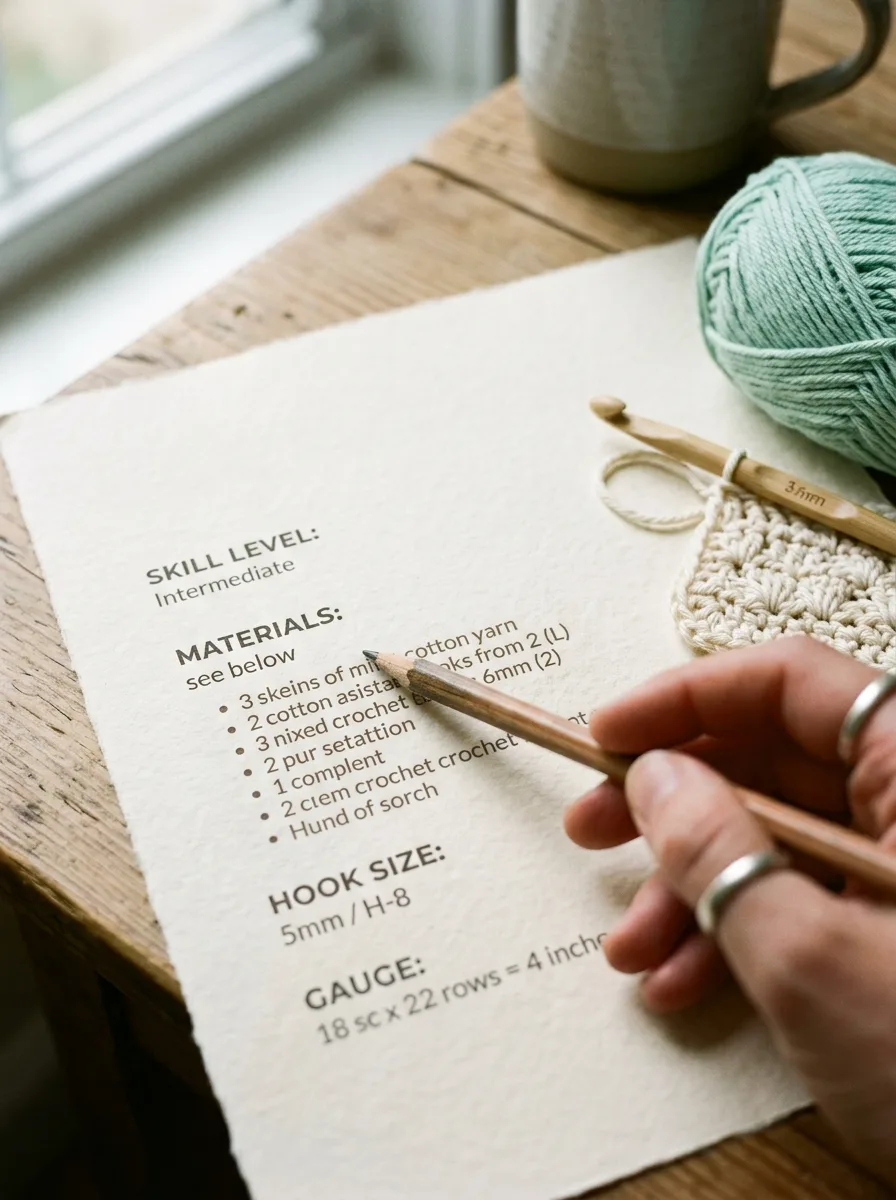
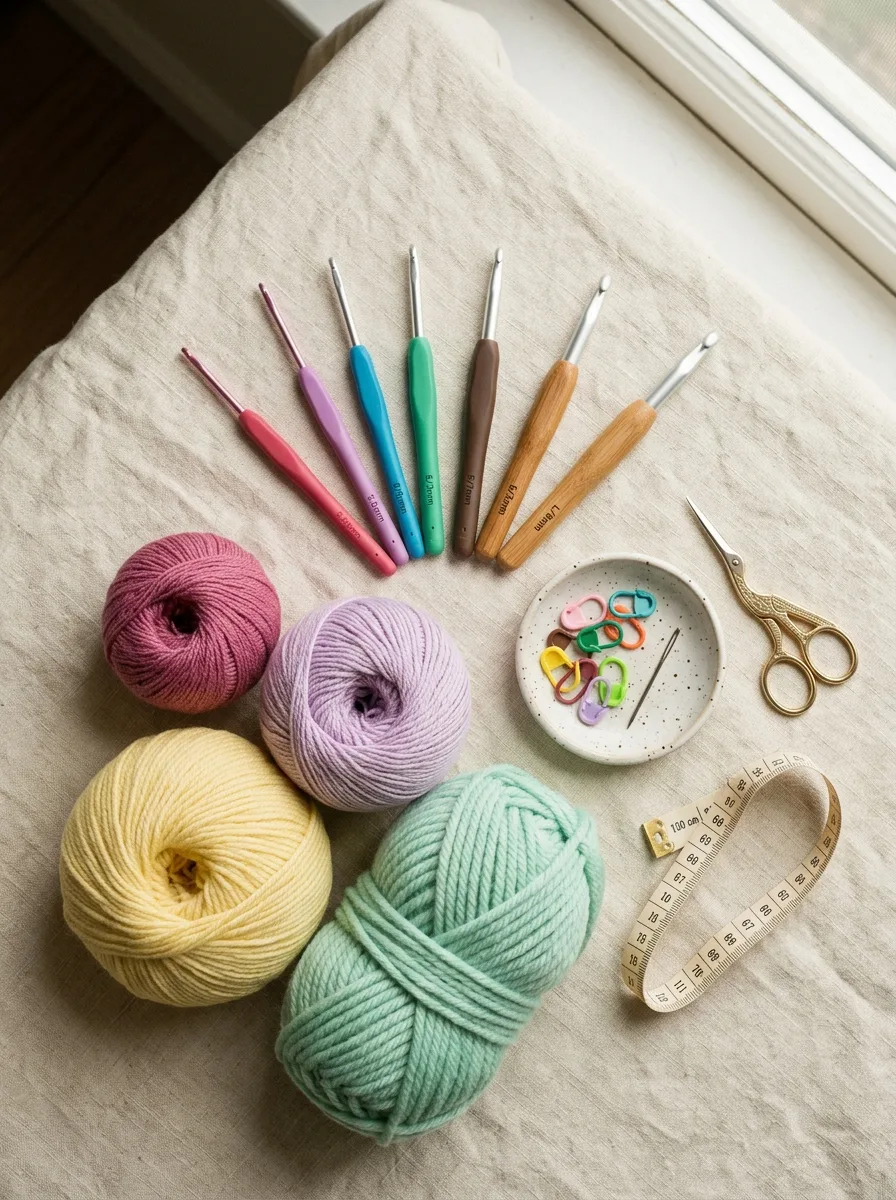
Read the top of a pattern first: skill level, yarn weight, hook, gauge, and which terms (US or UK) it uses.
Skill level. Usually Beginner, Easy, Intermediate, or Experienced, following the Craft Yarn Council scale. On this site it’s the dotted badge on every pattern card.
Yarn weight and amount. Weight is the thickness (e.g. worsted #4). Buy the full amount from the same dye lot.
Hook size. Treat it as a starting point, not a law.
Gauge. Stitches and rows per 10 cm (4 in). More on this below.
Terms. US or UK. This one line changes the meaning of every stitch name in the pattern.
Gauge: Why Your Project Came Out the Wrong Size
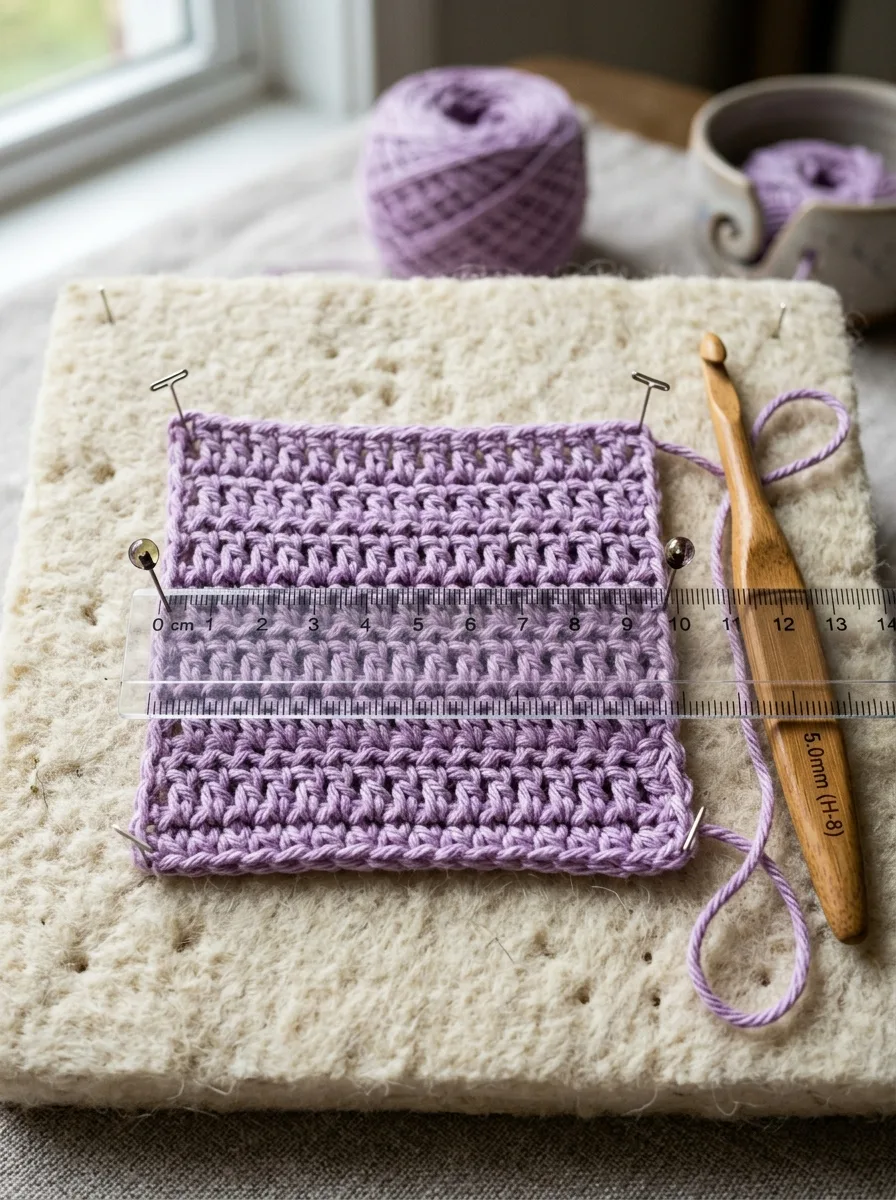
Gauge is how many stitches and rows fit in 10 cm with your hands, yarn, and hook. Crochet a square slightly bigger than 10 cm in the pattern’s stitch, then count.
Gauge is a promise: if your 10 cm square matches the pattern's, your finished piece will match its size.
Too many stitches? Your tension is tight. Go up a hook size.
Too few? You crochet loosely. Go down a hook size.
For tops, cardigans, and hats, matching gauge is the difference between a perfect fit and a gift for someone else.
Abbreviations and Symbols
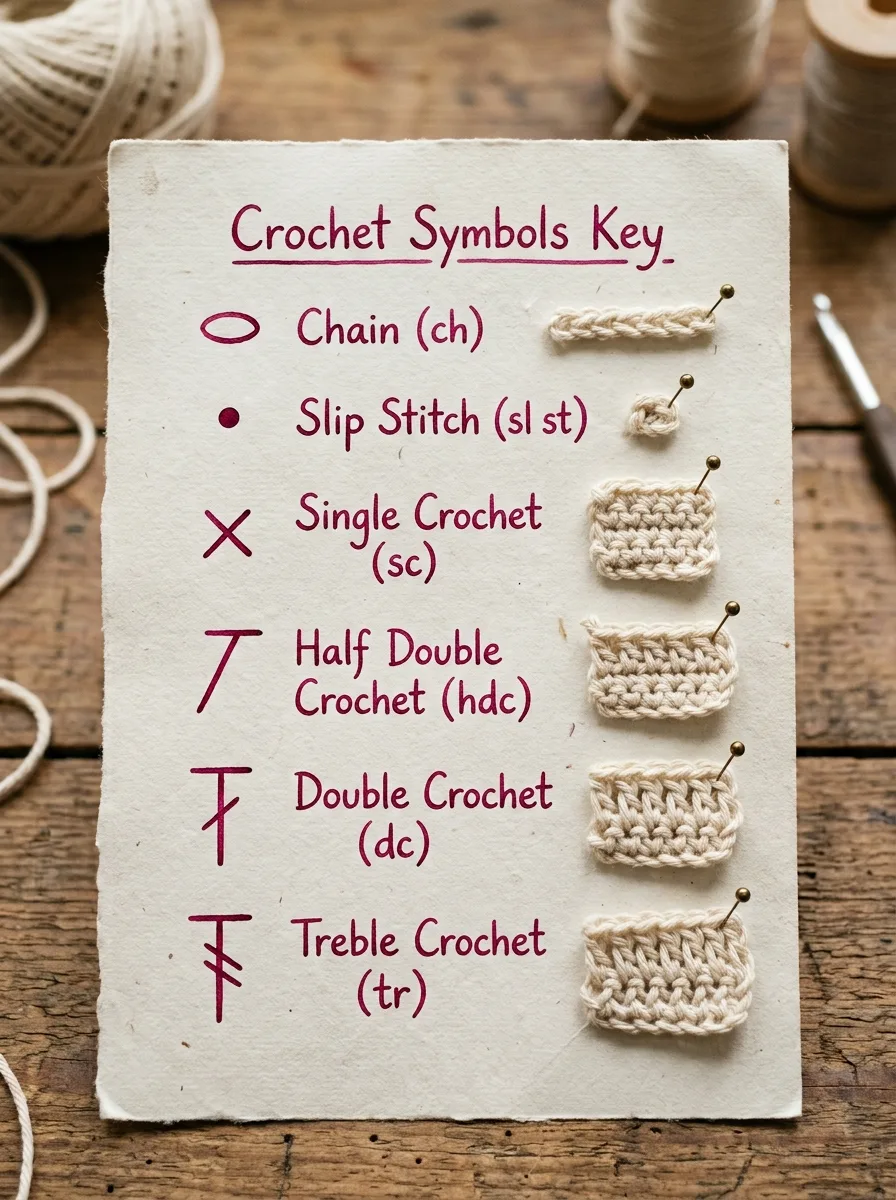
Patterns shorten every stitch and action. The core ones are chch = chainUK: chainYarn over and pull through the loop on your hook. The foundation of almost every project., sl stsl st = slip stitchUK: slip stitch (ss)Insert hook, yarn over, pull straight through the stitch and the loop on your hook. Used to join rounds and travel invisibly., scsc = single crochetUK: double crochet (dc)Insert hook, yarn over, pull up a loop (2 loops), yarn over, pull through both. The shortest, densest basic stitch., hdchdc = half double crochetUK: half treble (htr)Yarn over, insert hook, pull up a loop (3 loops), yarn over, pull through all three., dcdc = double crochetUK: treble (tr)Yarn over, insert, pull up a loop (3 loops), then [yarn over, pull through 2] twice. About twice as tall as sc., and trtr = treble crochetUK: double treble (dtr)Yarn over twice, insert, pull up a loop (4 loops), then [yarn over, pull through 2] three times., plus instructions like sksk = skipUK: missSkip the next stitch (or stitches) and work into the one after. (skip), spsp = spaceUK: spaceThe gap under a chain or between stitches. "Ch-sp" means work into the space under a chain, not into the chain itself. (space), st(s)st(s) = stitch(es)UK: stitch(es)Any single stitch. Stitch counts at the end of a row are written in parentheses, e.g. (12 sts). (stitch), RSRS = right sideUK: right sideThe side of the work that will face outward on the finished piece. and WSWS = wrong sideUK: wrong sideThe side of the work that will face inward or down on the finished piece. (right and wrong side). Hover over any of them on this site for a quick definition, or keep our full US and UK abbreviations chart open in another tab.
The number in parentheses at the end of a row is the stitch count: “(20 sc)” means you should have exactly 20 stitches when the row is done.
The number in parentheses at the end of a row is your stitch count. Check it every row until the pattern becomes a habit.
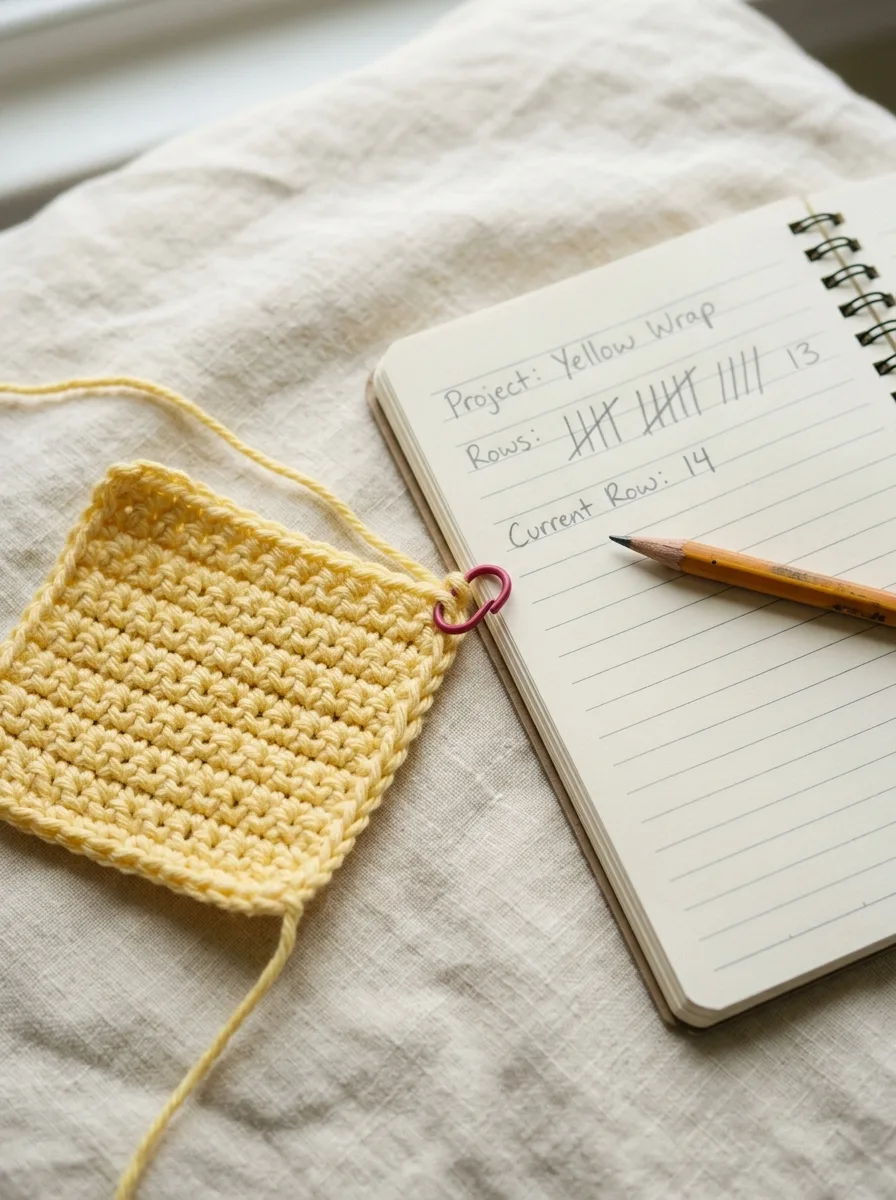
Count, especially in the first few rows. A missed stitch in Row 2 becomes a lopsided project by Row 20.
Rows vs. Rounds
Rows are worked back and forth. You turn at the end of each one, usually after a turning chain.
Rounds (rndrnd = roundUK: roundOne full circuit of a piece worked in the round, instead of back and forth in rows.) go in a circle, from the center out or around a tube.
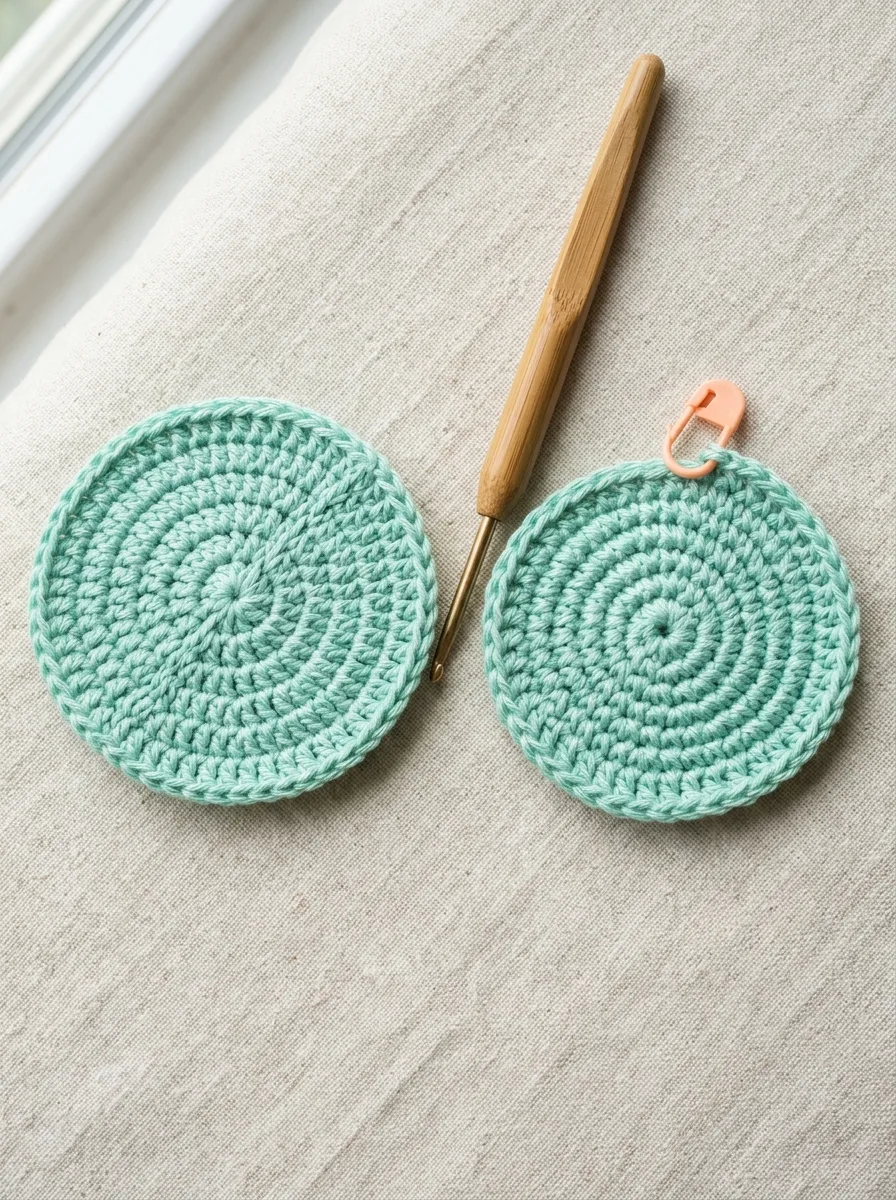
Rounds come in two flavors. Joined rounds end with a slip stitch into the first stitch, and the next round starts with a chain. Spiral rounds never join. You just keep going and move a stitch marker to track where each round begins. Amigurumi is almost always worked in spirals because it leaves no seam.
Rnd 2: Sl st in next 2 dc and into ch-2 sp. Ch 3, (2 dc, ch 2, 3 dc) in same sp, ch 1, [(3 dc, ch 2, 3 dc) in next ch-2 sp, ch 1] 3 times; join with sl st to top of beg ch-3.
Translated: slip stitch over to the corner space so you start in the right place. The chain 3 counts as your first double crochet. Work a full corner into that space, then chain 1. Repeat “corner plus chain 1” three more times for the other corners, then join.
Reading Crochet Symbol Charts
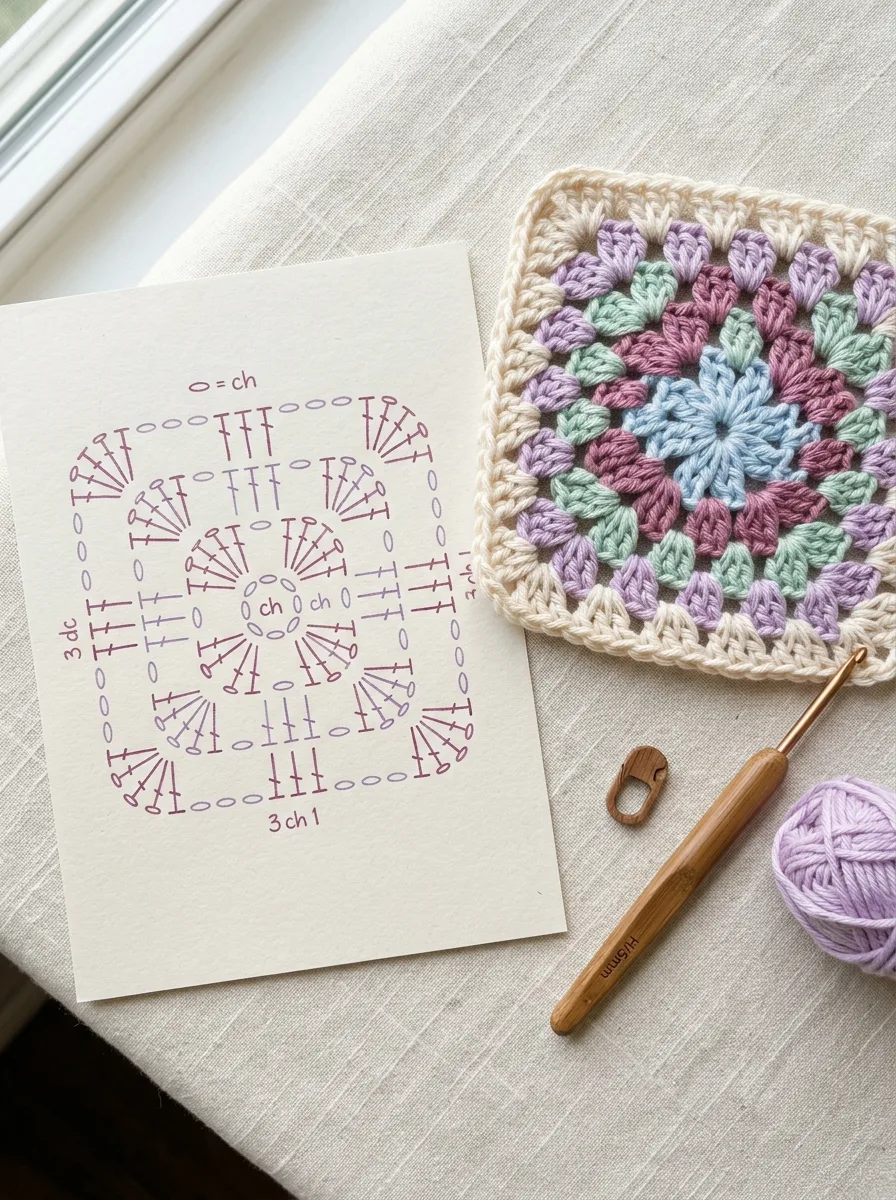
A crochet chart (or diagram) draws each stitch as a symbol, placed where it sits in the work. They’re universal. A chart from a Japanese pattern book reads exactly the same as an English one.
The number of little crossbars on a symbol is the number of yarn overs: none for sc, one for dc, two for tr.
Charts worked in the round start in the center and read counter-clockwise (for right-handers). Charts worked in rows read right to left on right-side rows and left to right on wrong-side rows, with row numbers printed on the side you start from.
Grid and Pixel Charts
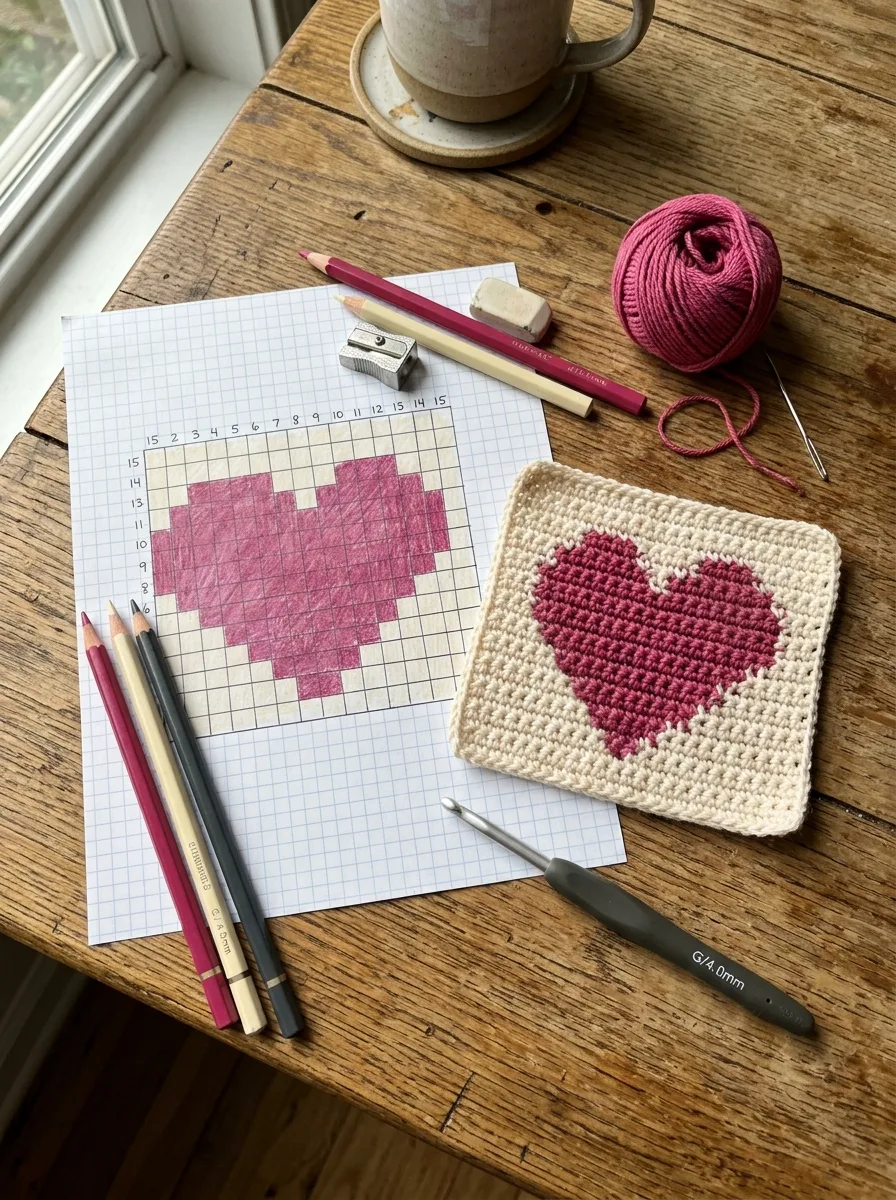
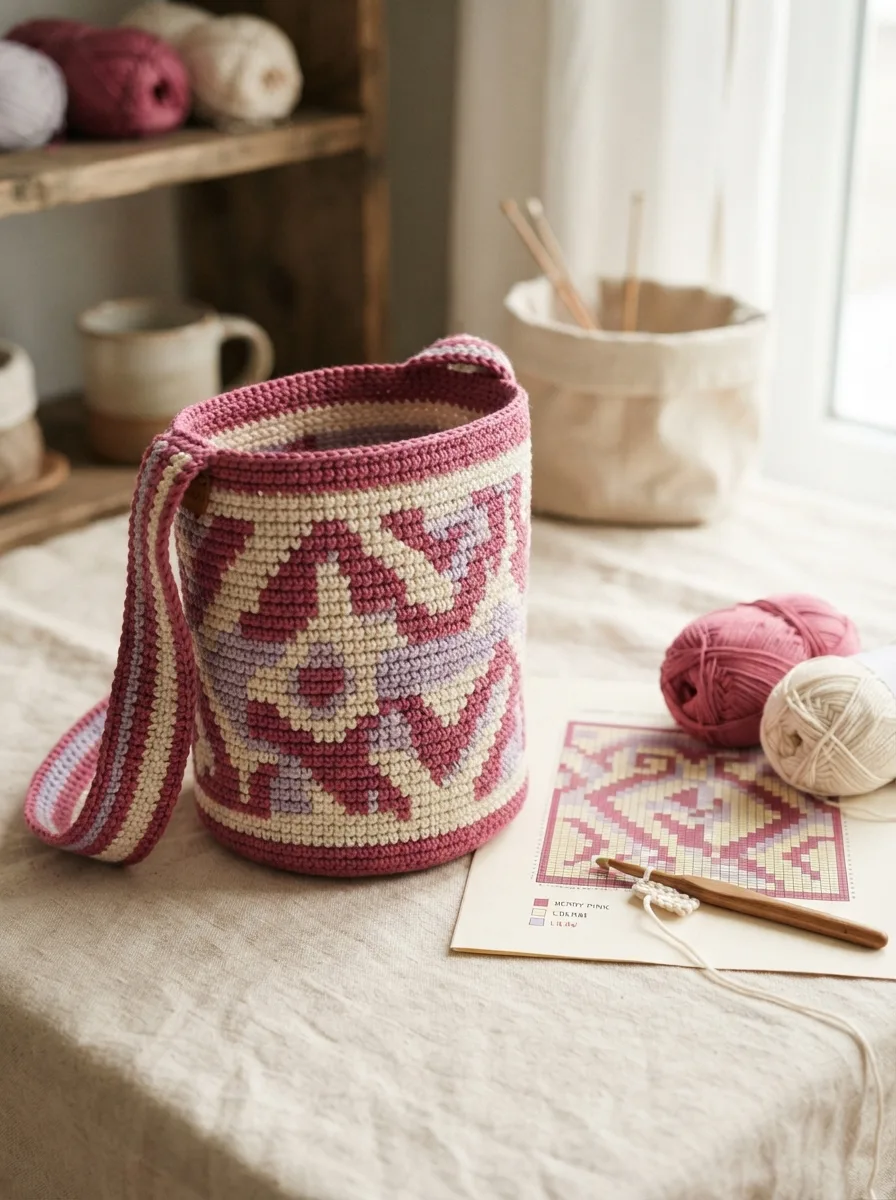
Grid charts, sometimes called graph or pixel crochet patterns, are the other big chart type. They don’t show stitch symbols. Instead, each square is one stitch in a certain color. They’re used for tapestry crochet, mosaic crochet, pixel blankets, and C2C (corner-to-corner) designs.
Grid charts: one square equals one stitch. They're how tapestry bags and pixel blankets are planned.
Read them like a symbol chart worked in rows: bottom row first, right to left, then left to right on the way back, changing colors where the squares change.
Special Stitches and Notes
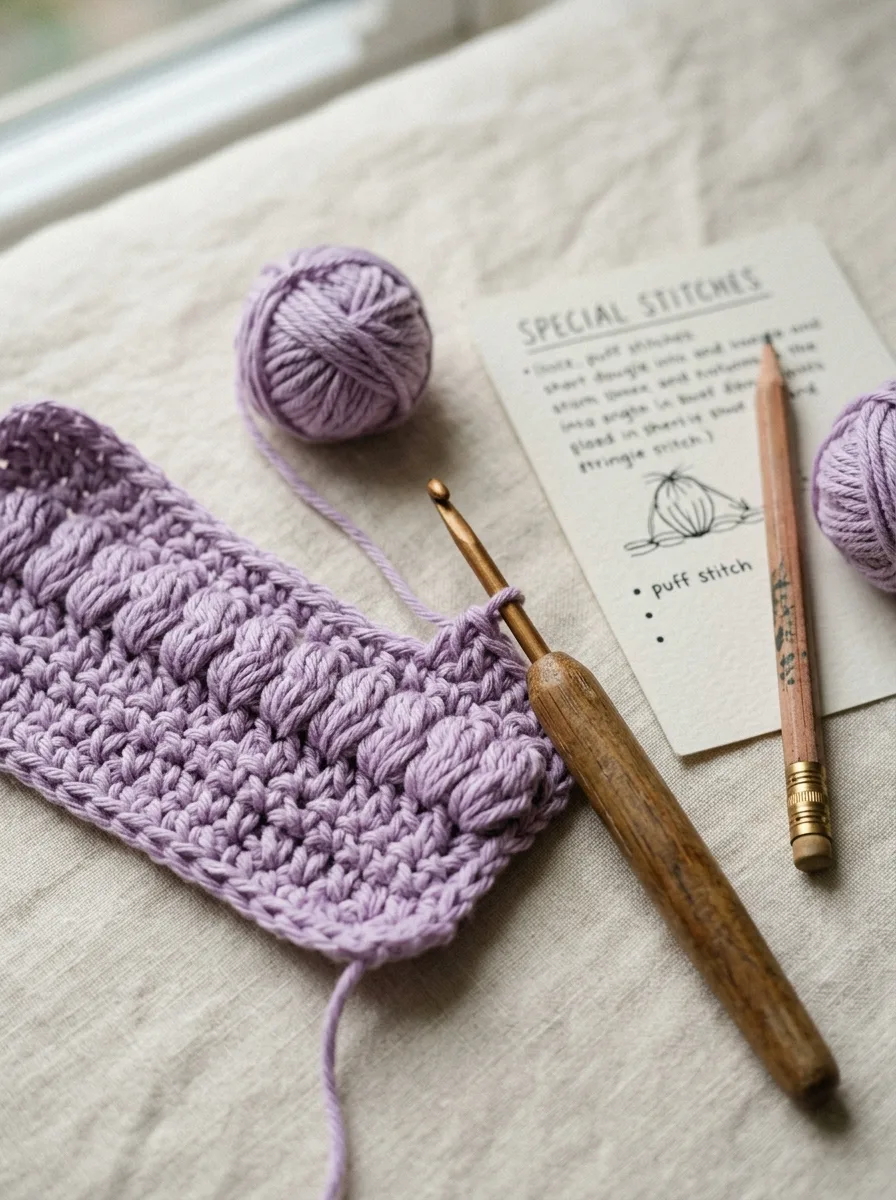
If a pattern uses anything beyond the basics, like a puffpuff = puff stitchUK: puff stitchSeveral yarn-over loops pulled up in one stitch and closed together, for a soft, pillowy bump. or a FPdcFPdc = front post double crochetUK: front post treble (FPtr)Work a dc around the post of the stitch from the front instead of into its top. Makes raised ribbing and cables., it’s defined in a “special stitches” section near the top. The “notes” section says things like whether turning chains count as stitches. Read both before you start. They answer most mid-project questions in advance.
Special stitches are explained in their own section near the top. Read it once before starting, not mid-row.
Five Habits That Make Any Pattern Easy
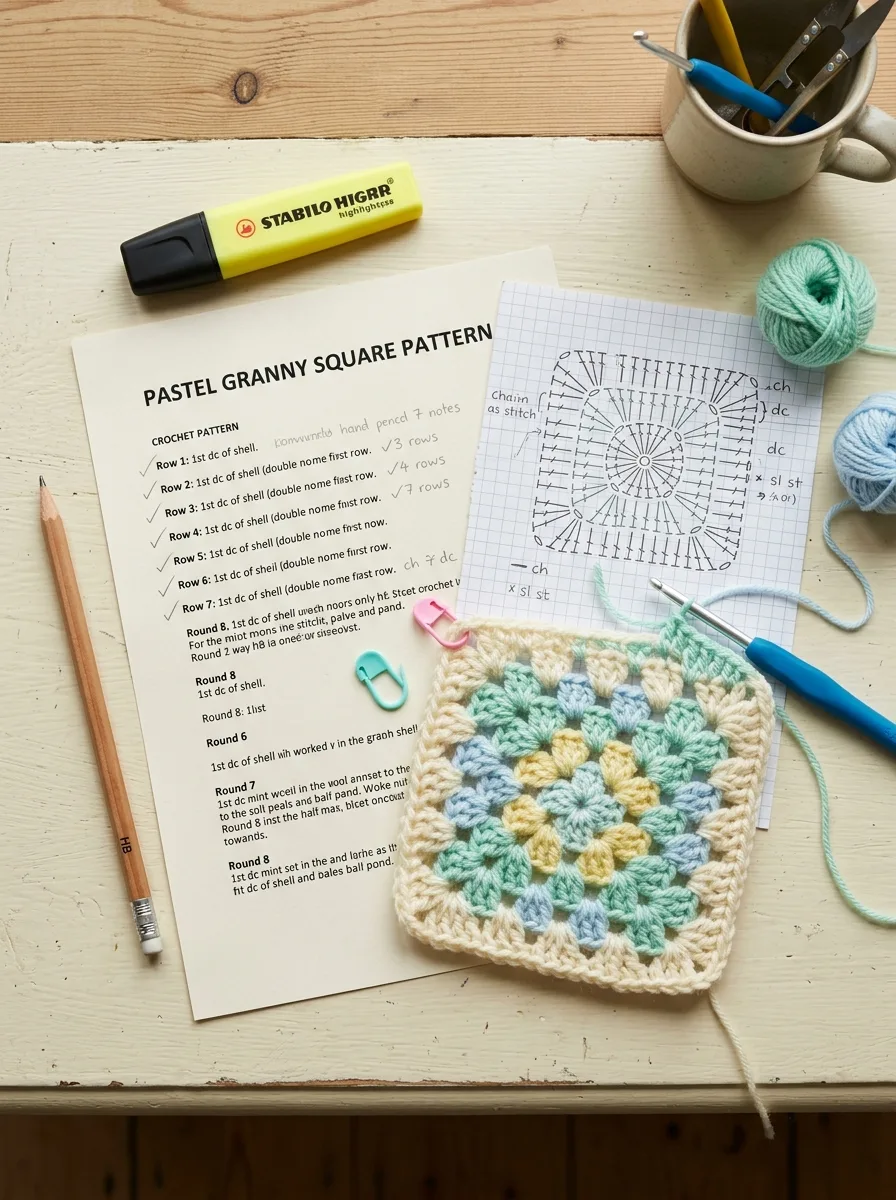
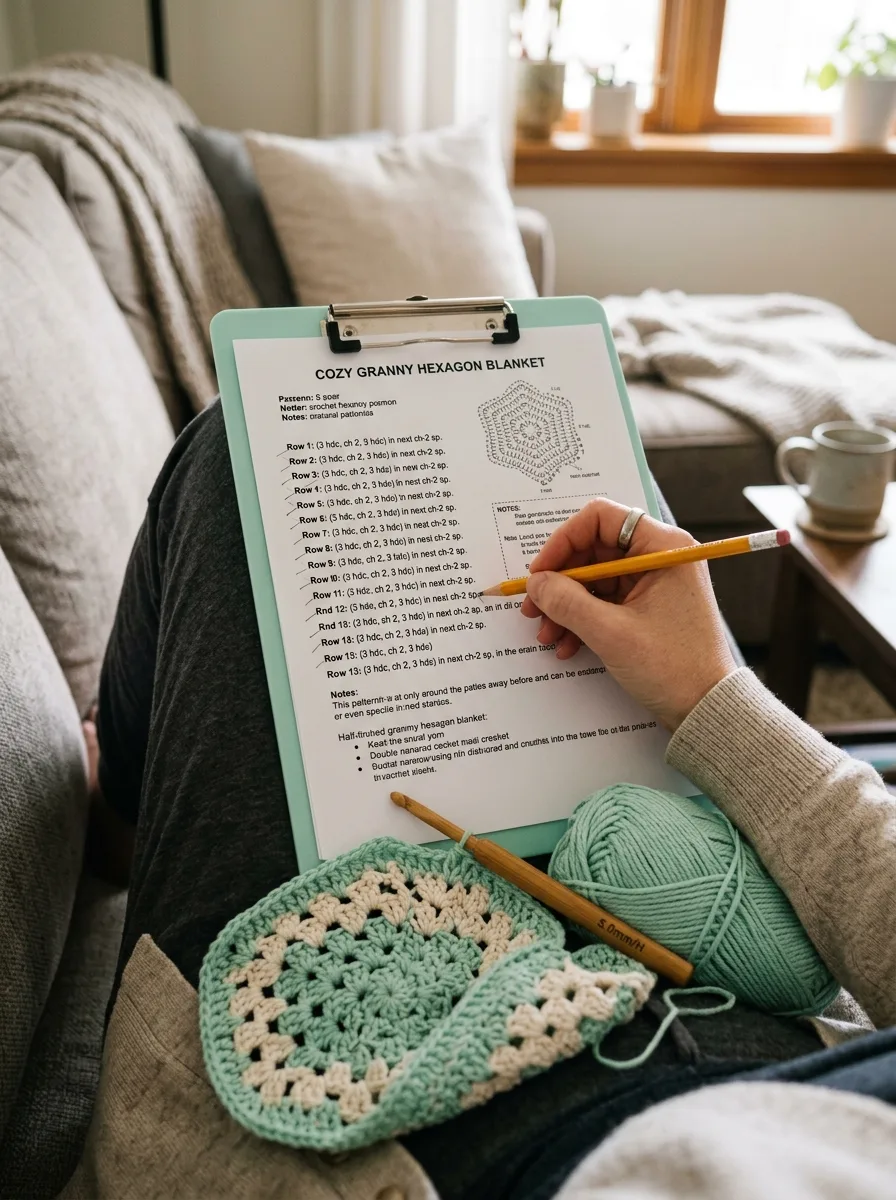
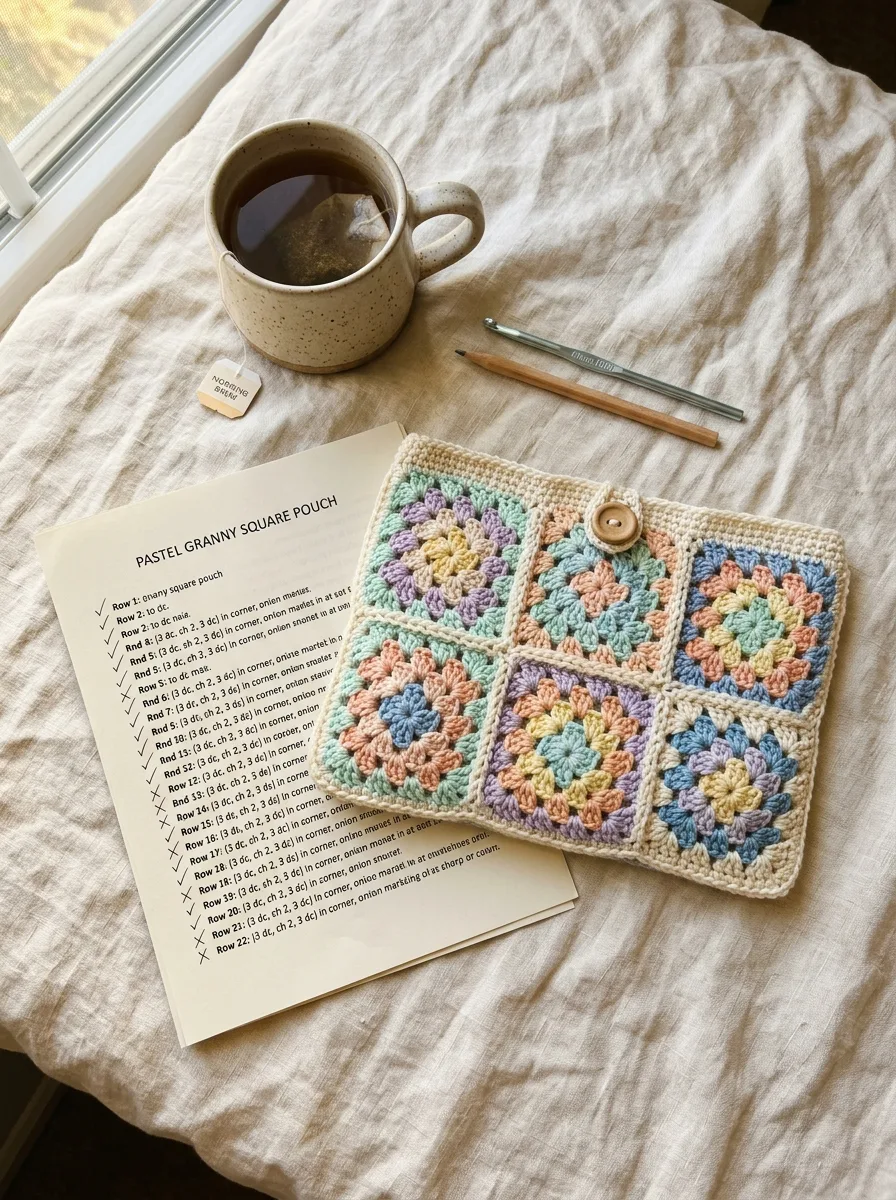
Print it or copy it into a notes app and cross off each row as you finish it. On this site, pattern articles have a built-in row tracker that remembers your place.
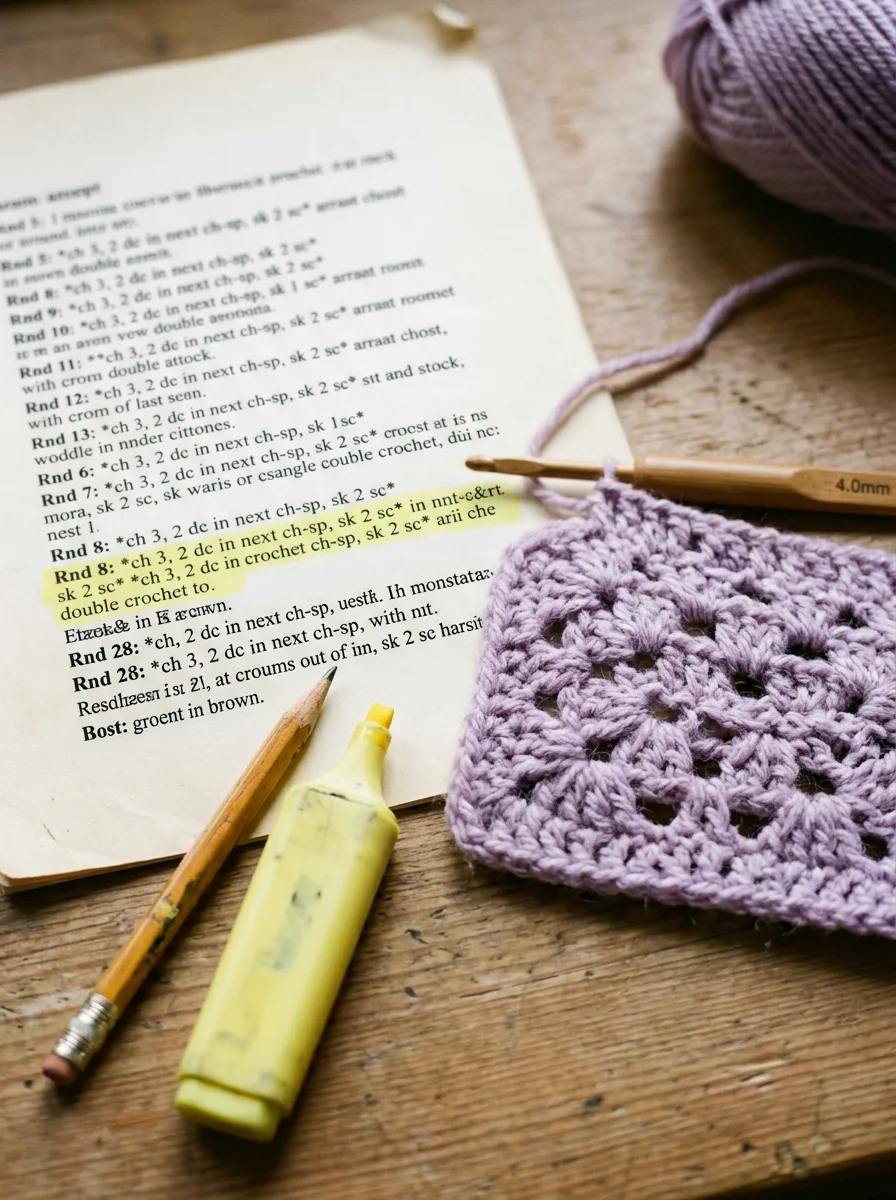
Highlight the repeats before you start.
Count stitches at the end of every row for the first few rows.
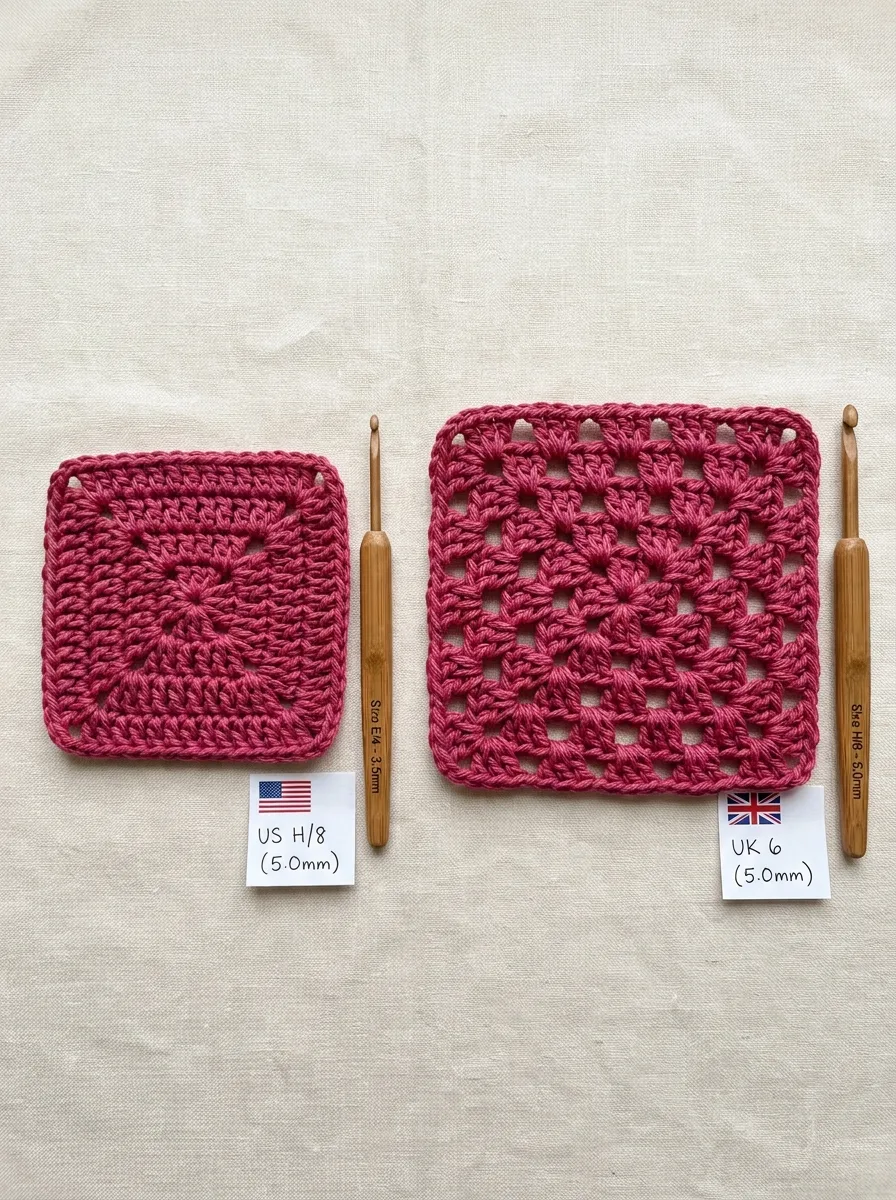
Check the terms line (US vs UK) before anything else. Here’s what happens when you don’t:
A pencil and a clipboard is a crochet superpower. Cross off rows as you finish them and you'll never lose your place.
Ready to Try One?
Put it into practice with a pattern that uses everything in this lesson: the classic granny square has brackets, parentheses, joined rounds, and stitch counts, all in four short rounds. Or pick a quick project from our easy crochet ideas.
Do I need to make a gauge swatch for every project?
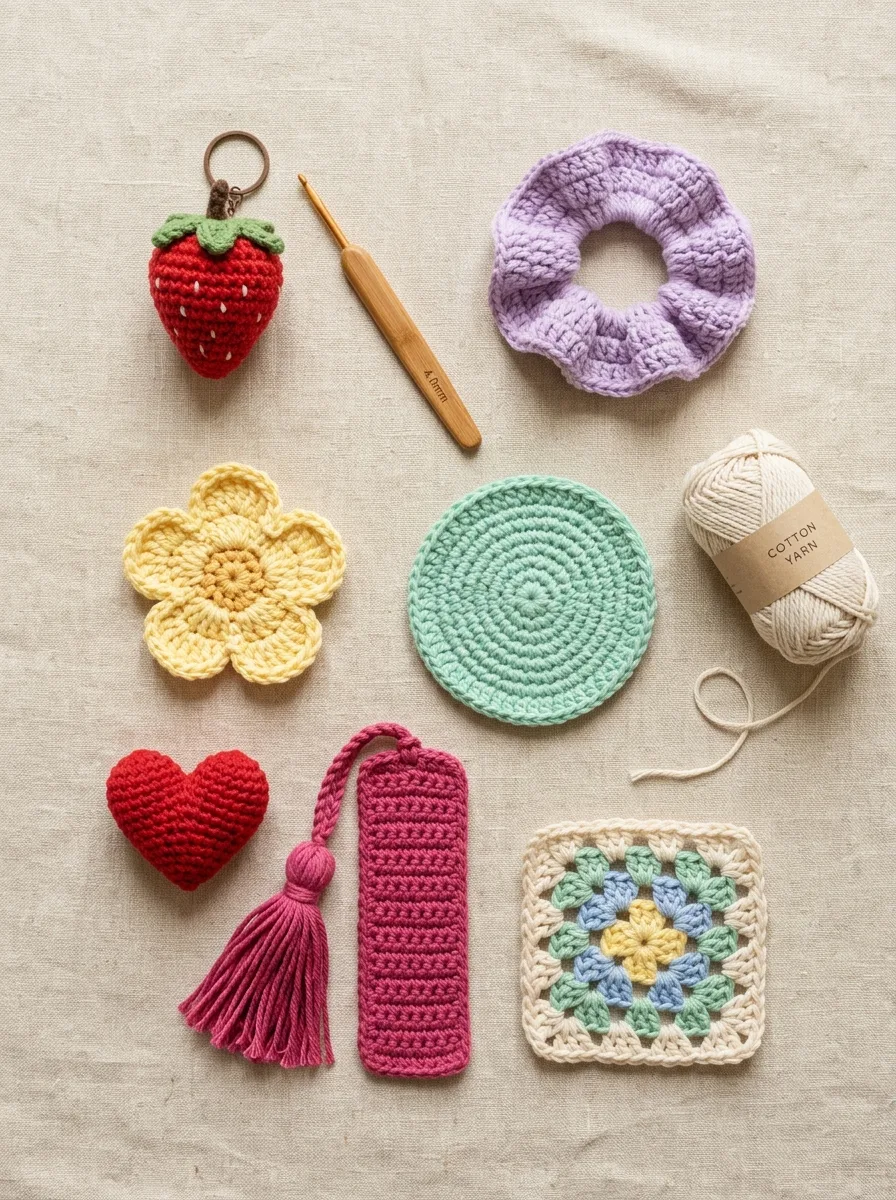
For anything that has to fit, like tops, cardigans, and hats, yes. For flowers, keychains, coasters, and blankets where a few centimeters don't matter, you can skip it. A swatch takes ten minutes and saves you from a sweater that fits a giant.
Is a written pattern or a chart better for beginners?
Written patterns are easier to start with because they spell out every step. Charts are faster once you know the symbols and are language-independent, so you can follow a Japanese or Spanish chart without translating it. Most crocheters end up using both.
What does 'rep from * to end' mean?
Repeat the instructions that come after the asterisk as many times as you can until you reach the end of the row. If there are stitches left over that don't fit a full repeat, the pattern will tell you what to do with them.
How do I read a grid (pixel) crochet chart?
Each square is one stitch and each row of squares is one row. Read right-side rows from right to left and wrong-side rows from left to right (reversed if you crochet left-handed), changing yarn color whenever the square color changes.
Good patterns say so near the top. If not, look for 'single crochet' or 'sc': it only exists in US terms. A pattern that uses 'double crochet' but never 'single crochet' is almost certainly UK.