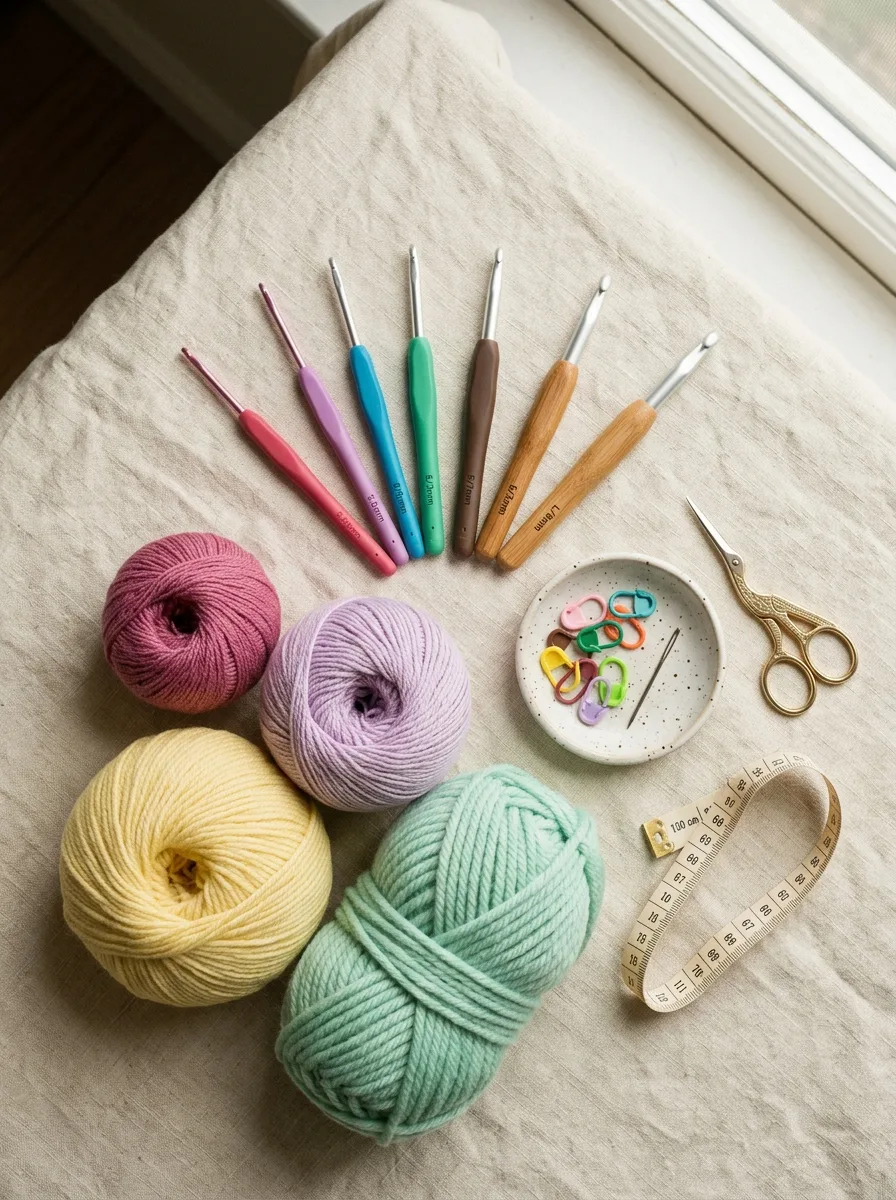
Walk into any craft store and the crochet aisle suggests you need forty hooks, six gadgets, and a yarn in every fiber. You don’t. Choosing crochet hooks and yarn for beginners comes down to three decisions: one good hook, the right weight of smooth yarn, and a few small tools that genuinely make crochet easier. This guide covers all three, plus a chart you can come back to every time a pattern says “worsted.”
Choosing Your First Crochet Hook
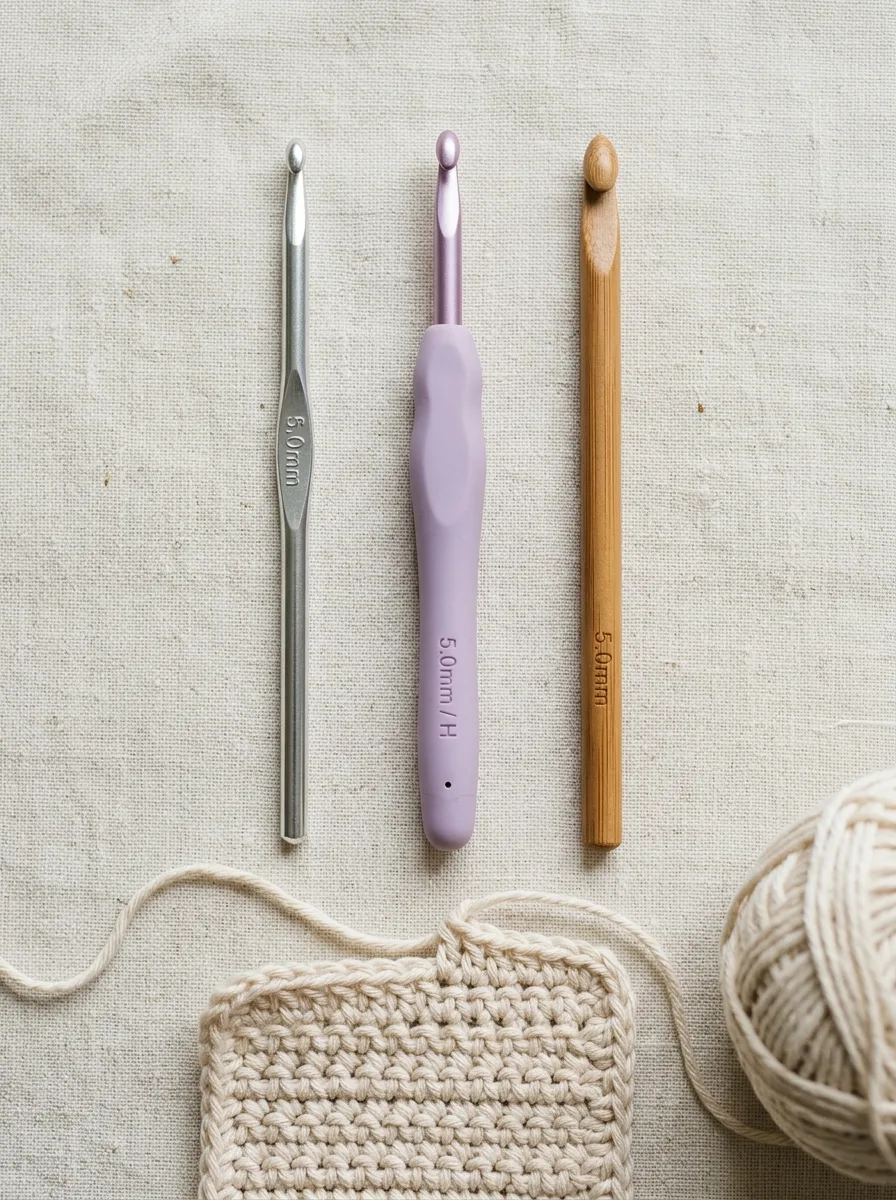
Hooks come in three common materials, and all of them work.
Aluminium hooks are fast and cheap, ergonomic handles save your wrist, and bamboo grips slippery yarn. Start with whichever feels good.
Aluminium: smooth, fast, inexpensive, and the standard for most crocheters.
Ergonomic: an aluminium head with a thick, soft handle. It’s worth it if your hands cramp or you crochet for hours.
Bamboo or wood: warmer and grippier. That’s helpful with slippery cotton or silk, but slower with sticky yarn.
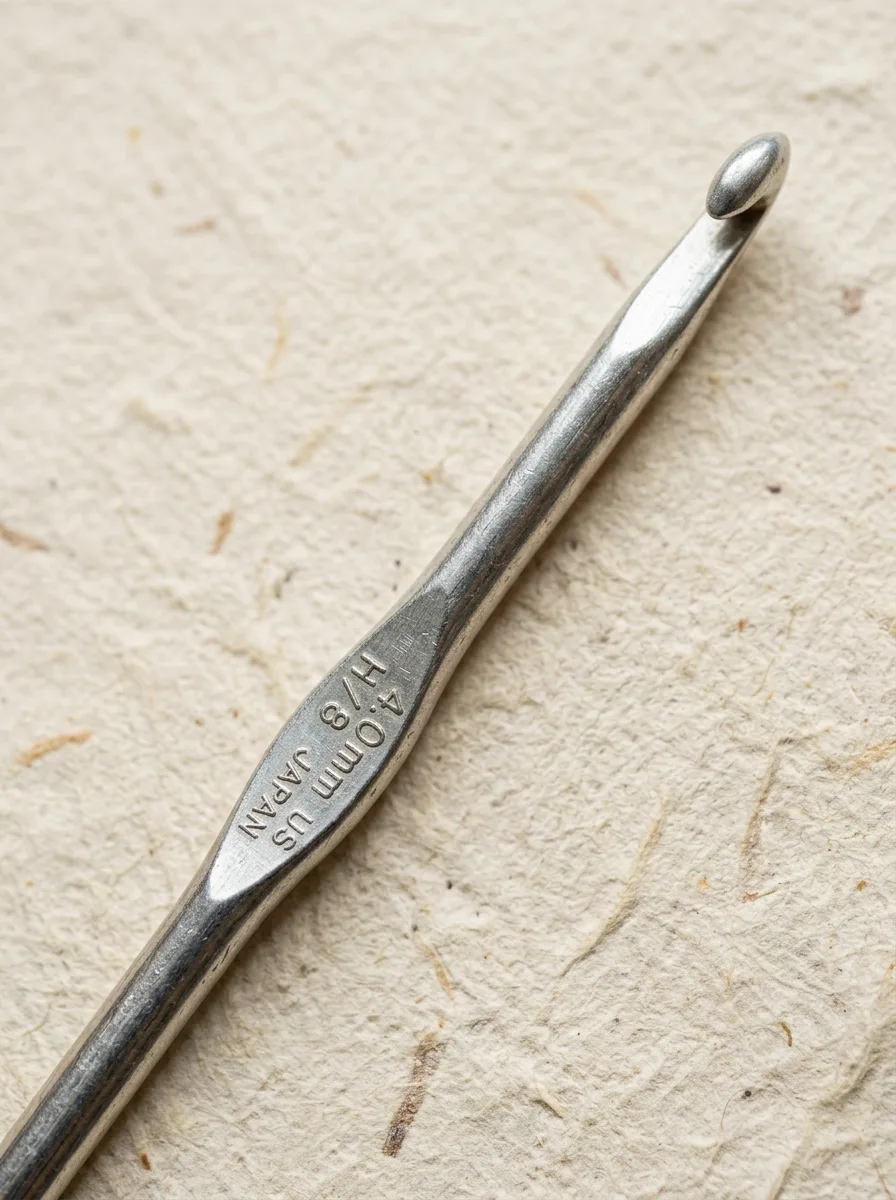
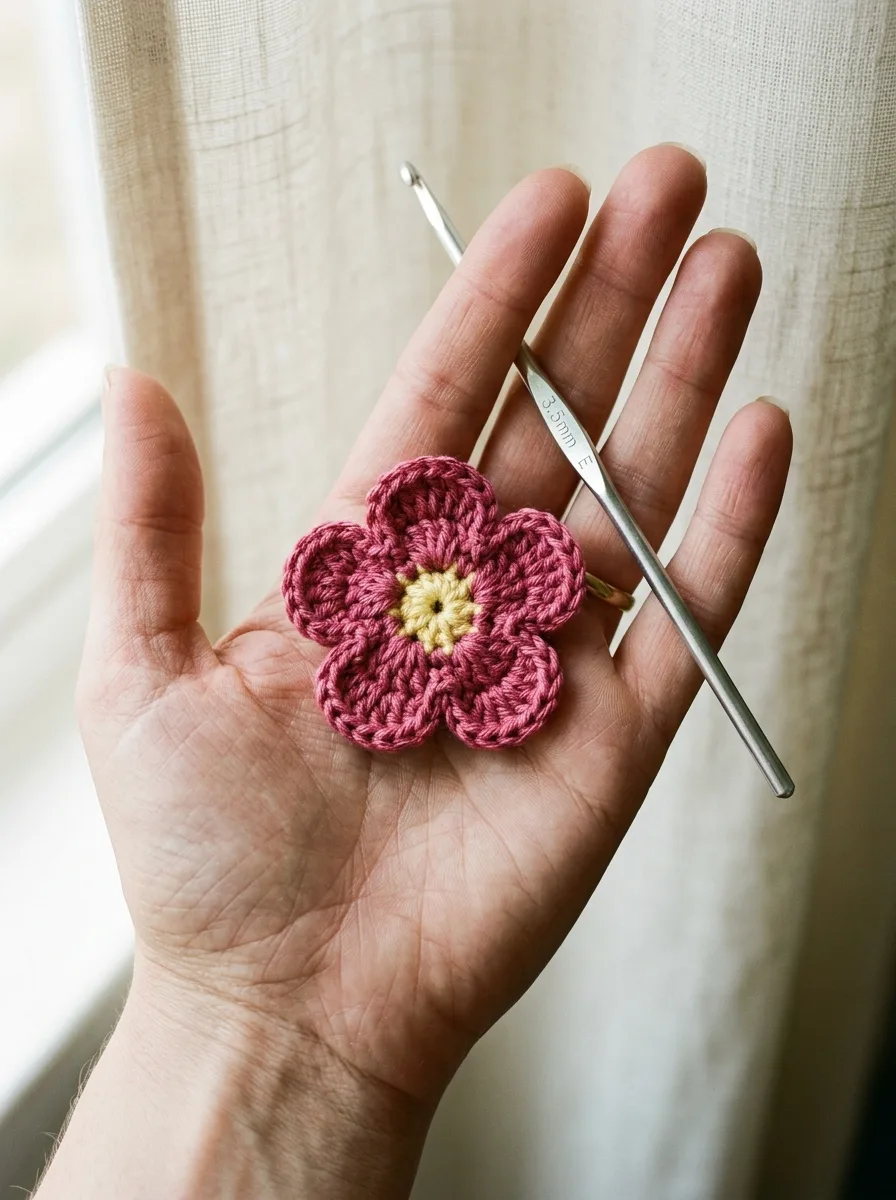
What matters more than material is size. A hook’s size is the diameter of its shaft, the part your loops sit on, and it’s printed on the thumb rest in millimeters (and often a US letter).
The shaft (not the point) sets your stitch size. The size is stamped on the thumb rest.
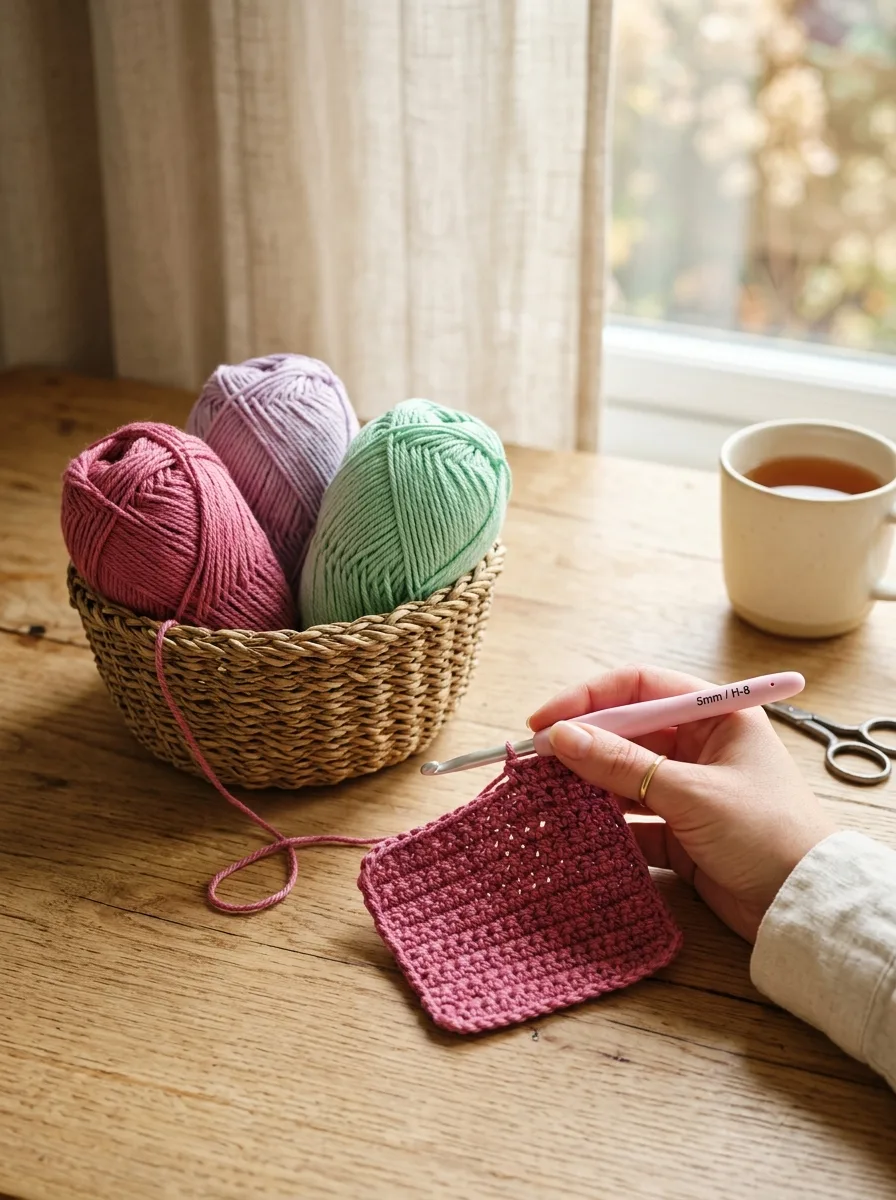
Our recommendation: buy one 5 mm (US H-8) hook to learn with. Add a 3.5 mm for keychains and amigurumi, and a 6 mm for faster, drapier wearables, once a project asks for them.
Yarn Weights, Explained
“Weight” means thickness, not grams. Yarn weights are numbered 0 to 7 on the label using the Craft Yarn Council system.
Yarn weights from thinnest to thickest. For learning, stay in the middle: DK or worsted.
Number
Name(s)
Typical crochet hook
Great for
0
Lace, thread
1.5–2.25 mm
Doilies, fine lace
1
Super fine, fingering, sock
2.25–3.5 mm
Socks, lightweight tops
2
Fine, sport
3.5–4.5 mm
Baby items, amigurumi
3
Light, DK
4.5–5.5 mm
Tops, keychains, flowers
4
Medium, worsted, aran
5.5–6.5 mm
Blankets, bags, beanies
5
Bulky, chunky
6.5–9 mm
Quick scarves, cozy hats
6
Super bulky
9–15 mm
Chunky blankets, rugs
7
Jumbo
15 mm and up
Arm-knit-style throws
These are starting points. Amigurumi deliberately uses a hook one or two sizes smaller than the label suggests, so stitches are tight enough that stuffing doesn’t show. Drapey summer tops often go a size or two larger.
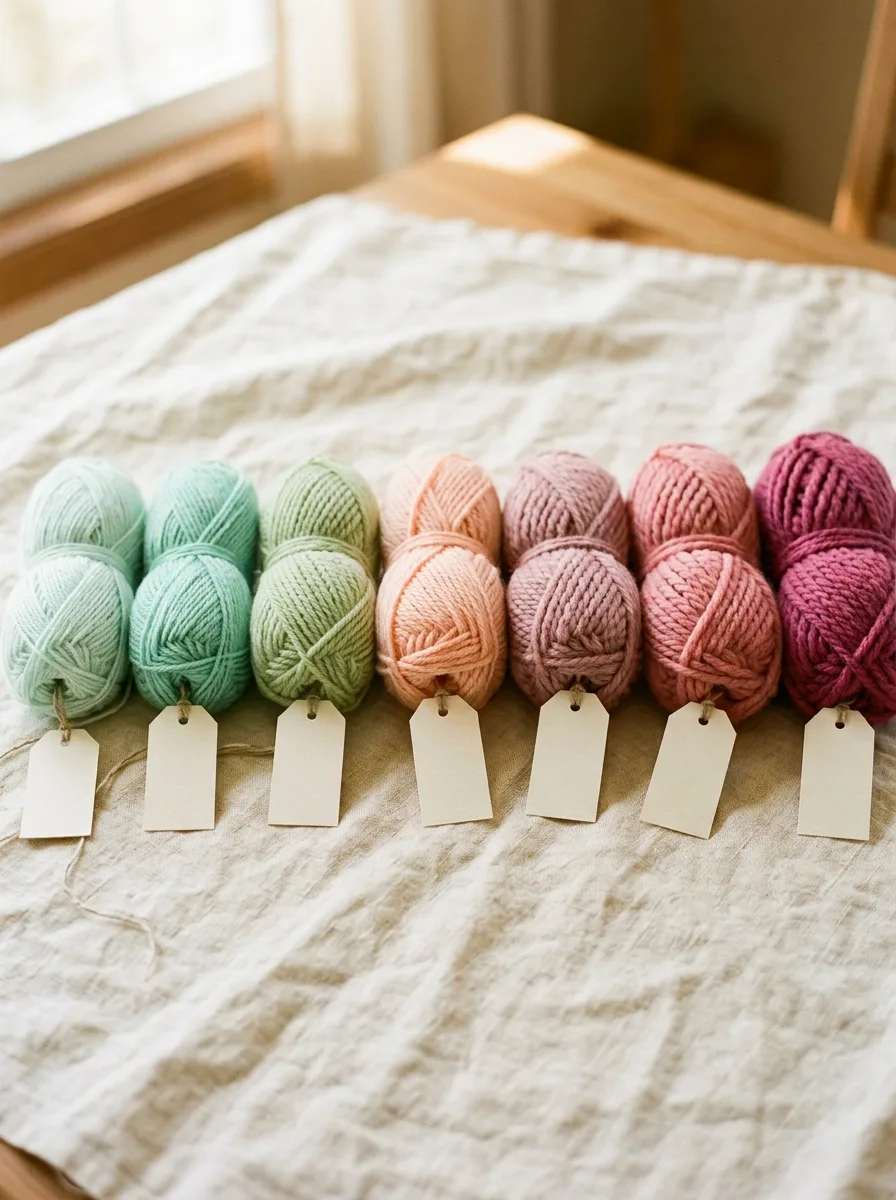
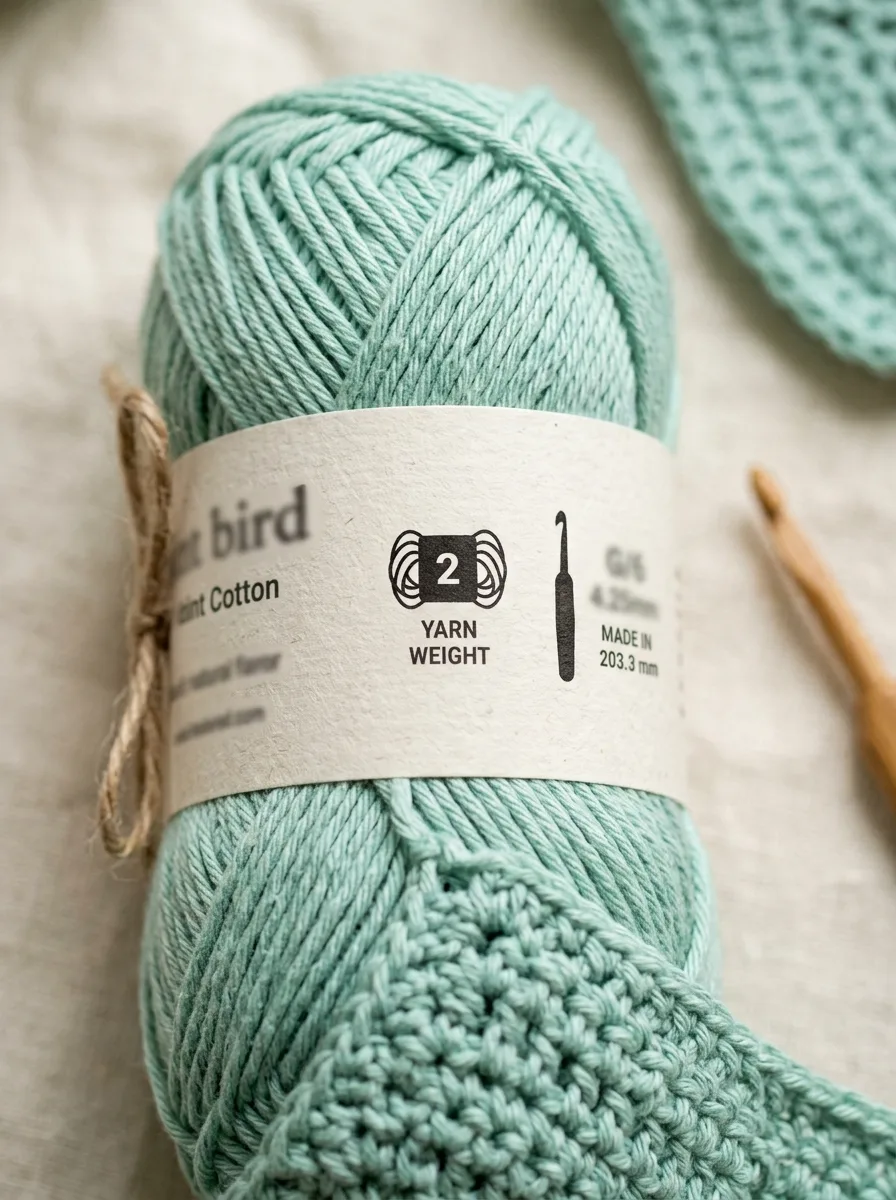
Everything you need is on the label: weight number, suggested hook, fiber, yardage, and the dye lot.
Always buy enough yarn from the same dye lot: the batch number on the label. Two skeins of “the same” color from different lots can look noticeably different side by side in a blanket.
Cotton shows every stitch and holds its shape, acrylic is soft and budget-friendly, and wool is warm and stretchy.
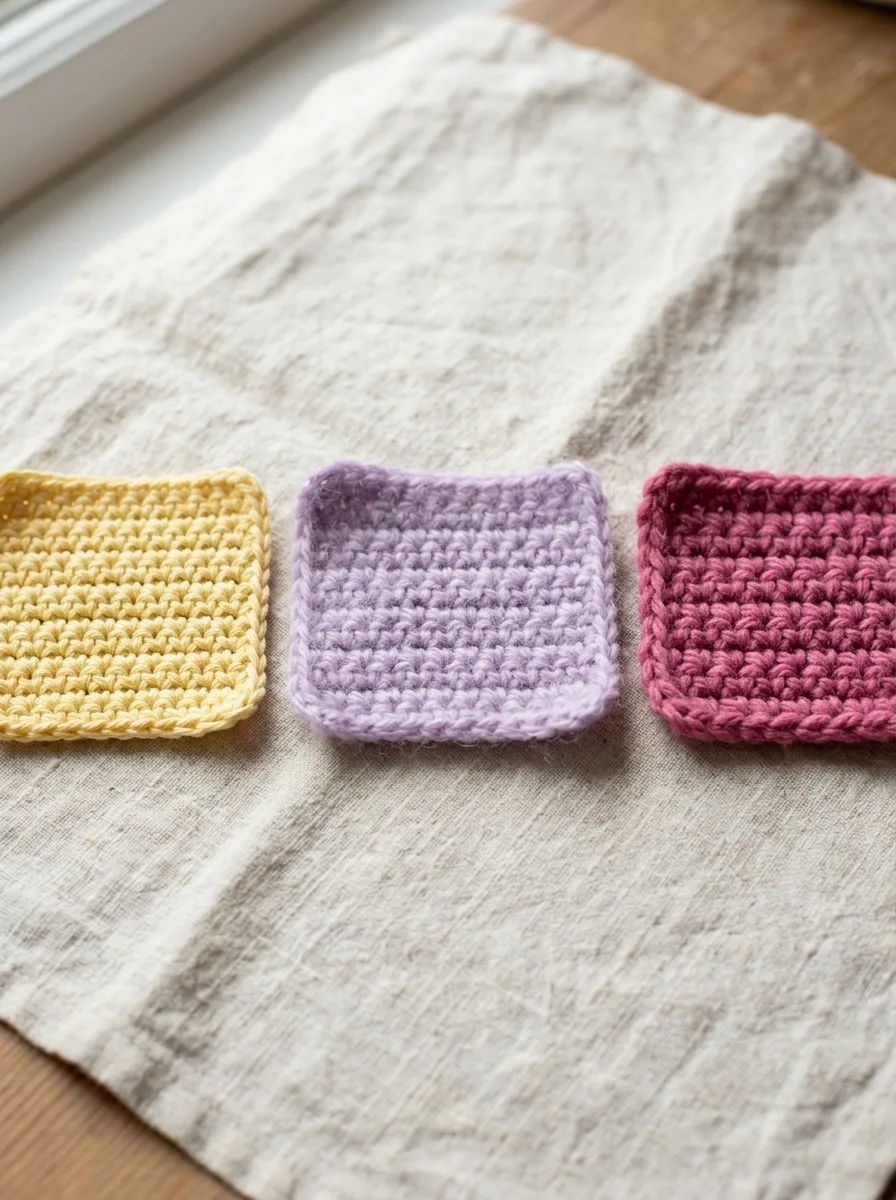
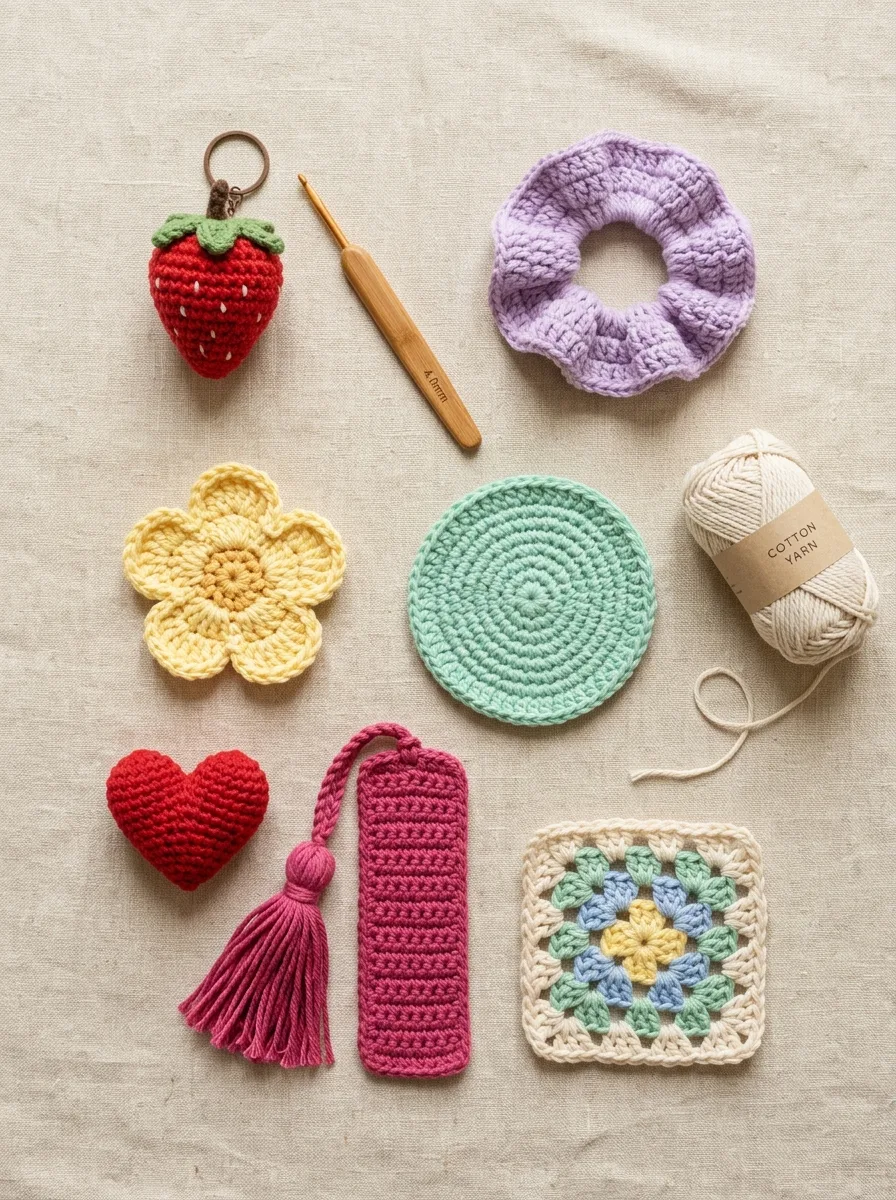
Cotton: crisp stitch definition, no stretch, and it holds its shape. It’s the best choice for bags, coasters, keychains, flowers, and summer tops. It’s a little hard on the hands for very long sessions.
Acrylic: soft, affordable, machine washable, and available in every color. It’s great for blankets and learning.
Wool and wool blends: warm, stretchy, and forgiving of uneven tension. It’s lovely for beanies and cardigans, but check whether it’s machine washable (look for “superwash”).
Cotton-acrylic blends: the best of both, soft but defined. This is a great all-rounder for beginners.
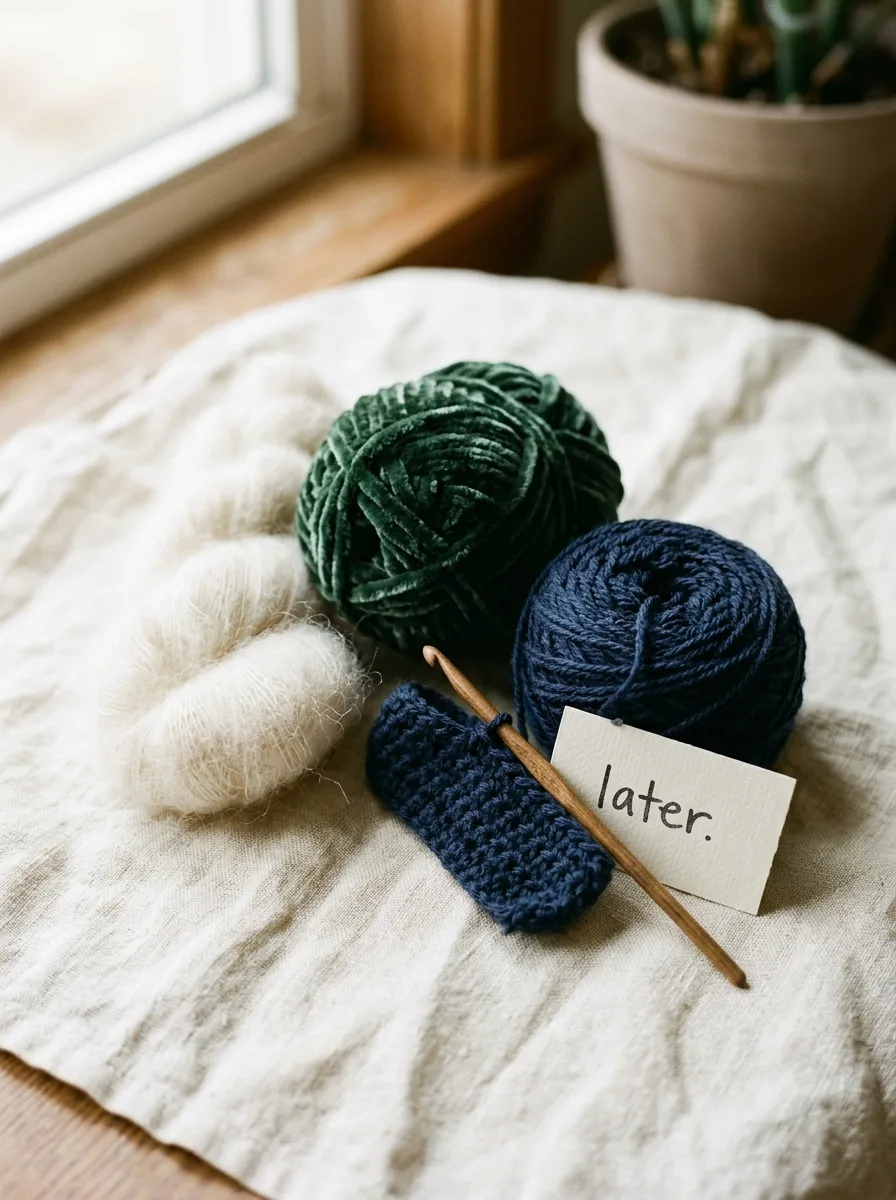
Save these for later: fuzzy mohair, velvet chenille, and very dark colors all hide your stitches.
What to skip for now: fuzzy mohair, “velvet” chenille, eyelash yarn, and very dark colors. They’re beautiful, but they hide stitches, which makes counting and fixing mistakes much harder when you’re learning.
The Small Tools That Matter
You need four small things, and a fifth only if you make toys.
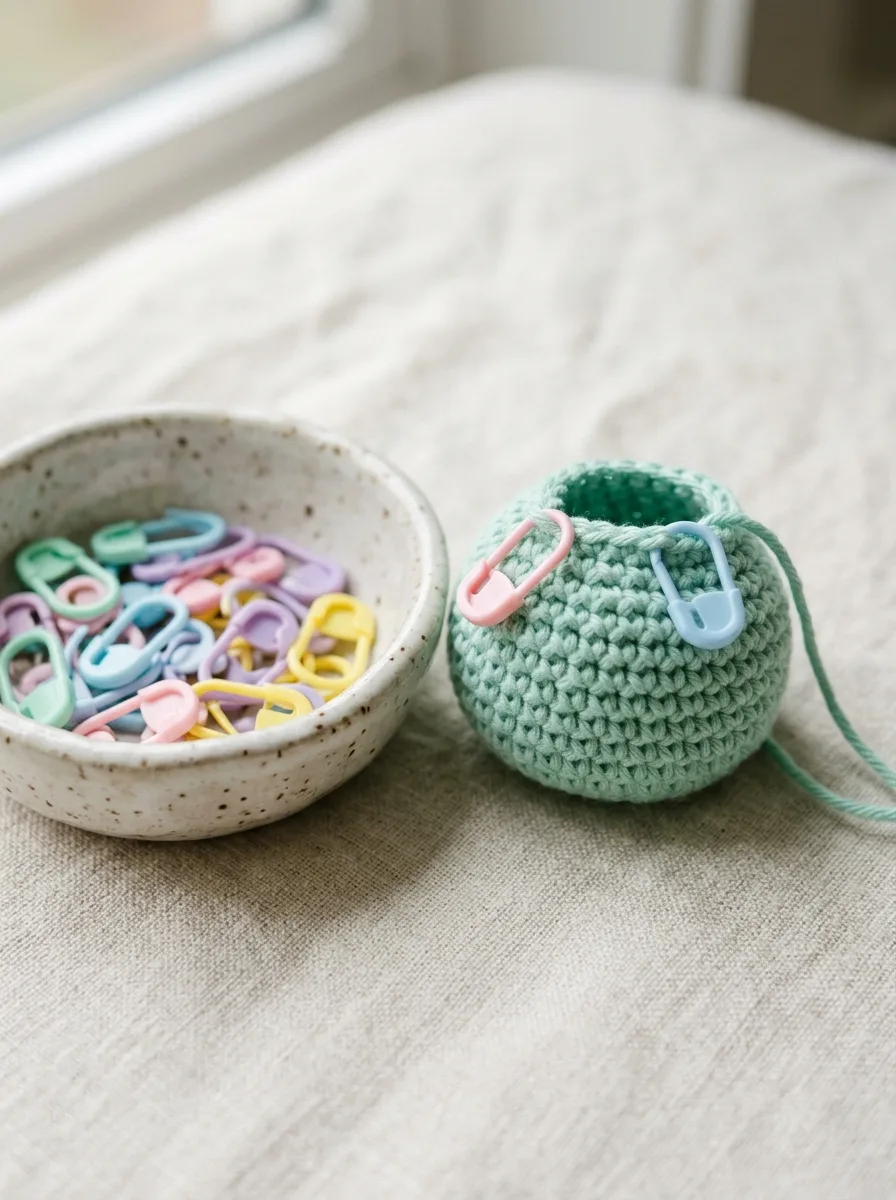
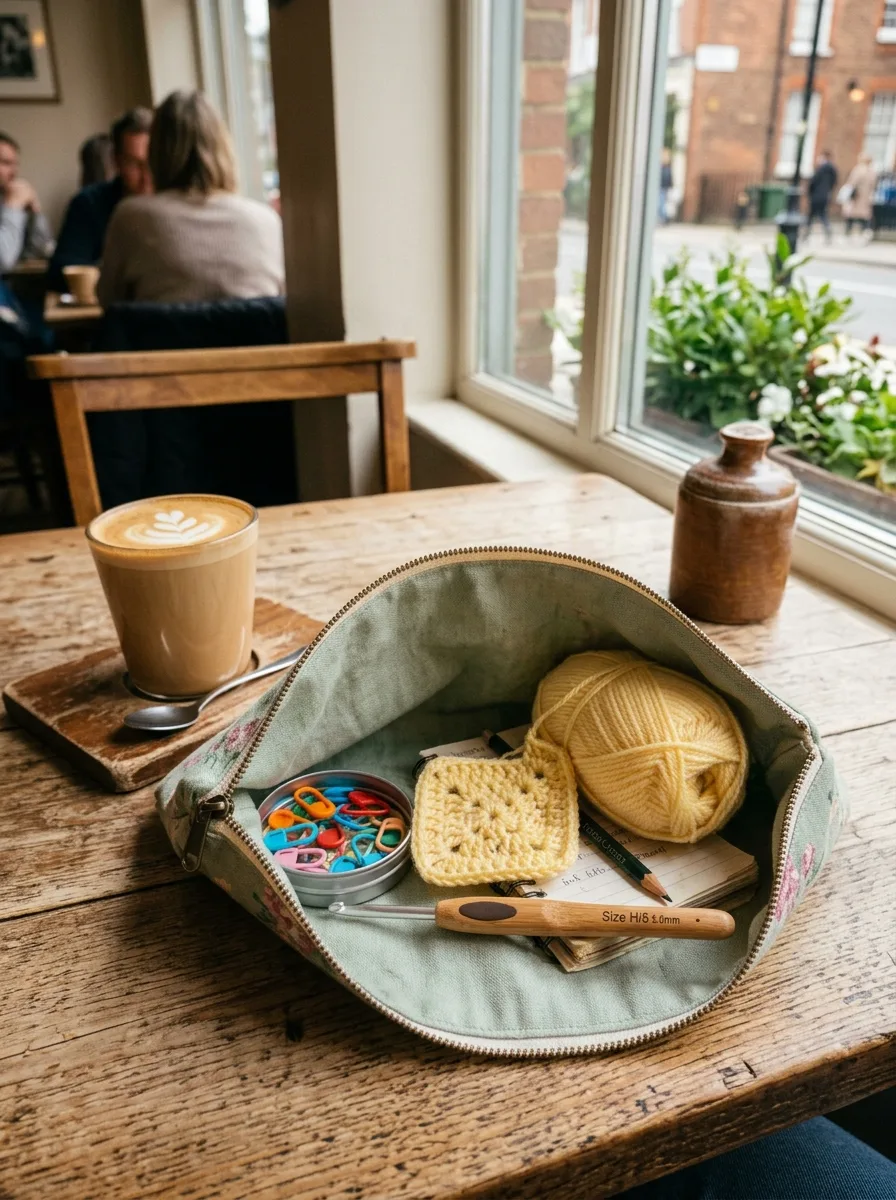
Locking stitch markers are the cheapest upgrade in crochet: they mark round starts, repeats, and your place.
Locking stitch markers (smsm = stitch markerUK: stitch markerA removable clip marking the first stitch of a round or a key point in the pattern.). They mark the first stitch of a round, the end of a repeat, or your place when you put the project down. They’re essential for amigurumi.
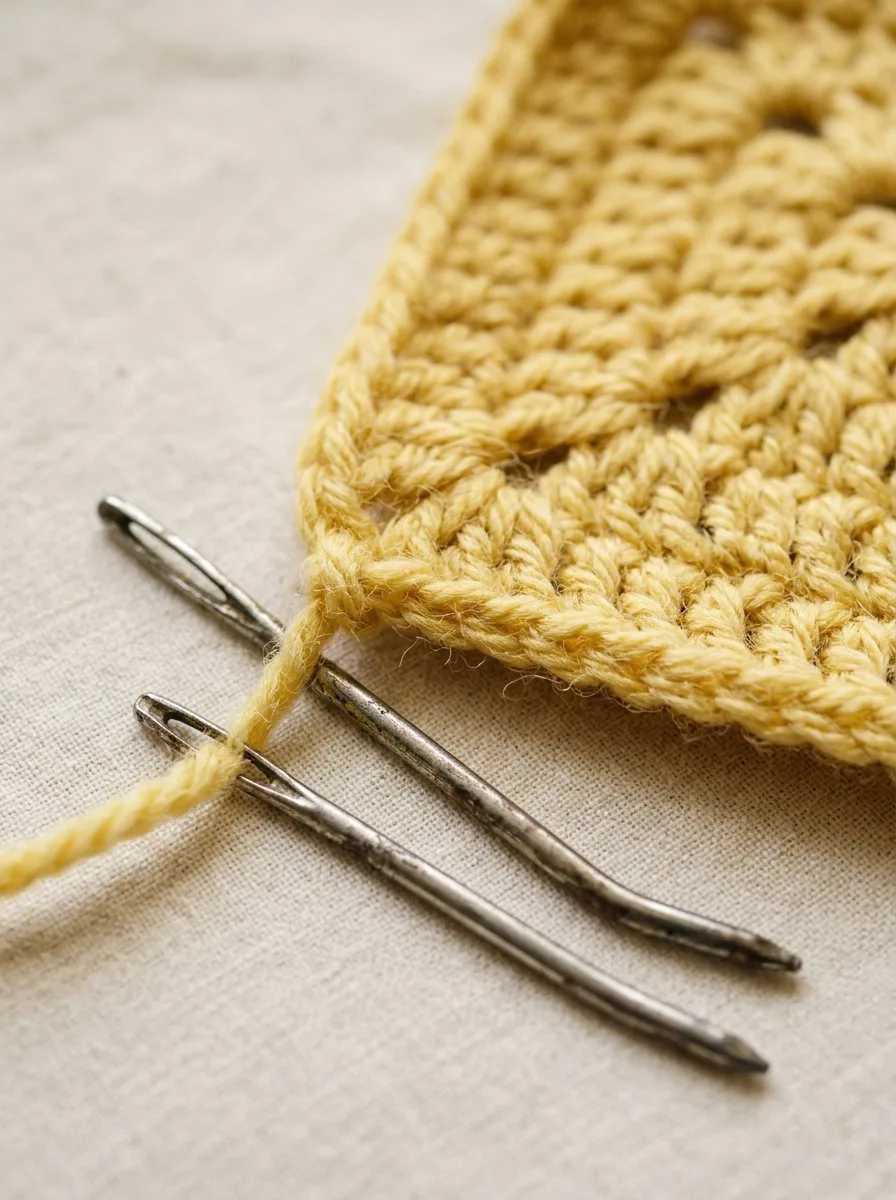
A blunt tapestry needle, ideally with a bent tip, for weaving in ends and sewing pieces together.
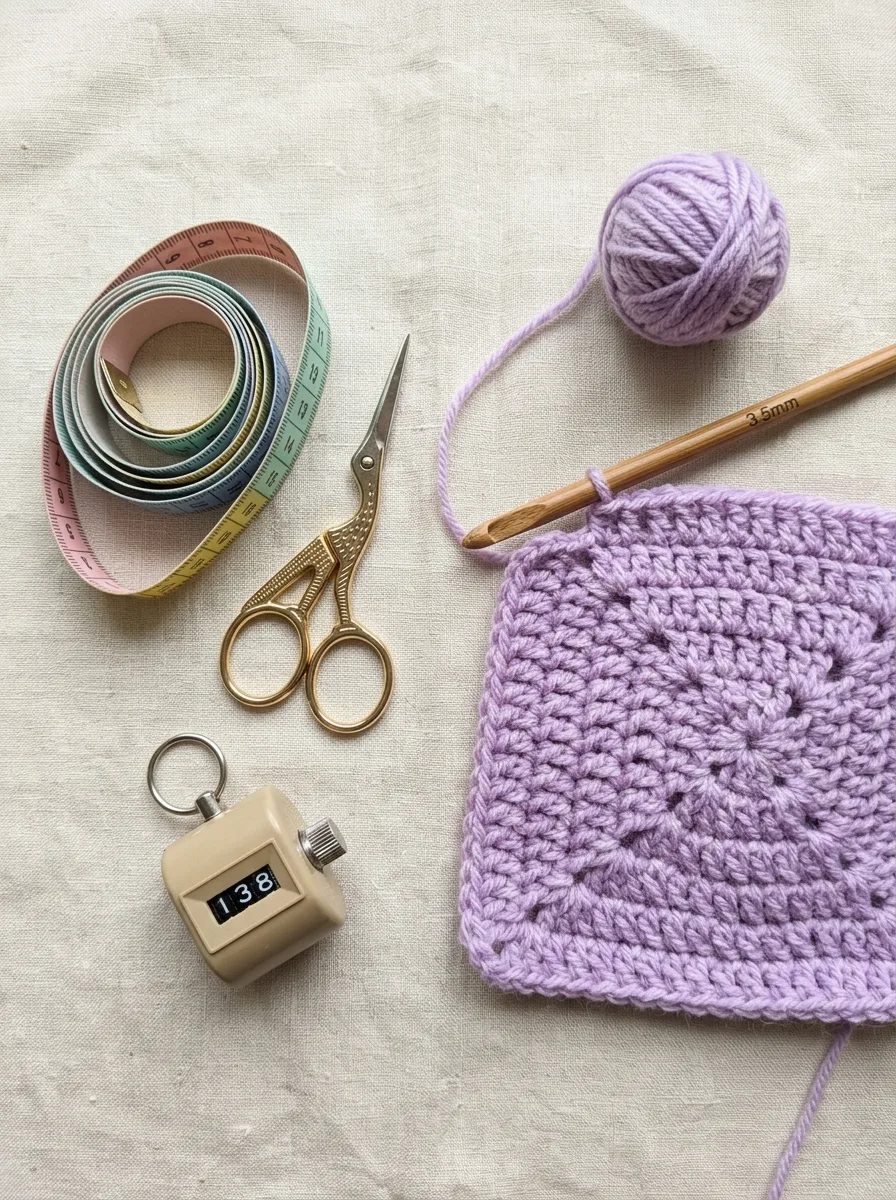
A tape measure for gauge, sharp small scissors, and (optionally) a row counter. That's the whole kit.
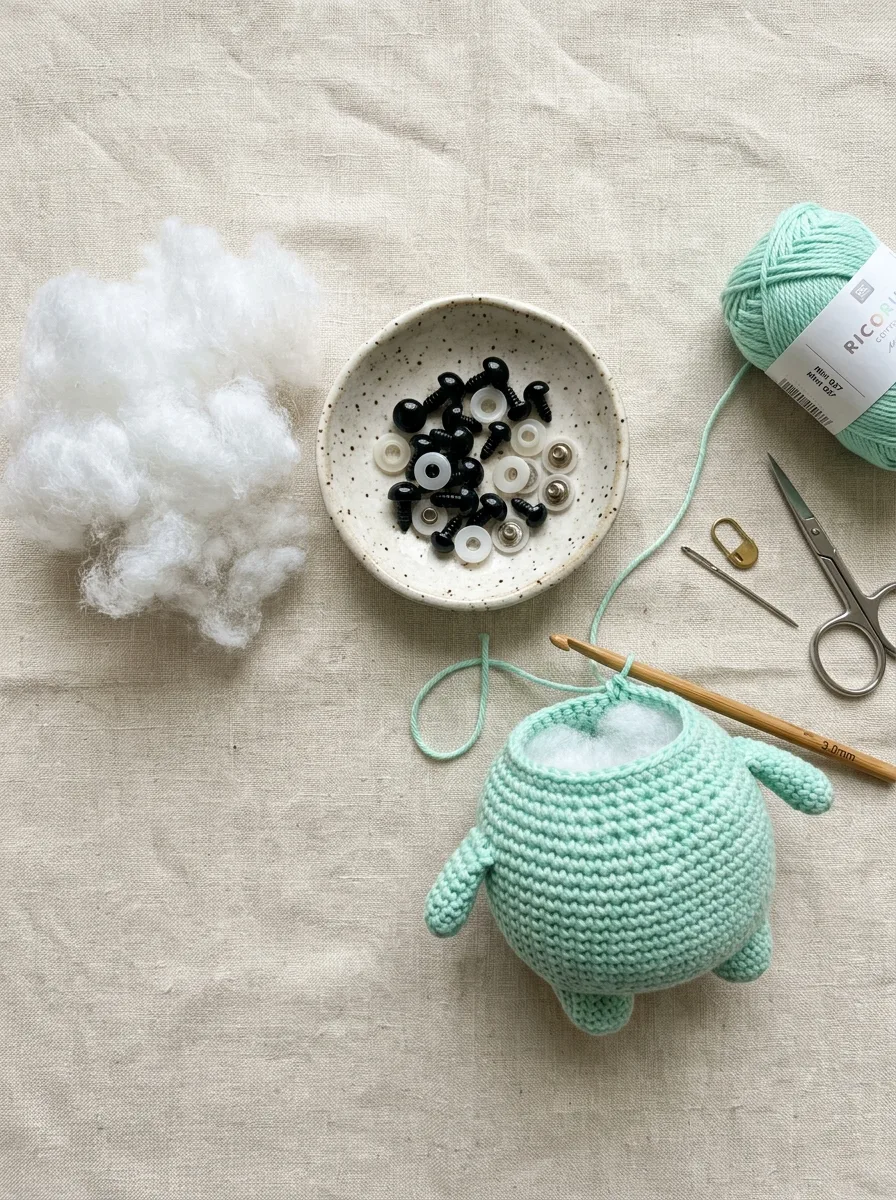
For amigurumi only: polyester fiberfill and safety eyes. On anything for babies or small children, embroider the eyes instead: safety eyes can be a choking hazard.
Only for amigurumi: polyester fiberfill and safety eyes. Skip safety eyes on anything for babies and embroider instead.
A row counter is nice but optional. On this site, every pattern has a built-in row tracker that remembers your progress, so your phone can do that job.
What NOT to Buy Yet
A 30-piece hook set. Buy sizes as patterns ask for them.
Yarn winders and swifts. They’re lovely for hand-dyed skeins, but pointless for balls from the store.
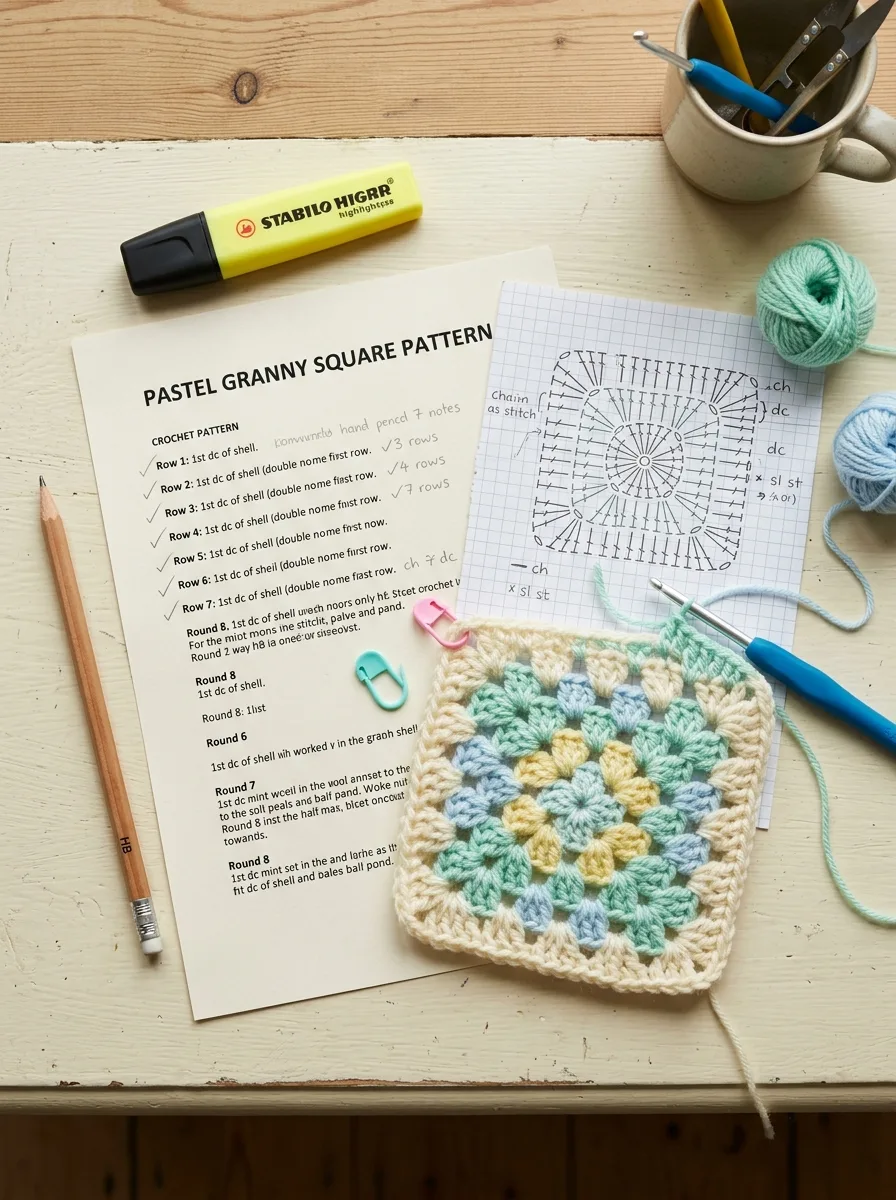
Blocking mats. Useful later for granny squares and shawls; a towel and pins work fine for now.
A smooth, light-colored worsted-weight (#4) cotton or acrylic. It's thick enough to see each stitch, doesn't split easily, and holds its shape so you can spot mistakes. Avoid fuzzy, dark, or novelty yarns for your first few projects.
What size crochet hook should I start with?
A 5 mm (US H-8) or 5.5 mm (US I-9) hook for worsted yarn. If you'll mostly make amigurumi or keychains, a 3.5 mm hook with DK cotton is the classic combination.
No, but if your hand or wrist aches after 20 minutes, an ergonomic handle is the most effective upgrade you can make. Many crocheters buy one ergonomic hook in their most-used size and keep cheap aluminium hooks for the rest.
Why do yarn labels list a knitting needle size too?
Many labels are written for knitters first. Look for the small crochet hook icon; if it's missing, use the chart in this article. Crochet generally uses a hook about 0.5–1 mm larger than the listed knitting needle.
Can I mix different yarns in one project?
Yes, as long as they're the same weight and care instructions. Mixing a machine-washable acrylic with a wool that felts in the wash will distort the piece the first time you clean it.