Crochet Cardigan & Sweater Ideas: Granny, Hexagon, Chunky & More
Crochet cardigan and sweater ideas explained by construction: granny square, hexagon, rectangle, top-down, and chunky, with yarn, fit, and first-garment advice.
A crochet cardigan or sweater is the project most crocheters dream about, and the one that feels most intimidating. The secret is that nearly every crochet cardigan is built from a few simple shapes. Once you understand the construction, choosing (and finishing) your first garment gets much easier. Here are the main crochet cardigan and sweater styles, grouped by how they’re made.
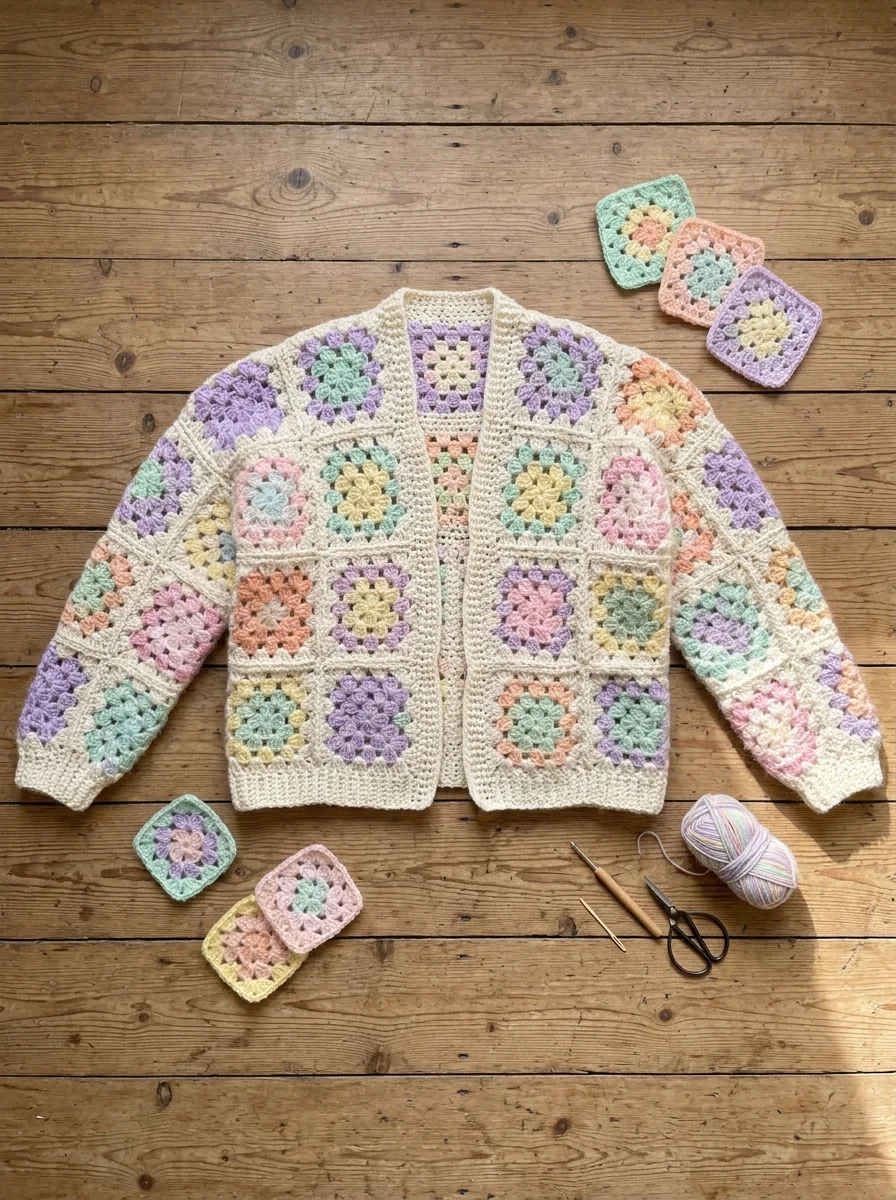
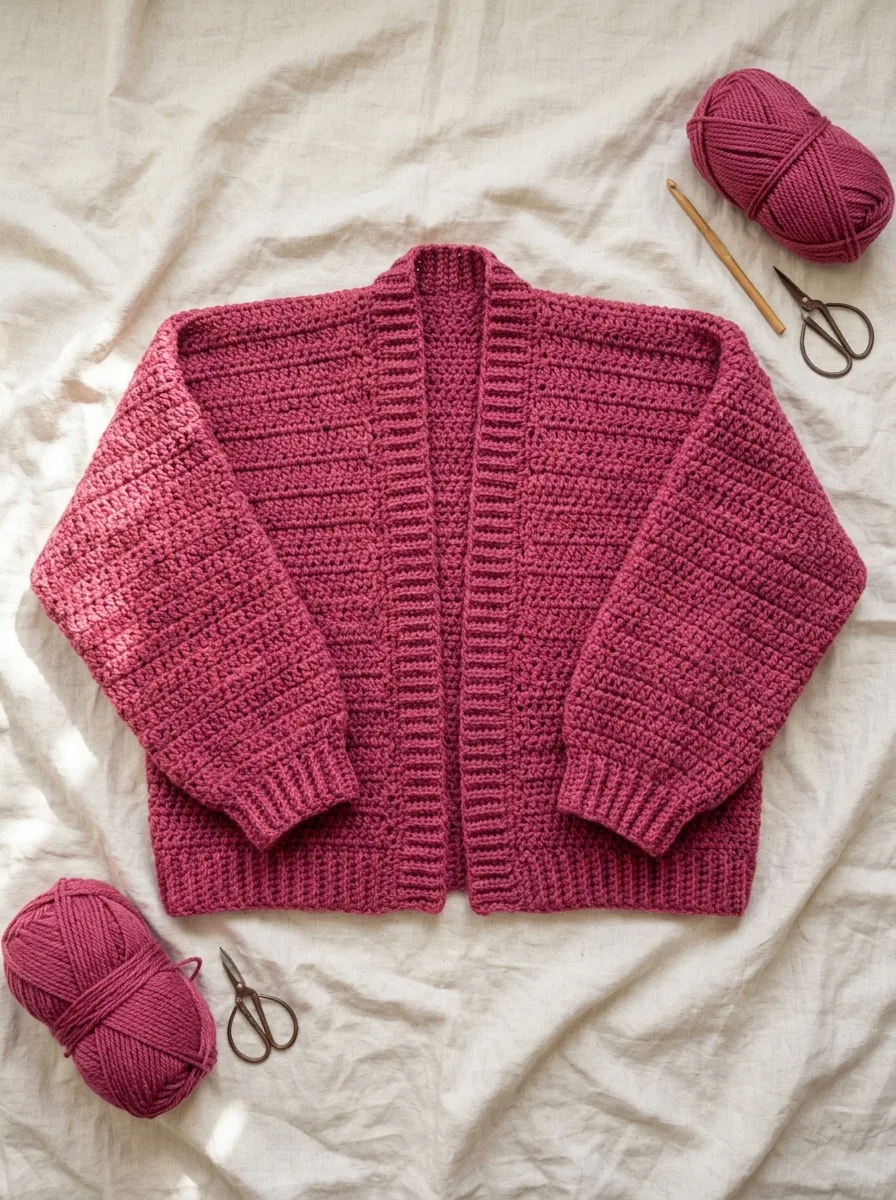
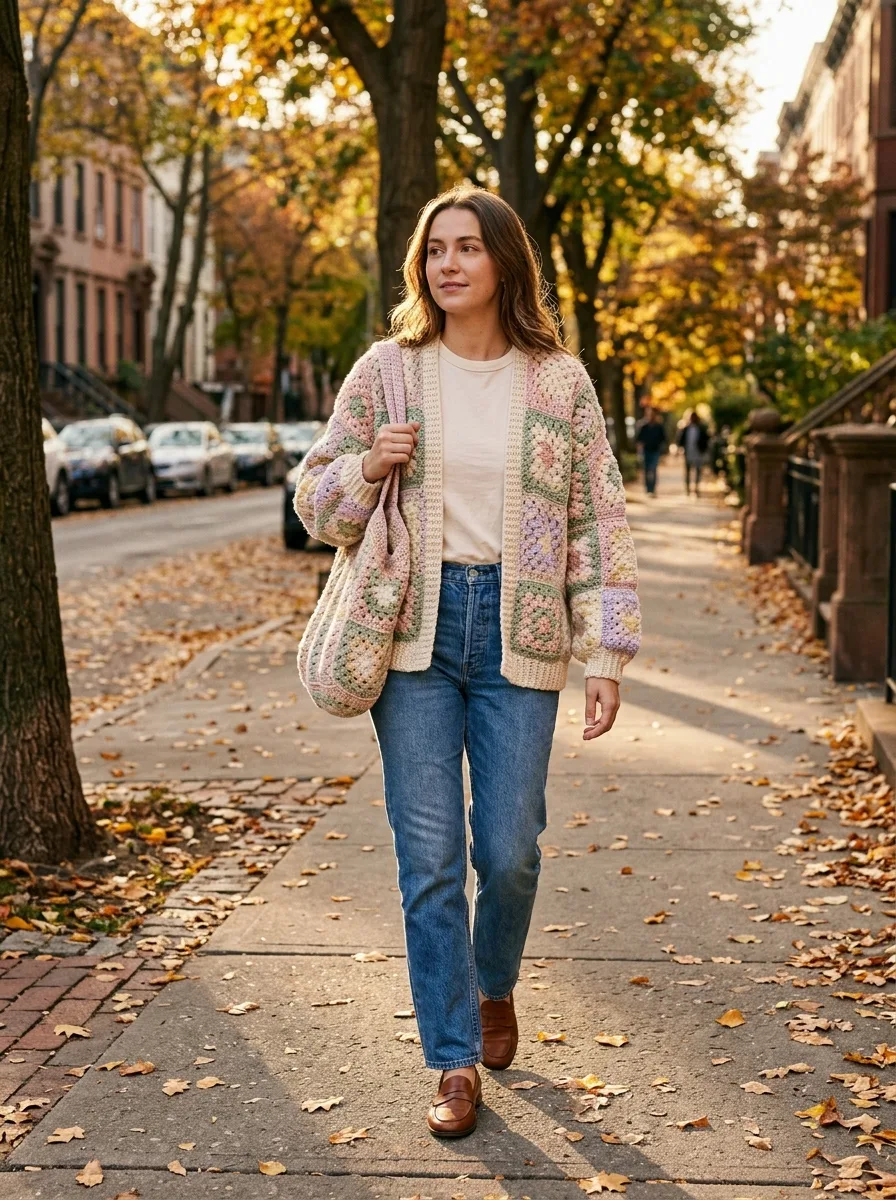
The granny square cardigan, laid flat: it's squares arranged in a T-shape and joined.
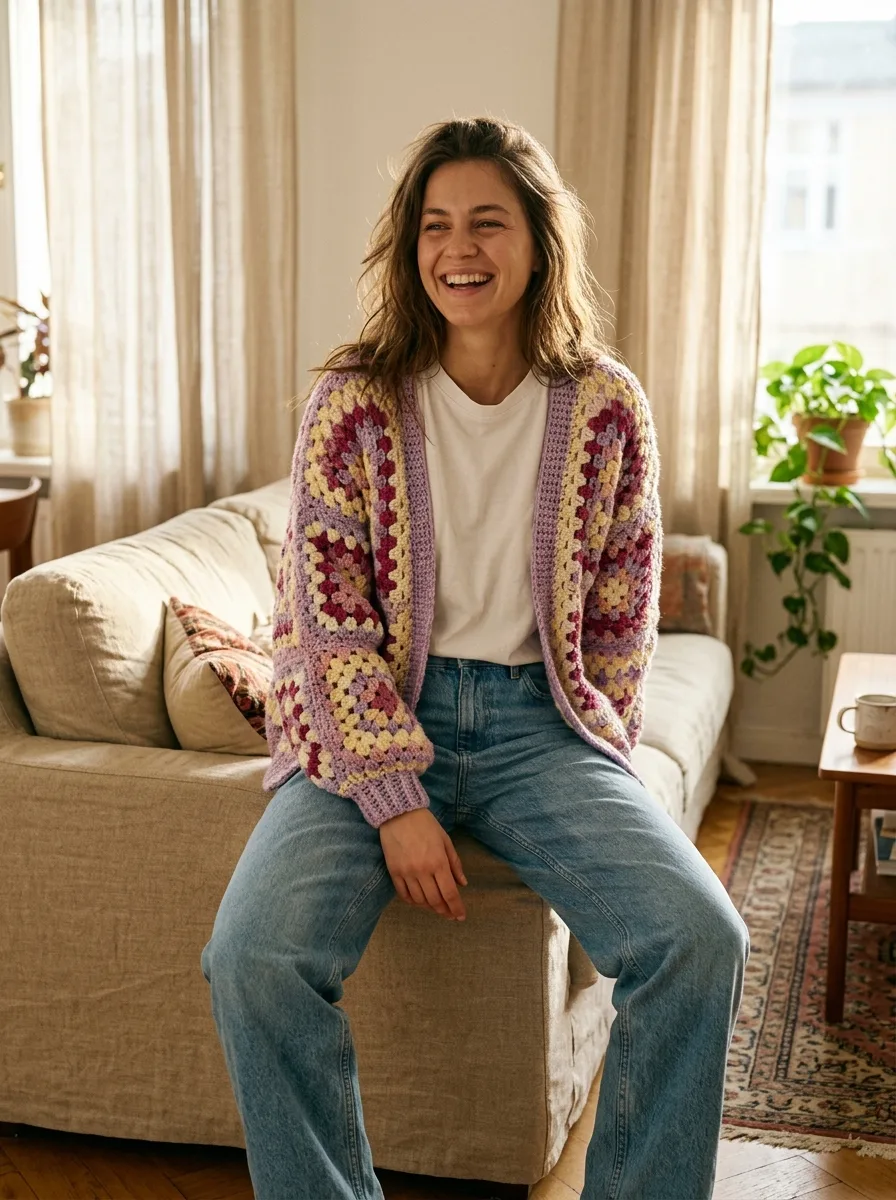
The most-saved crochet garment on Pinterest is really a clever arrangement of squares. Squares are joined into a T-shape: a back, two front panels, and two sleeves. Then a ribbed band goes around the front opening.
Why it’s beginner-friendly: every piece is a classic granny square, which is portable, quick, and satisfying. Sizing comes down to square size and number.
The Hexagon Cardigan
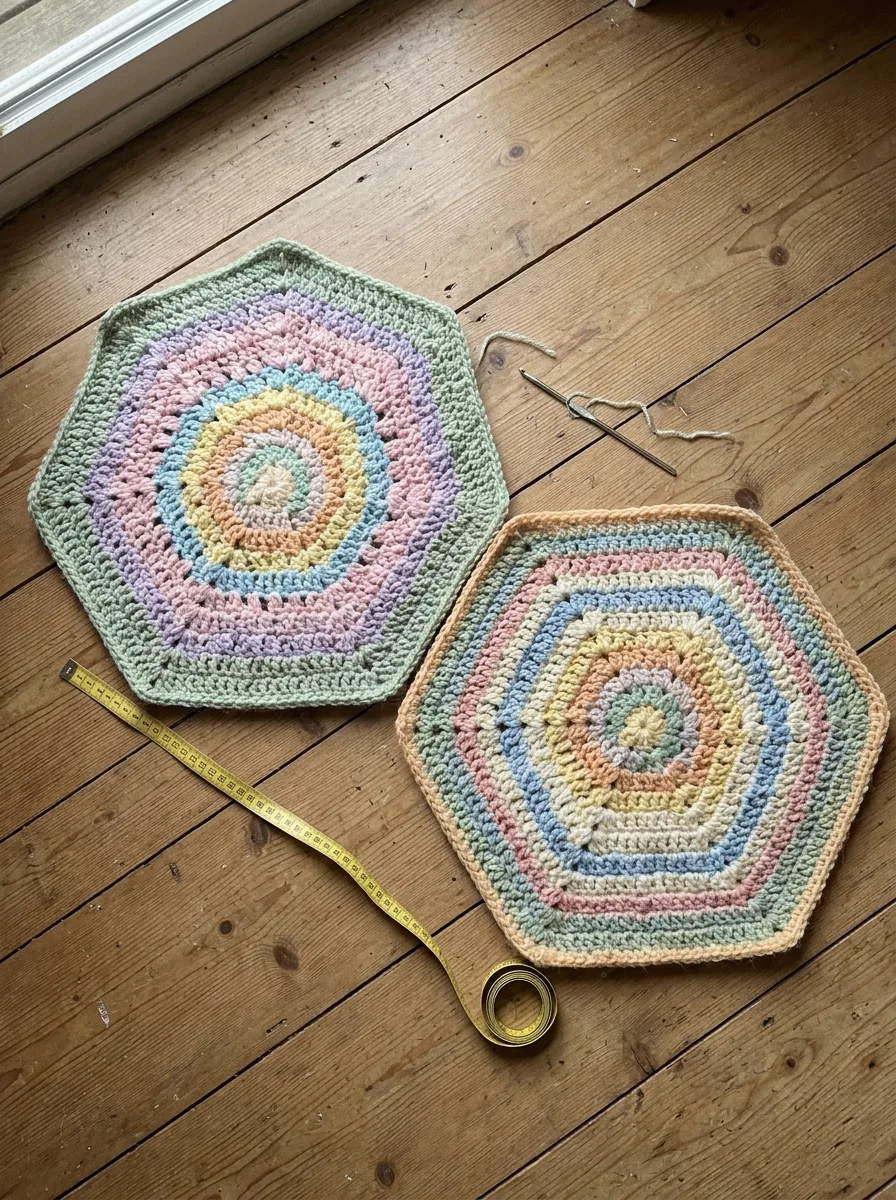
The hexagon cardigan went viral because it seems like magic: it’s made from just two large hexagons.
The hexagon cardigan starts as two big hexagons. Fold, seam, and they become a cardigan.
Each hexagon is worked in rounds (like a granny square with six corners) until it reaches a target size. Each one is then folded, and specific edges are seamed so that one part becomes the sleeve and the rest becomes half of the body. Ribbing is added at the cuffs, the hem, and around the front.
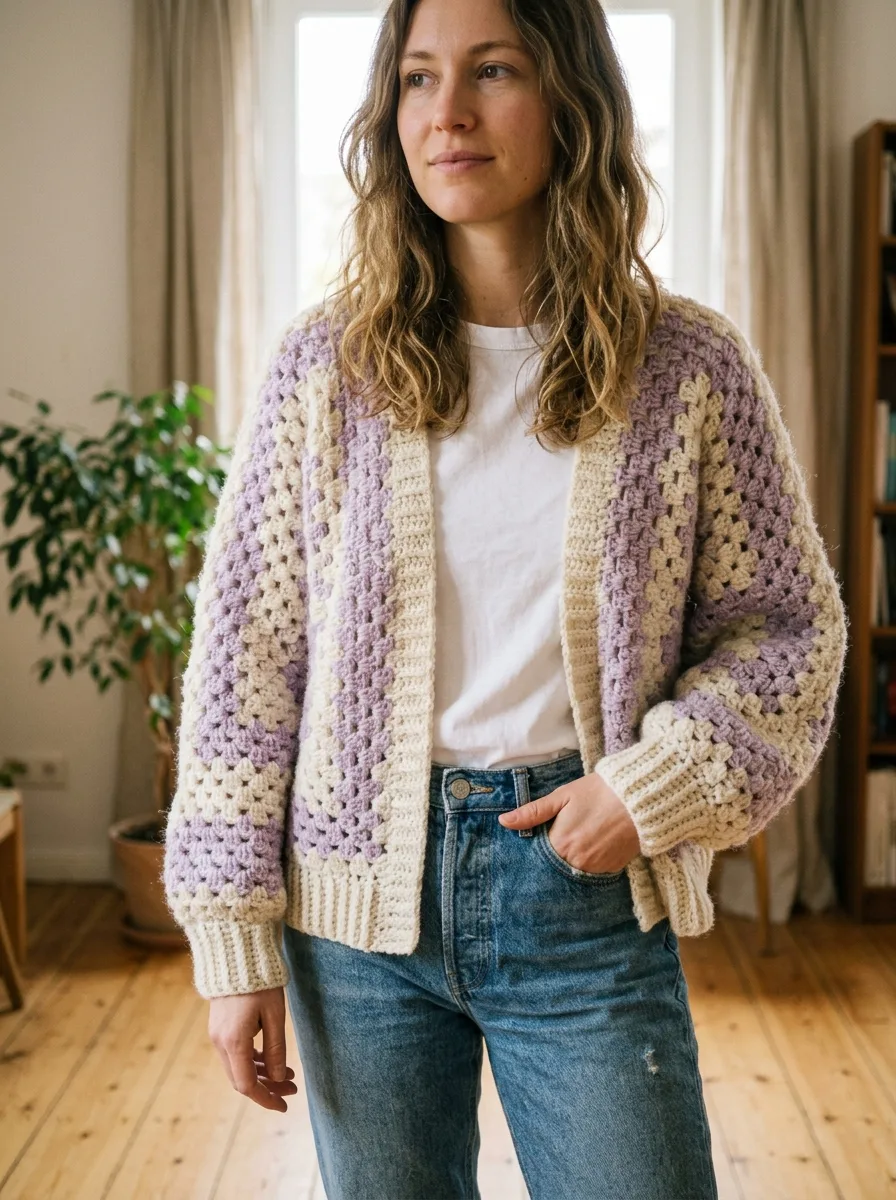
Worn, the hexagon construction makes a cocoon shape with slouchy sleeves.
Tips: follow a pattern with a folding diagram the first time. Mark the seam edges with contrast yarn before you sew, and don’t skip the gauge swatch: hexagon size decides the entire fit.
Rectangle (Drop-Shoulder) Cardigans
The simplest garment construction of all: a back rectangle, two front rectangles, and two sleeve rectangles (or tapered trapezoids), all seamed together.
Rectangle cardigans: body panels plus two rectangle sleeves. It's the easiest sweater shape.
Use the sizing formula from our crochet top guide (width × stitches per 10 cm) to size each panel for your measurements. It’s the best first-sweater construction if you want to understand fit.
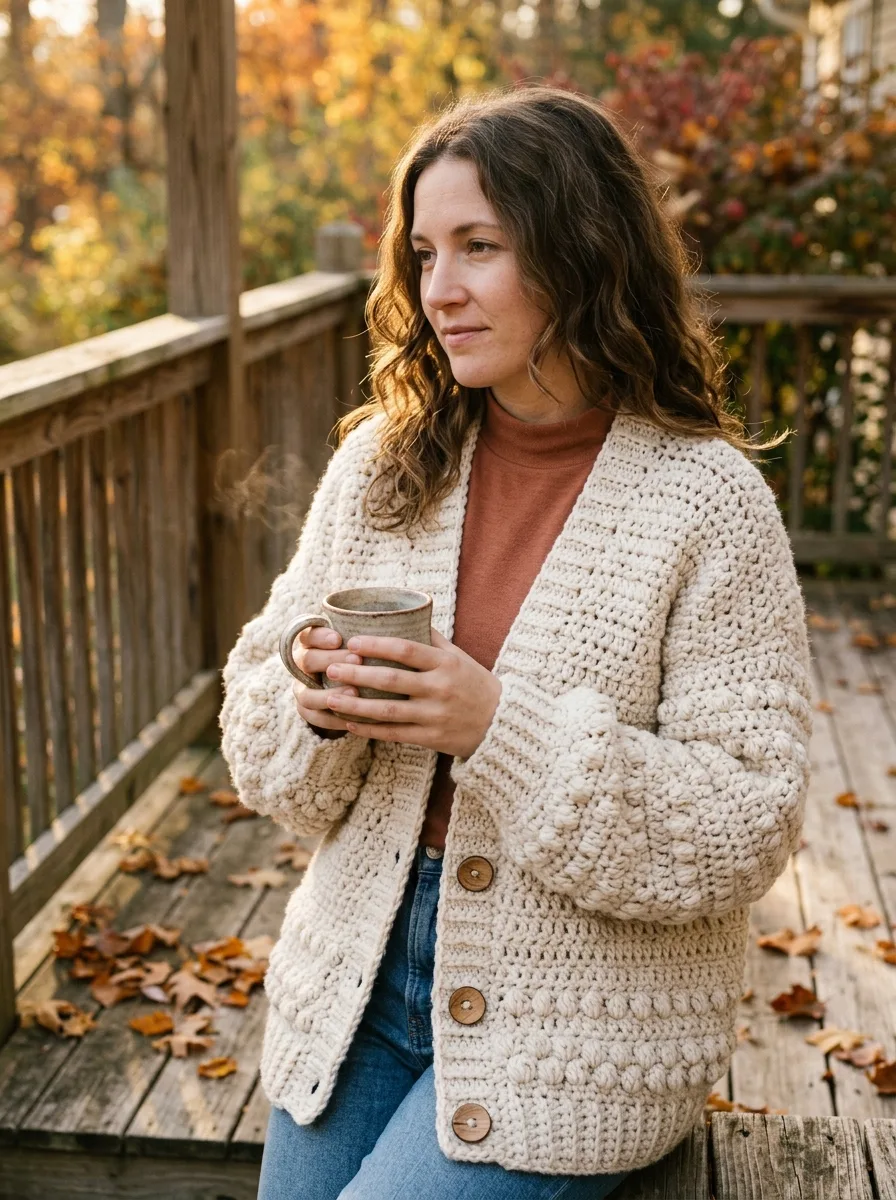
Chunky cardigans in bulky yarn grow fast and are wonderfully cozy.
Bulky or super bulky yarn with a big hook makes a cardigan grow incredibly fast, often in a week or two of evenings. Chunky yarns suit simple stitches like hdchdc = half double crochetUK: half treble (htr)Yarn over, insert hook, pull up a loop (3 loops), yarn over, pull through all three. or moss stitch, and big wooden buttons.
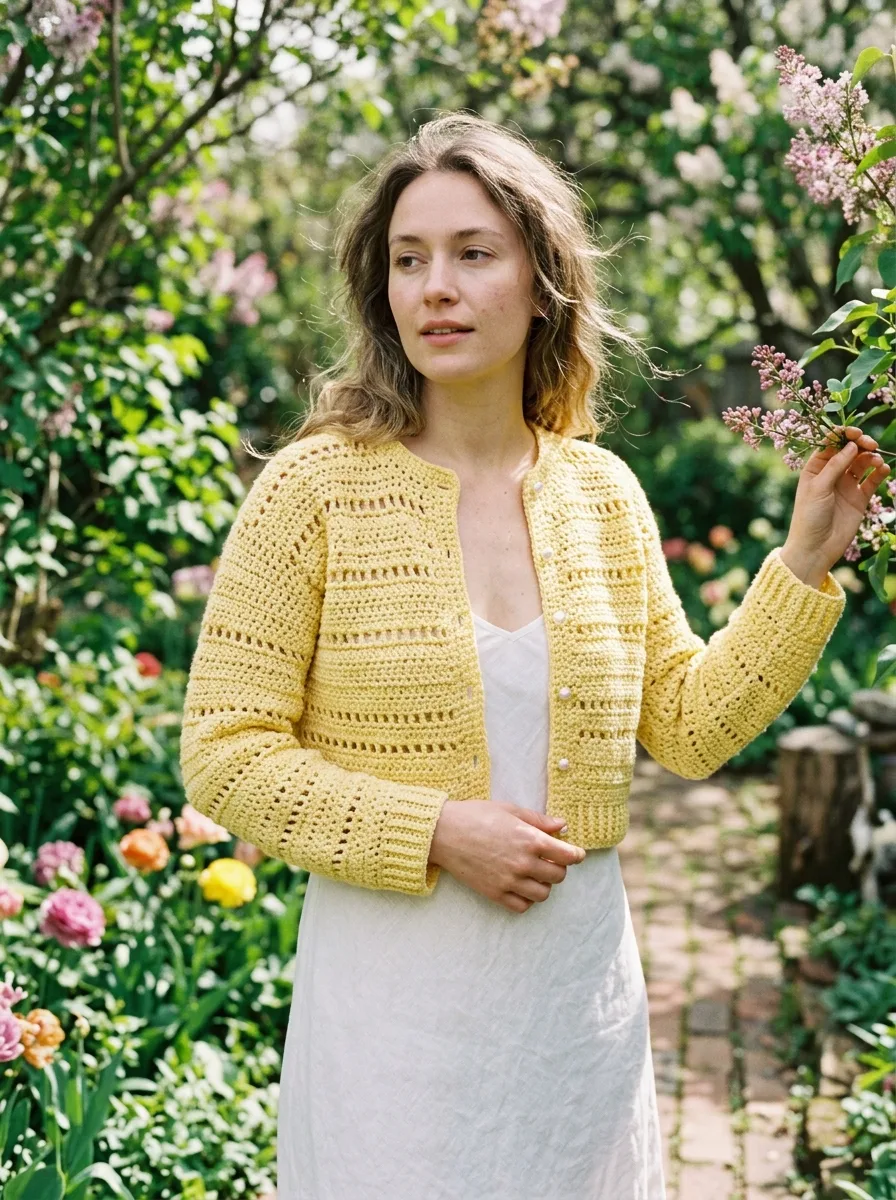
Cropped cardigans use less yarn and look great over dresses.
Cropped cardigans use less yarn and look lovely over dresses. Shrugs, which are basically just sleeves and a back, are an even smaller first garment.
Finishing Details That Make It Look Professional
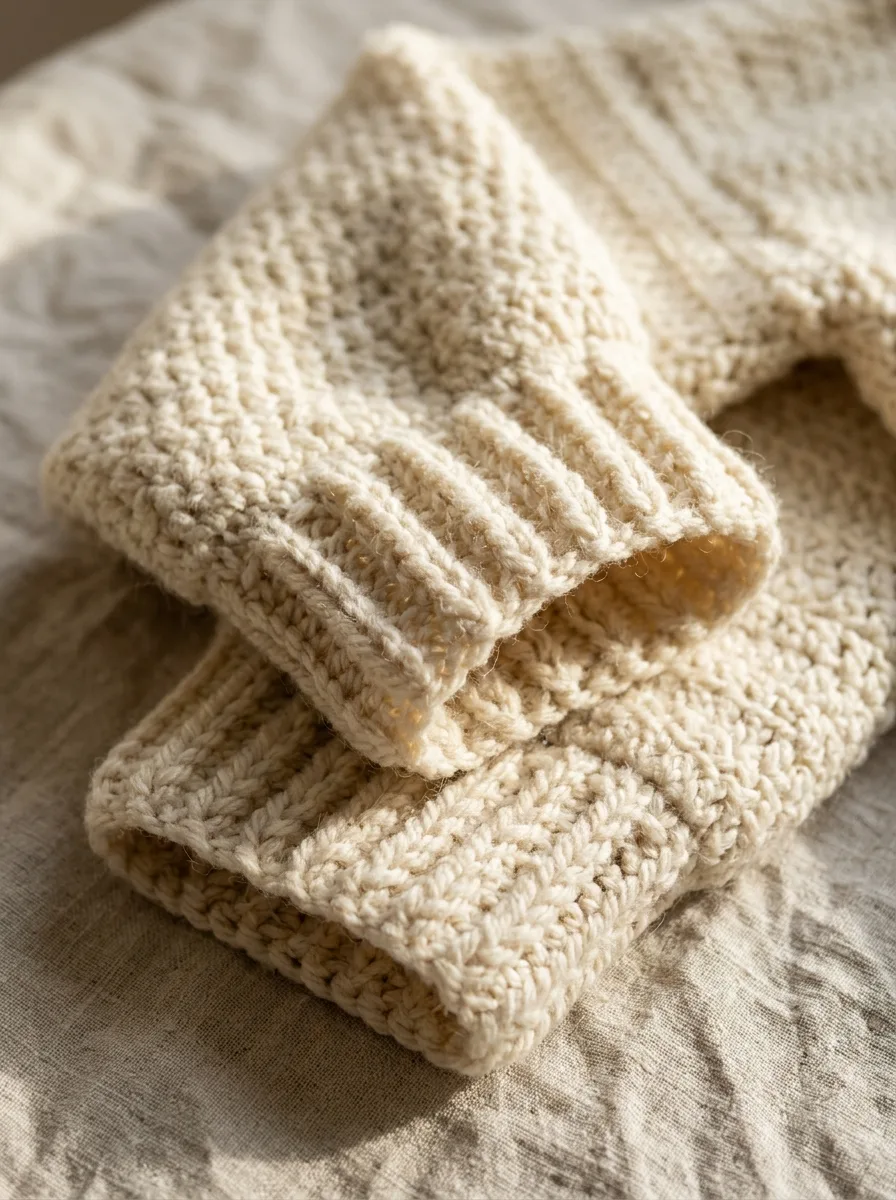
Ribbing. Alternate FPdcFPdc = front post double crochetUK: front post treble (FPtr)Work a dc around the post of the stitch from the front instead of into its top. Makes raised ribbing and cables. and BPdcBPdc = back post double crochetUK: back post treble (BPtr)Work a dc around the post of the stitch from the back. Pair it with FPdc for stretchy ribbing. for stretchy, knit-looking cuffs and hems. Or work rows of sc in the BLOBLO = back loop onlyUK: back loop onlyInsert your hook under only the back loop of the stitch. Creates a ridge and a stretchy, ribbed texture. sideways for a flatter rib.
Post-stitch ribbing on cuffs and hems makes crochet garments look polished.
Buttons and bands. A front band worked in sc gives buttons something firm to hold. Space buttonholes evenly using stitch markers first.
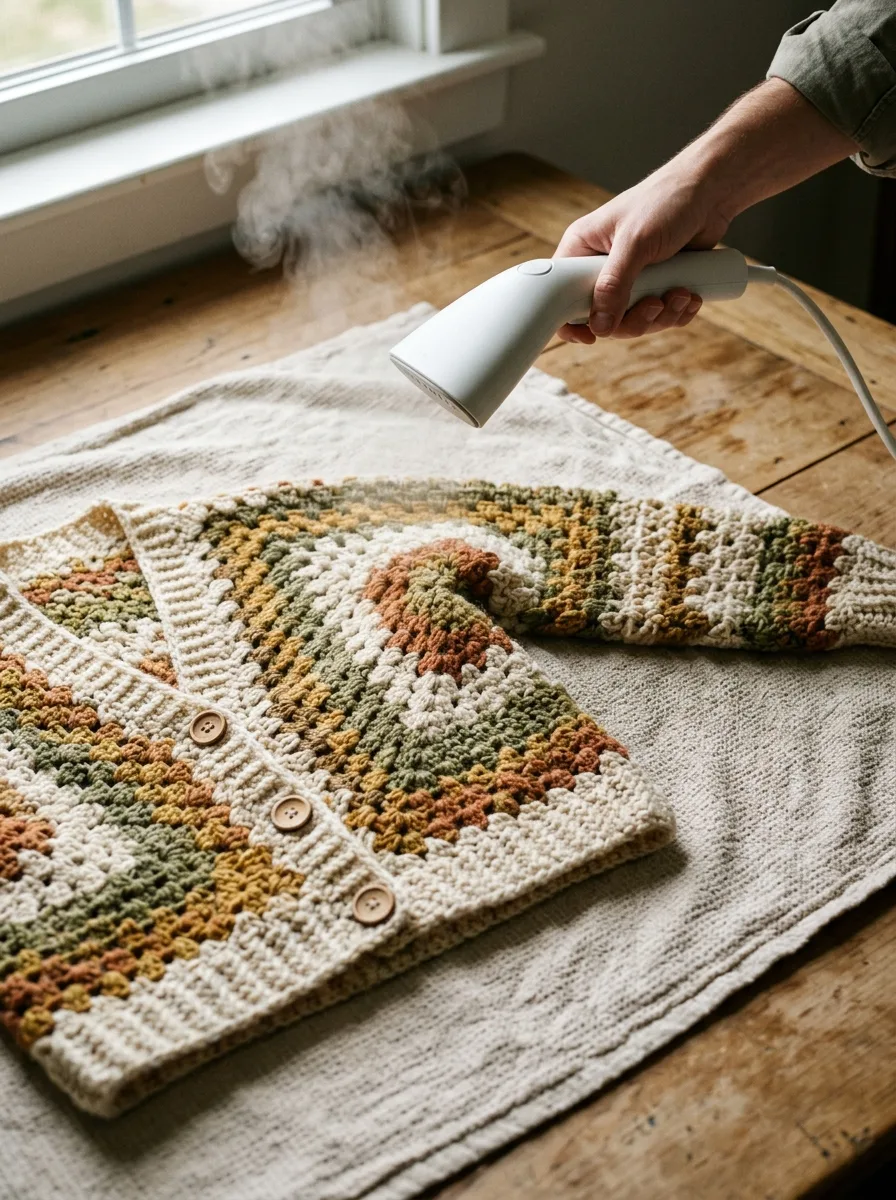
Blocking. Lay the finished cardigan flat, gently steam (hover, don’t press) or wet-block, and let it dry completely. It evens the stitches and relaxes the drape.
What's the easiest crochet cardigan for a beginner?
A rectangle (drop-shoulder) cardigan or a granny square cardigan. Both are made of simple flat shapes with no complicated shaping. The hexagon cardigan is also beginner-friendly, but it's harder to visualize, so follow a pattern with a diagram the first time.
Typically 1,000–1,800 m of worsted weight for an adult cardigan, depending on size, length, and stitch. Chunky cardigans use fewer meters but more weight. Always buy the pattern's amount plus one extra skein from the same dye lot.
How do I make sure my crochet sweater fits?
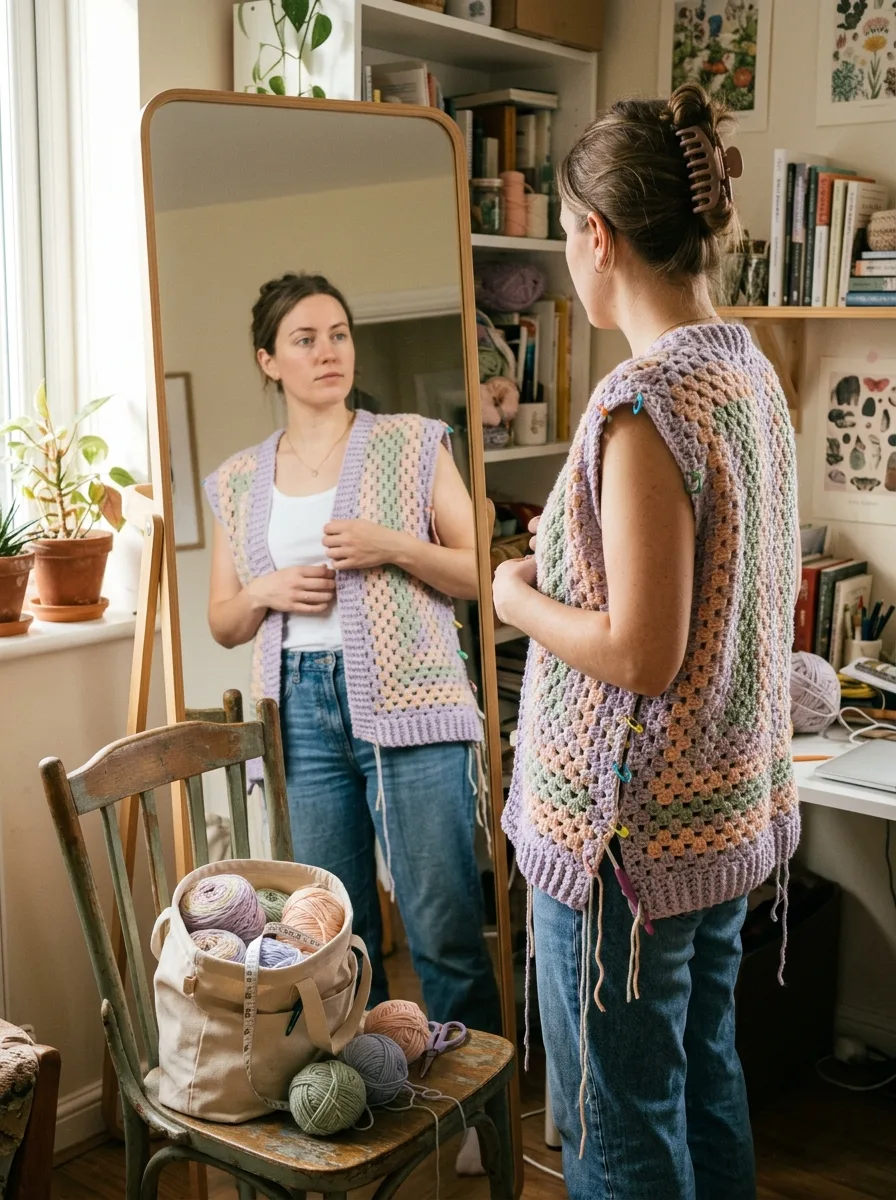
Make and wash a gauge swatch, choose your size by finished measurement (not body measurement), and try the garment on as you go. Crochet garments are easy to adjust: add or remove rows before seaming.
Yes, especially in wool blends and dense stitches like half double crochet, moss stitch, or waffle stitch. Very open, lacy stitches are more of a layering piece.
What's the best yarn for a crochet cardigan?
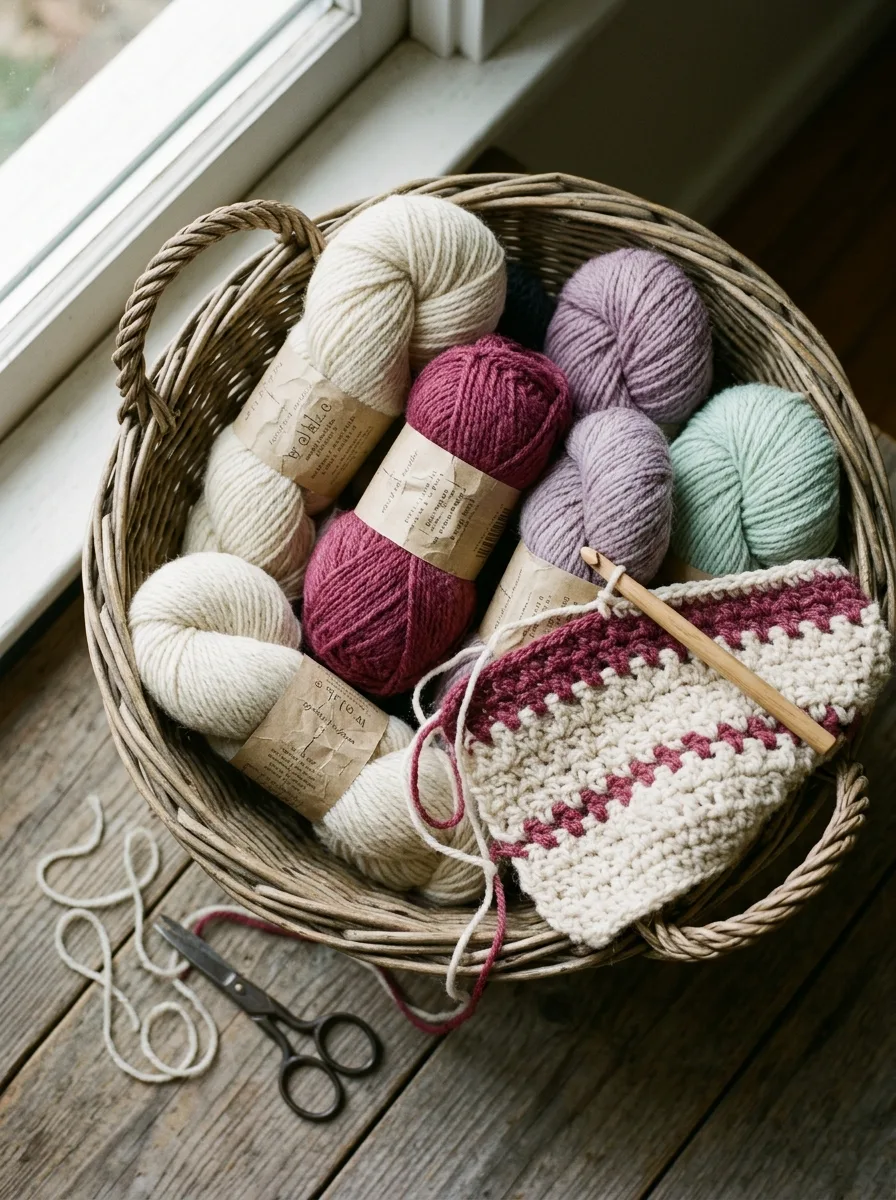
A soft wool blend or superwash wool for warmth and bounce, or a quality acrylic for easy care. Cotton cardigans are lovely for spring but heavier and can stretch lengthwise. Choose a smooth yarn in a light color for your first garment.