Tapestry Crochet for Beginners: Technique, Charts & a Free Practice Pattern
Learn tapestry crochet step by step: carrying yarn, clean color changes, reading grid charts, plus a free checkerboard pattern and ideas for bags and wall hangings.
Tapestry crochet is the technique behind those bold, graphic crochet bags and wall hangings: hearts, checkerboards, mountains, and lettering in crisp color blocks. It’s all scsc = single crochetUK: double crochet (dc)Insert hook, yarn over, pull up a loop (2 loops), yarn over, pull through both. The shortest, densest basic stitch., with one extra idea: you carry the unused color inside your stitches, so there are no loose strands on the back. Once that clicks, you can crochet any design you can draw on graph paper.
Two colors of smooth cotton, a slightly small hook, and a chart. That's all tapestry needs.
Smooth cotton in two contrasting colors. Cotton gives crisp edges, and high contrast makes the pattern pop.
A hook half a size smaller than usual. Tight stitches hide the carried yarn better.
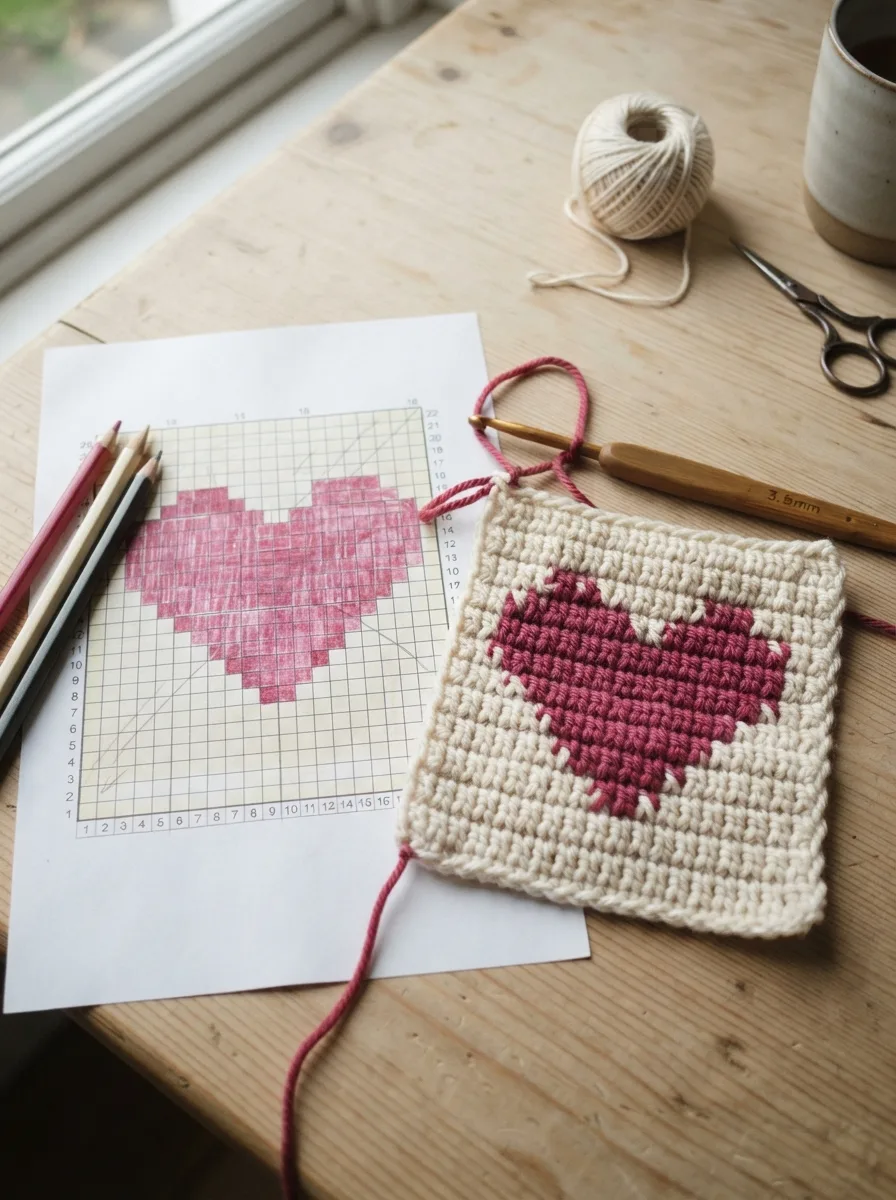
A grid chart. Graph paper and colored pencils are enough to design your own.
Technique 1: Carrying the Yarn
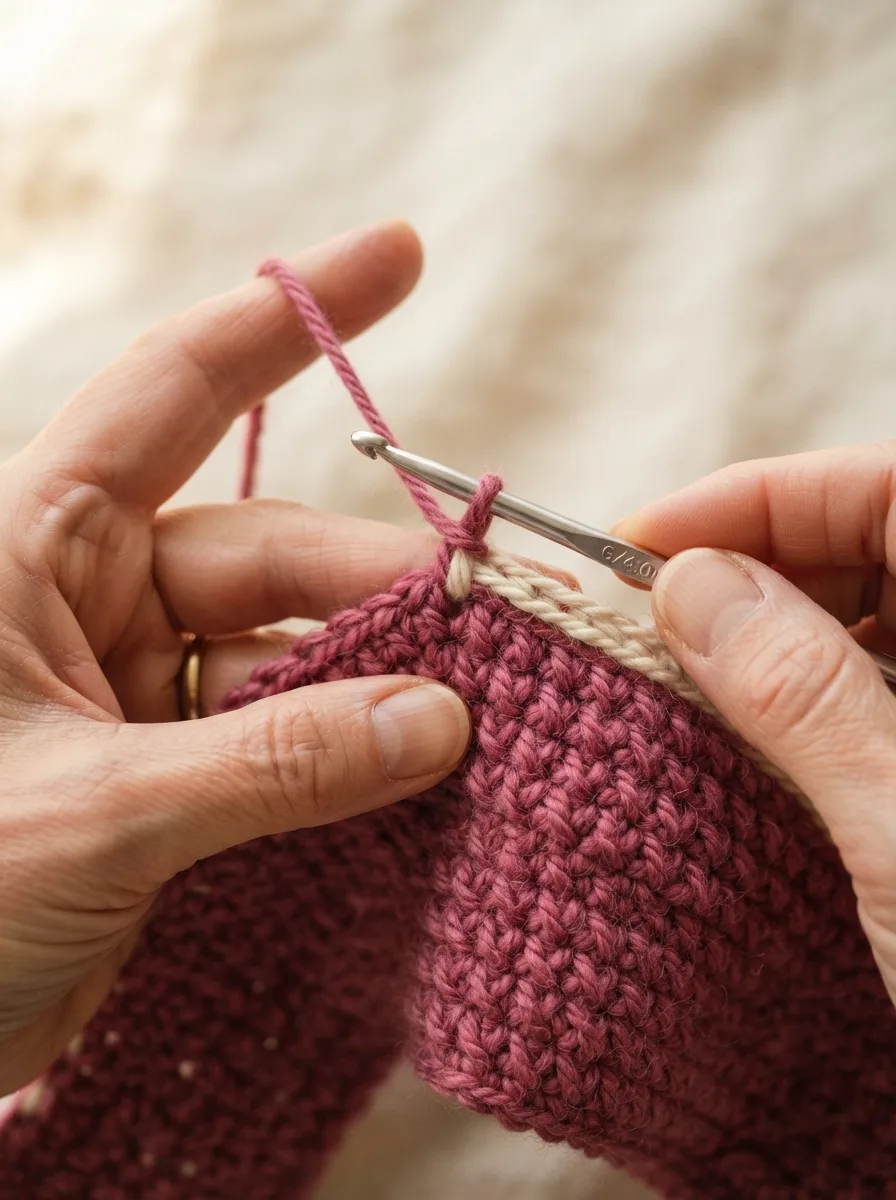
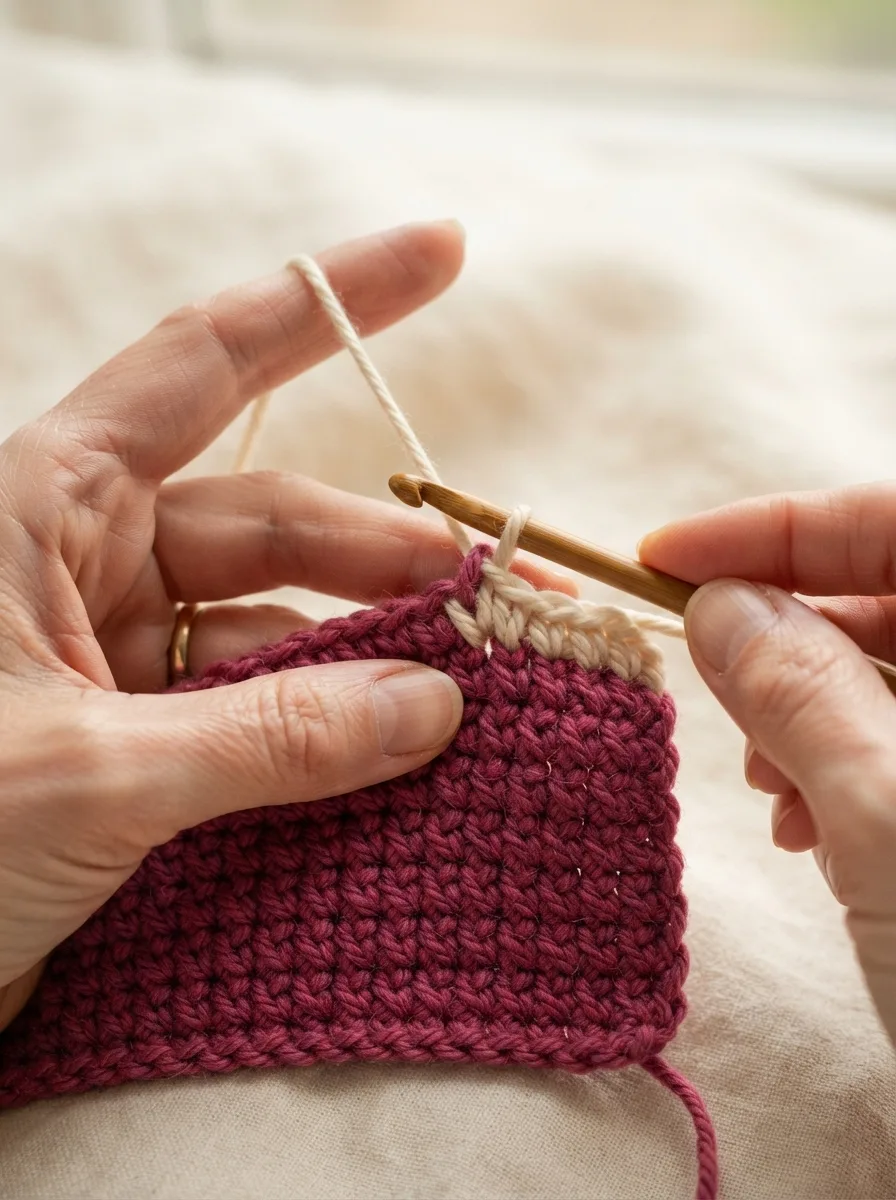
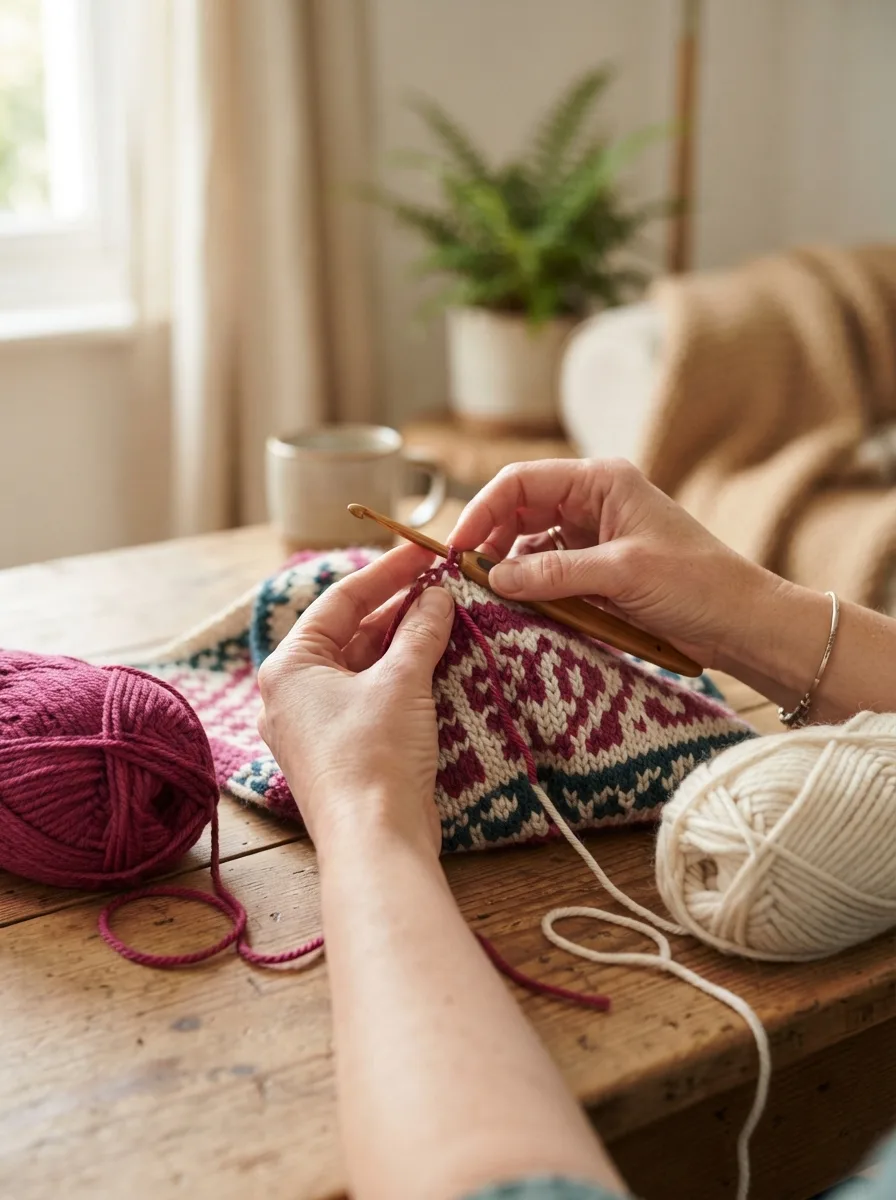
While you work with color A, lay color B along the top of the row you’re working into, and crochet right over it. Your stitches wrap around the carried strand and hide it.
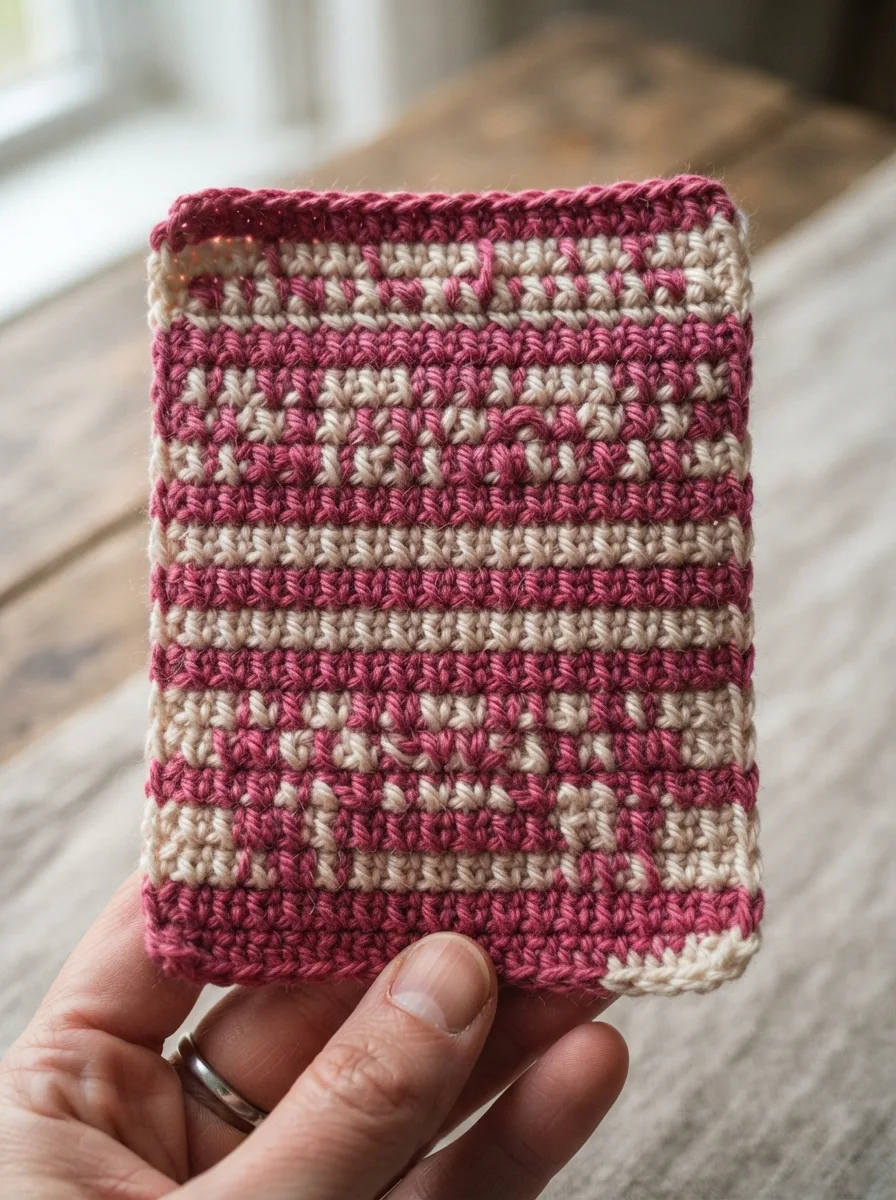
Flip it over: no loose floats. That's what makes tapestry crochet sturdy enough for bags.
Technique 3: Straighter Stitches
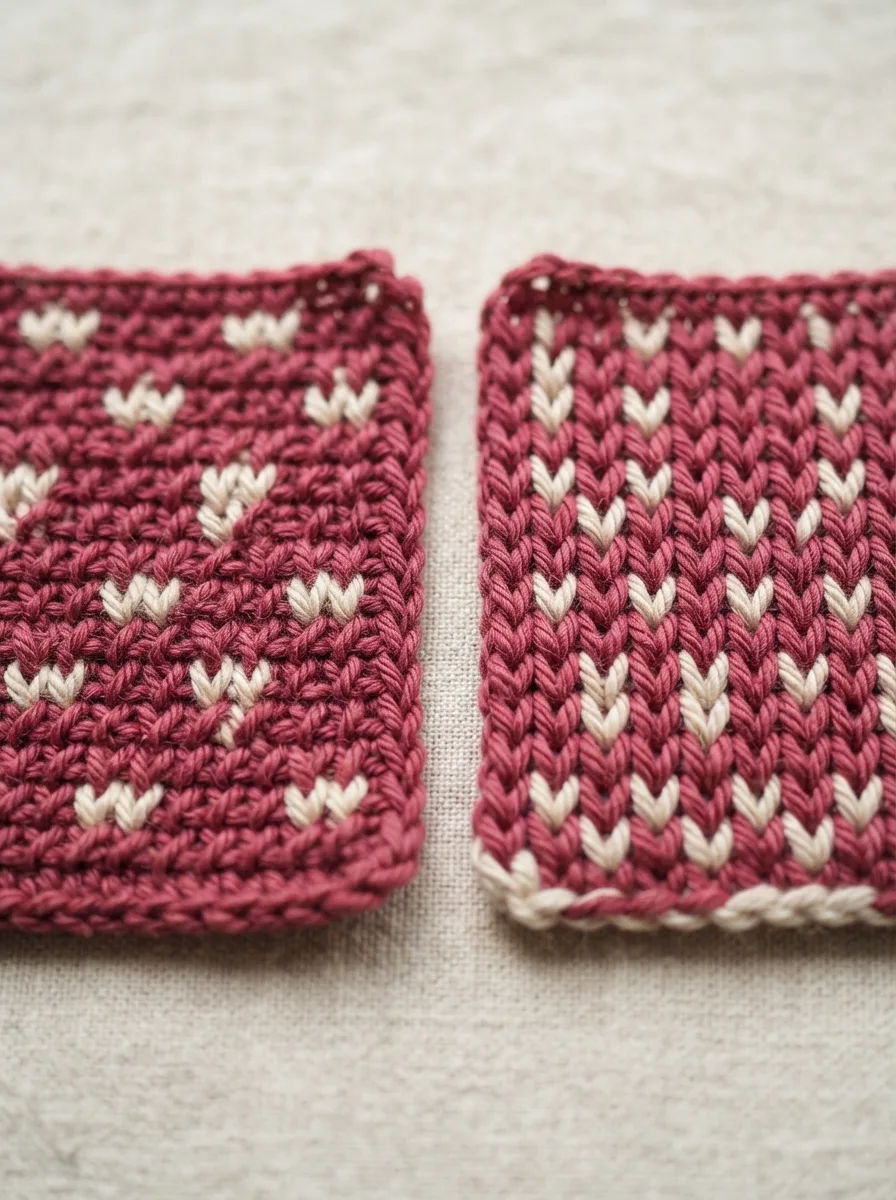
Tapestry stitches naturally lean slightly. That’s fine for most projects, but for crisp vertical lines try working in the BLOBLO = back loop onlyUK: back loop onlyInsert your hook under only the back loop of the stitch. Creates a ridge and a stretchy, ribbed texture. or inserting your hook between the two legs of the stitch below (the “waistcoat” or “center” single crochet).
Tapestry stitches naturally lean. Working in the back loop or using a 'waistcoat' insertion straightens them.
Free Practice Pattern: Checkerboard Coaster
This small coaster teaches everything: carrying, clean color changes, and the golden rule of tapestry crochet, “work each stitch in the same color as the stitch below it.”
Tick as you go
Tapestry Checkerboard Coaster
0 / 12 done
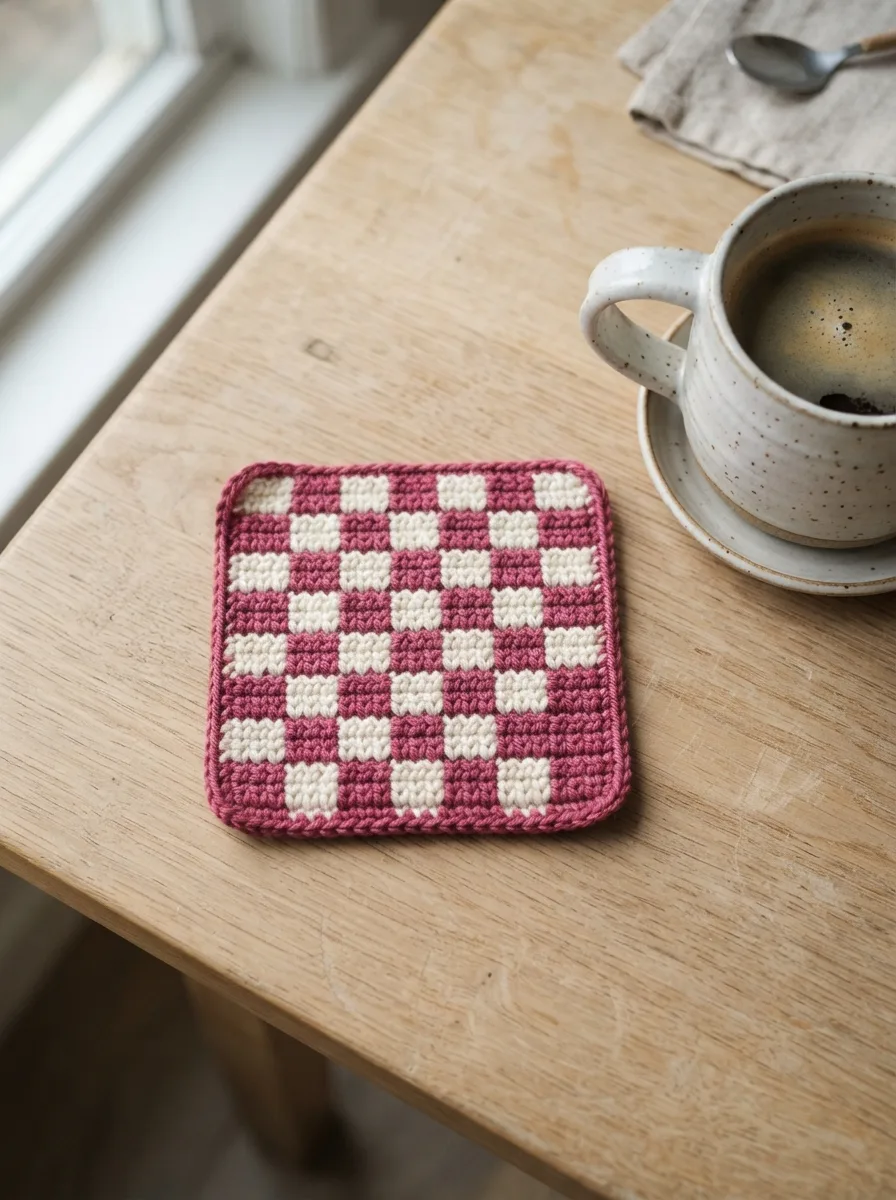
You'll have 5 bands of 4 rows each, for a 6 × 5 checkerboard. Change color on the final yarn over of the stitch before each new block.
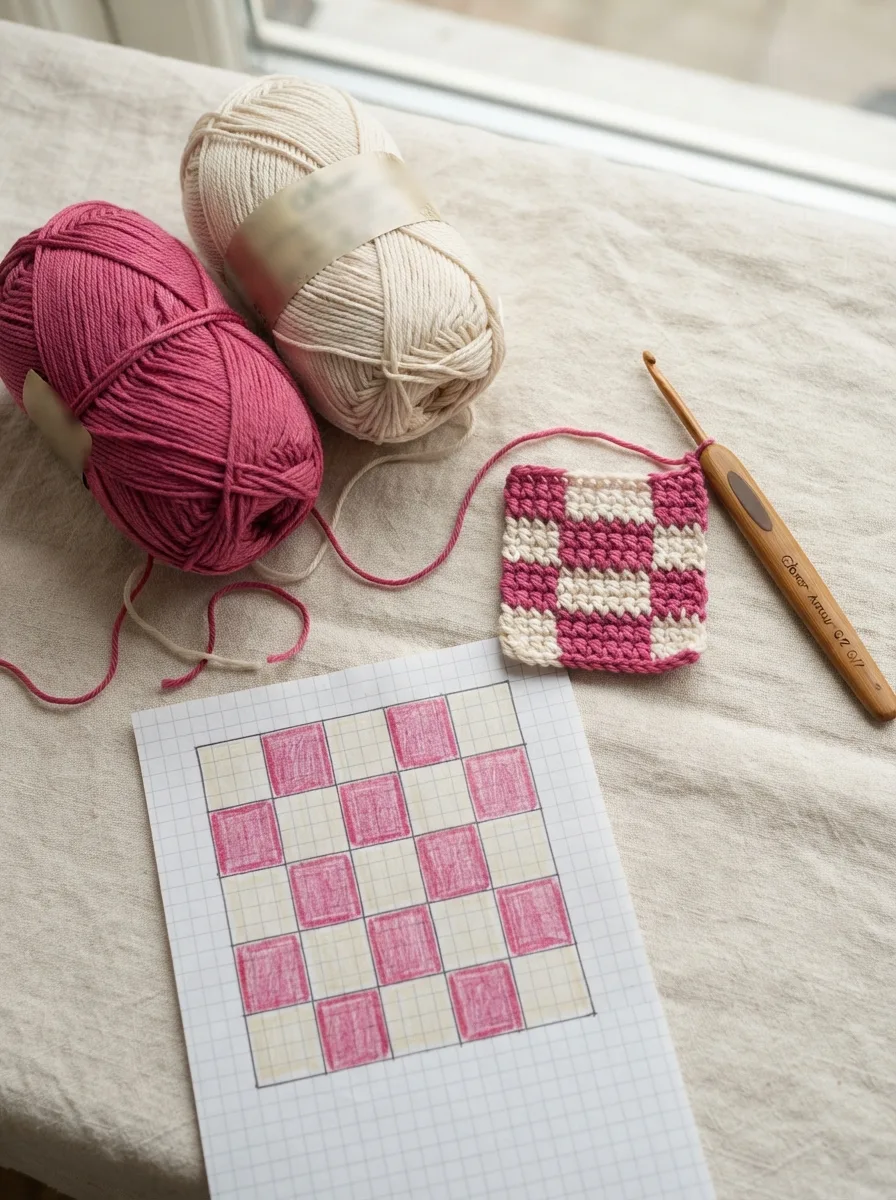
The practice checkerboard: four color blocks per row, and the rule 'match the stitch below.'
Reading and Designing Tapestry Charts
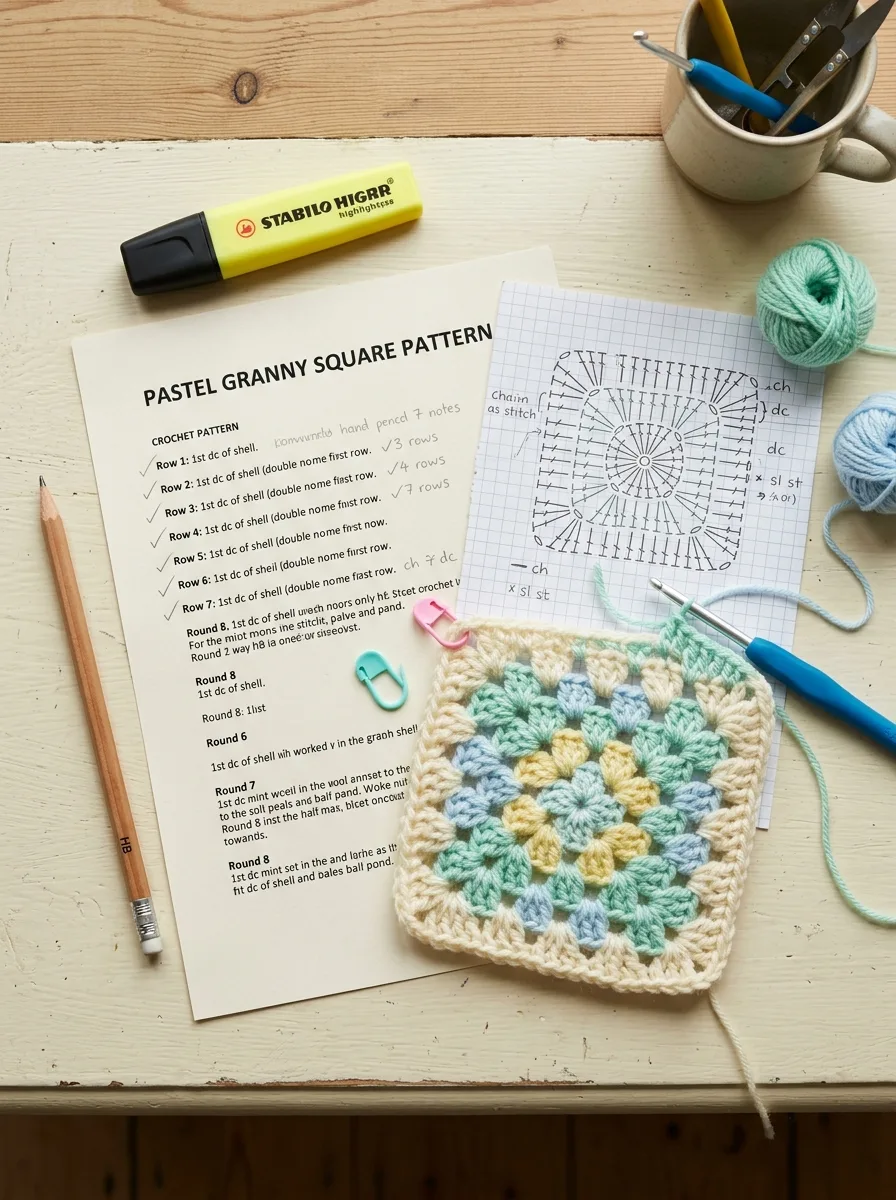
A tapestry chart is a grid: each square is one sc in that square’s color. Row 1 is at the bottom. Read right-side rows right to left and wrong-side rows left to right. For the full breakdown, see our lesson on reading crochet charts.
One square on the chart is one stitch. Colored pencils plus graph paper let you design your own.
To design your own, draw a rectangle on graph paper the width of your project in stitches, then color in squares. Keep motifs simple at first: hearts, stripes, triangles, and initials.
Keeping Two Balls From Tangling
Place one ball on each side of your chair. At the end of each row, turn your work clockwise; at the end of the next row, turn it counter-clockwise. The strands untwist themselves.
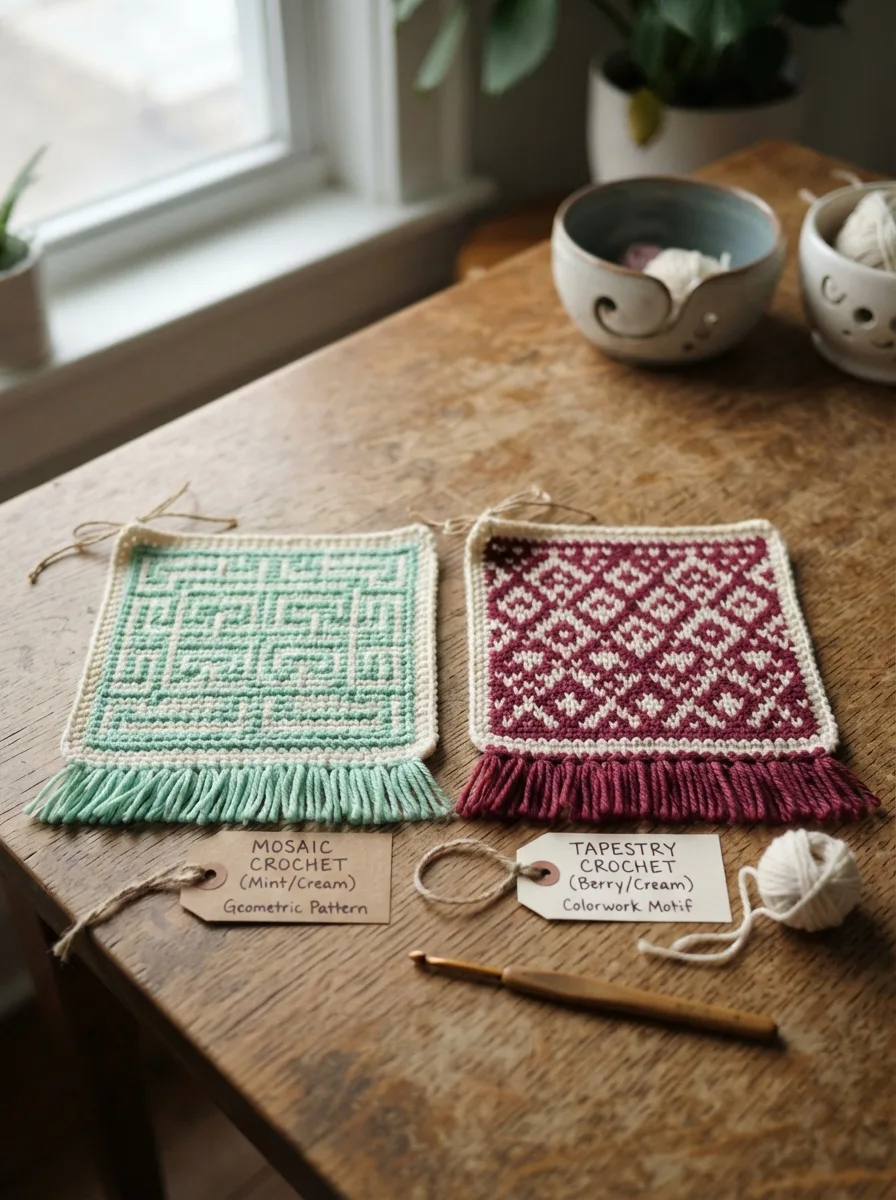
If you love geometric colorwork, you’ll hear about mosaic crochet too. It uses only one color per row (no carrying) and creates the pattern by dropping double crochet stitches down into earlier rows. Mosaic is lighter and drapier; tapestry is sturdier and more precise for pictures and lettering.
What's the difference between tapestry crochet and mosaic crochet?
Tapestry crochet uses two or more colors in the same row, carrying the unused color inside the stitches. Mosaic crochet uses only one color per row and creates the pattern by dropping long stitches down into earlier rows. Tapestry gives sturdier fabric; mosaic is lighter and has no carried strands.
Why do my tapestry crochet stitches slant?
Regular single crochet naturally leans in the direction you work, which is more noticeable in colorwork. Working through the back loop only, or using the 'waistcoat' stitch (inserting between the legs of the stitch below), gives straighter vertical columns.
How do I stop the carried yarn from showing through?
Keep the carried strand snug (not tight) along the top of the row, use a hook half a size smaller, and pick colors of similar weight and fiber. Very dark carried colors behind very light ones may peek through a little. That's normal.
How do I read a tapestry crochet chart?
Each square is one single crochet in the square's color. Read right-side rows from right to left and wrong-side rows from left to right (reverse this if you're left-handed). Charts worked in the round are always read right to left.
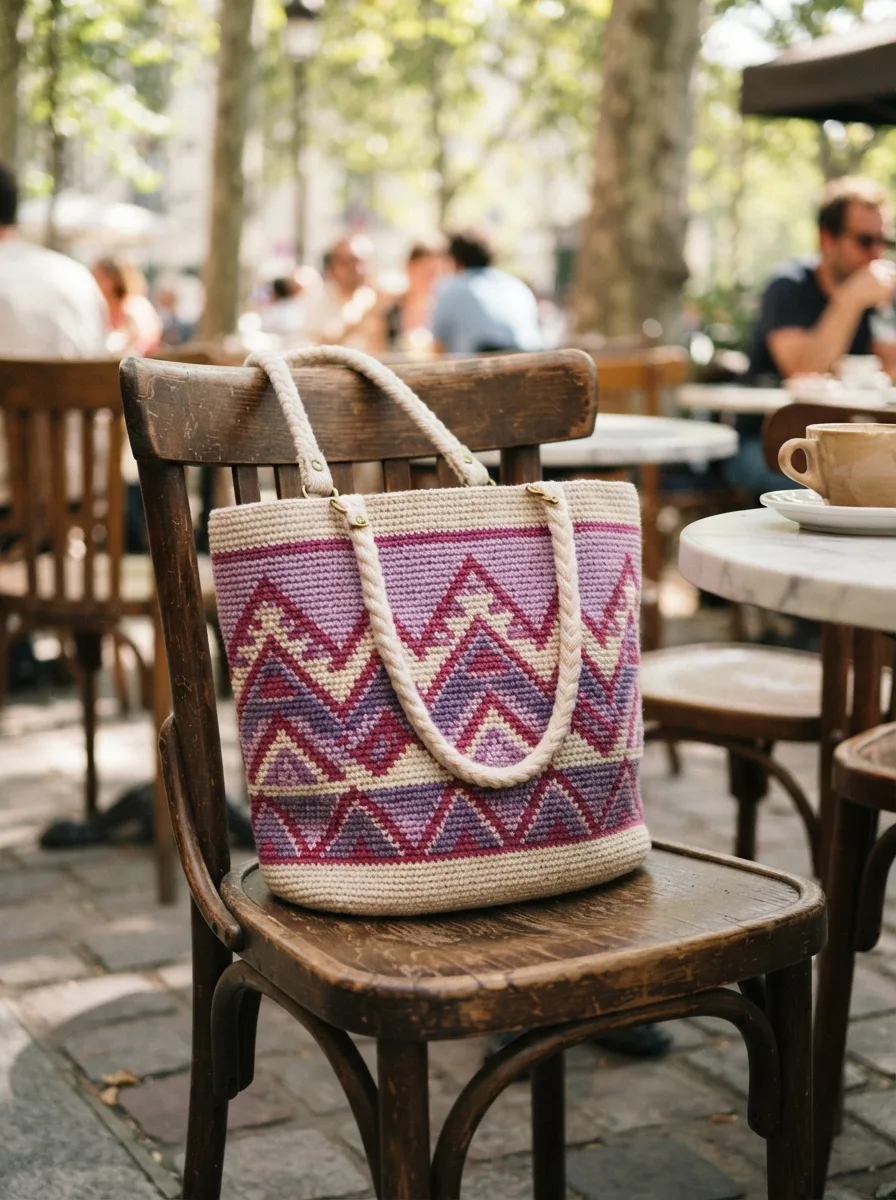
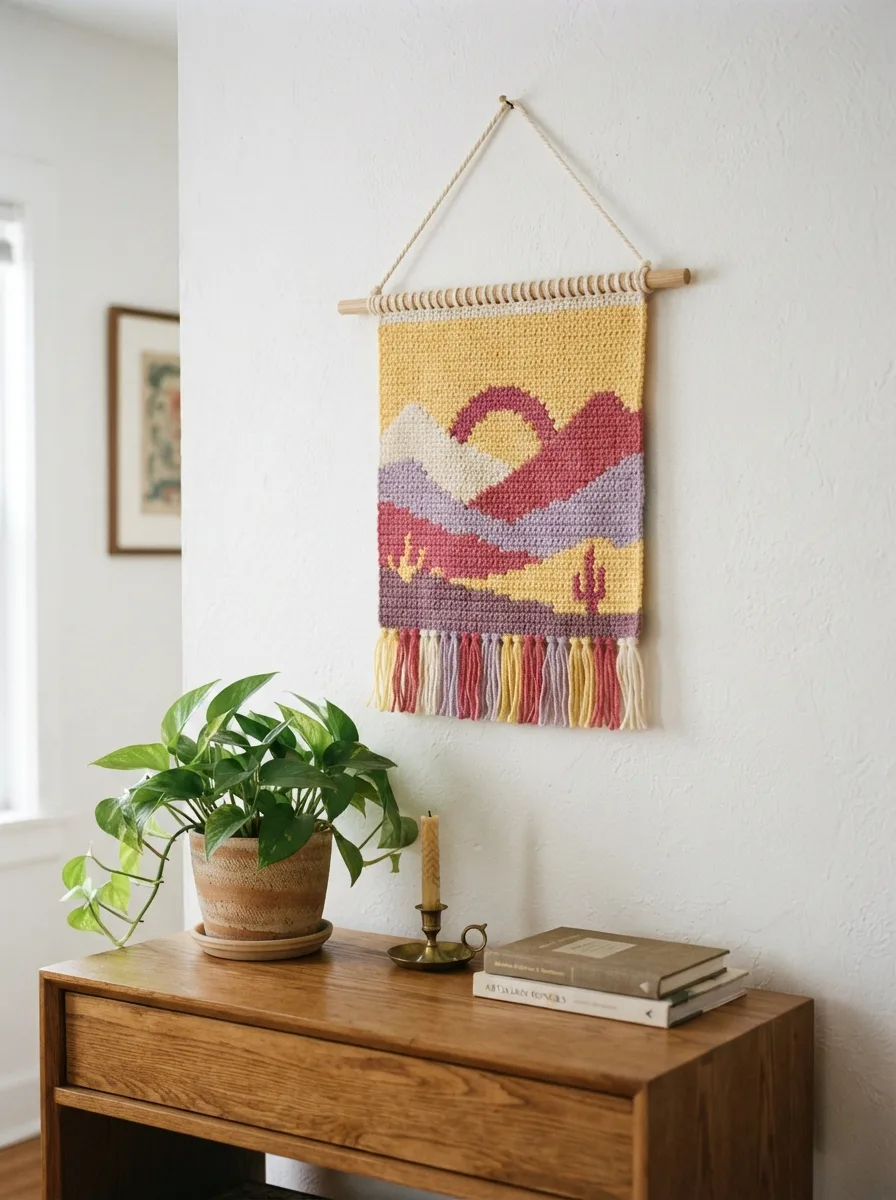
Bags (it's sturdy and structured), coasters, pillow covers, wall hangings, pouches, and blankets. It's the go-to technique for the graphic crochet bags you see on Pinterest.