Learn · Stitches
Crochet Stitches Guide: Every Basic Stitch + the Magic Ring
A visual guide to crochet stitches for beginners: chain, slip stitch, single, half double, double, treble, the magic ring, increases, and textured stitches.
6 min read
Learn · Stitches
A visual guide to crochet stitches for beginners: chain, slip stitch, single, half double, double, treble, the magic ring, increases, and textured stitches.
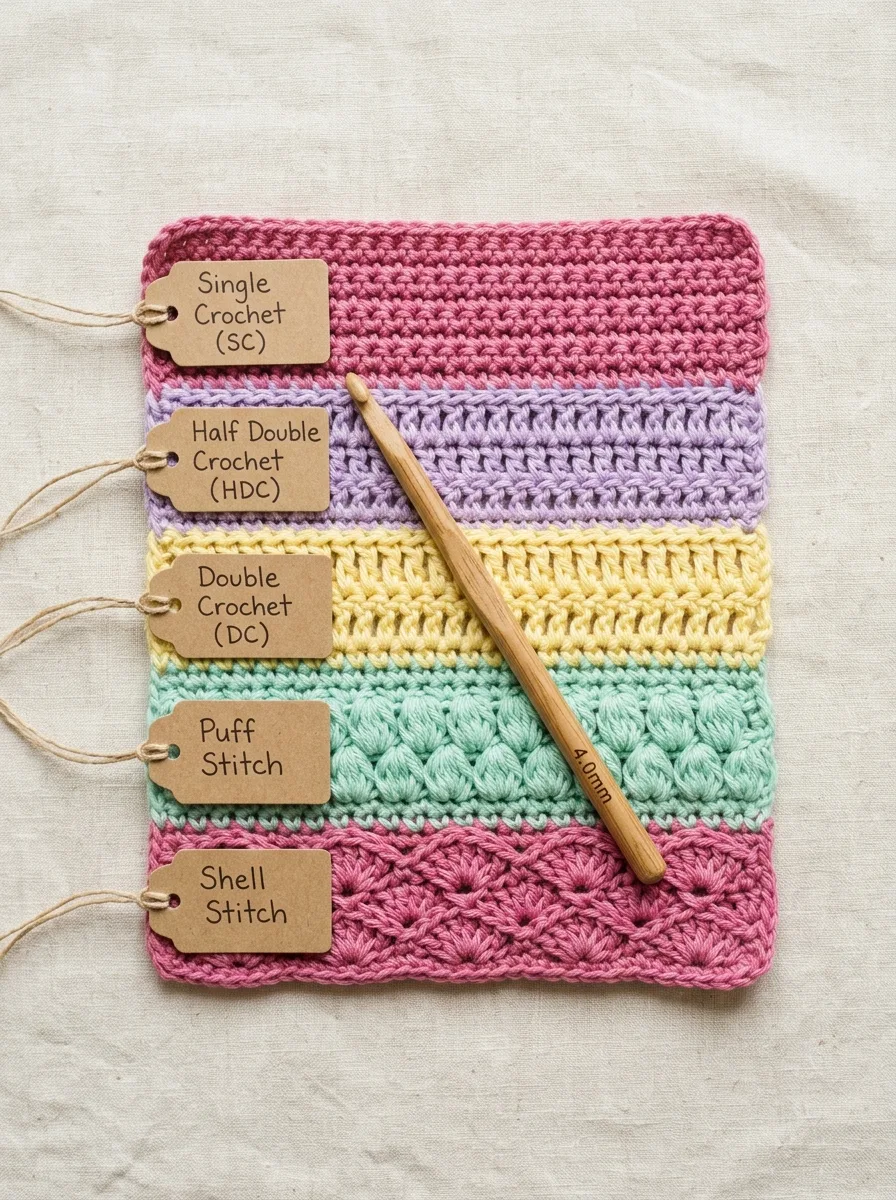
Every crochet project, from a strawberry keychain to a granny-square cardigan, is built from a small set of crochet stitches. This guide covers the handful you’ll use constantly: the basic stitches in order of height, the magic ring for anything worked in the round, how to increase and decrease, and the textured stitches that make crochet look so squishy on Pinterest.
Hover over (or tap) any highlighted abbreviation on this site, like hdchdc = half double crochetUK: half treble (htr)Yarn over, insert hook, pull up a loop (3 loops), yarn over, pull through all three., to see its full name and its UK equivalent.
Nearly every basic stitch is the same idea: pull up a loop, then pull through loops two at a time. Taller stitches just add a yarn over at the start.
Yarn over and pull through the loop on your hook. Chains form the foundation row and the turning chains that lift you to the height of the next row. If you haven’t made one yet, start with our beginner’s guide.
Insert the hook, yarn over, and pull straight through both the stitch and the loop on your hook in one motion. It adds almost no height, so it’s used to join rounds and to travel across stitches without them showing.
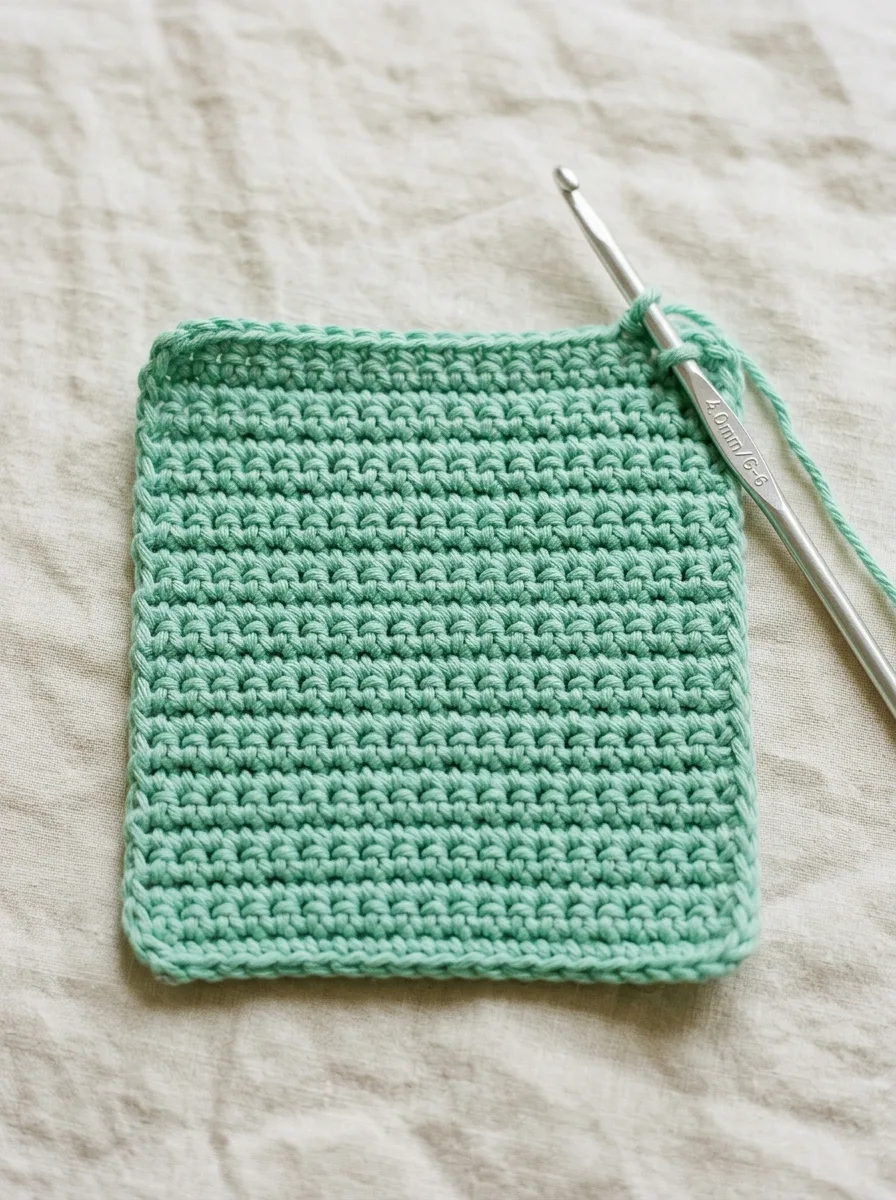
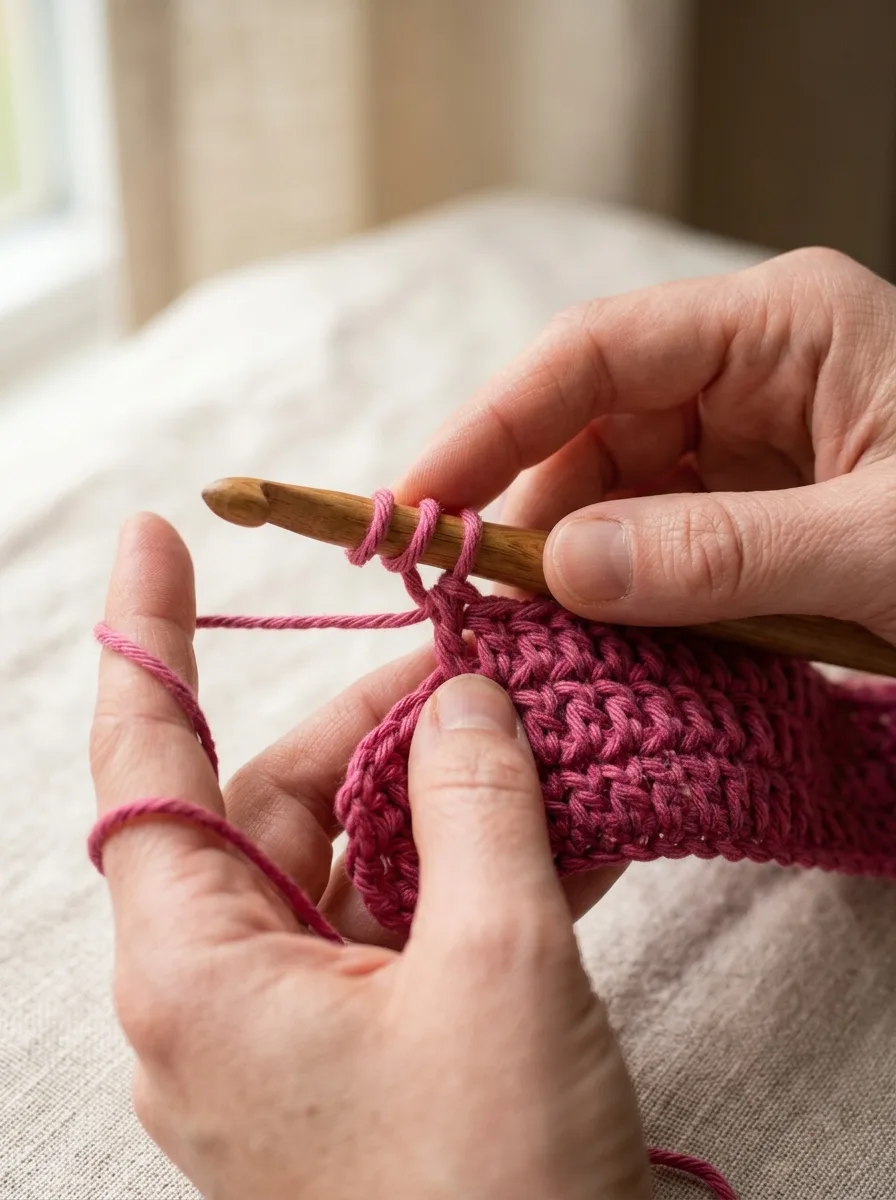
Insert, yarn over, pull up a loop (2 loops on hook), yarn over, pull through both. Dense and firm. It’s the stitch for amigurumi keychains, bag bottoms, and baskets. Turning chain: 1, which doesn’t count as a stitch.
Yarn over, insert, pull up a loop (3 loops), yarn over, pull through all three. It’s a warm, slightly squishy middle ground, and a favorite for beanies and scarves. Turning chain: 2, which usually doesn’t count.
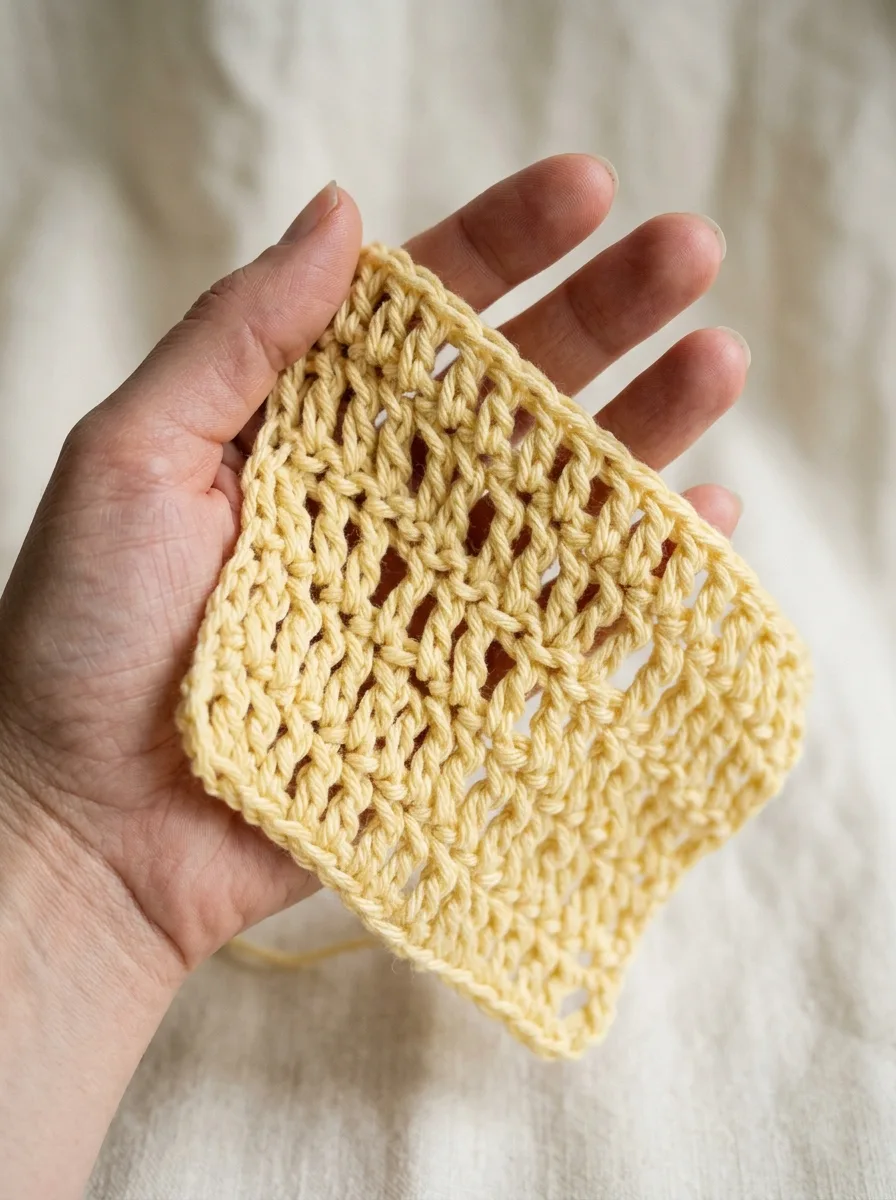
Yarn over, insert, pull up a loop (3 loops), then yarn over and pull through 2, and yarn over and pull through the last 2. It’s tall, quick, and drapey, which makes it the backbone of granny squares and most blankets. Turning chain: 3, which usually does count as the first stitch.
Yarn over twice, insert, pull up a loop (4 loops), then yarn over and pull through 2 three times. It’s used for tall petals, lacy shawls, and anywhere you need height fast.
The US/UK trap: UK patterns name every stitch one step taller. A UK “double crochet” is a US scsc = single crochetUK: double crochet (dc)Insert hook, yarn over, pull up a loop (2 loops), yarn over, pull through both. The shortest, densest basic stitch., and a UK “treble” is a US dcdc = double crochetUK: treble (tr)Yarn over, insert, pull up a loop (3 loops), then [yarn over, pull through 2] twice. About twice as tall as sc.. Our abbreviations chart has the full list.
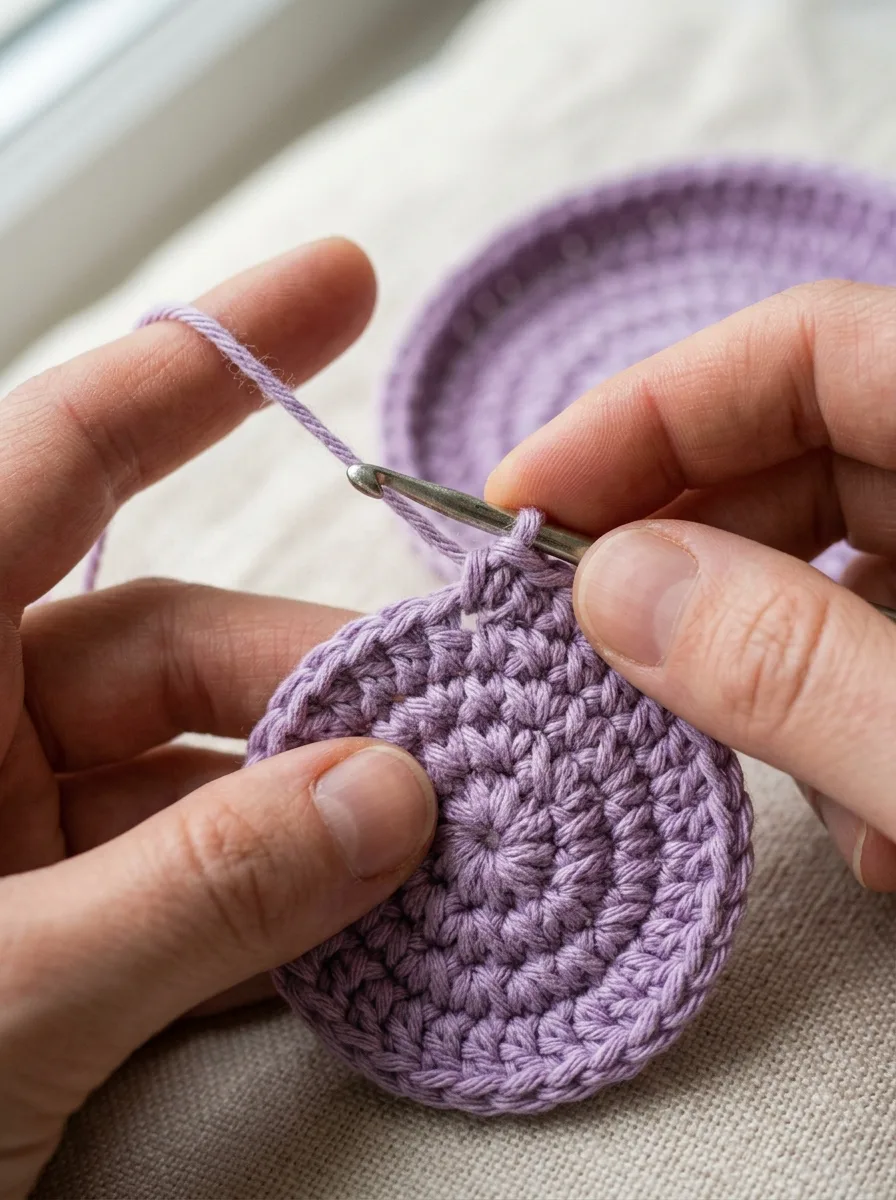
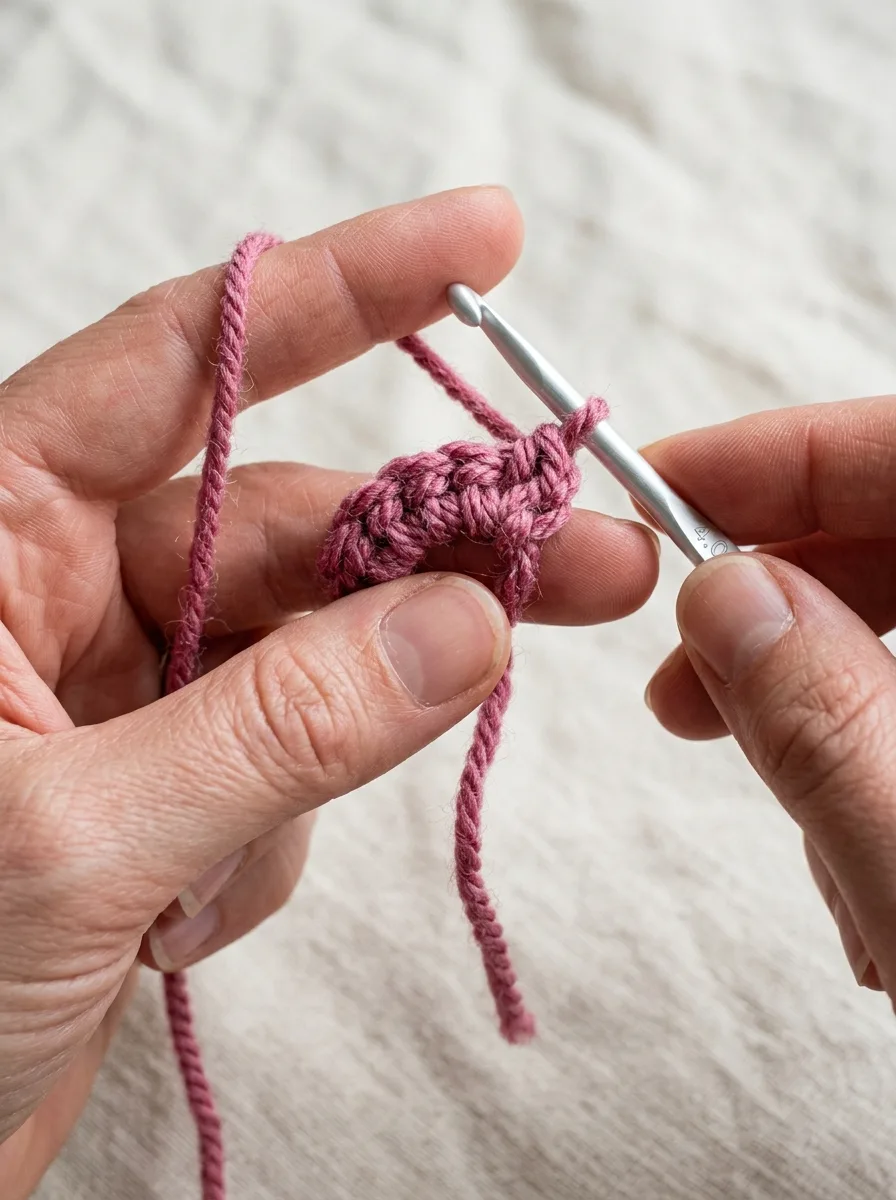
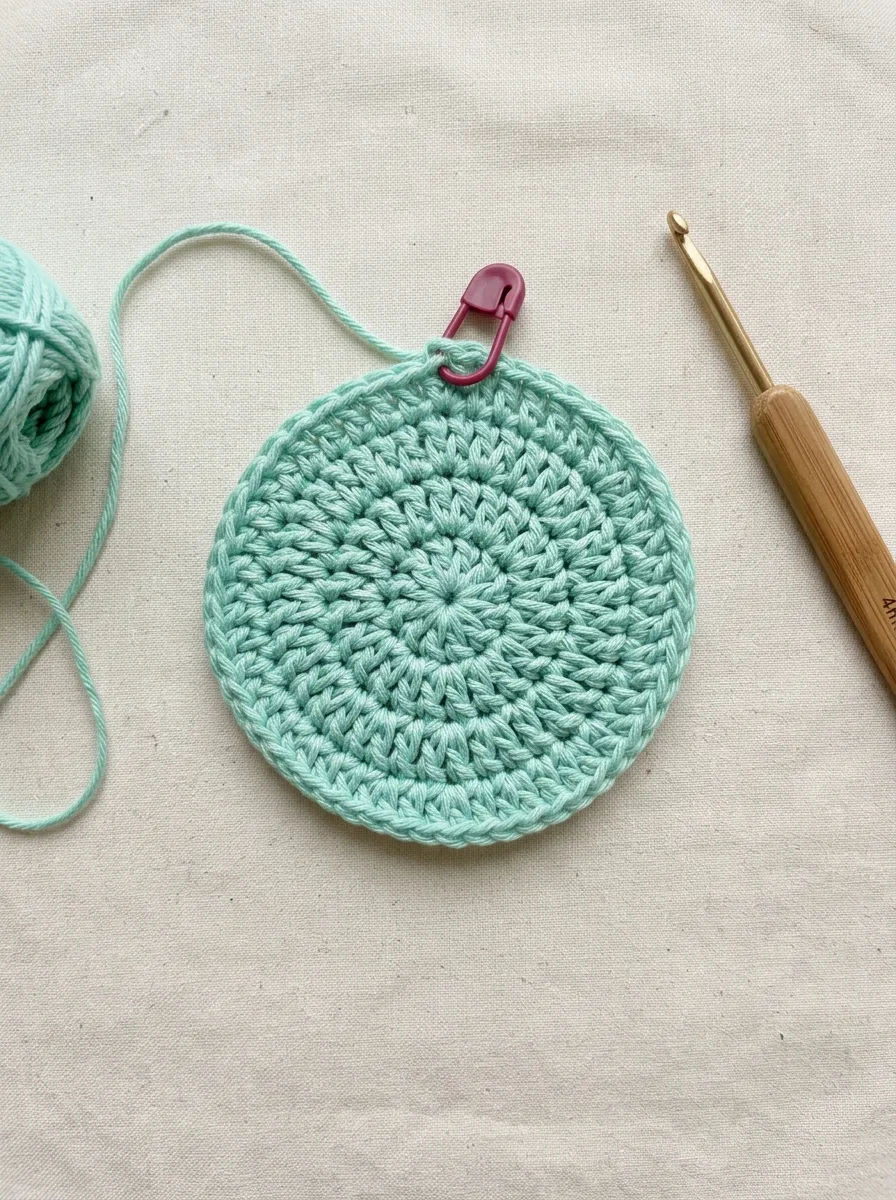
Anything worked in the round from the center out, like amigurumi, flowers, coasters, or top-down hats, starts better with a magic ring (MRMR = magic ringUK: magic ring / magic loopAn adjustable loop you work the first round into, then pull tight so the center of a round piece closes with no hole.) than with a chained circle, because it closes with no hole.
An increase (incinc = increaseUK: increaseWork 2 stitches into the same stitch, adding one stitch to the count.) is simply two stitches worked into the same stitch. A decrease (decdec = decreaseUK: decreaseWork 2 stitches together into one, removing a stitch. In amigurumi, use the invisible decrease through front loops only.) joins two stitches into one: pull up a loop in each of the next two stitches, then yarn over and pull through all the loops at once (written sc2tog, or togtog = togetherUK: togetherWork the stated stitches together into a single stitch, as in sc2tog or dc2tog (a decrease). for “together”).
For amigurumi, use the invisible decrease: insert the hook through the front loops only of the next two stitches, pull up a loop, and finish as a normal sc. It hides almost completely.
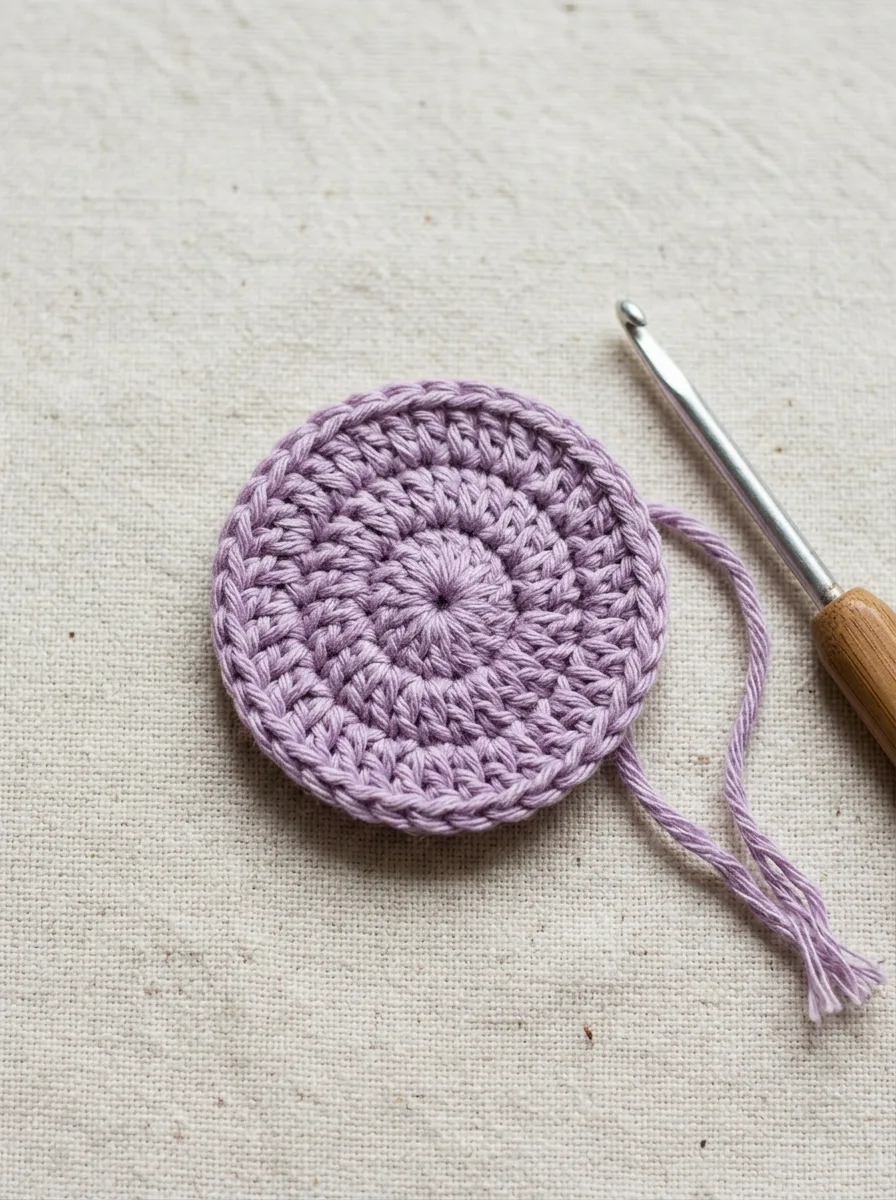
The rhythm of a flat single crochet circle is worth memorizing, because so many patterns use it:
Tick as you go
0 / 6 done
Worked in a continuous spiral: don't join the rounds. Move a stitch marker to the first stitch of each new round. The pattern continues the same way: one more sc between increases each round.
Finished! Fasten off and admire it.
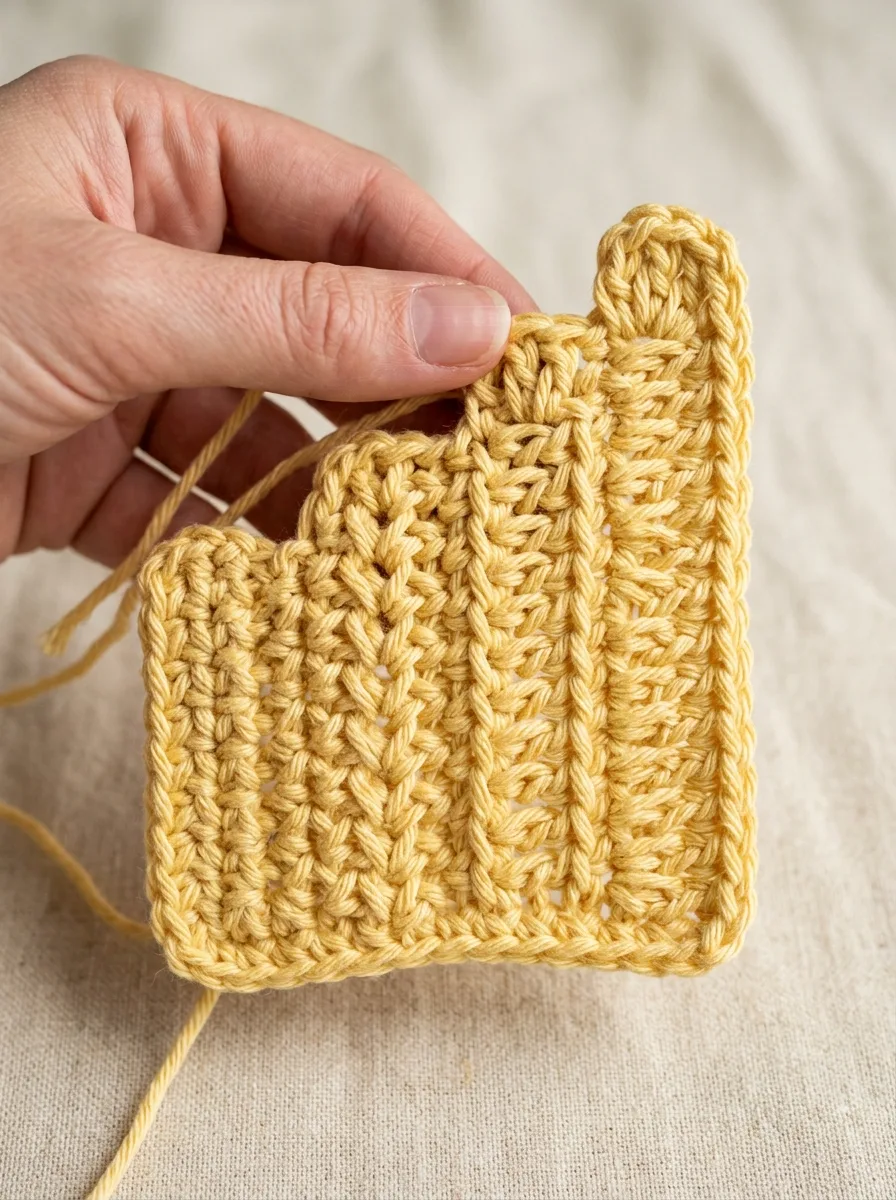
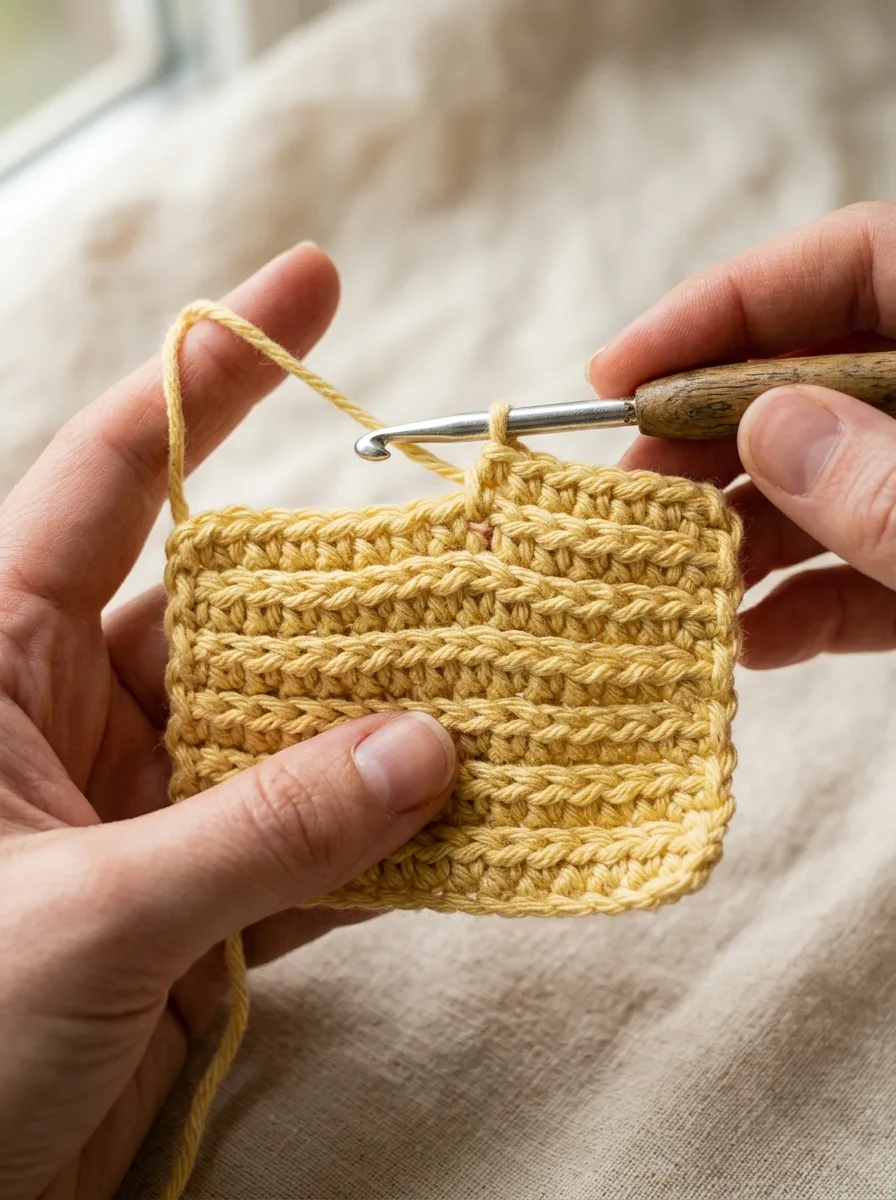
Look down at the top of any stitch and you’ll see a V made of two loops. Working into the back loop only (BLOBLO = back loop onlyUK: back loop onlyInsert your hook under only the back loop of the stitch. Creates a ridge and a stretchy, ribbed texture.) or front loop only (FLOFLO = front loop onlyUK: front loop onlyInsert your hook under only the front loop of the stitch, leaving the back loop free.) leaves the other loop as a horizontal ridge.
That ridge is the whole trick behind ribbed-looking scarves, headbands, and the “fold line” at the base of a bag or pouch where the flat bottom turns into the sides.
Instead of working into the top of a stitch, you work around its post, the vertical body of the stitch below.
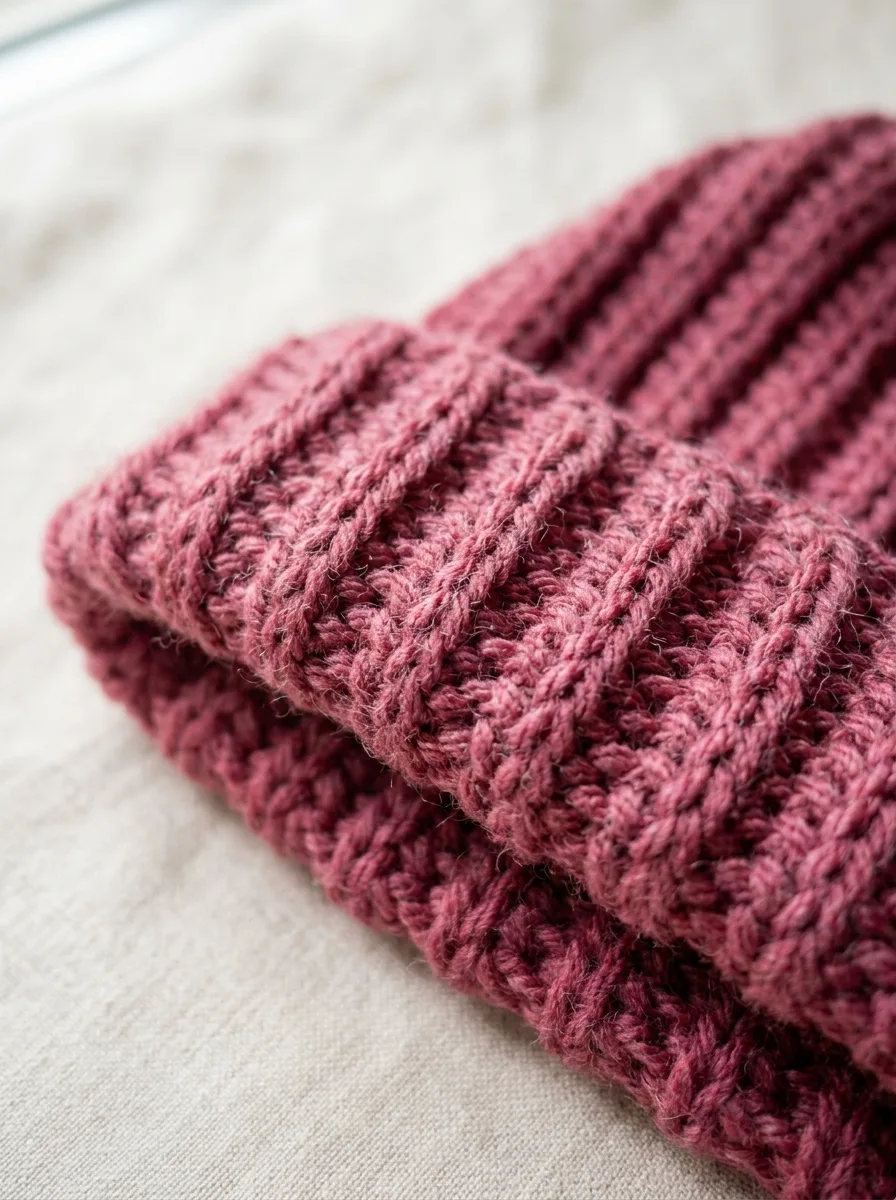
Alternate one of each and you get stretchy ribbing that looks almost knitted, perfect for hat brims, sweater cuffs, and cardigan hems.
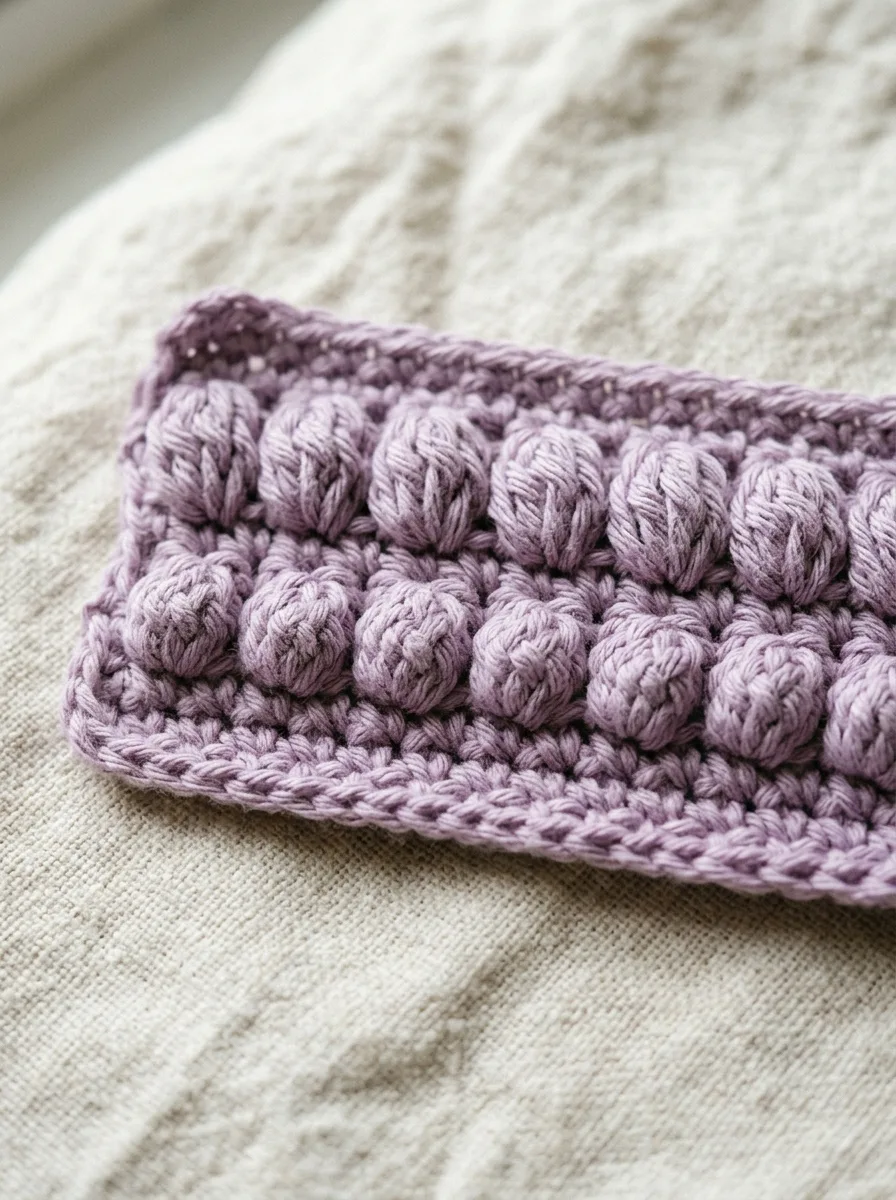
These are the stitches behind that squishy, cozy texture that performs so well on Pinterest.
Instead of endless swatches, make something small with each new stitch: a coaster in single crochet, a scrunchie in double crochet, a five-petal flower with the magic ring. You’ll learn the stitch and end up with something to use or gift. When you’re ready to follow full written instructions, read how to read crochet patterns next.
Saving this for your next project?
Pin it, so it's there when you pick up your hook.
The chain, then single crochet. Chains are the foundation of almost everything, and single crochet is only two movements (pull up a loop, pull through two). Once those feel natural, half double and double crochet are just small extensions of the same motion.
How to Crochet for Beginners →The tail isn't locked in yet. After pulling the ring closed, work the next round, then weave the tail through the first round in two directions before trimming. With slippery cotton, a small knot on the wrong side adds extra security for keychains that will be tugged.
Crochet Keychain Ideas (with a Strawberry Pattern) →A puff stitch pulls up several long loops in one stitch and closes them together, so it's soft and flat-topped. A bobble works several unfinished double crochets into one stitch and closes them, so it pops out as a firmer, rounder bump.
A bowl means too few increases; waves mean too many. A flat circle in single crochet adds 6 stitches every round (6, 12, 18, 24...), and in double crochet it adds about 12 per round. Count each round and compare it to that rhythm.
No. Most beginner projects use only chain, single crochet, and double crochet. Learn a new stitch when a pattern asks for it: it sticks much better when you're using it for something real.
Easy Crochet Ideas for Beginners →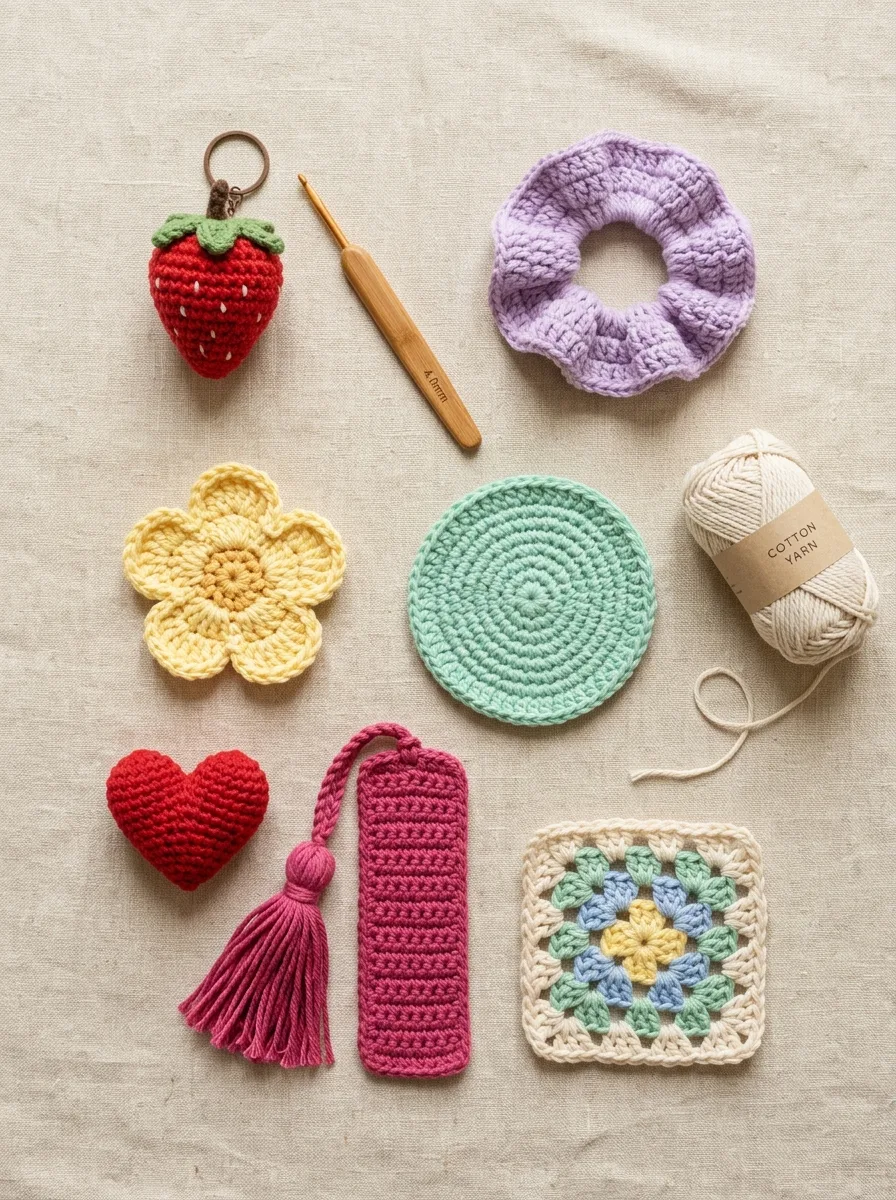 Beginner Projects
Learn
Easy crochet ideas for beginners, sorted by time and skill: quick 30-minute makes, cute gifts, small projects for yarn scraps, and first wearables.
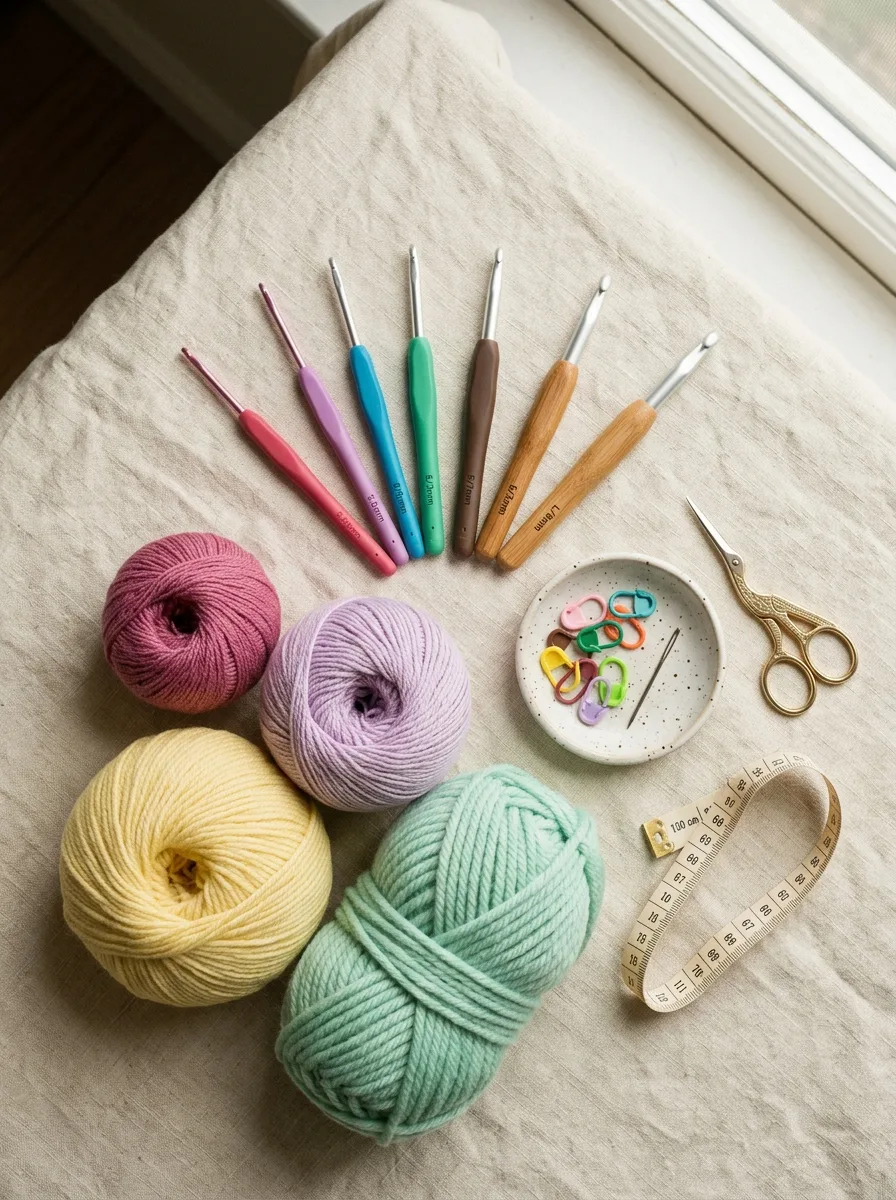 Getting Started
Learn
A no-fluff guide to crochet hook sizes, yarn weights, fibers, and the small tools that matter, plus a simple chart matching yarn to hook size.
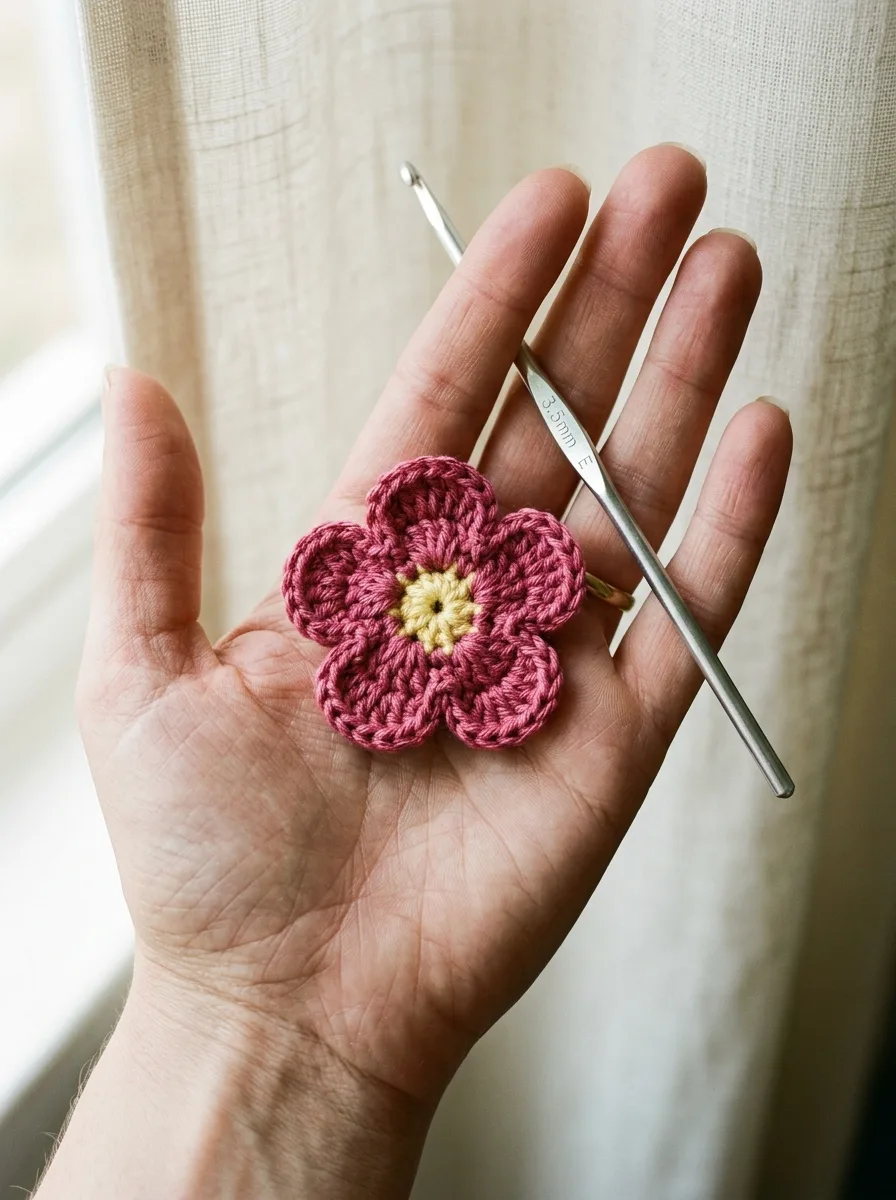 Tutorials
Flowers
Learn how to crochet a flower in two rounds with this free beginner pattern: a five-petal flower with a contrast center, plus easy variations and ways to use it.