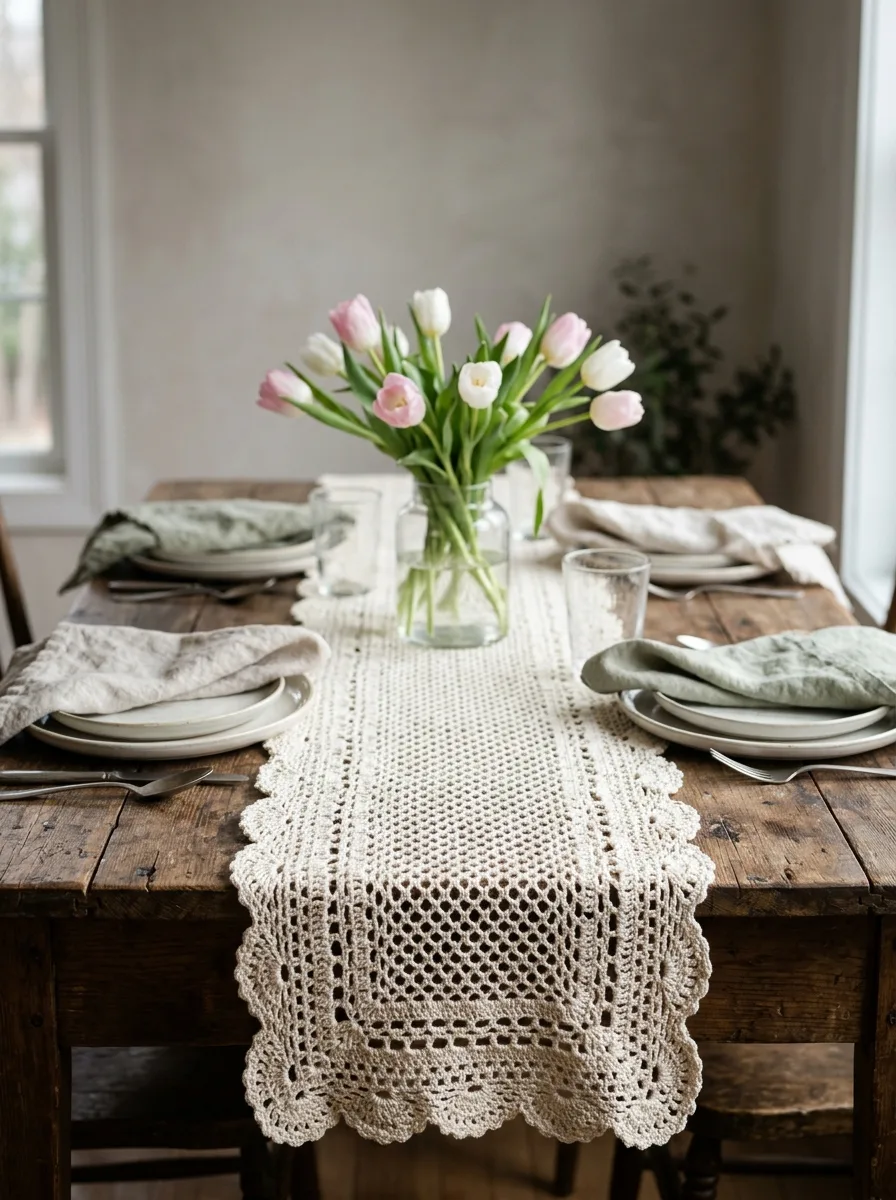
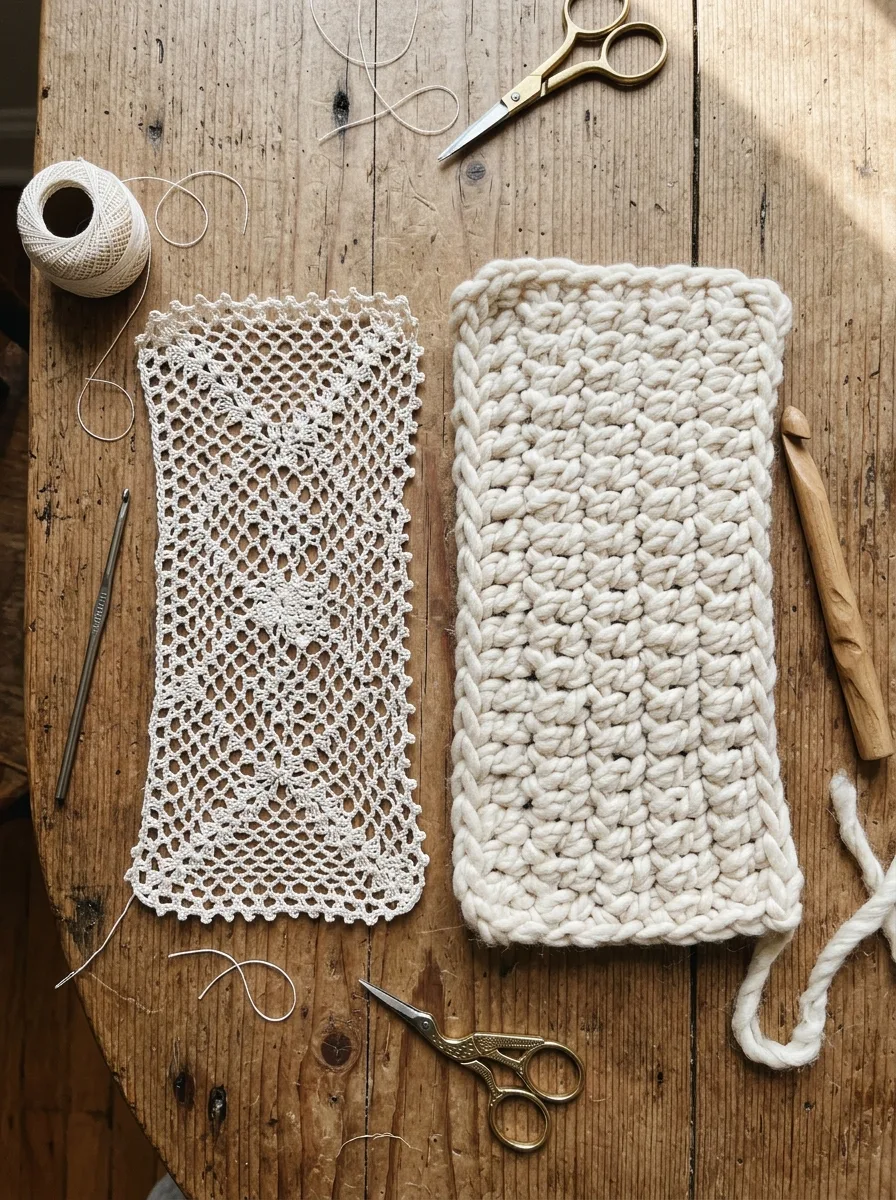
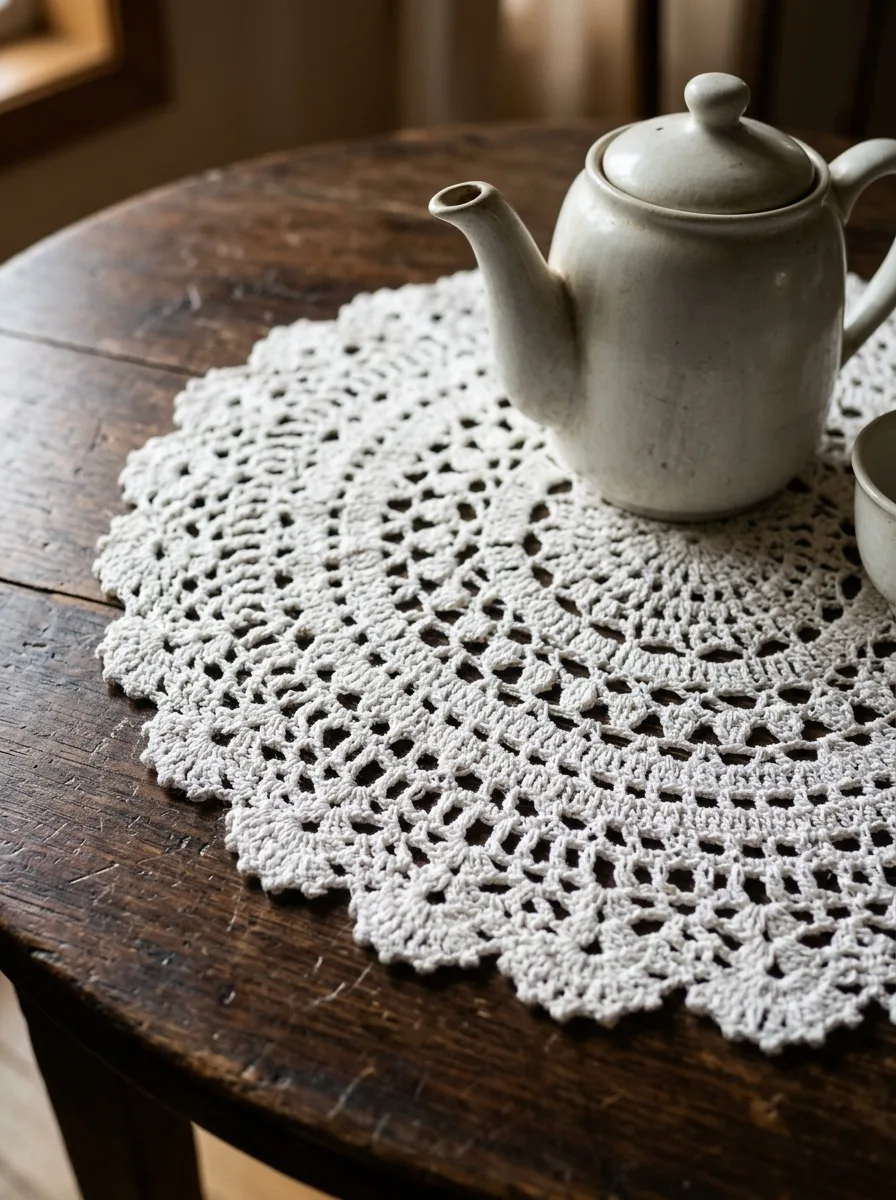
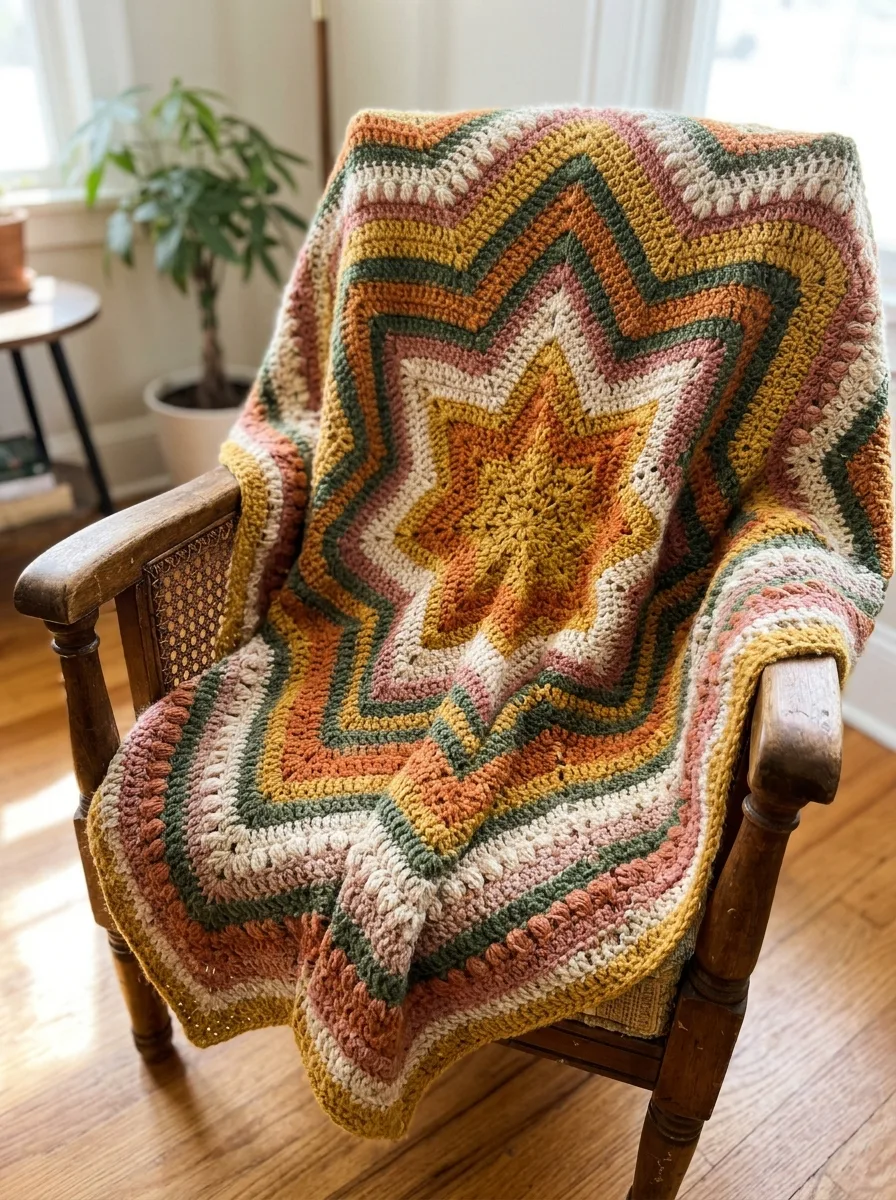
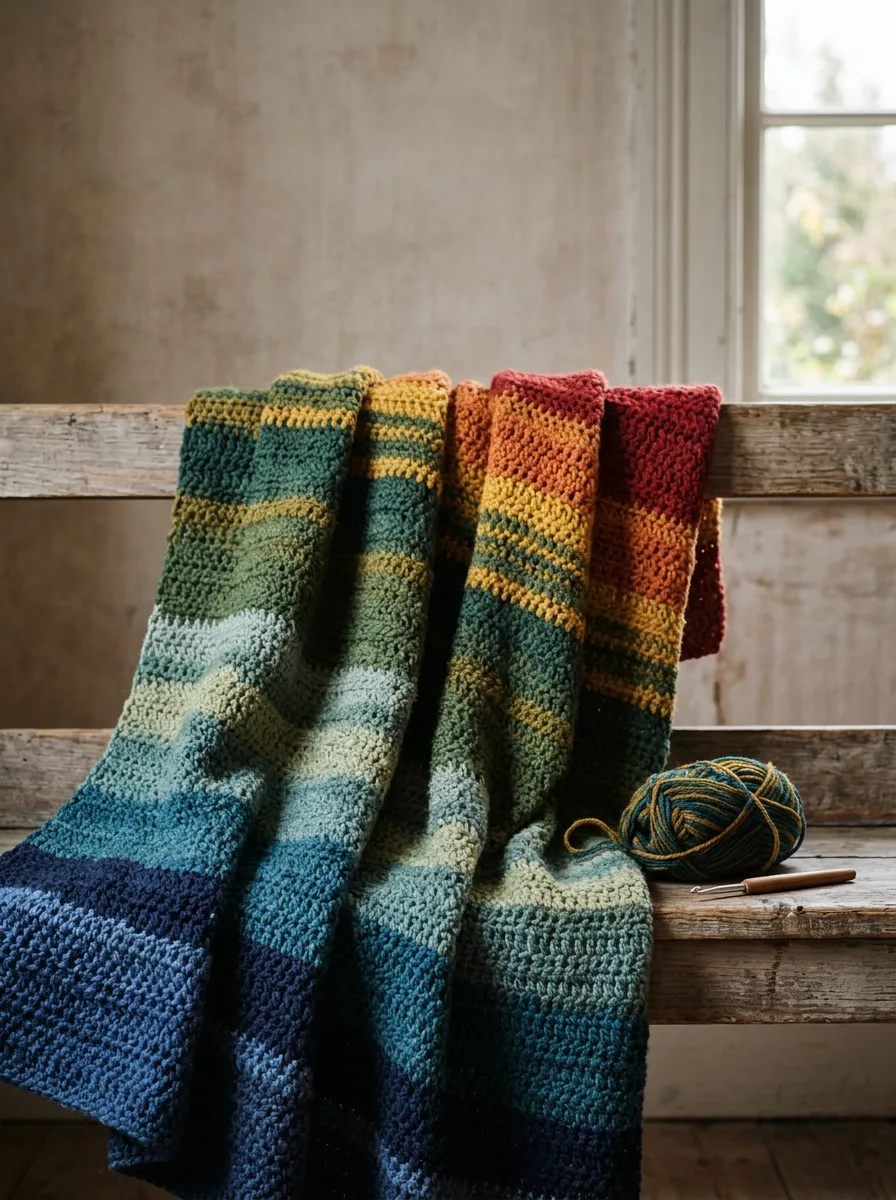
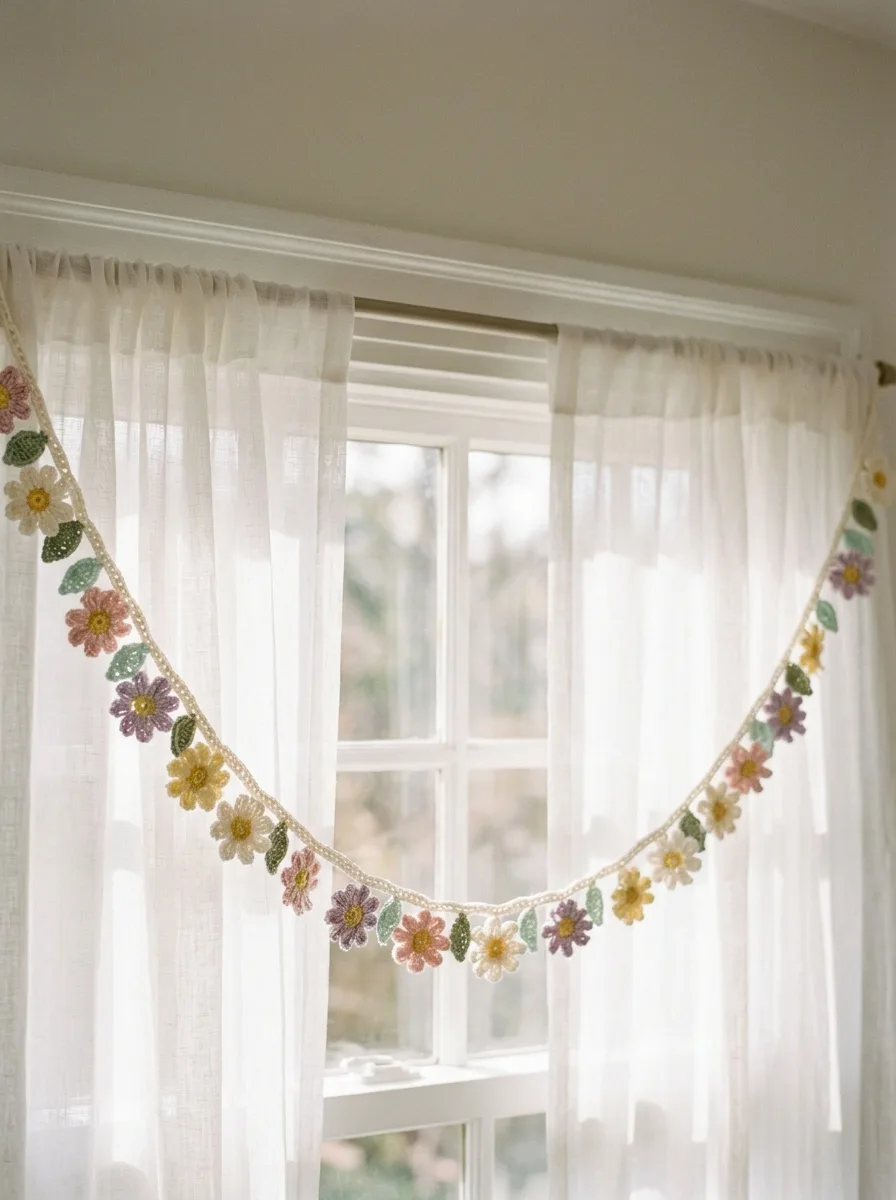
Table linens are the project where crochet looks most traditional and, in the right thread, most elegant. The same stitch can look completely different in two weights: lace in fine thread, and a cozy rustic cloth in worsted yarn. This page sorts table projects by size (doilies, placemats, runners and tablecloths), covers starching and care and ends with a free mesh runner pattern. For smaller pieces see our crochet coasters.
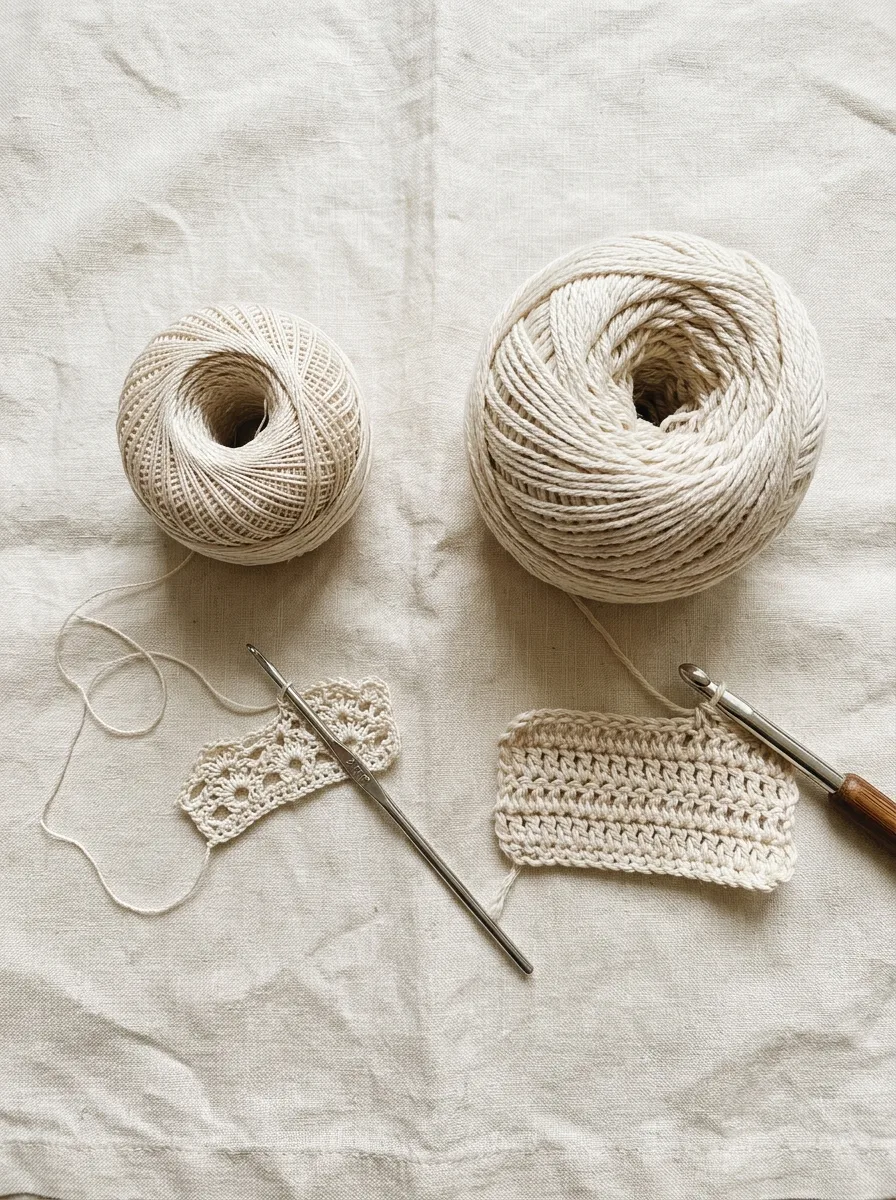
Thread or Yarn: What Changes
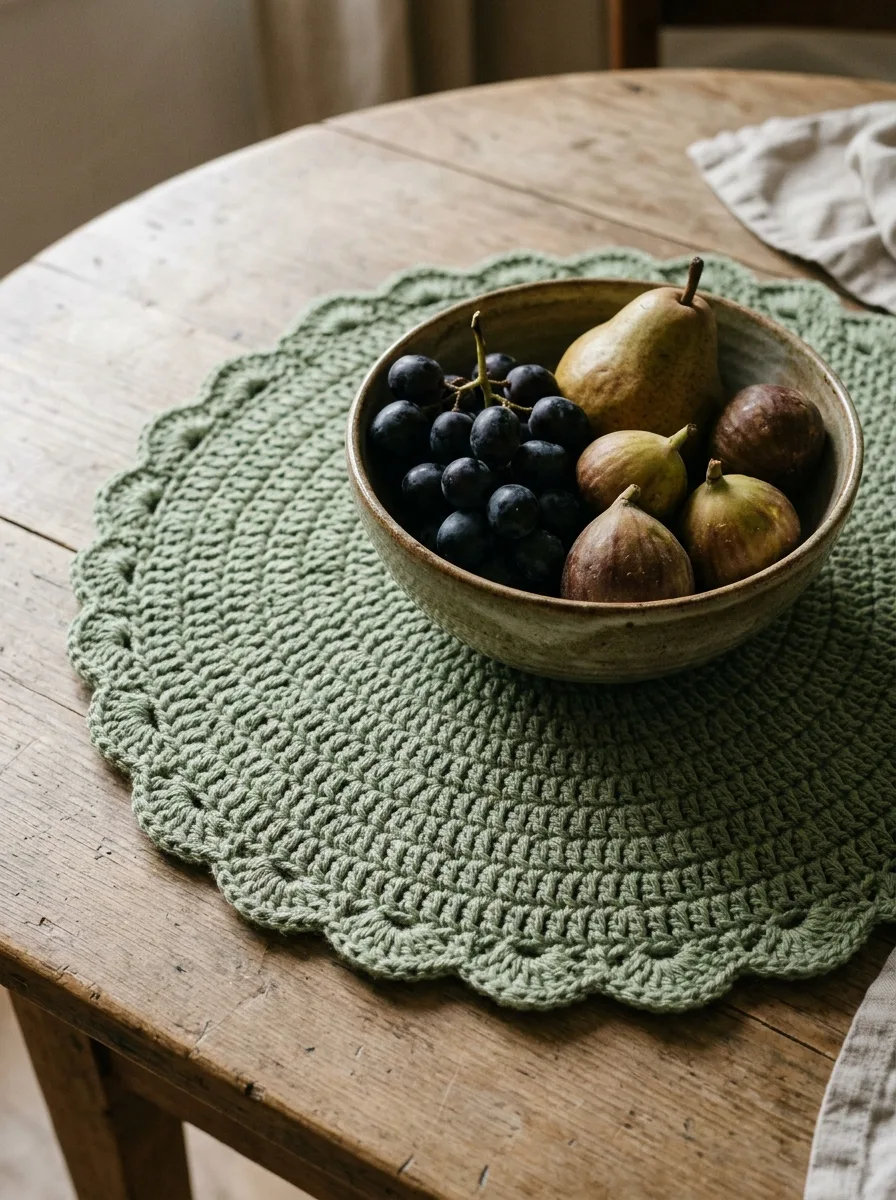
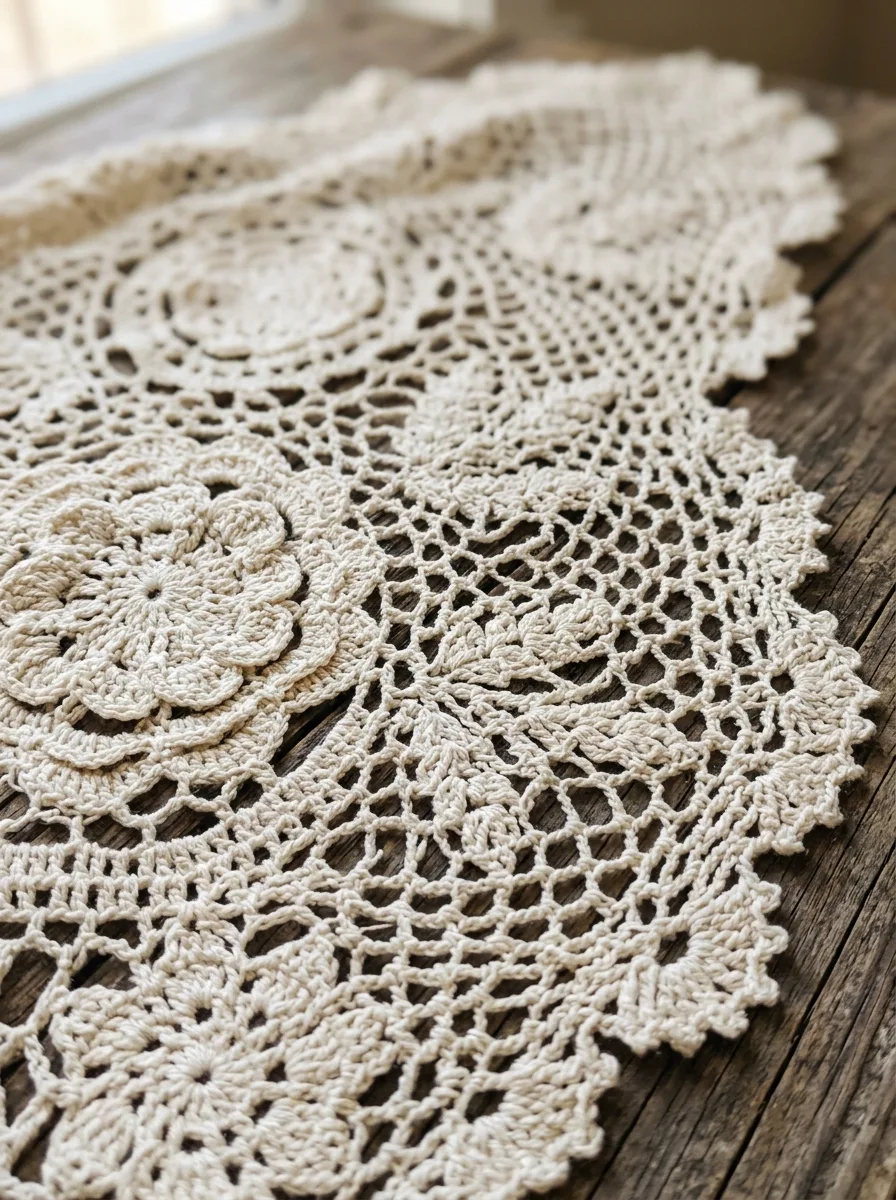
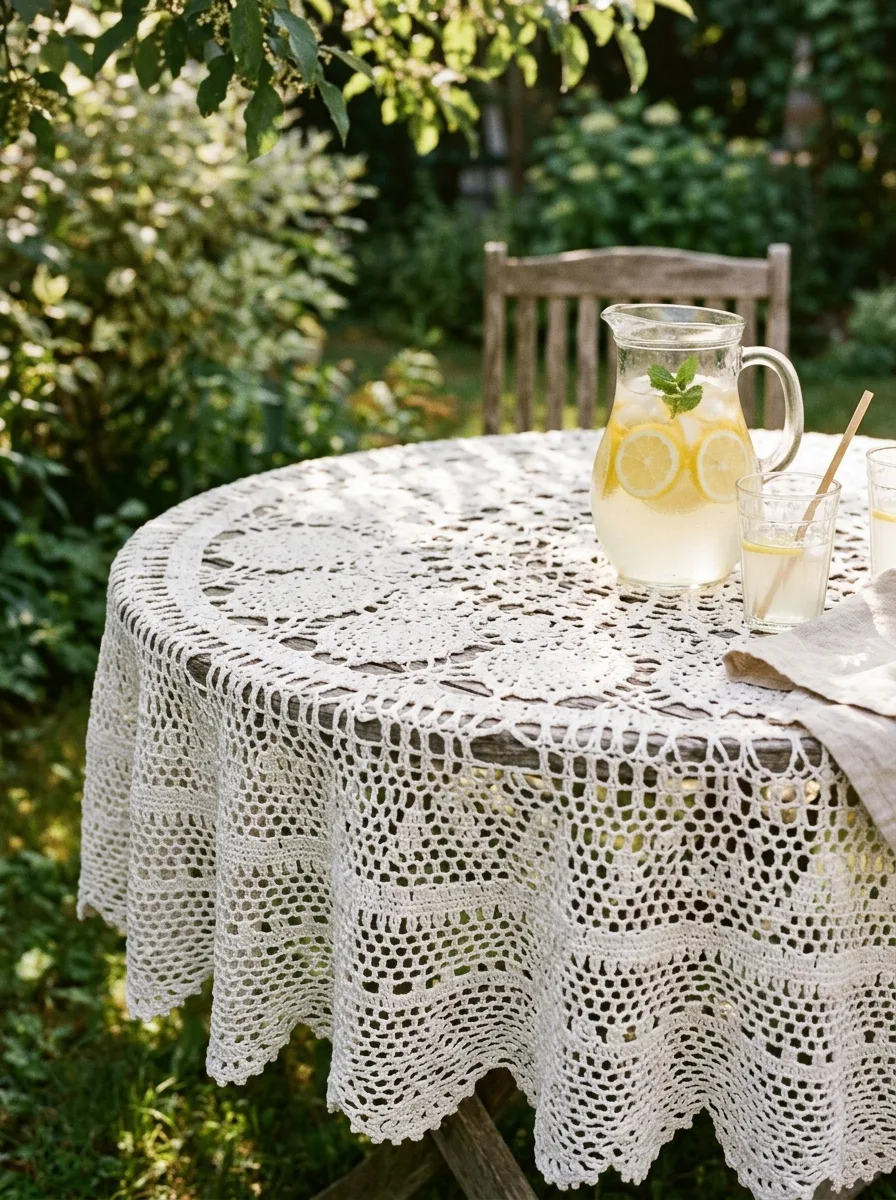
Fine thread gives lace; worsted yarn gives a cozy, rustic cloth. Choose the thread to match the table and the mood of the room.
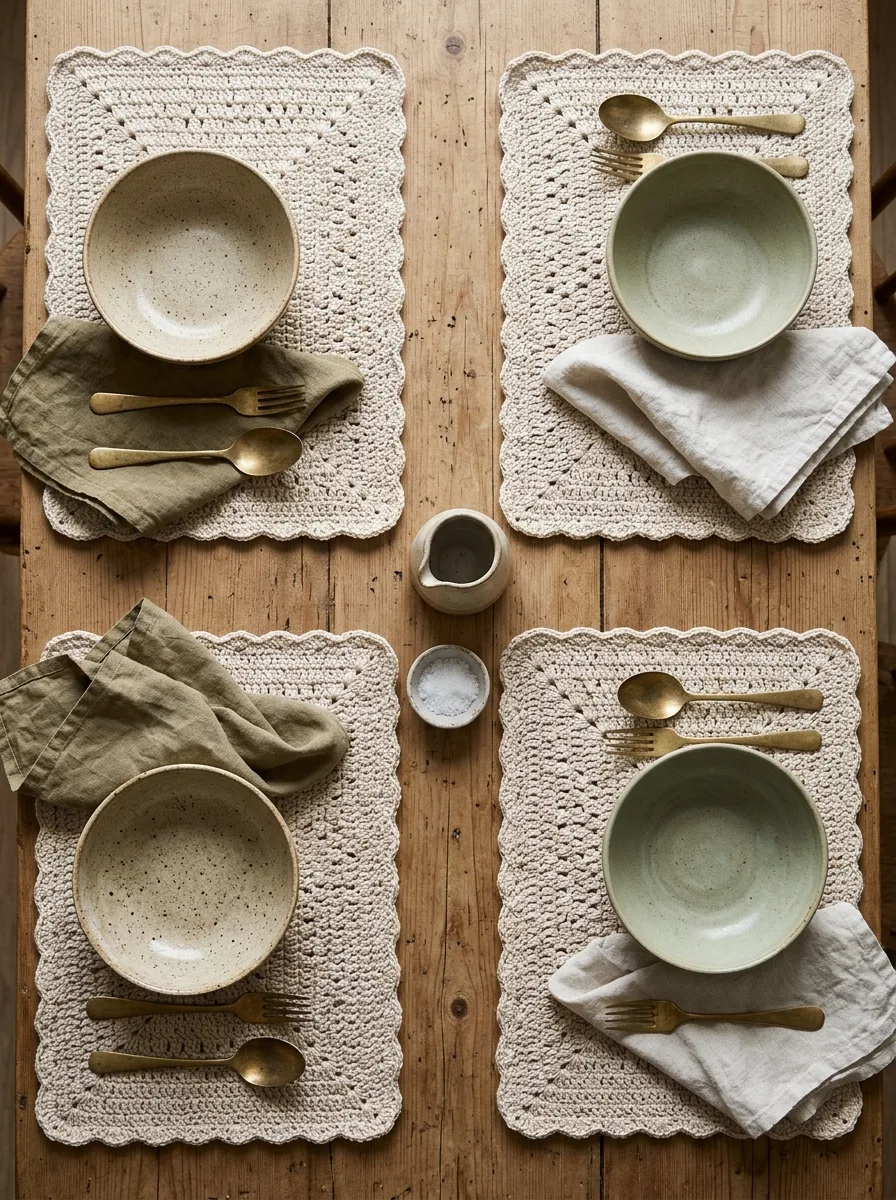
Placemats are rectangles, so the pattern repeats are easy to count.
A scalloped edge is a simple repeat that looks polished. Use shells (skip 2, 5 dc in the next, skip 2, sc in the next), and repeat. See our stitches guide.
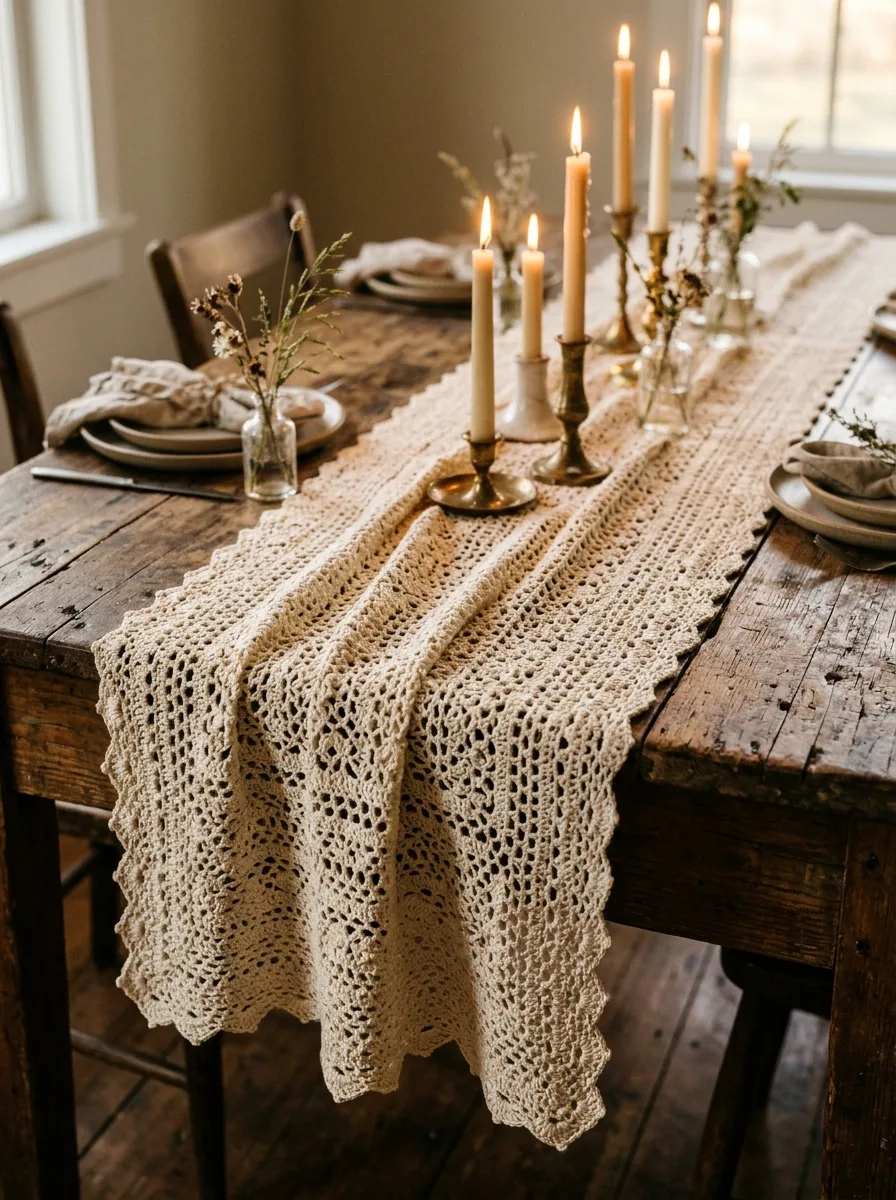
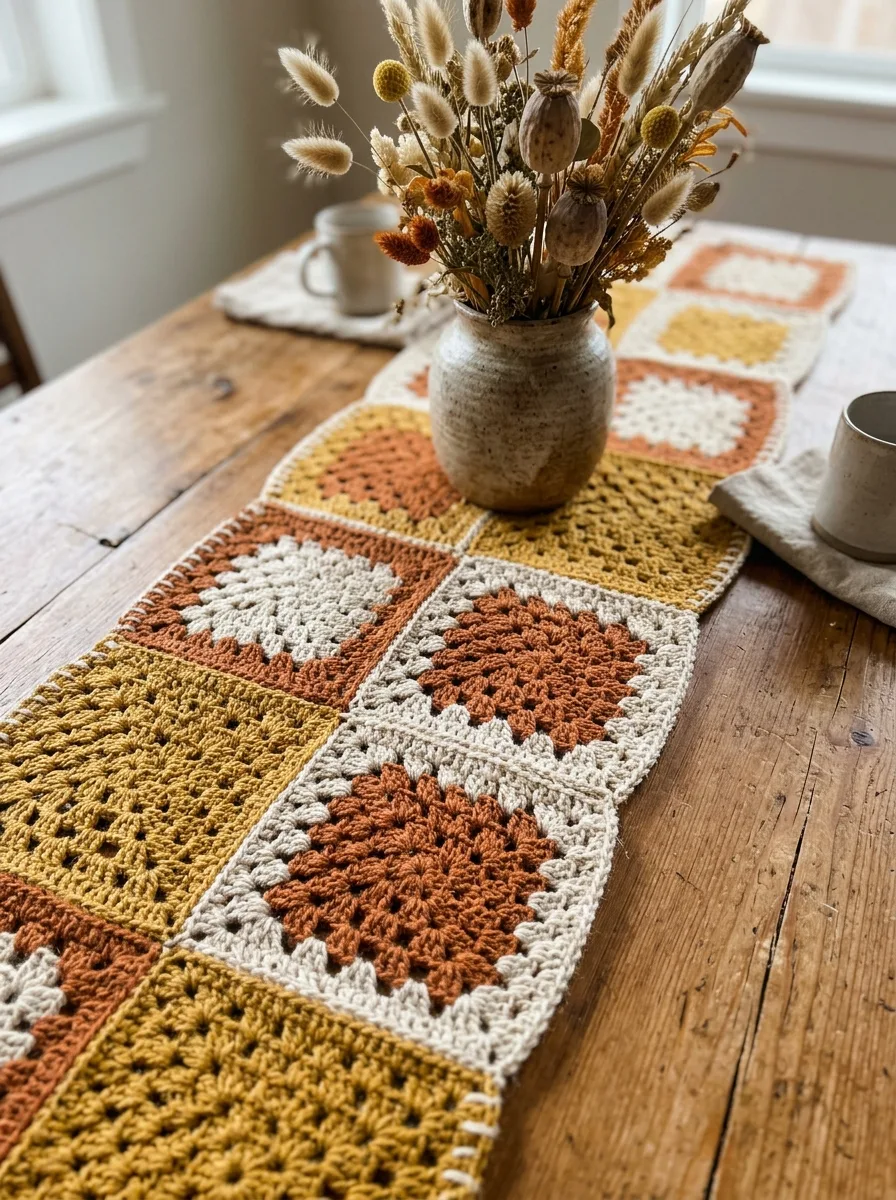
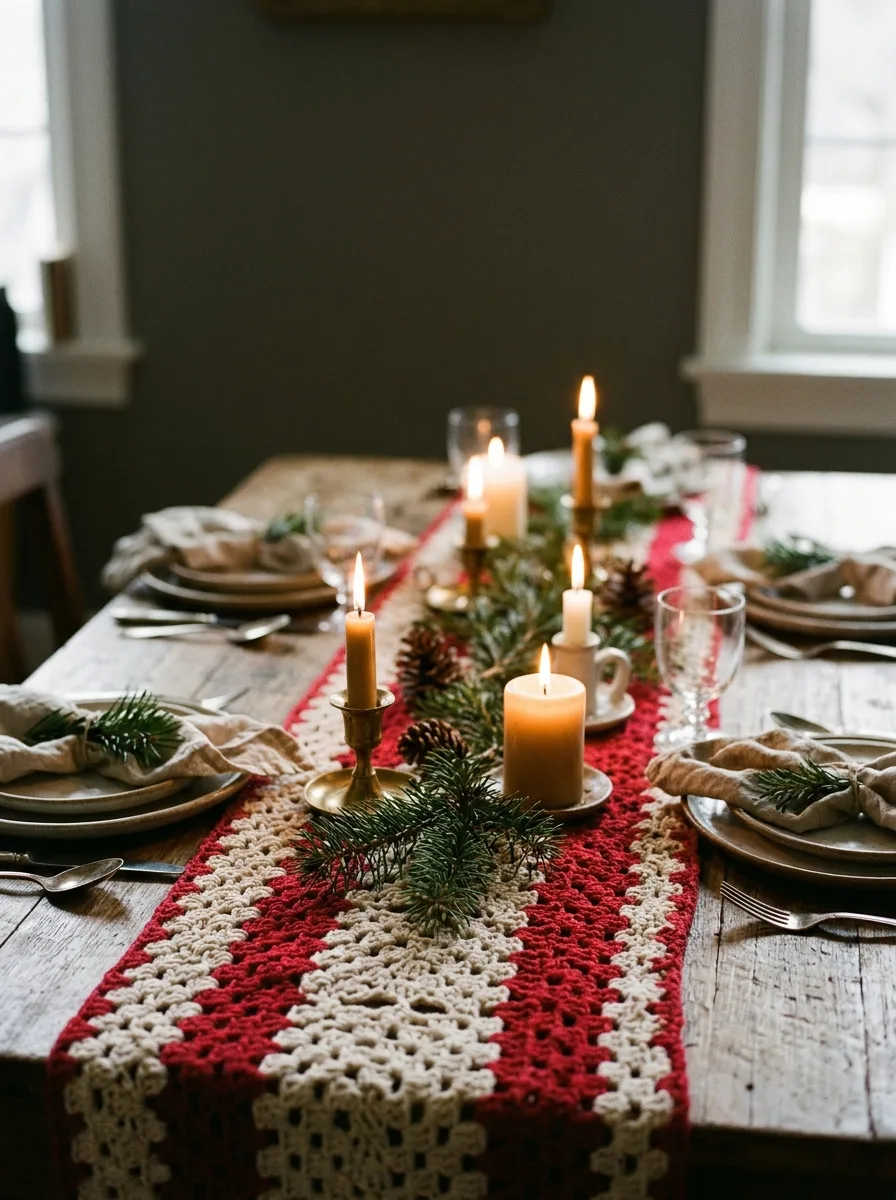
A runner in seasonal colors changes the whole table.
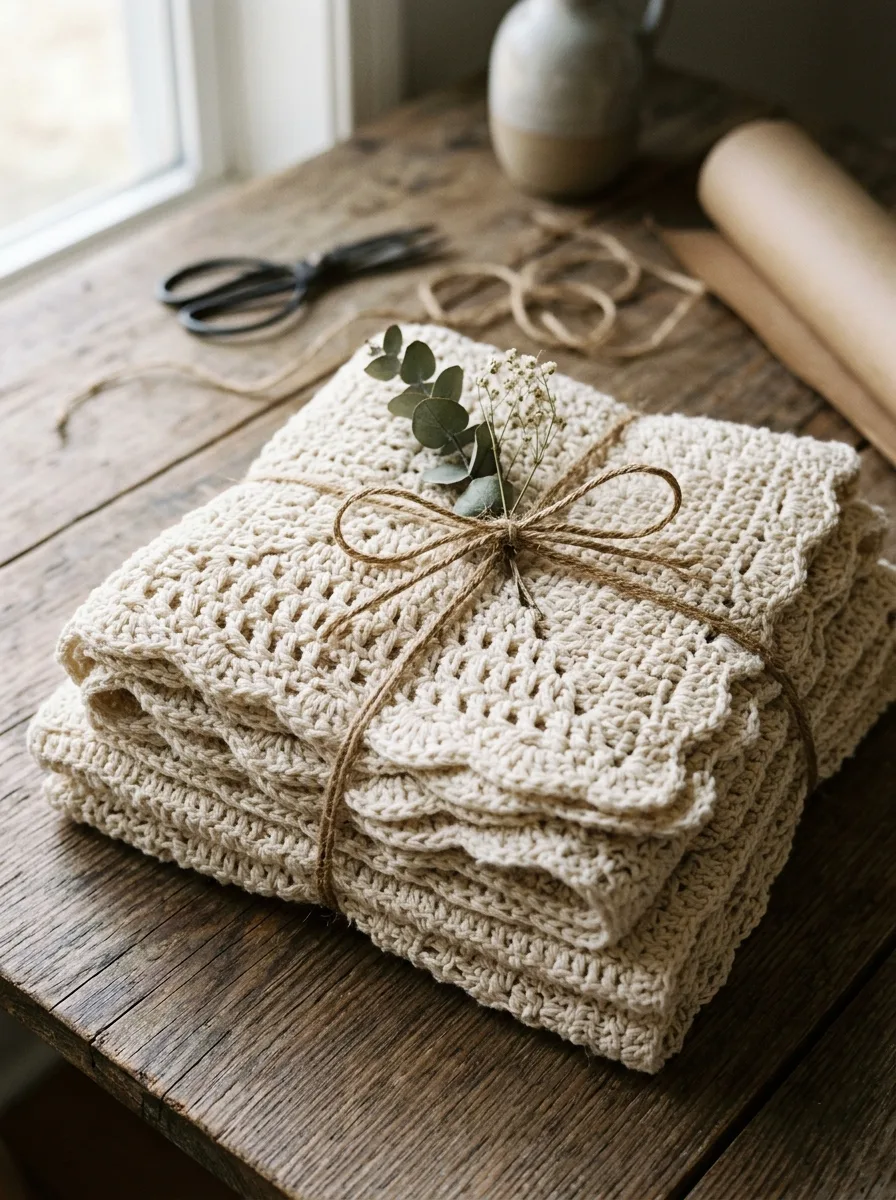
A table set tied with twine is a wedding or housewarming gift. Include a runner and four placemats. See our crochet home decor ideas and our tapestry crochet for more table textiles.
A table set tied with twine is a wedding or housewarming gift.
Free Pattern: Mesh Table Runner With Shell Edge
The runner is a mesh of dcdc = double crochetUK: treble (tr)Yarn over, insert, pull up a loop (3 loops), then [yarn over, pull through 2] twice. About twice as tall as sc. and chain-1 spaces, 25 dc wide with 24 spaces. Both short ends have a shell edge of 12 shells. Change the length by adding rows: each row adds about 1.4 cm.
Tick as you go
Mesh Table Runner (60 rows, about 85 cm)
0 / 7 done
Count check: 51 chains = 4 skipped (dc + ch-1) + 1 dc + 23 × 2 (ch-1 + dc) = 51, which gives 25 dc and 24 spaces. Shell edge: sc in the 1st dc, then 12 repeats × 2 dc = 25 dc. Bottom edge: chains 3, then 12 repeats covering chains 4–51.
Finished! Fasten off and admire it.
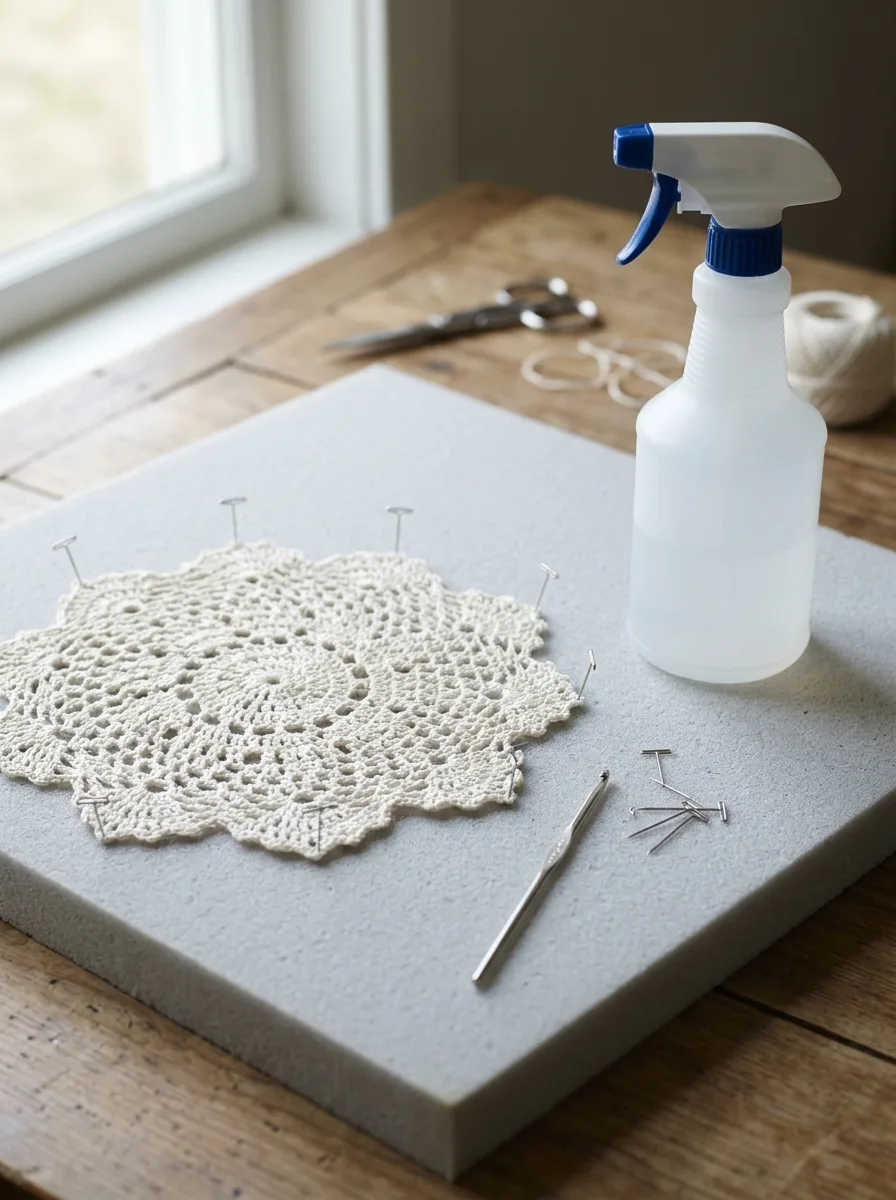
If your runner is narrower or wider than 27 cm, change the foundation chain by multiples of 2 and keep the shell edge repeats in step: each extra pair of chains adds one dc and one space. Starch gives mesh a crisp look and keeps the edges straight.
Size 10 cotton thread gives fine, delicate lace; DK cotton gives a thicker, easier runner. Mercerized cotton is best because it has a sheen and holds starch well.
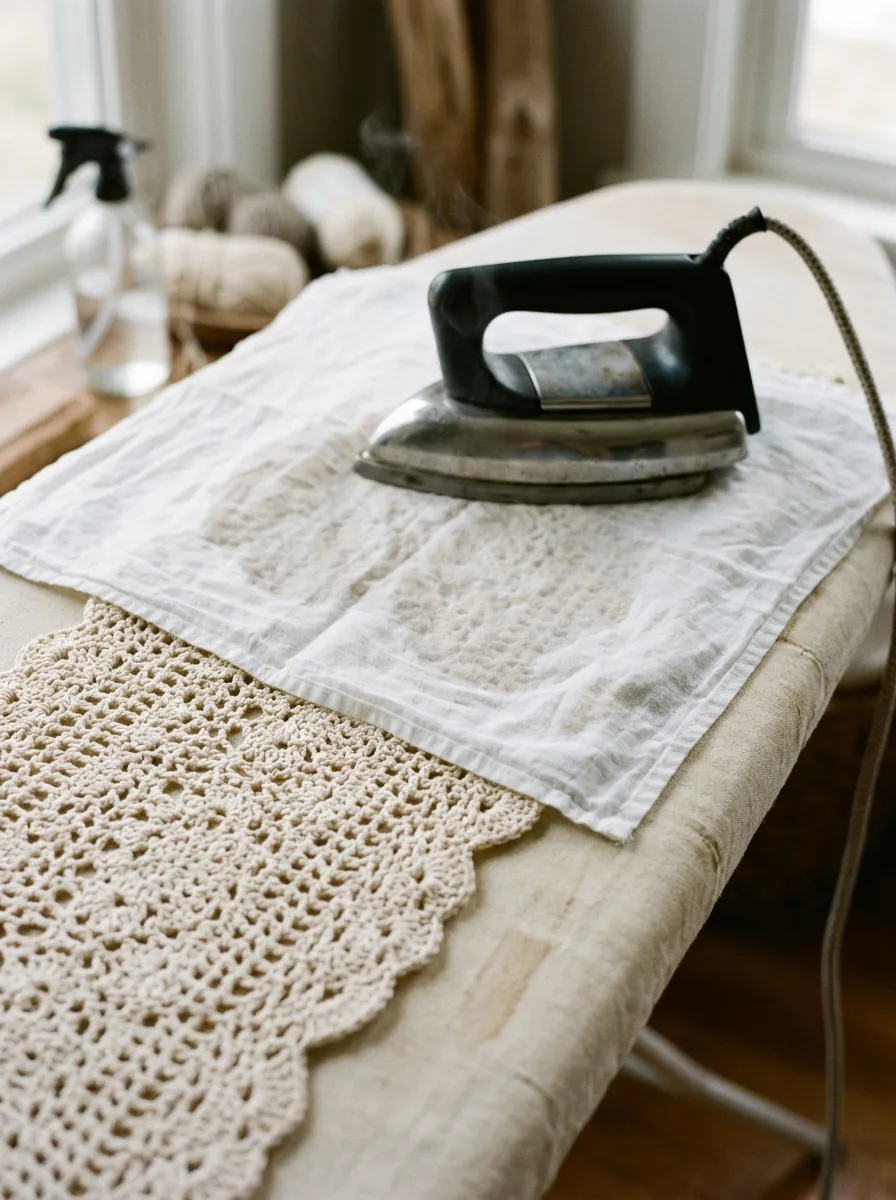
Soak it in diluted starch, press out the water, pin it flat to the measurements you want and leave it to dry. Press with a cool iron under a damp cloth if you need extra crispness.
How long should a table runner be?
Leave about 20 to 30 cm hanging over each end of the table, so for a 150 cm table a runner of about 200 cm is typical. For a table centerpiece, a short runner of 80 cm is fine.
Can I make a tablecloth from motifs?
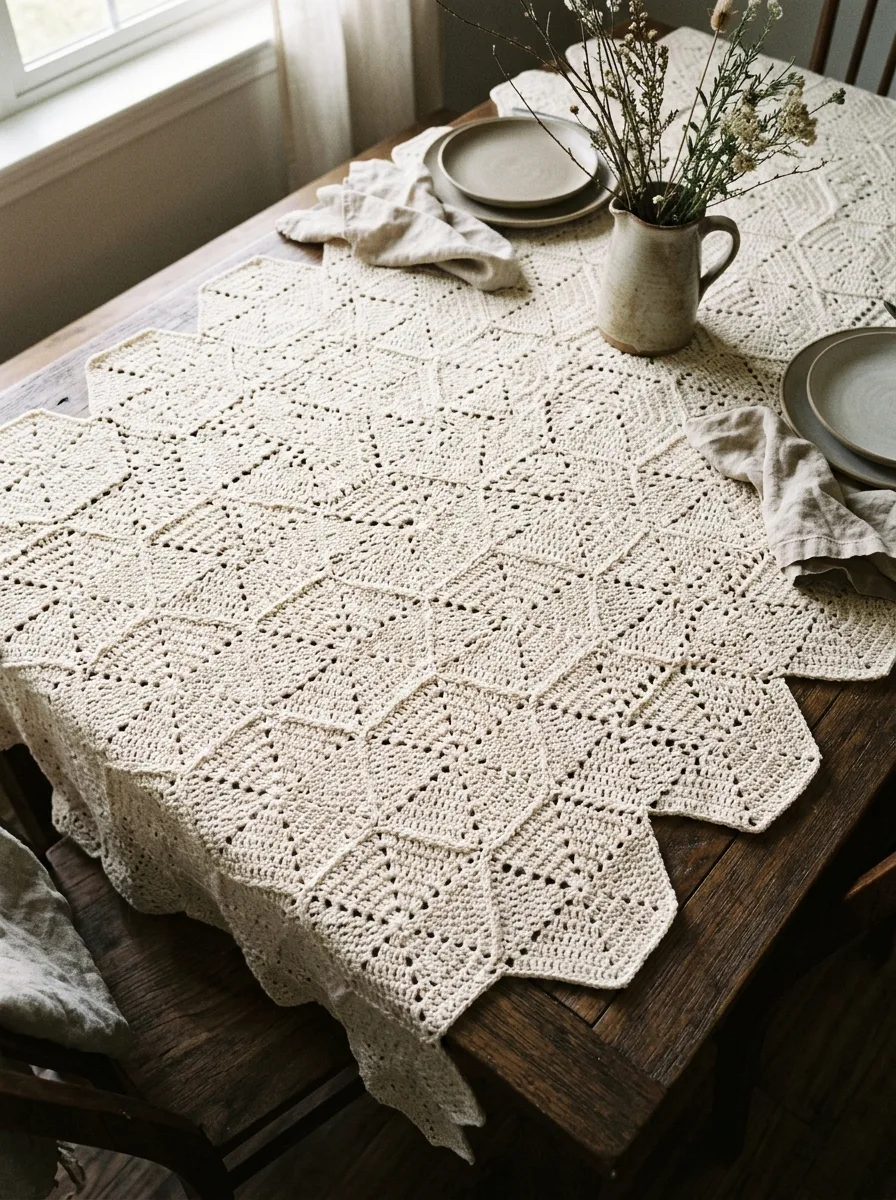
Yes. Join motifs in strips, then join the strips together. Flower motifs that join as you go need no sewing at the end. A tablecloth is a long-term project, so make a runner first.