Crochet Temperature Blanket: How to Plan One (and 12 Color Ideas)
How to plan a crochet temperature blanket: choose colors and a temperature key, pick a stitch, work out your stitch count and length, with 12 color ideas.
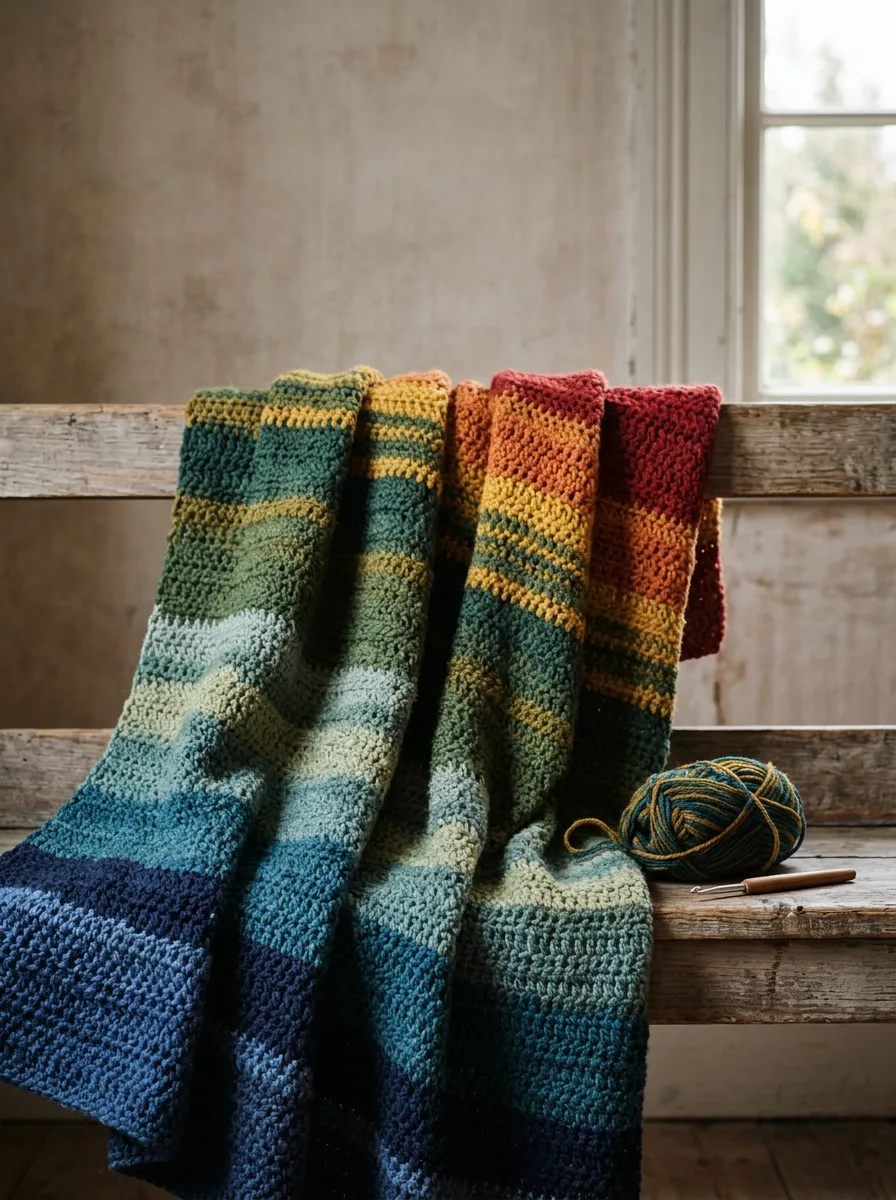
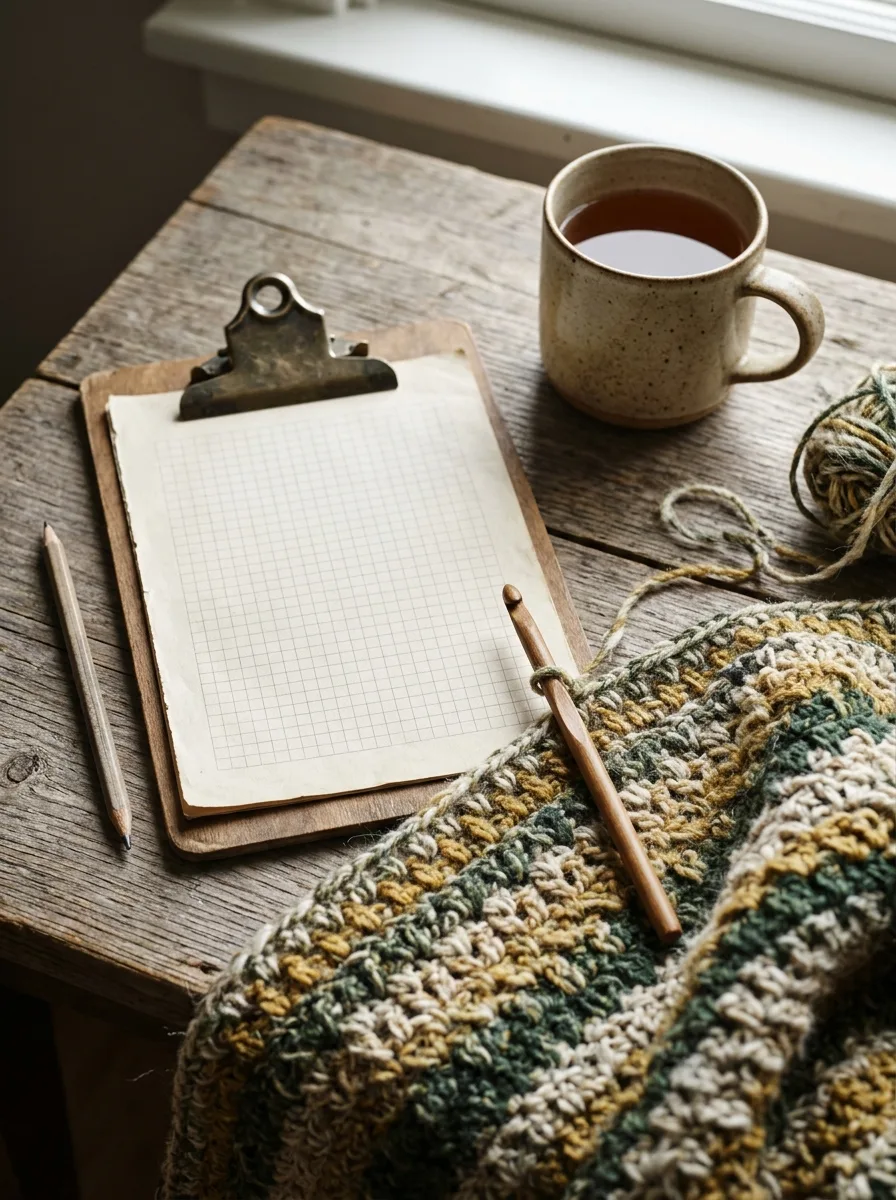
A temperature blanket is a year-long project: one row per day, a color for each temperature and a blanket that records the weather. It is also a project that fails when planning is skipped, so this page is a planning guide. You will choose a stitch, set a temperature key, work out the stitch count and the length, and track your rows so you never lose your place. It includes 12 color ideas for different climates. For general blanket ideas see our crochet blanket ideas.
Choose Your Rule Before You Buy Yarn
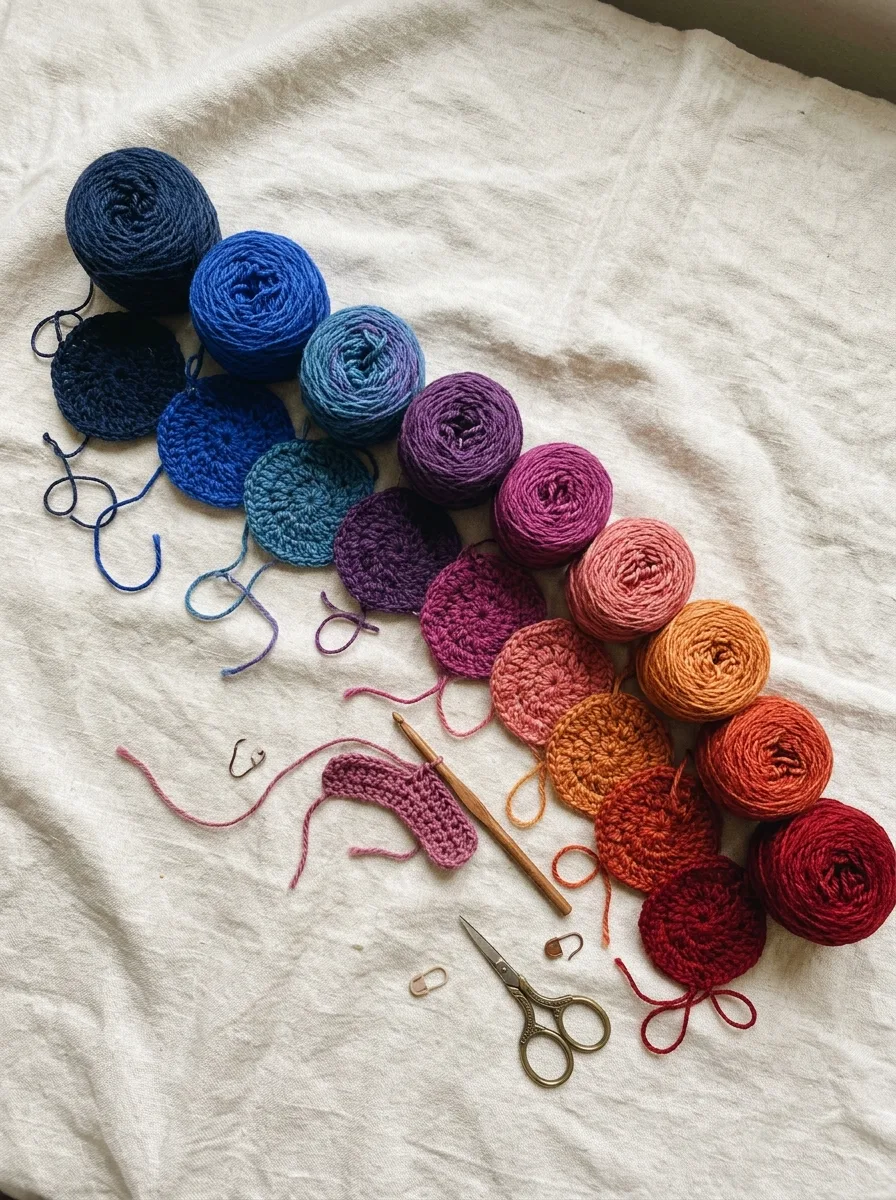
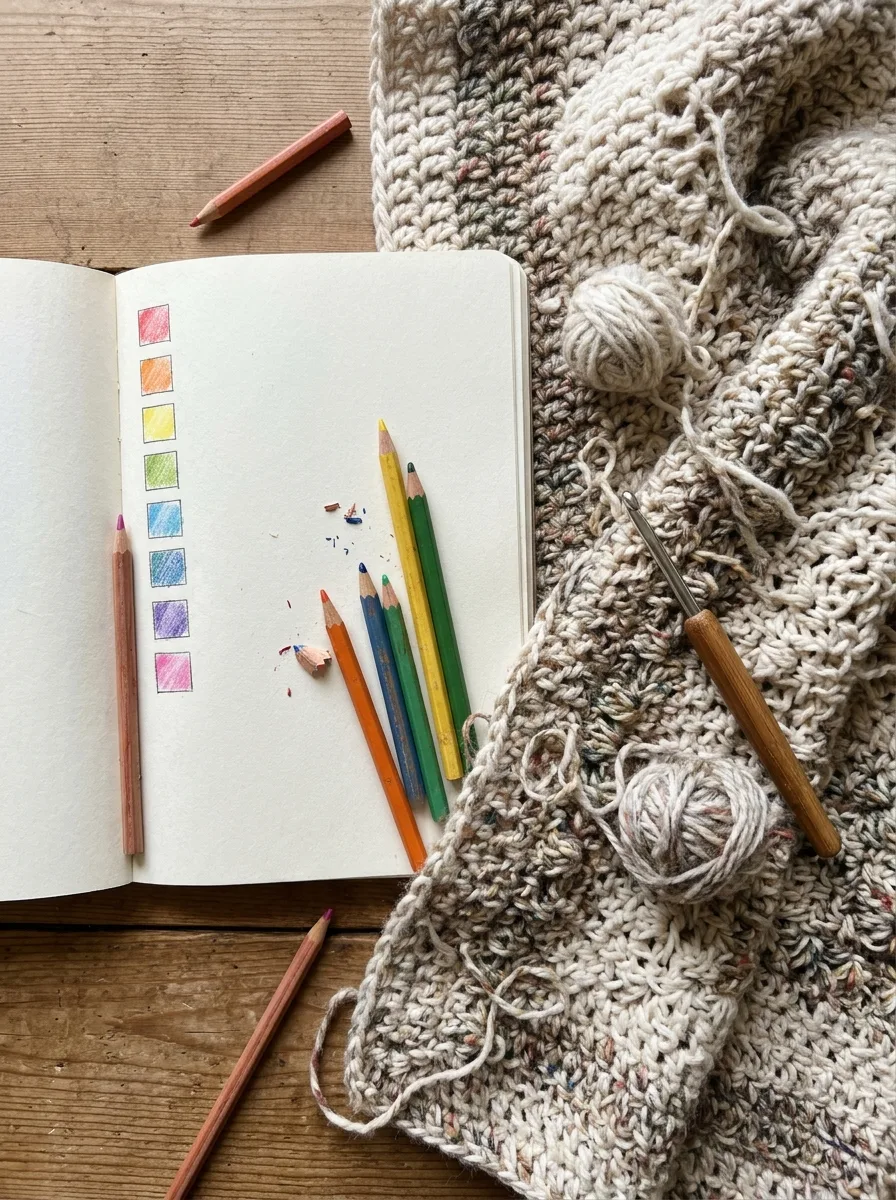
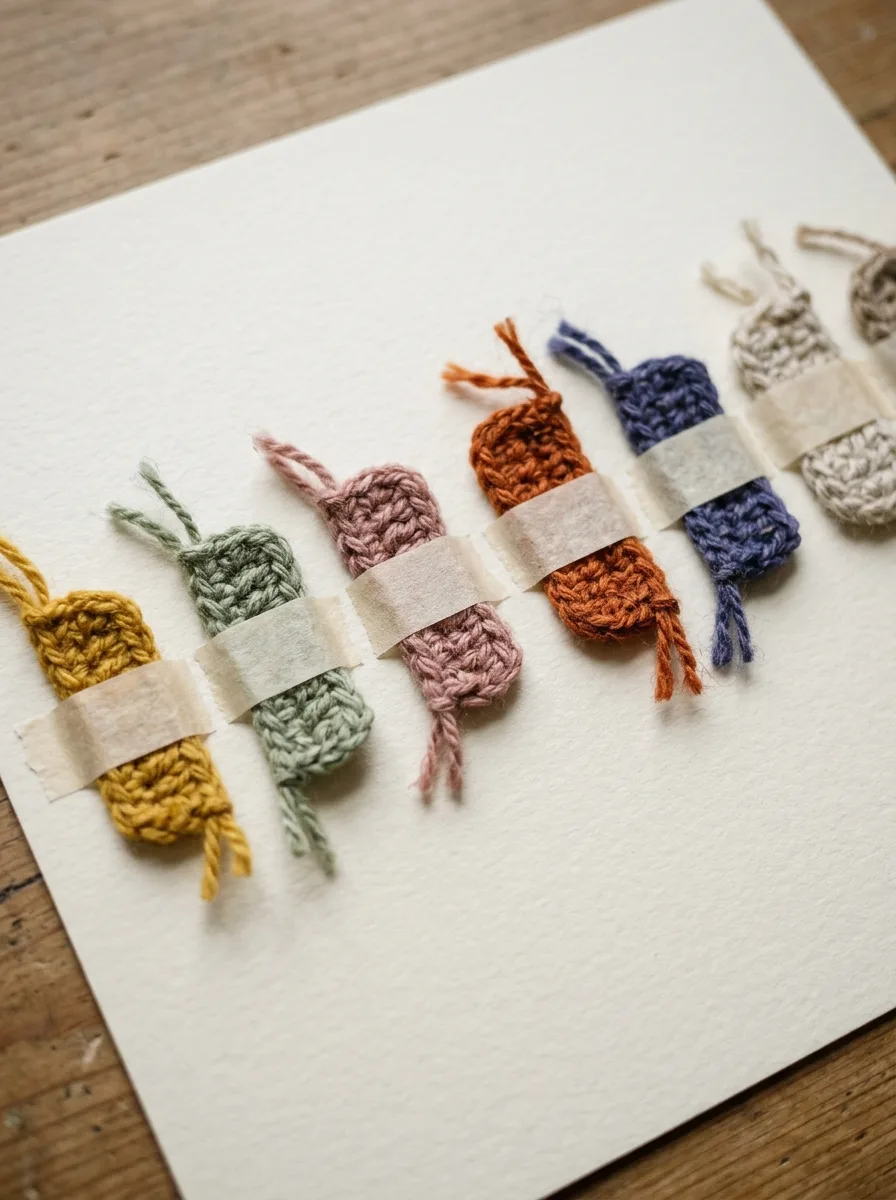
Pick nine or ten colors for the temperature range. Divide the year’s temperatures into bands of 3 to 5 degrees, with one color for each band.
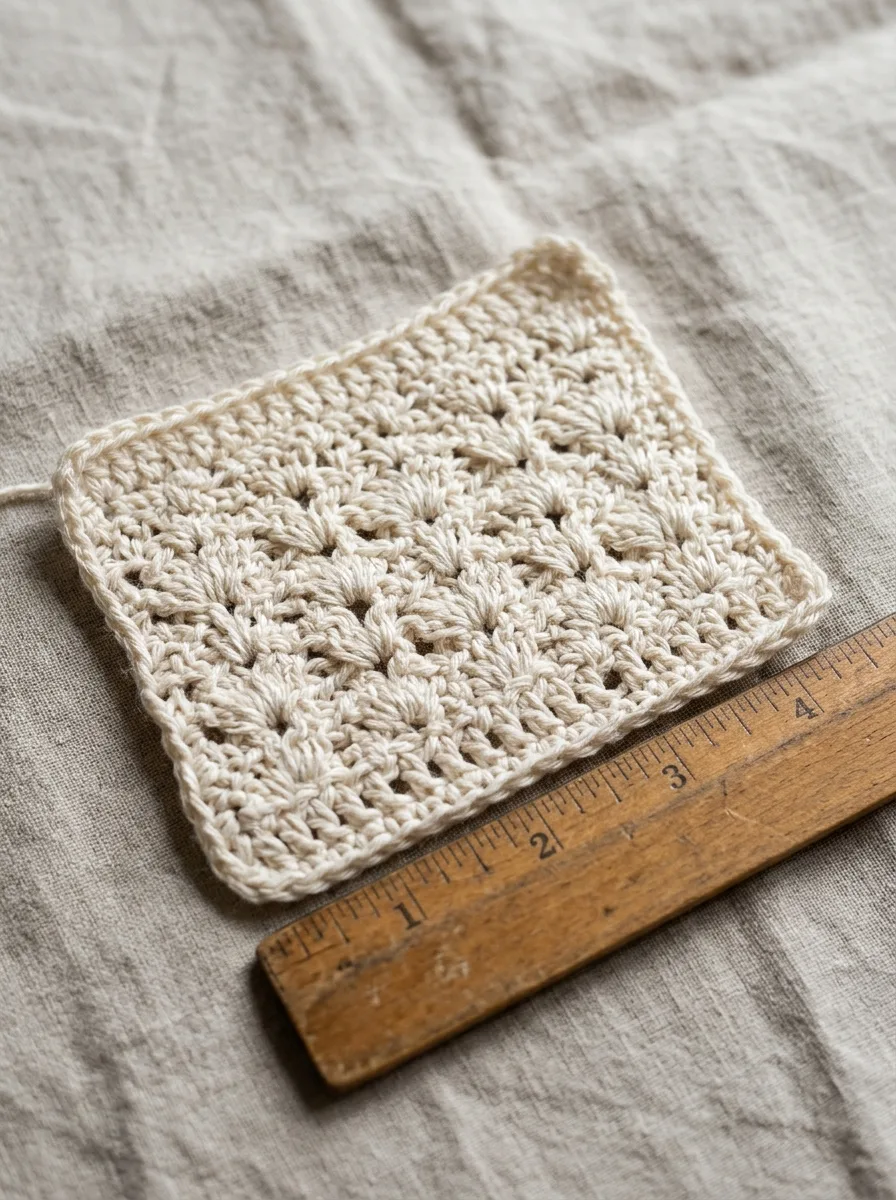
A swatch tells you how wide the blanket will be. Make a 15 cm swatch, count the stitches and use the formulas below. Read our yarn guide for help choosing a yarn.
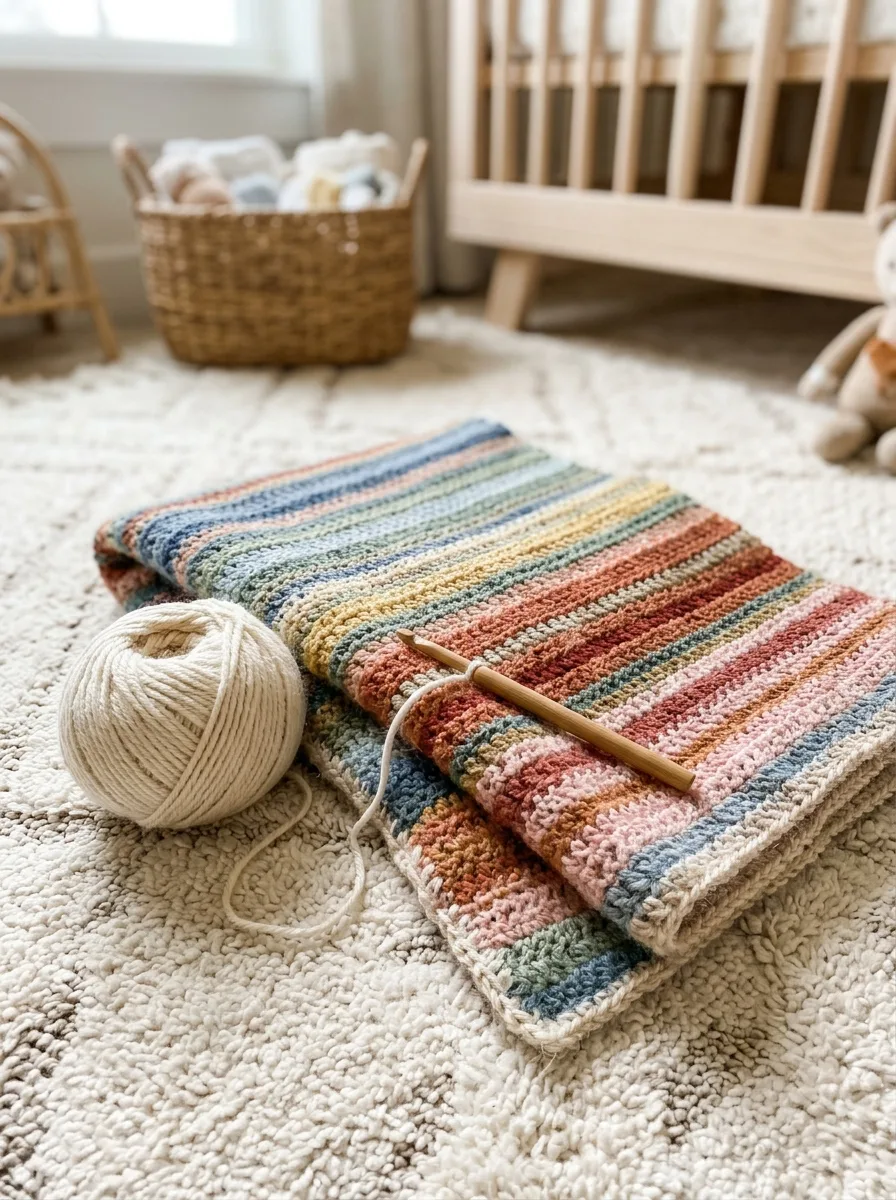
Record a wedding year or a baby’s first year in stitches.
The Stitch-Count Formula
Use these steps with your own swatch:
Stitches per 10 cm (S): count the stitches across a 10 cm swatch.
Rows per 10 cm (R): count the rows in 10 cm.
Width in stitches = S × width in cm ÷ 10, plus 2 for the foundation chain in half double crochet.
Length in cm = number of rows × 10 ÷ R.
Example swatch (worsted, 5.5 mm hook, hdc)
Value
Stitches per 10 cm
13
Rows per 10 cm
10
Width 120 cm
13 × 12 = 156 hdc (foundation chain 158)
365 rows (one per day)
365 × 10 ÷ 10 = 365 cm long
183 rows (one every second day)
about 183 cm long
If a year of rows is too long, work one row every two days, or work two rows per day with a narrower blanket. Count the foundation chain to match your target stitch count, and add a border at the end.
A year’s yarn: each hdc stitch uses about 4 cm of yarn, so 156 stitches × 365 rows = 56,940 stitches ≈ 2,280 m (about 2.3 km), or roughly 1.3 kg of worsted cotton. Weigh your swatch to refine the estimate, and divide the total among your colors by how many days fall in each temperature band.
Pick a stitch, choose about 9 or 10 colors for the temperature range, draw a color key and swatch to find your width. Then crochet one row per day in the color that matches the day's high temperature.
How wide should a temperature blanket be?
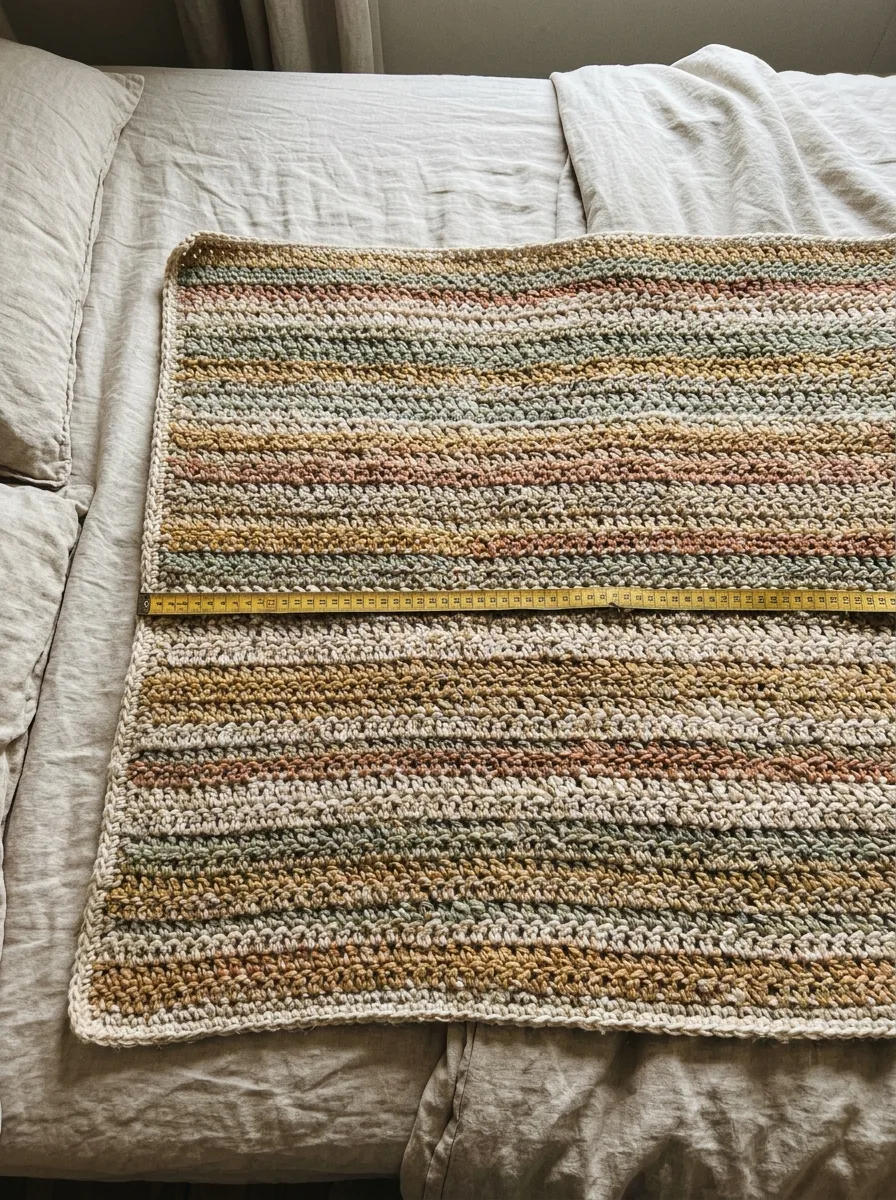
A throw is about 120 cm wide. Work out the stitch count from your swatch: stitches per 10 cm × 12 gives the width in stitches. Then add the length by multiplying days by the row height.
In half double crochet with worsted yarn, about 365 rows × 1 cm = 3.6 m, which is a long runner or a bed-end throw. For a standard throw, work one row every second day, or half the year.
Which stitch is best for a temperature blanket?
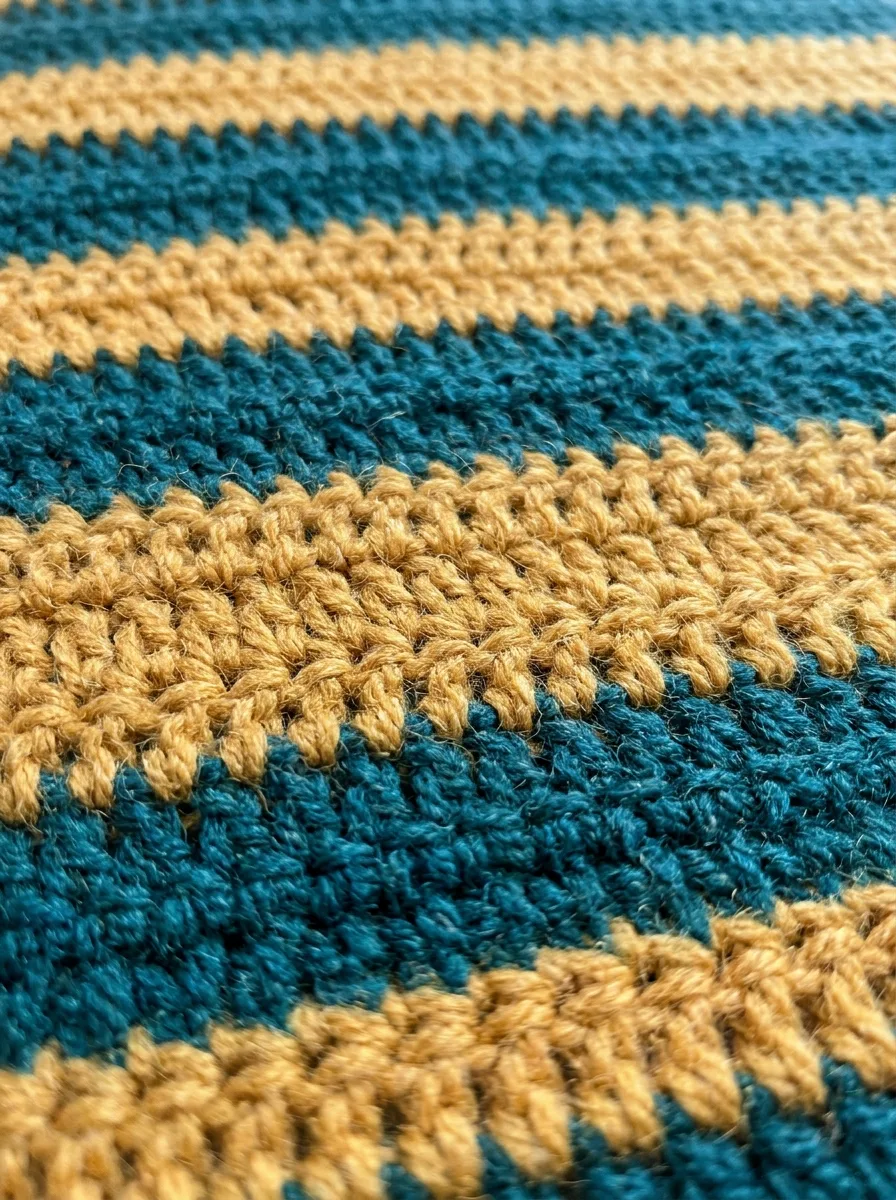
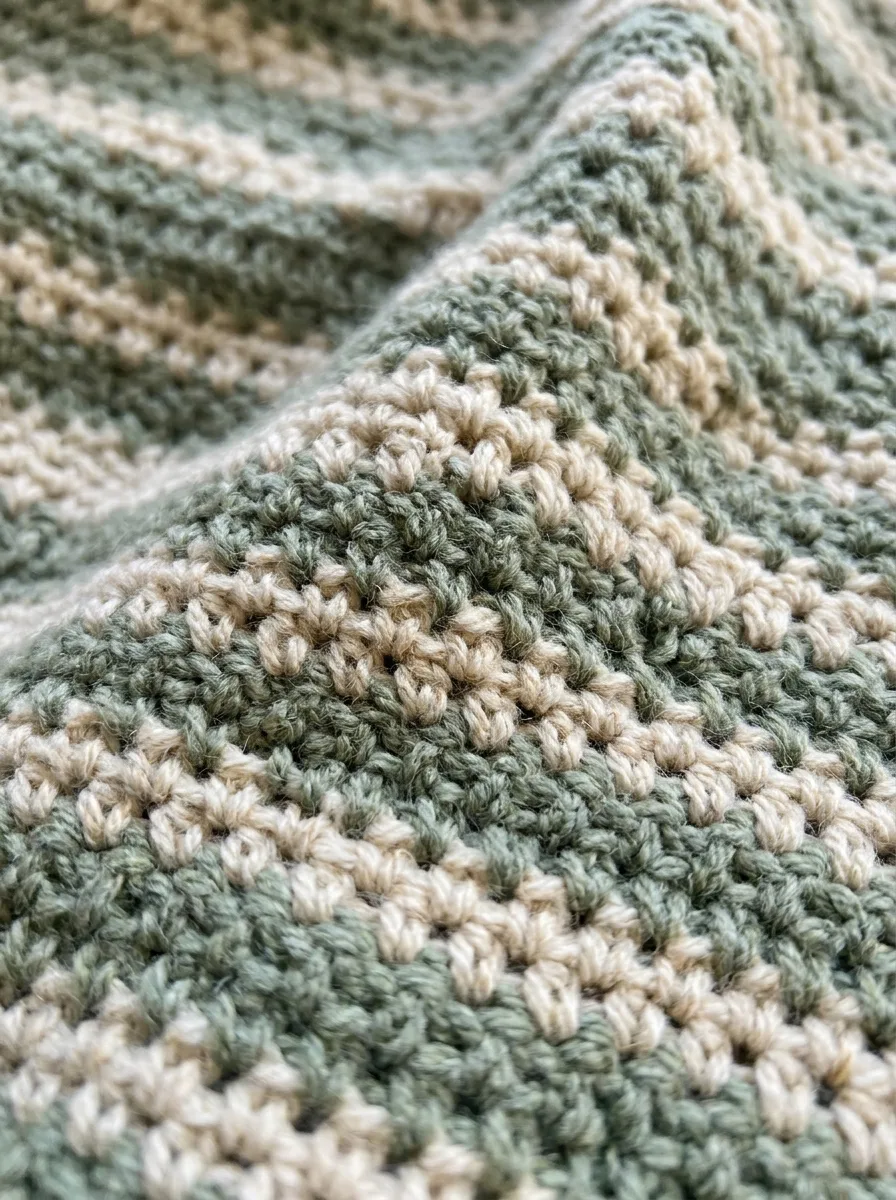
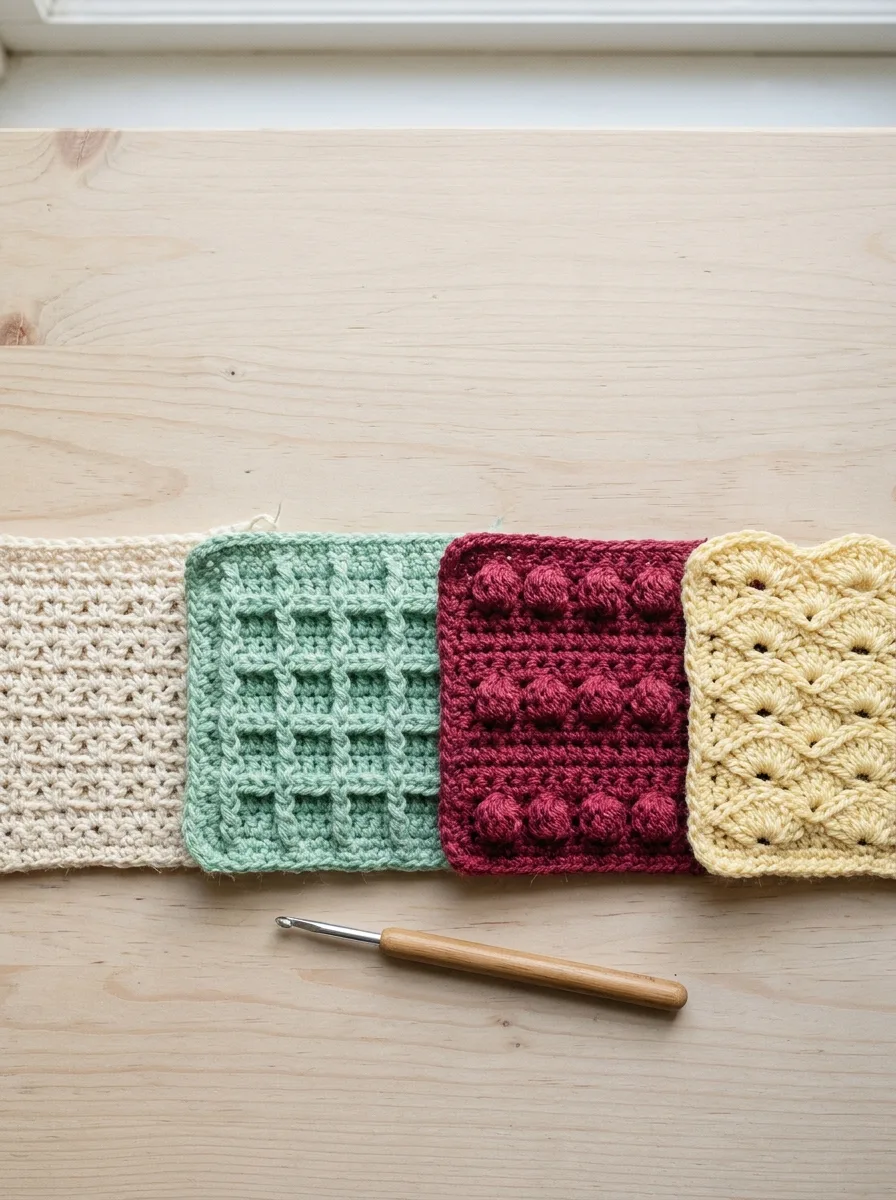
Half double crochet is quick and gives clean stripes. Single crochet is dense and slow, and double crochet is fast but rows are tall. Moss stitch adds texture.
Can I make a baby temperature blanket?
Yes, by recording the first year of the baby's life. Use soft washable yarn, keep the blanket out of the cot and sew in the ends securely.