Crochet Star Blankets: 12 Ideas From Single Stars to Starburst Throws
Crochet star blanket ideas, from single stars to starburst throws, how to join star motifs without gaps and a free star hexagon motif and blanket counts.
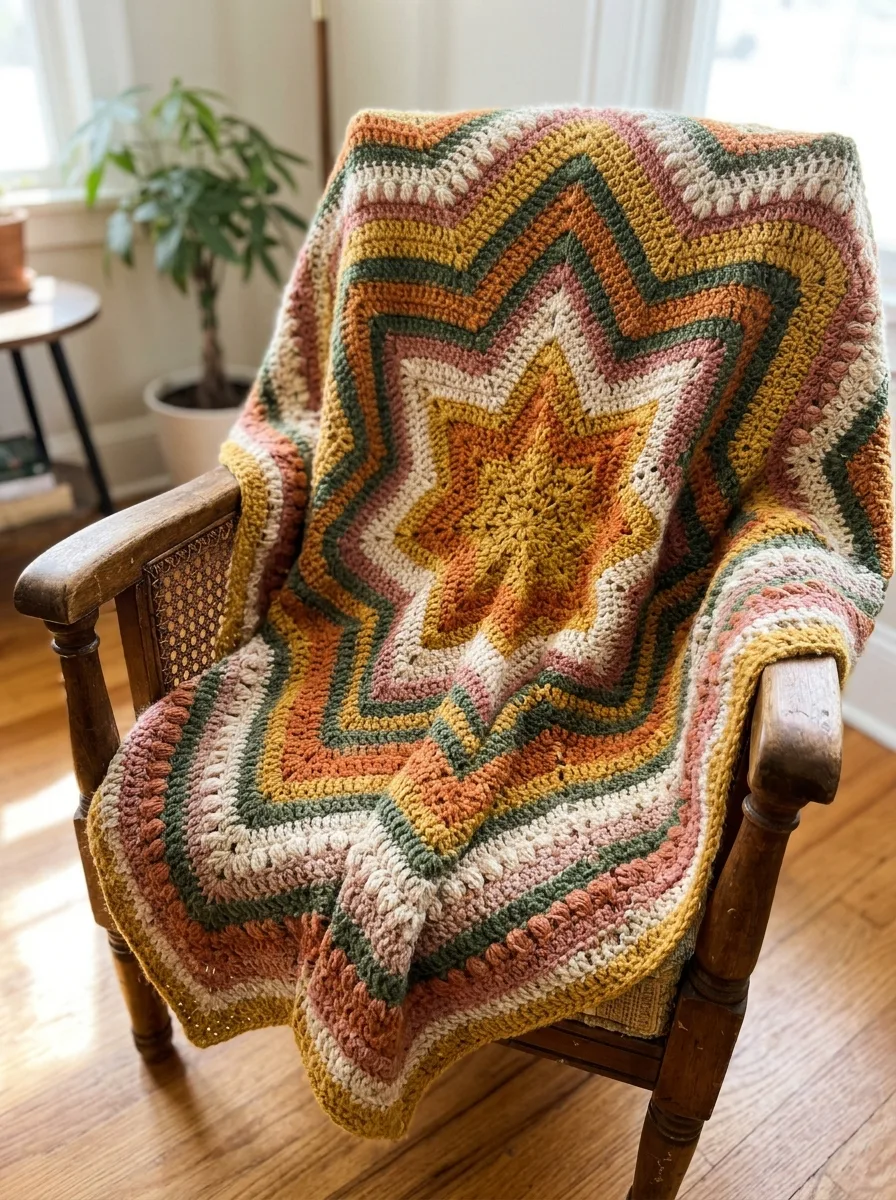
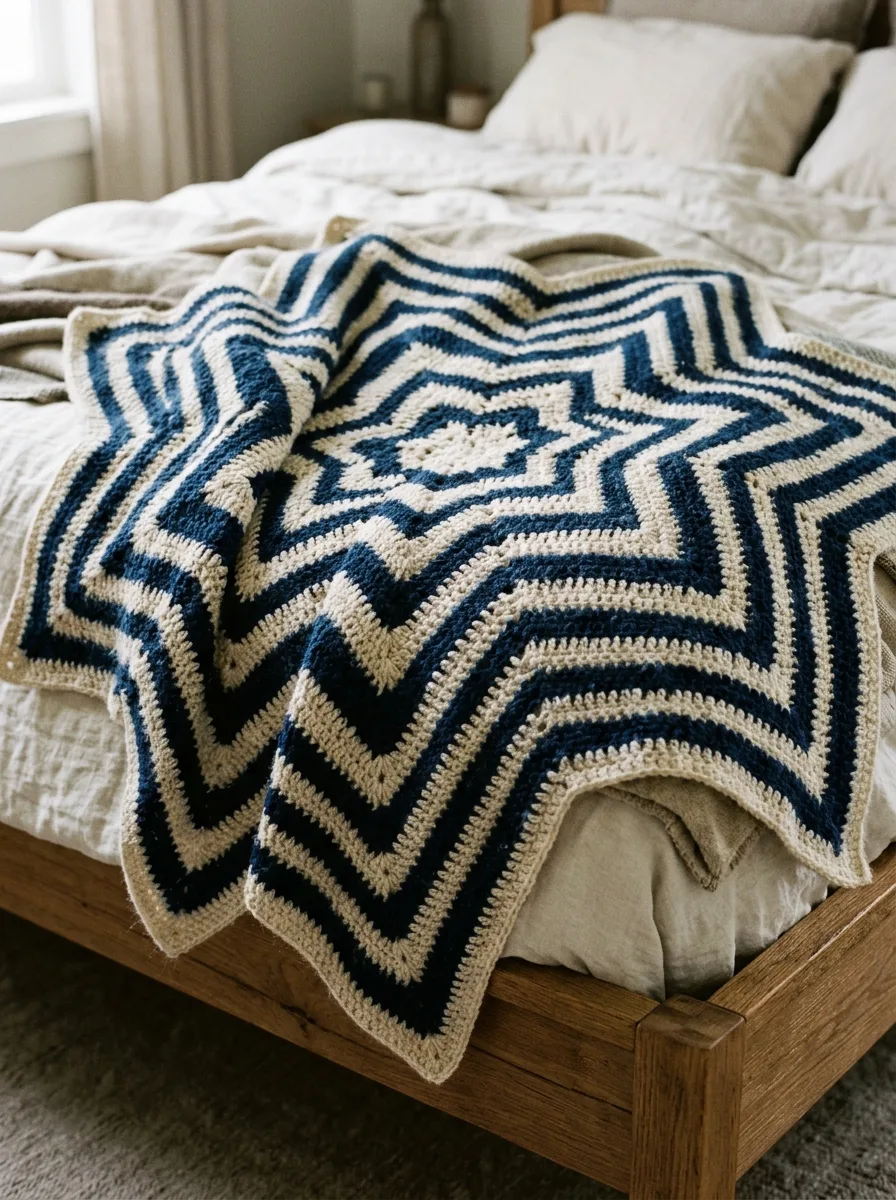
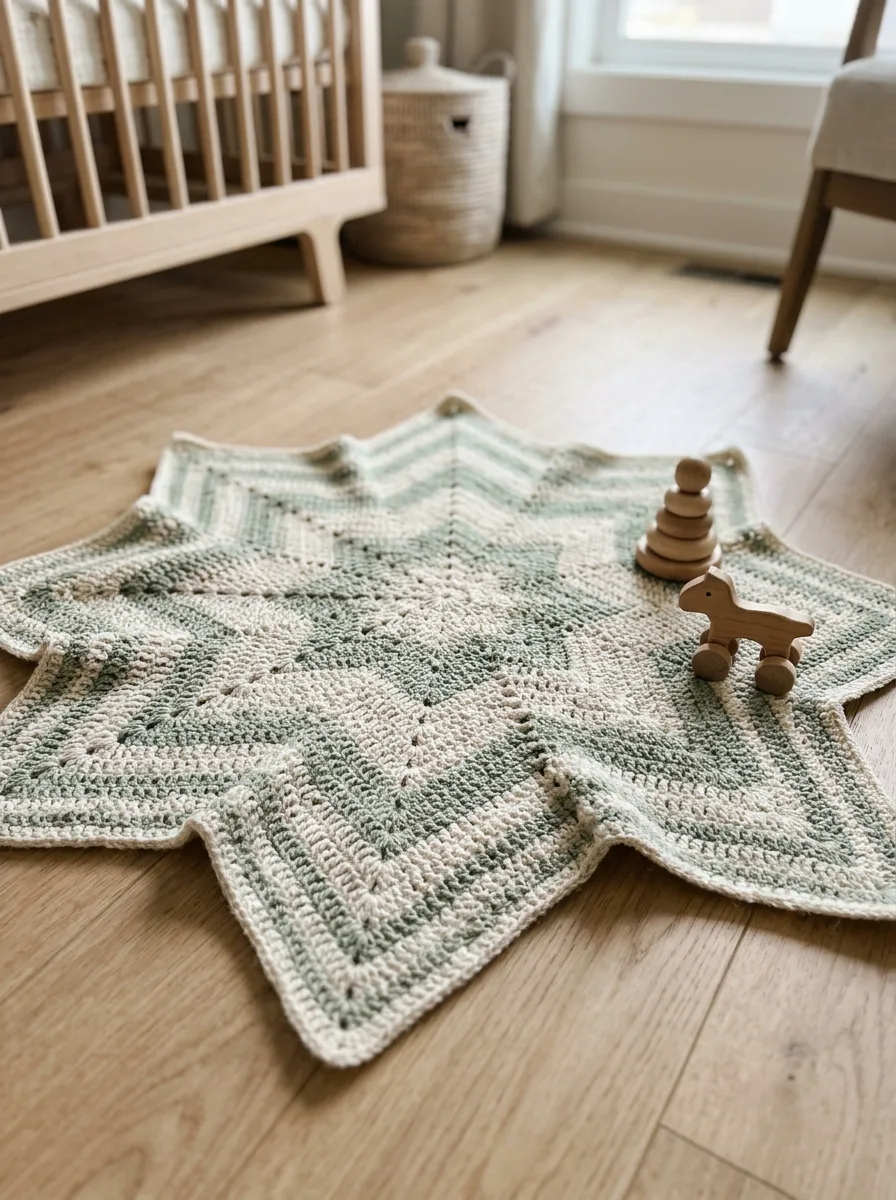
Stars are the most distinctive blanket motif on Pinterest, and the hardest part is joining them. A star has points, and points leave gaps. This page shows how a star is built, how to turn it into a hexagon so that joining is easy, which layouts work, and 12 star blanket ideas for babies, lap throws and big starburst designs. It ends with a free star hexagon motif and the counts you need to size a blanket. For other blanket ideas see our crochet blanket ideas.
How a Star Is Built
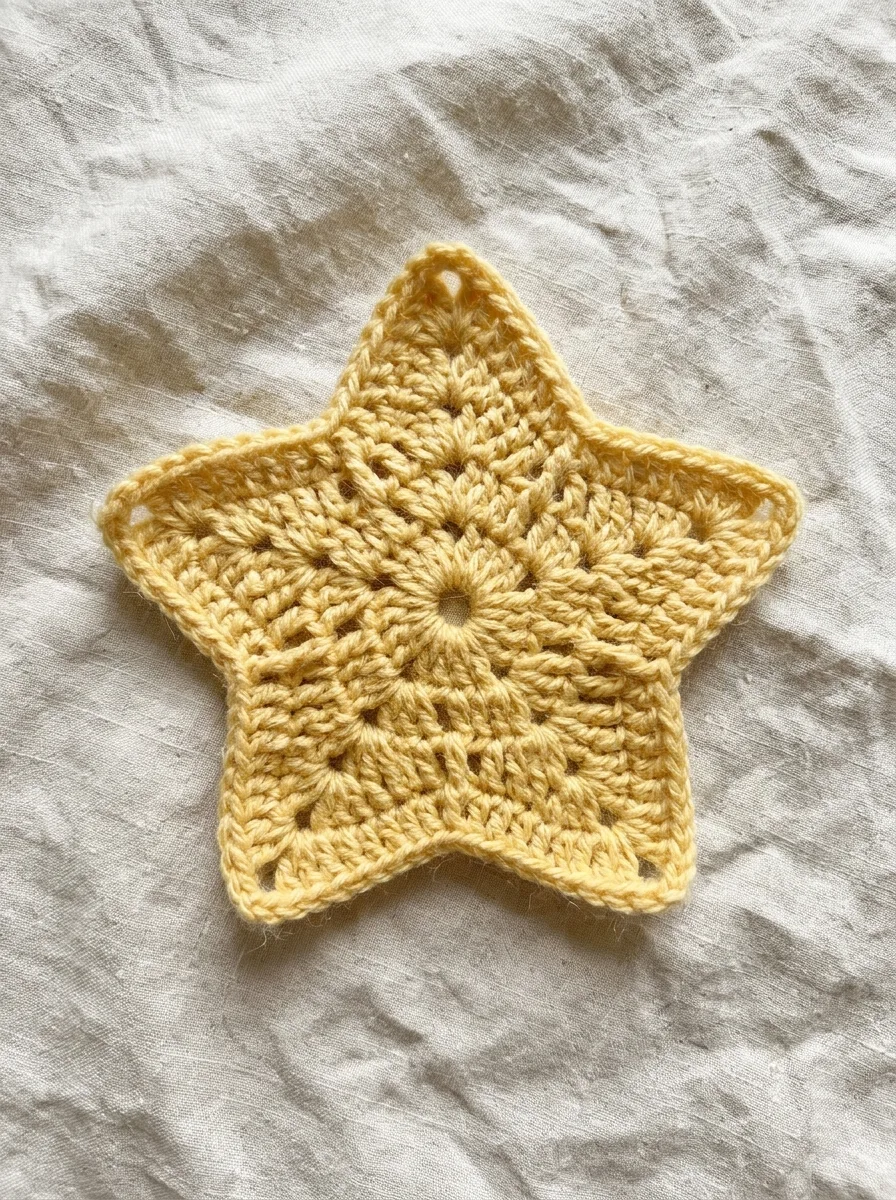
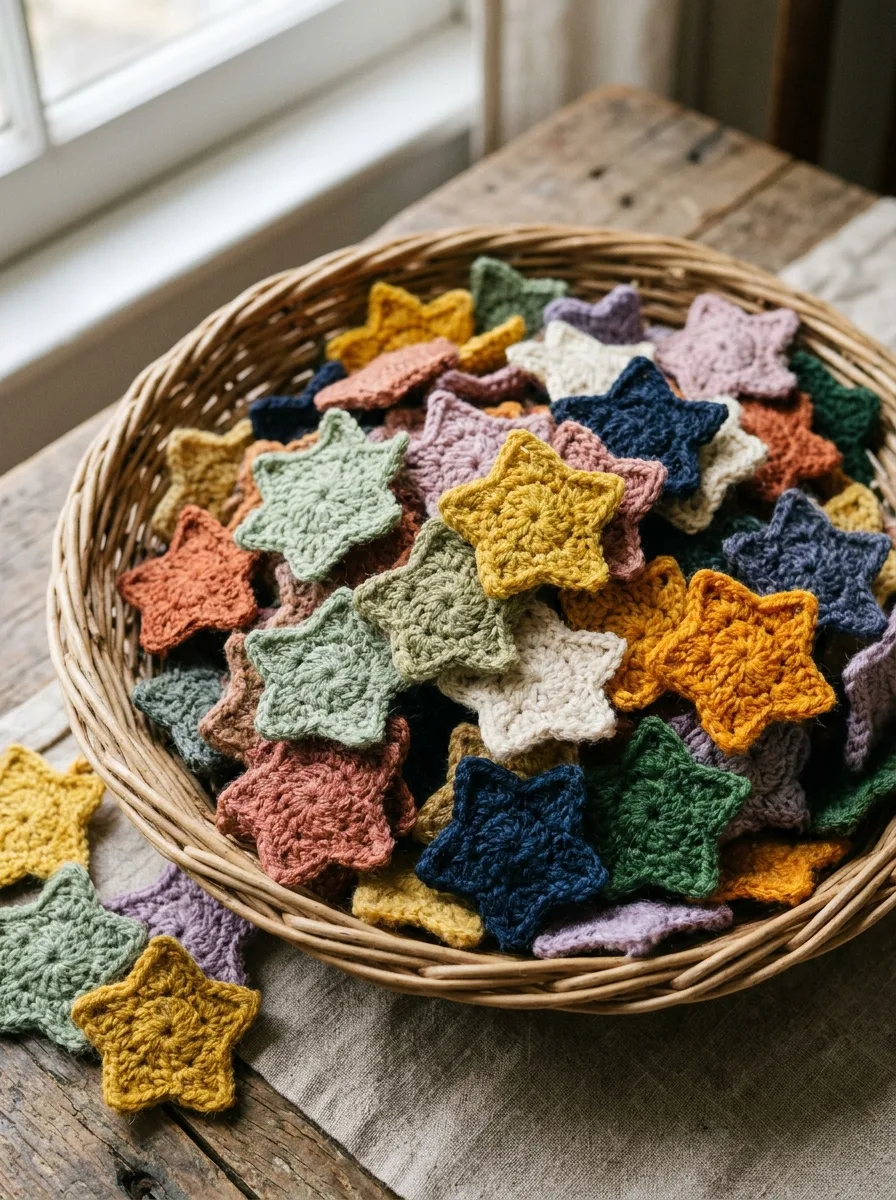
A star is five or six points worked from one center. The pattern below uses six, because six-point stars fit the hexagon grid.
Fill the gaps with tiny triangles for a flat blanket. The hexagon pattern below does this by filling the pockets with double crochet, so there are no gaps to fill.
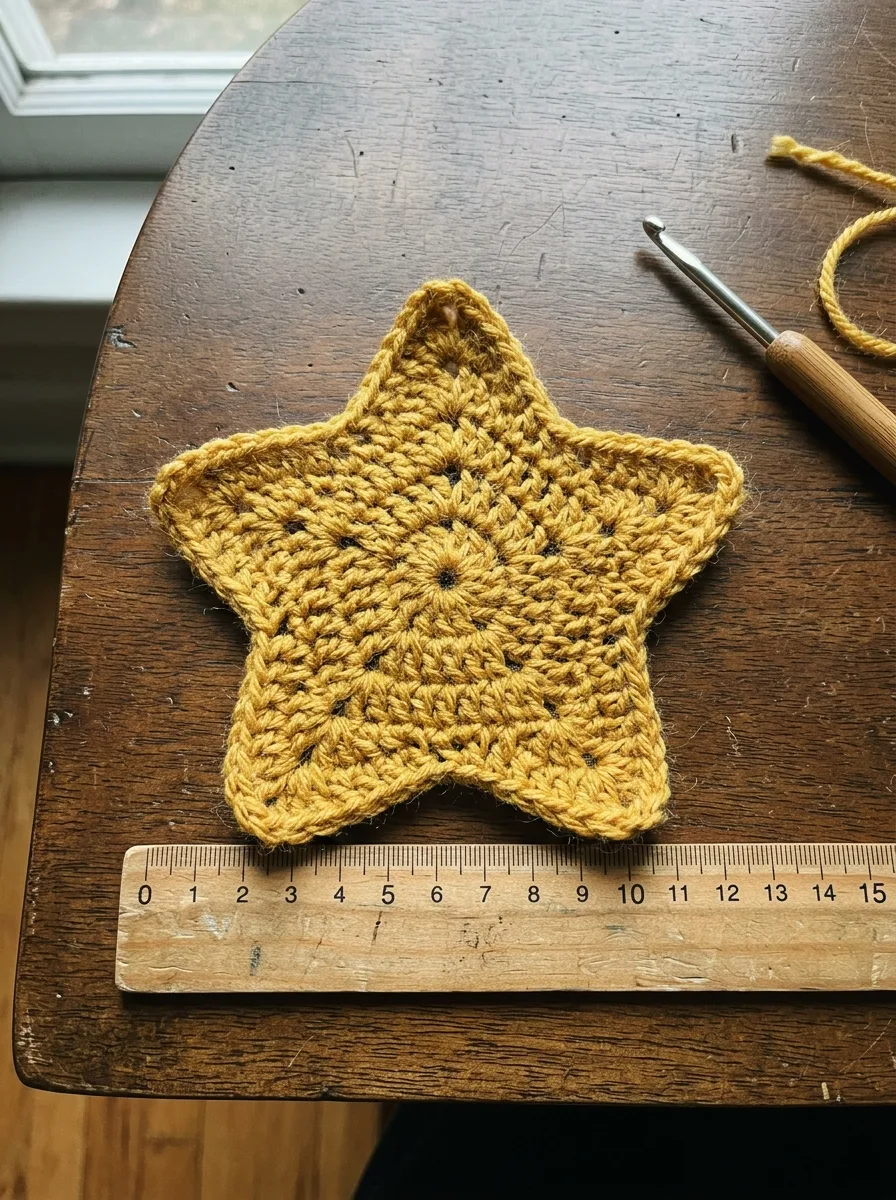
Each motif is a six-point star in the center color (Rnds 1–2) surrounded by a round of dcdc = double crochetUK: treble (tr)Yarn over, insert, pull up a loop (3 loops), then [yarn over, pull through 2] twice. About twice as tall as sc. in the background color (Rnd 3) that fills the pockets and makes the hexagon. The star uses scsc = single crochetUK: double crochet (dc)Insert hook, yarn over, pull up a loop (2 loops), yarn over, pull through both. The shortest, densest basic stitch., hdchdc = half double crochetUK: half treble (htr)Yarn over, insert hook, pull up a loop (3 loops), yarn over, pull through all three. and dcdc = double crochetUK: treble (tr)Yarn over, insert, pull up a loop (3 loops), then [yarn over, pull through 2] twice. About twice as tall as sc..
Baby
Lap
Throw
Size
60 × 75 cm
75 × 90 cm
90 × 120 cm
Hexagons (10 cm)
about 52
about 78
about 124
Yarn per hexagon
11 m
11 m
11 m
Total yarn
about 570 m
about 860 m
about 1,370 m
Tick as you go
Star Hexagon Motif (about 10 cm)
0 / 6 done
Count check: the ring has 12 sc, and 6 star points use 2 stitches each (12). Rnd 3 has 6 corners of (2 dc, ch 2, 2 dc) and 7 side dc per side: 6 × 4 + 6 × 7 = 66 dc. Number of hexagons = area ÷ (0.87 × 10 × 10 cm²): baby 4,500 ÷ 87 ≈ 52, lap 6,750 ÷ 87 ≈ 78, throw 10,800 ÷ 87 ≈ 124.
Finished! Fasten off and admire it.
Lay the hexagons out in staggered rows before you join them, and count the final number: edges that do not fit the rectangle can be trimmed with half hexagons or left with a zigzag edge and finished with the border. Make a test hexagon first, and measure its width across the flats to confirm the 10 cm size.
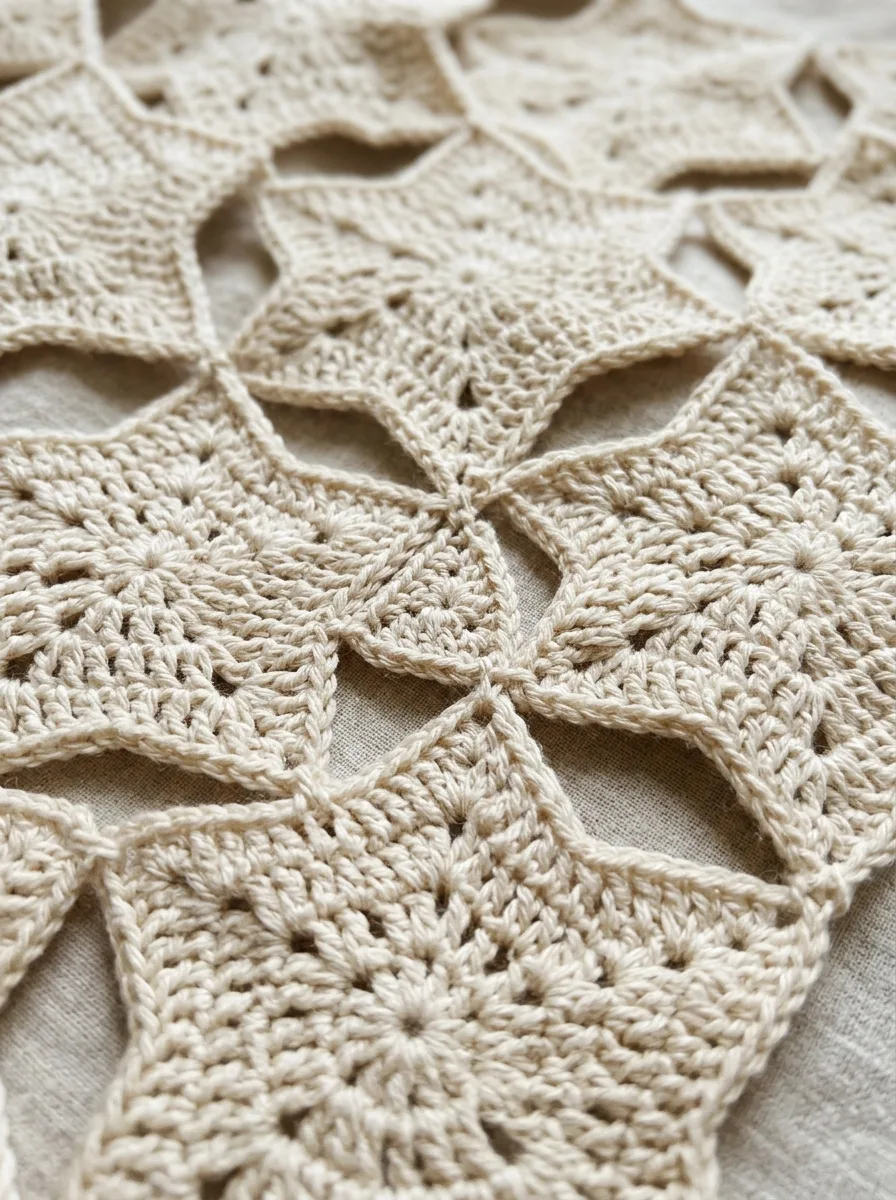
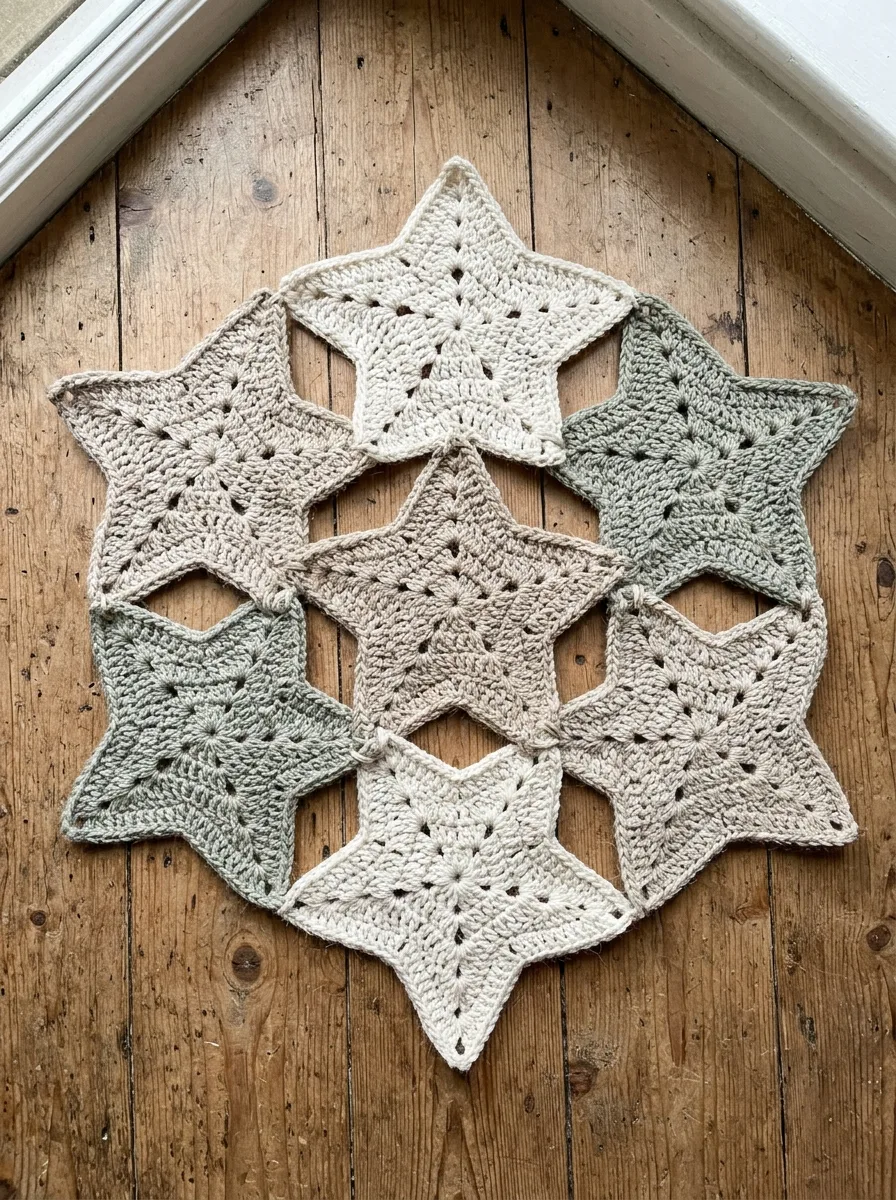
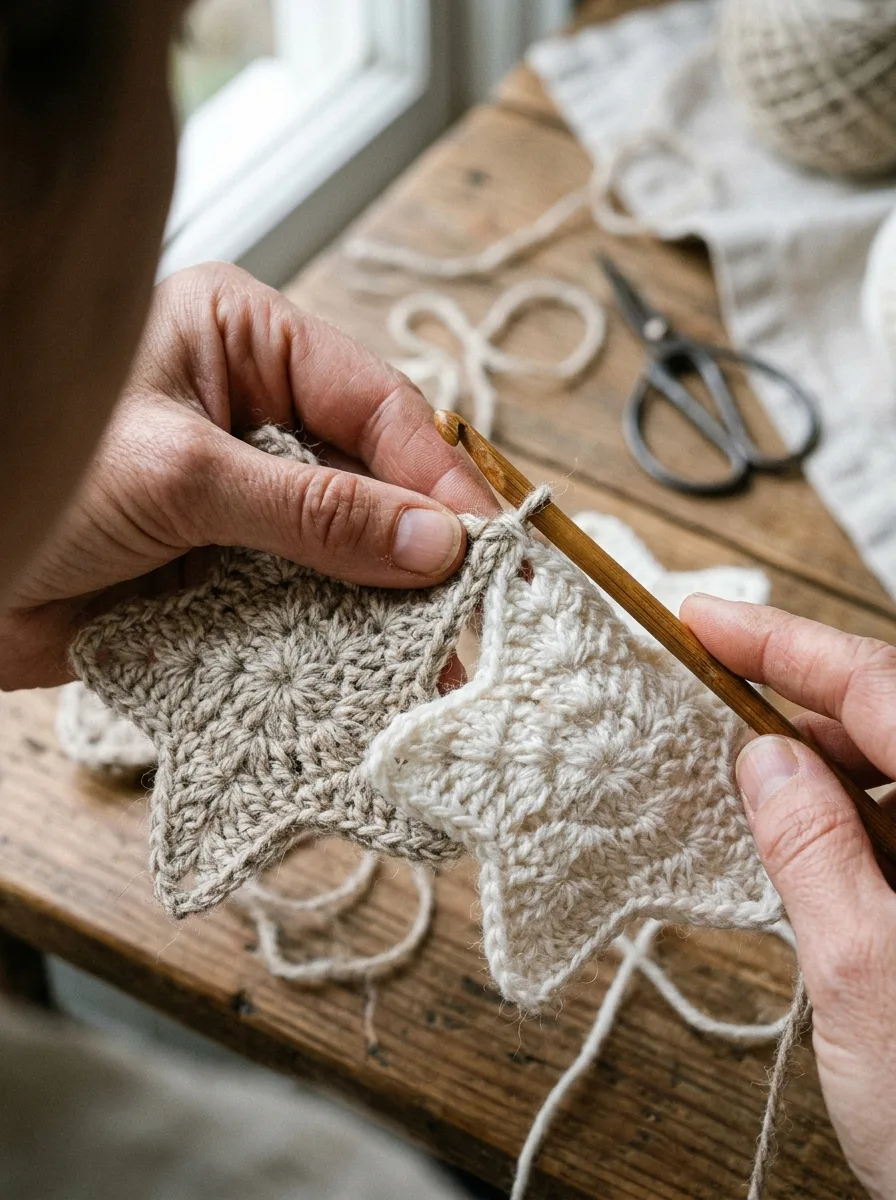
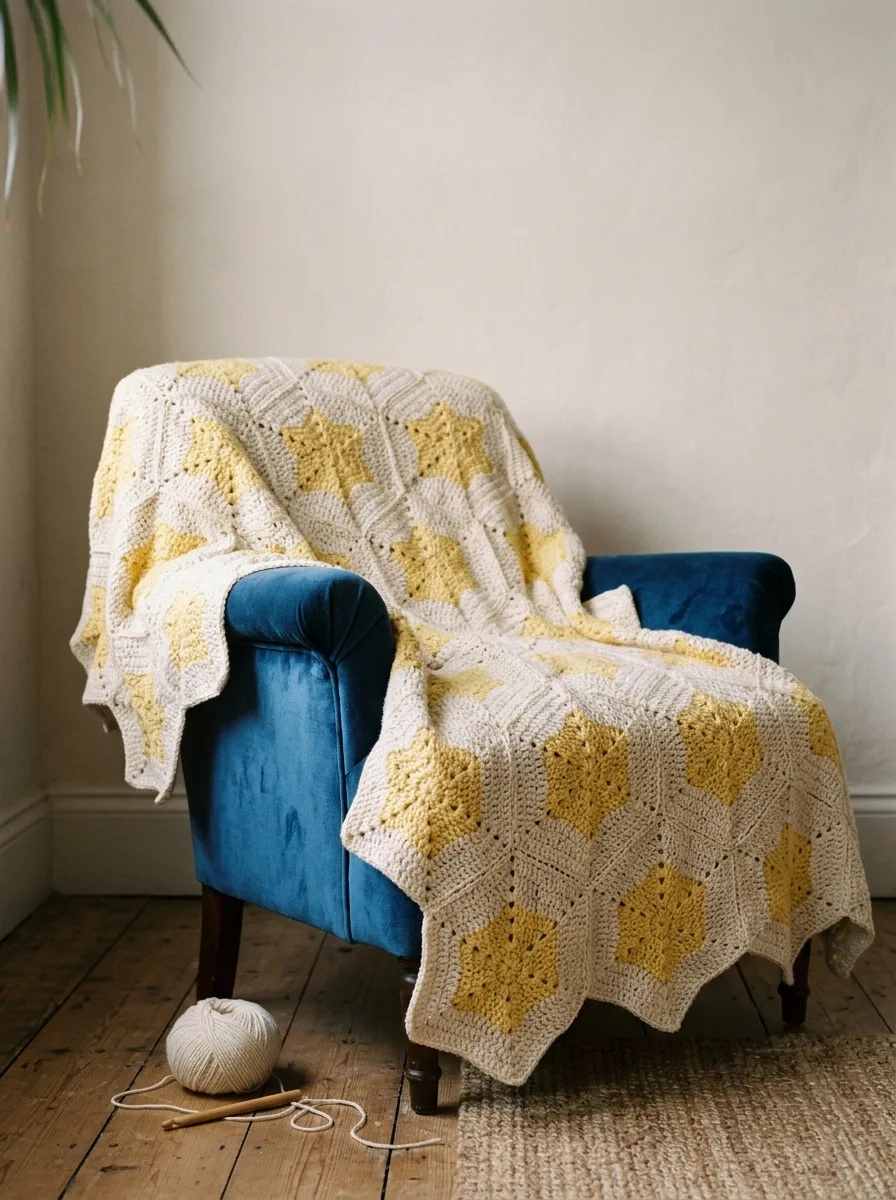
Turn the star into a hexagon by filling the pockets between the points, then join the hexagons side to side. Hexagons tessellate with no gaps. Join with a slip stitch on the wrong side or a flat whip stitch.
How many star hexagons do I need?
Divide the blanket's area by the area of one hexagon, which is about 0.87 × (width across the flats)². For 10 cm hexagons that is about 87 cm², so a 60 × 75 cm baby blanket needs about 52, a 75 × 90 cm lap blanket about 78 and a 90 × 120 cm throw about 124.
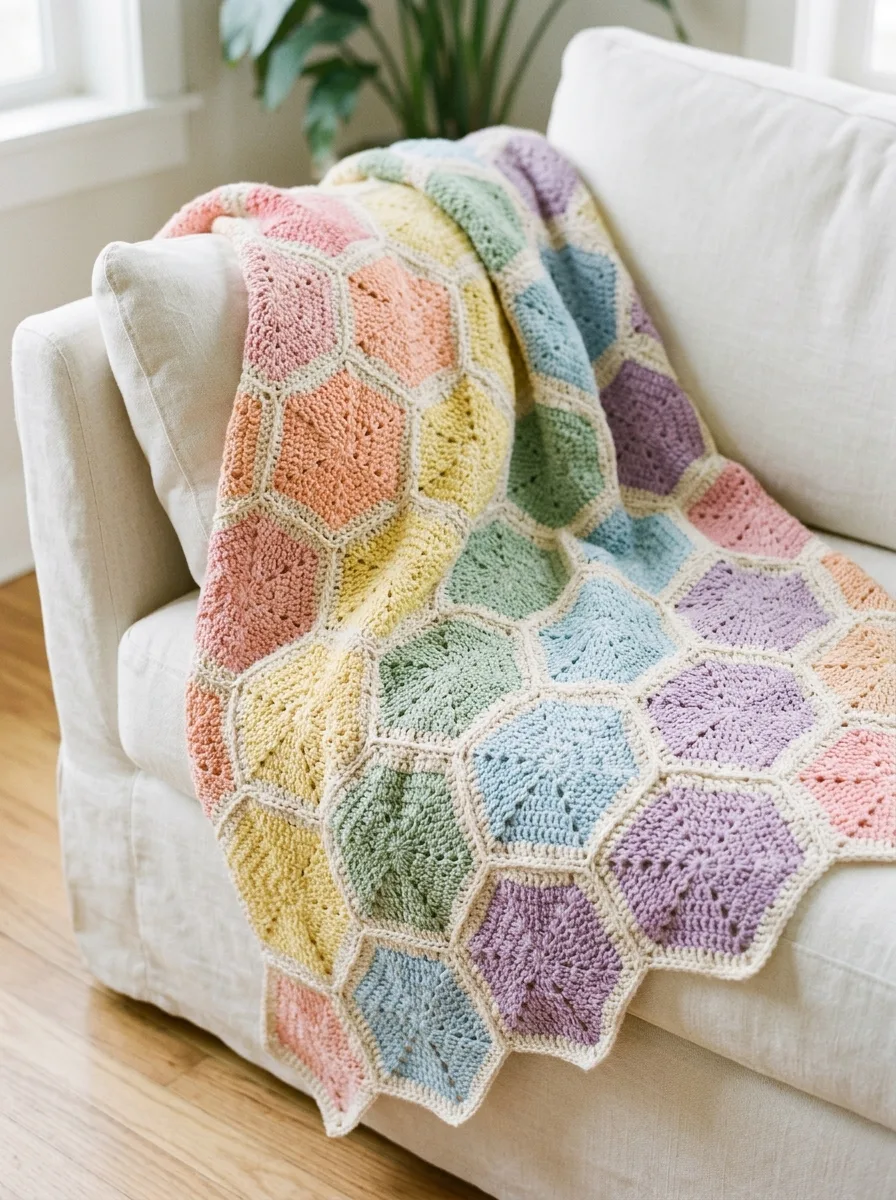
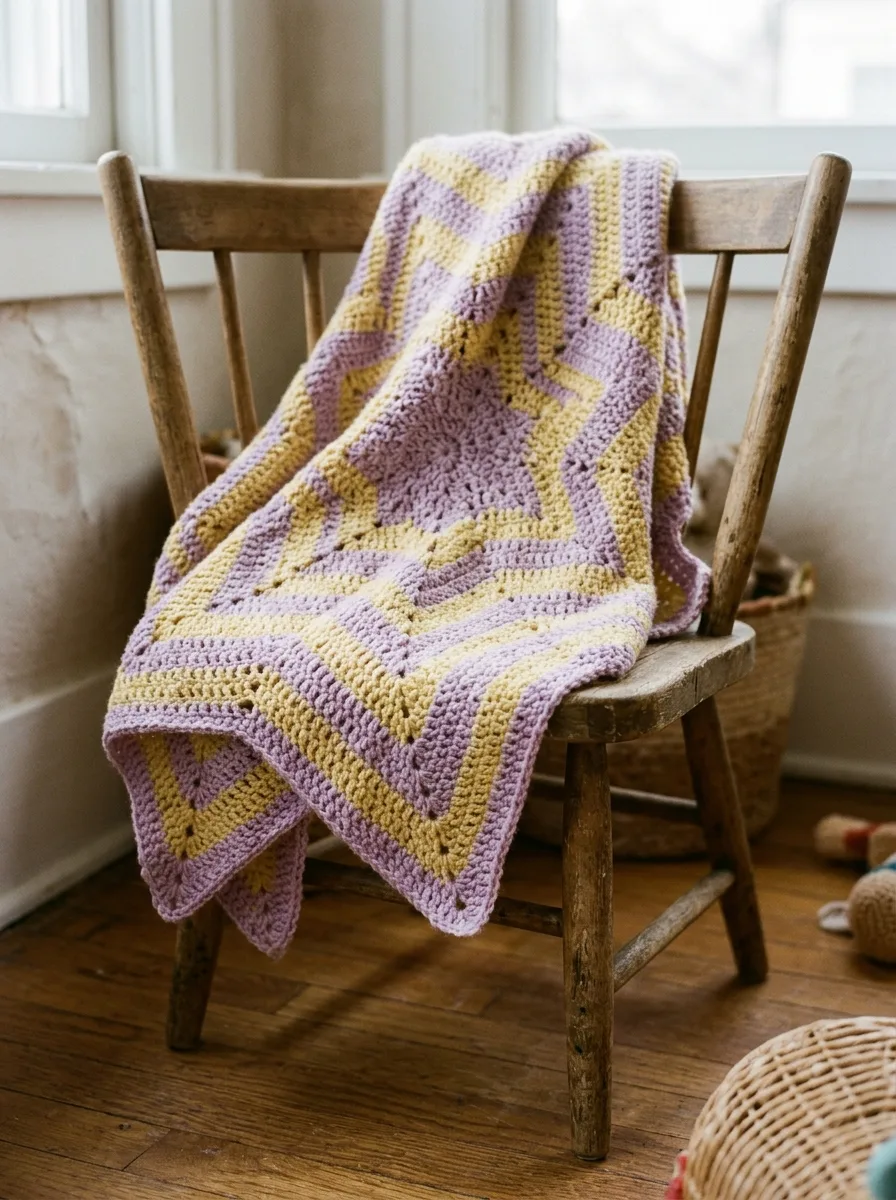
Cream joins let rainbow stars stand out, two colors give a calm modern look, and a night-sky palette of navy with yellow stars is a classic. Use soft pastels for a baby blanket.
Is a star blanket suitable for a baby?
Yes, if it is soft, washable and has no loose parts. Follow safe-sleep guidance: keep blankets out of a baby's sleep space and use them for play or the stroller.