A crochet vest is the easiest wearable you can make, and it looks far more complicated than it is. There are no sleeves, no armhole curves and no increases to count: a basic vest is two rectangles joined at the shoulders and sides. This page sorts 15 crochet vest ideas by how they are built, so you can pick a style you will actually finish, and it ends with a free two-rectangle vest pattern in three sizes.
Why a Vest Is the Easiest Crochet Garment
Every crochet garment is some arrangement of flat pieces. A sweater needs sleeves, a cardigan needs a front opening and a fitted top needs shaping at the waist. A vest needs none of that, so the only skills you need are straight rows and a neat seam.
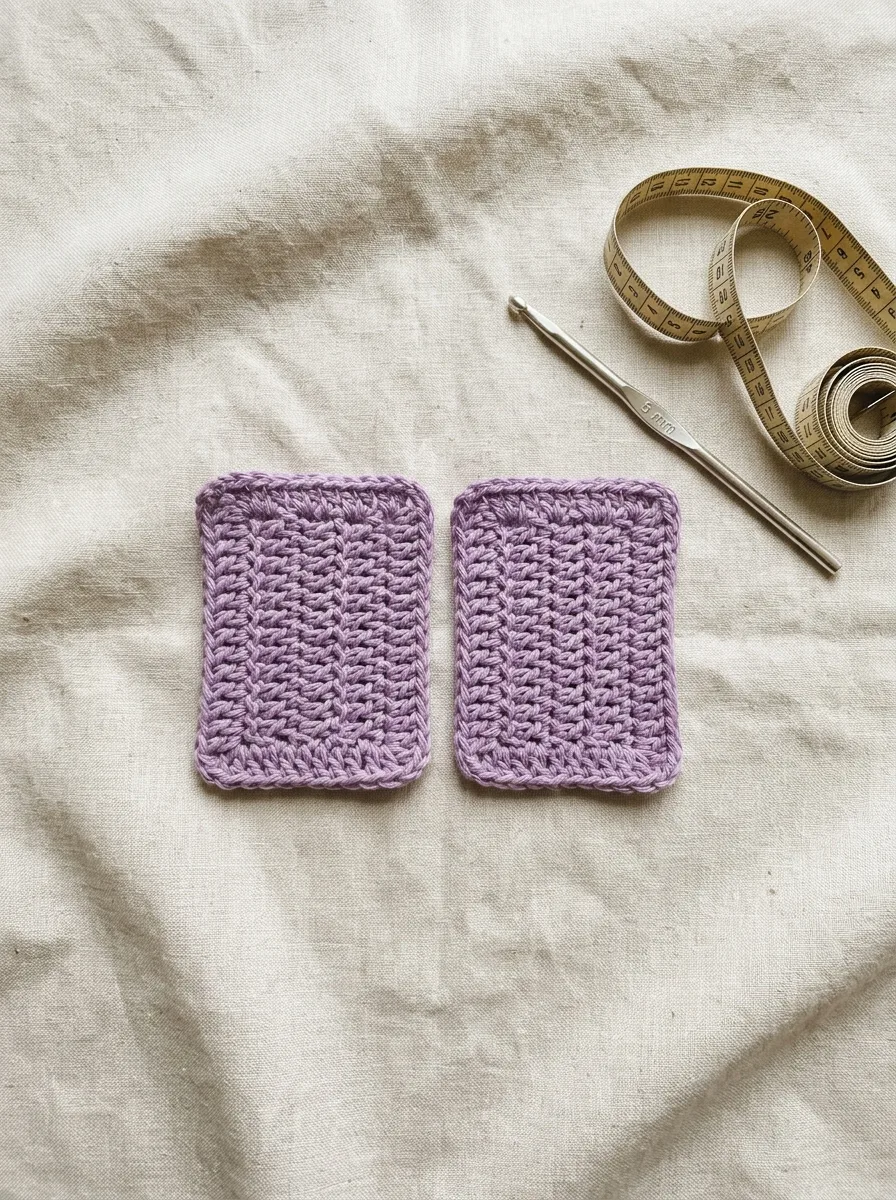
A basic vest is two rectangles joined at the shoulders and sides. That is all.
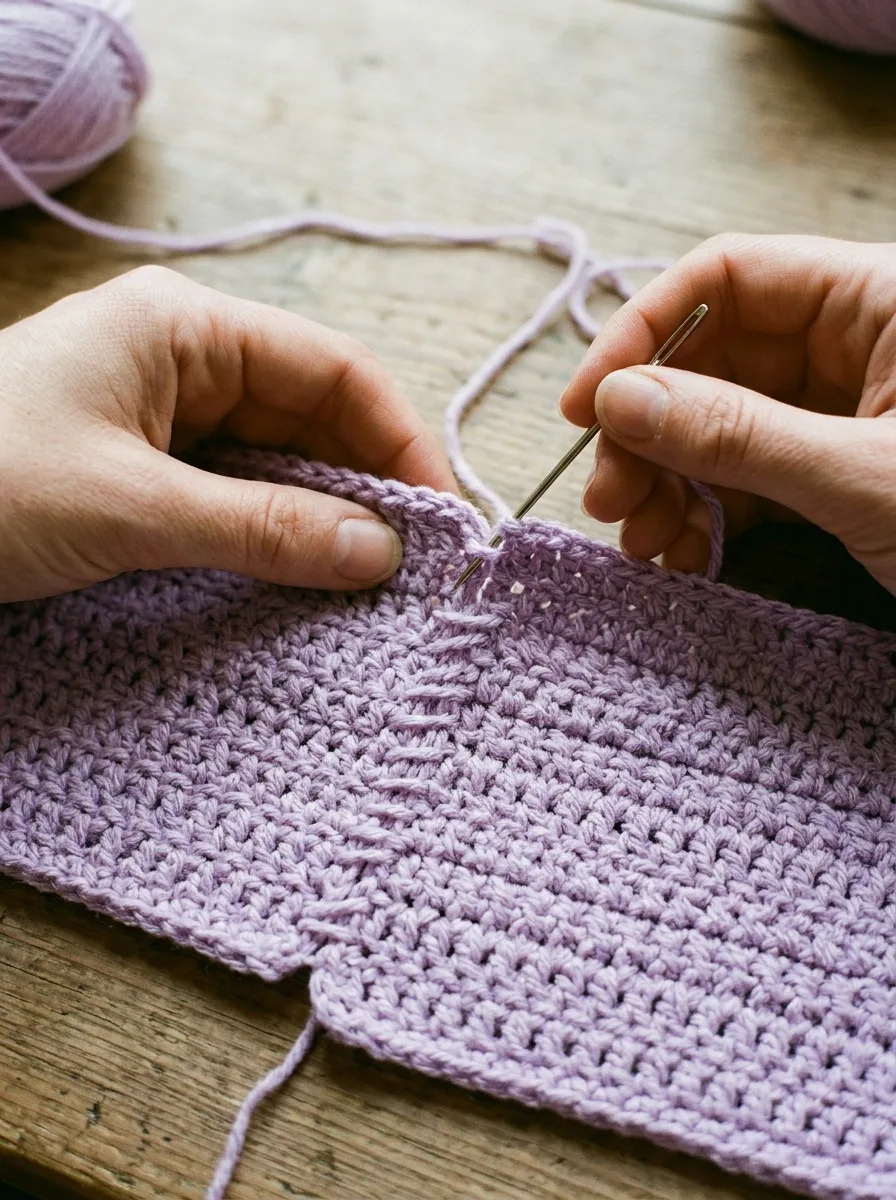
The only assembly is at the shoulders. You lay the front and back panels together, join the two short top edges, and leave the middle open for your neck. After that you close the sides, stopping before the armholes. If you have sewn a pillow cover, you can seam a vest.
Seaming the shoulders is the only assembly: no sleeves, no armhole shaping.
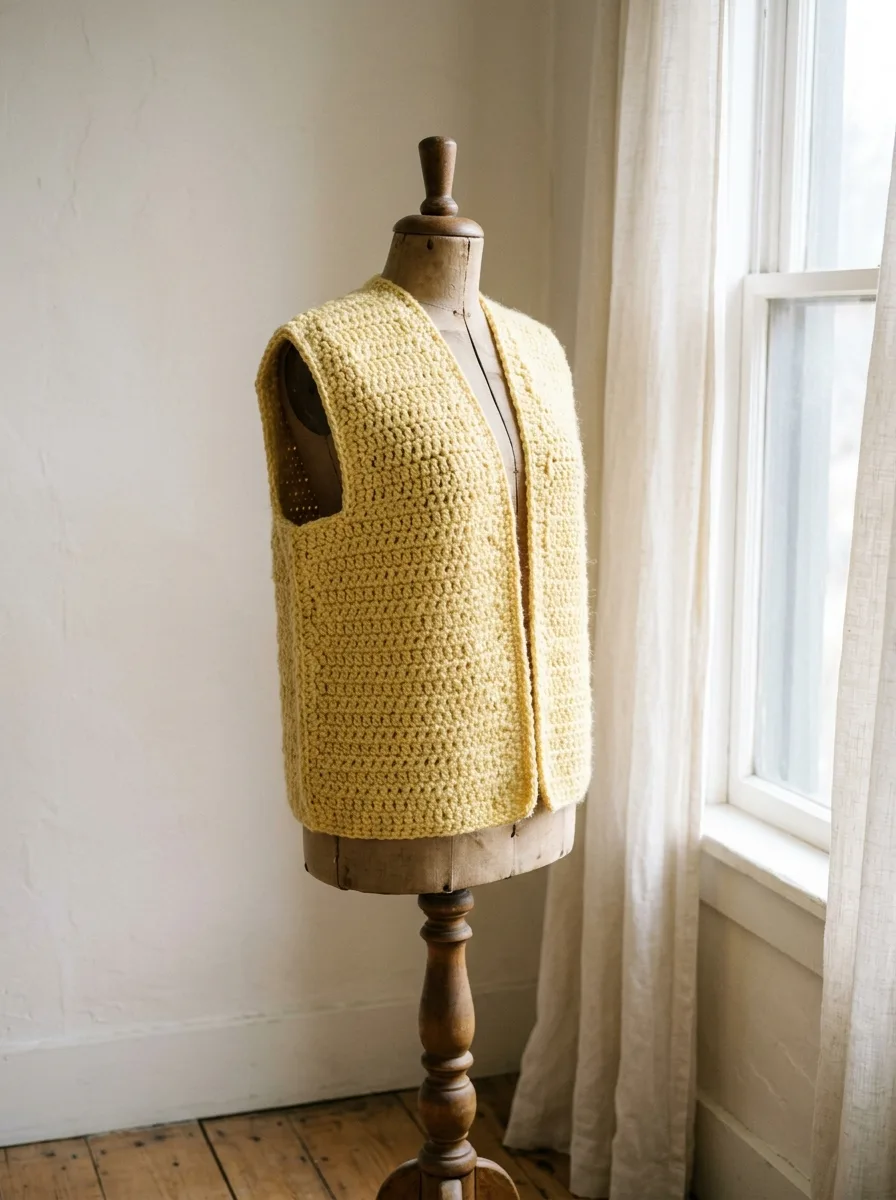
Because the pieces are plain rectangles, the shape is forgiving. A wide, straight vest sits well on almost any body, and you can make it longer or shorter simply by working more or fewer rows. The same two-rectangle idea underlies most of the styles below, even the granny square ones.
The simplest vest shape: wide, straight and forgiving on any body.
Granny Square Vests
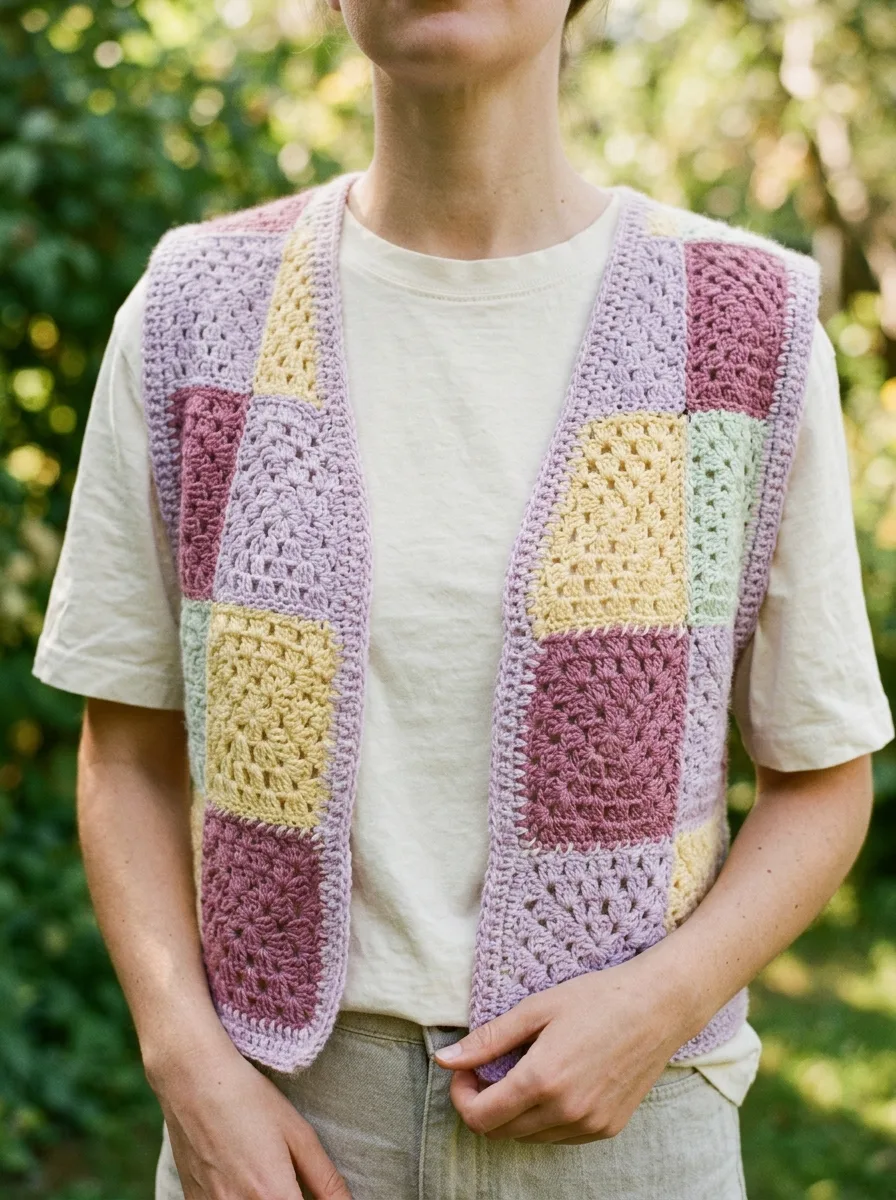
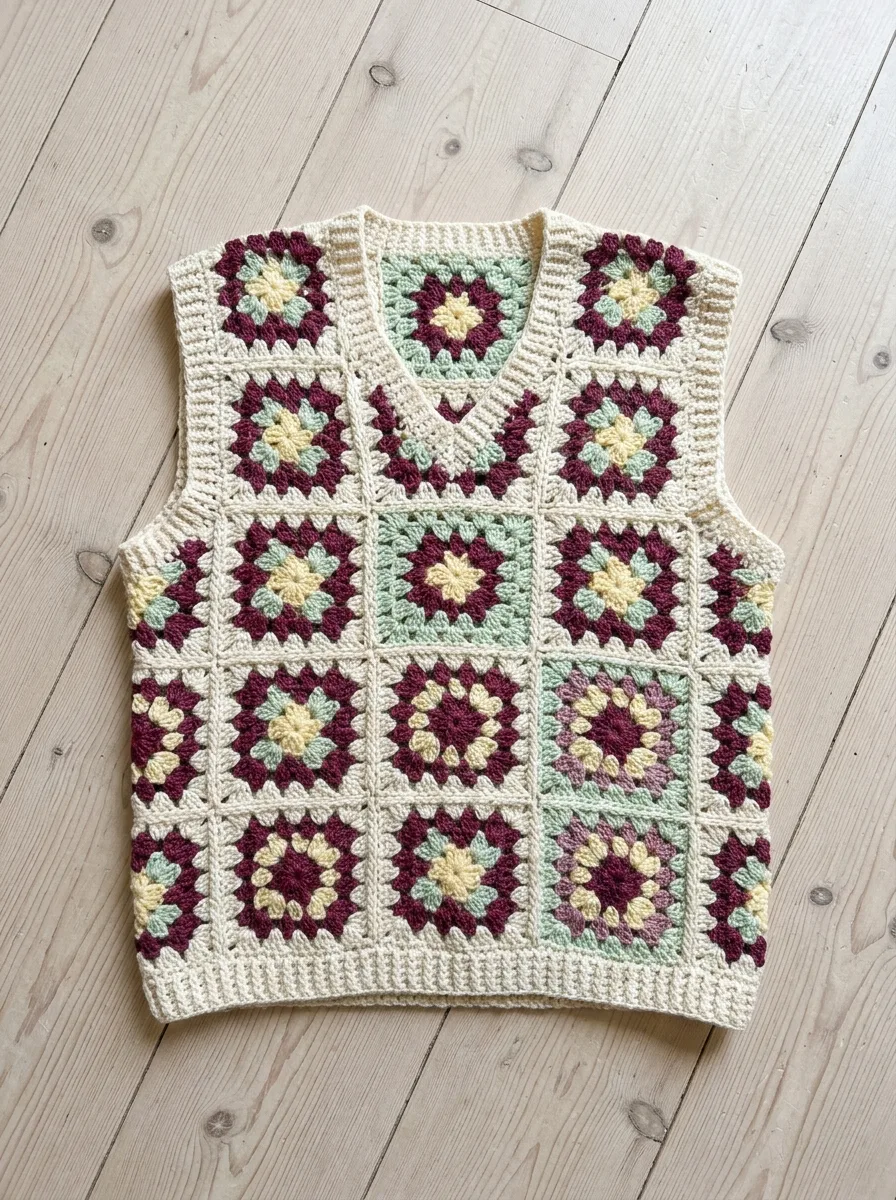
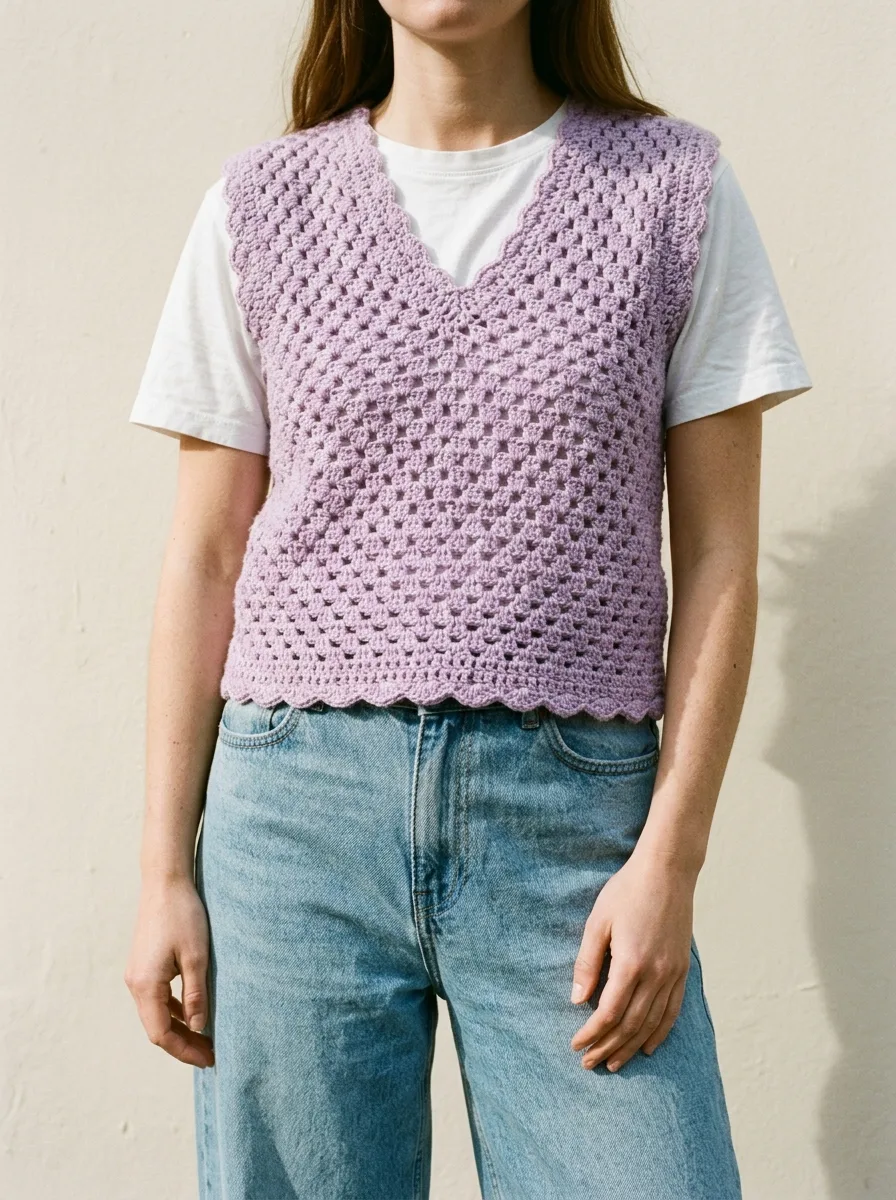
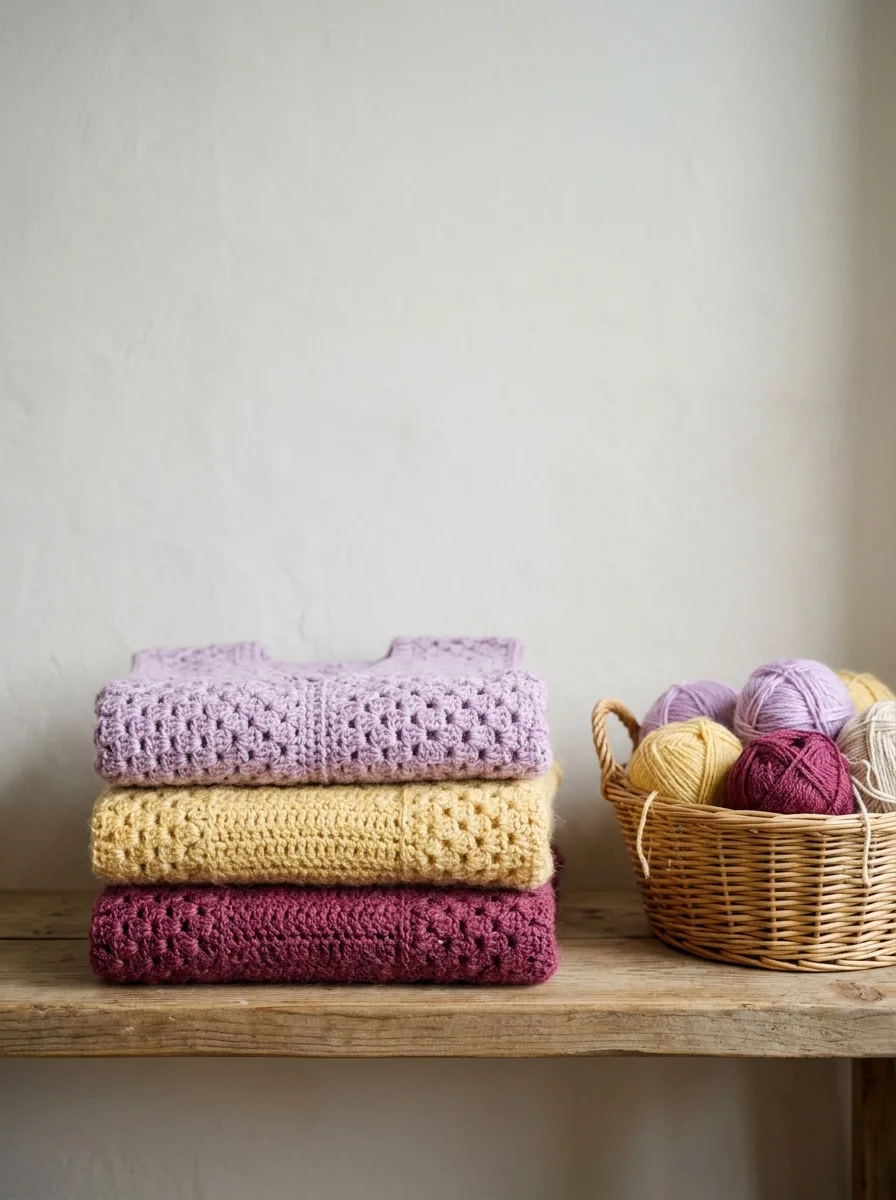
A granny square vest turns leftover yarn into a garment. You make a pile of squares, lay them out into a front and back, and join them. About 30 squares of 10 cm (4 in) make a medium vest, which is a very manageable number to crochet a few at a time. If you are new to the motif, start with our granny square pattern.
Granny square vests turn leftover yarn into a wearable: 30 or so squares make a vest.
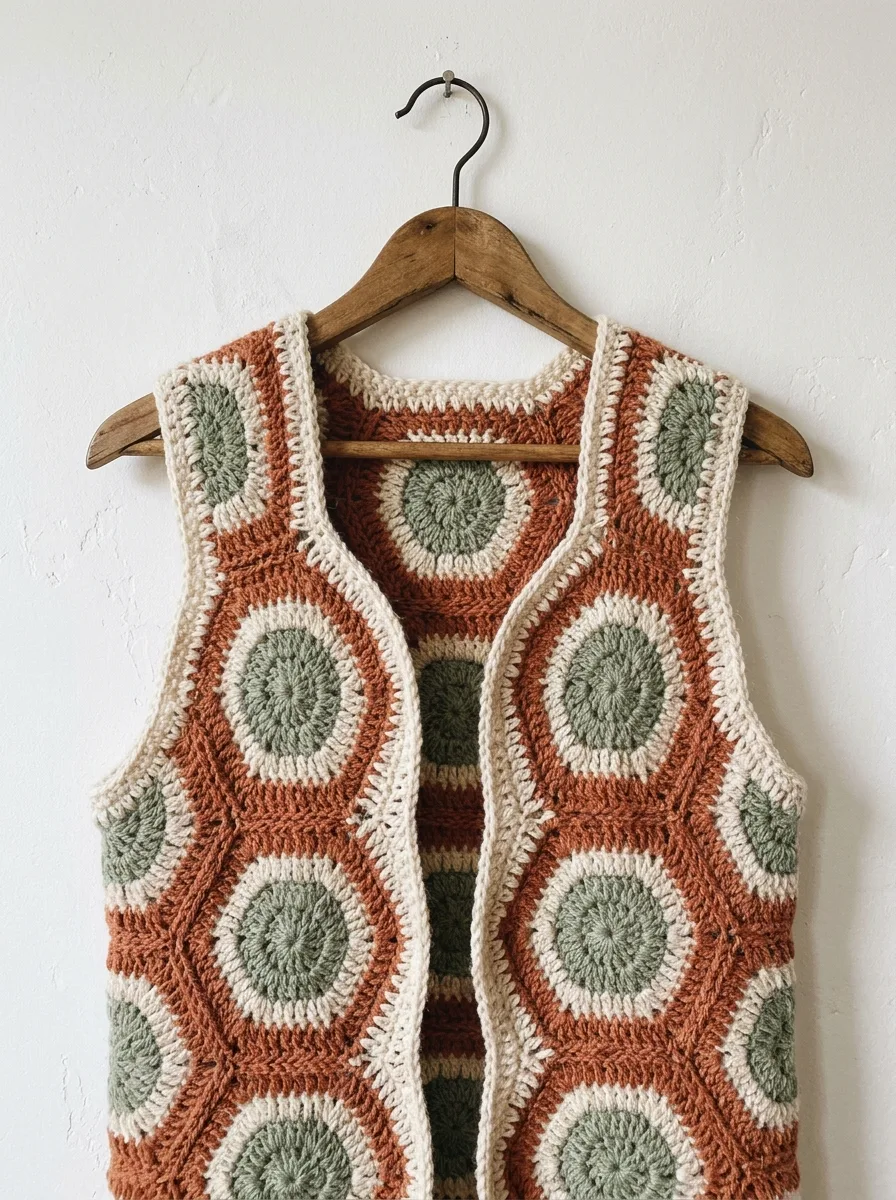
Hexagon motifs give the same patchwork idea a retro silhouette. They join in a honeycomb, so the vest hem and shoulder line become gently zigzag instead of straight. It is a little more work to square off the edges, so it suits a second or third vest.
Hexagons give a vest the retro look without extra difficulty.
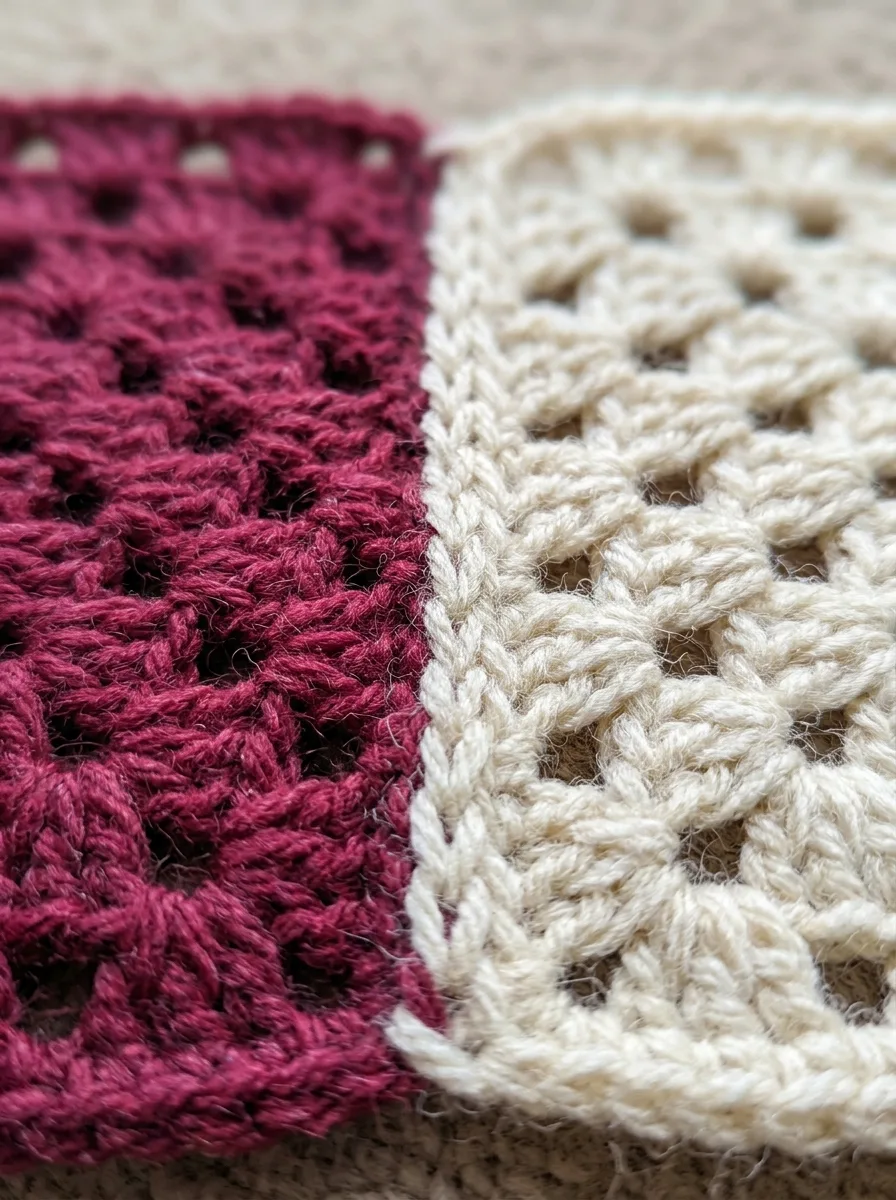
How you join the squares matters as much as the squares themselves. A flat slip stitch or a whip stitch seam on the wrong side keeps the fabric soft. A thick raised join gives a ridged look that can be lovely, but it makes the vest stiffer and uses more yarn.
A flat join keeps the vest drape soft instead of ridged.
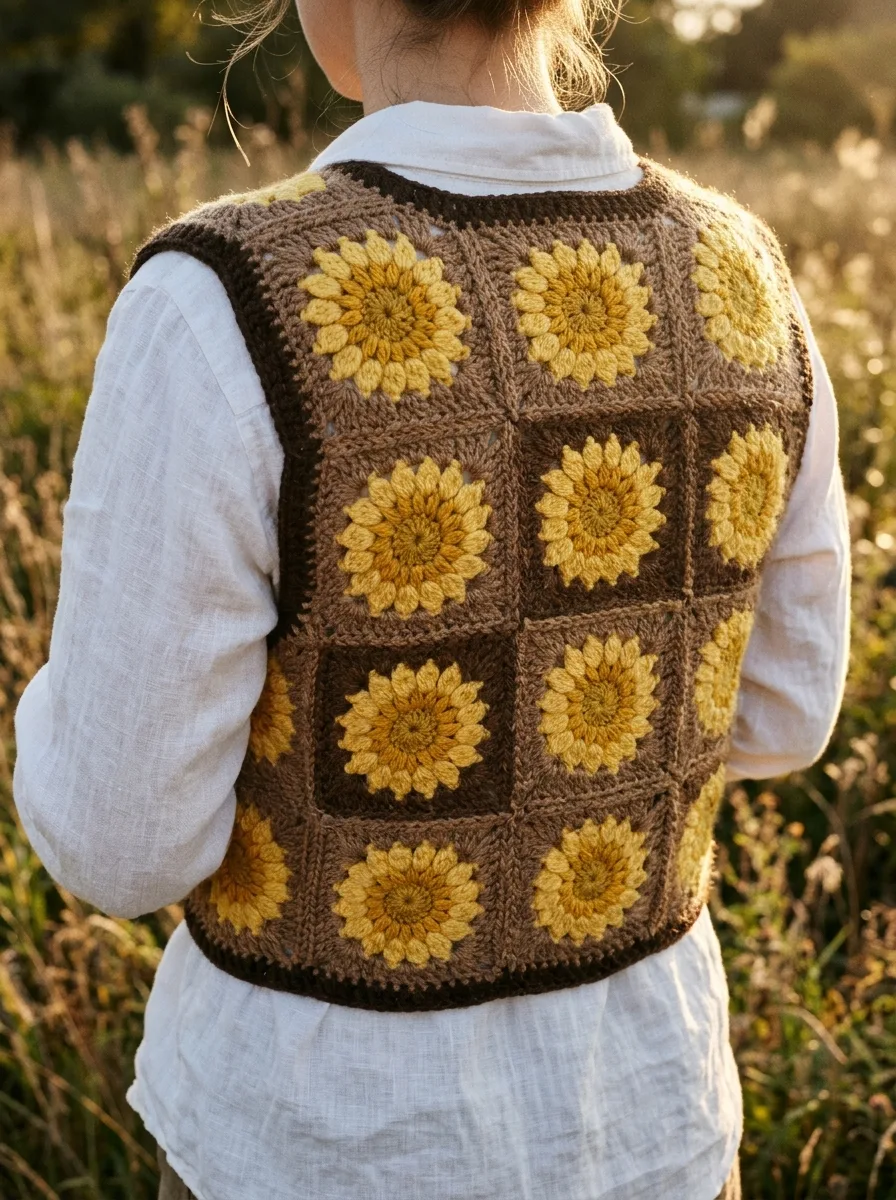
A sunflower-center square, with a brown or butter-yellow middle and a dark border, makes a vest that looks like summer from across a room. Whatever motif you choose, lay all the squares on the floor before you join anything and move them around until the colors feel balanced.
A sunflower-center square makes a vest that looks like summer.
Mesh and Lace Vests
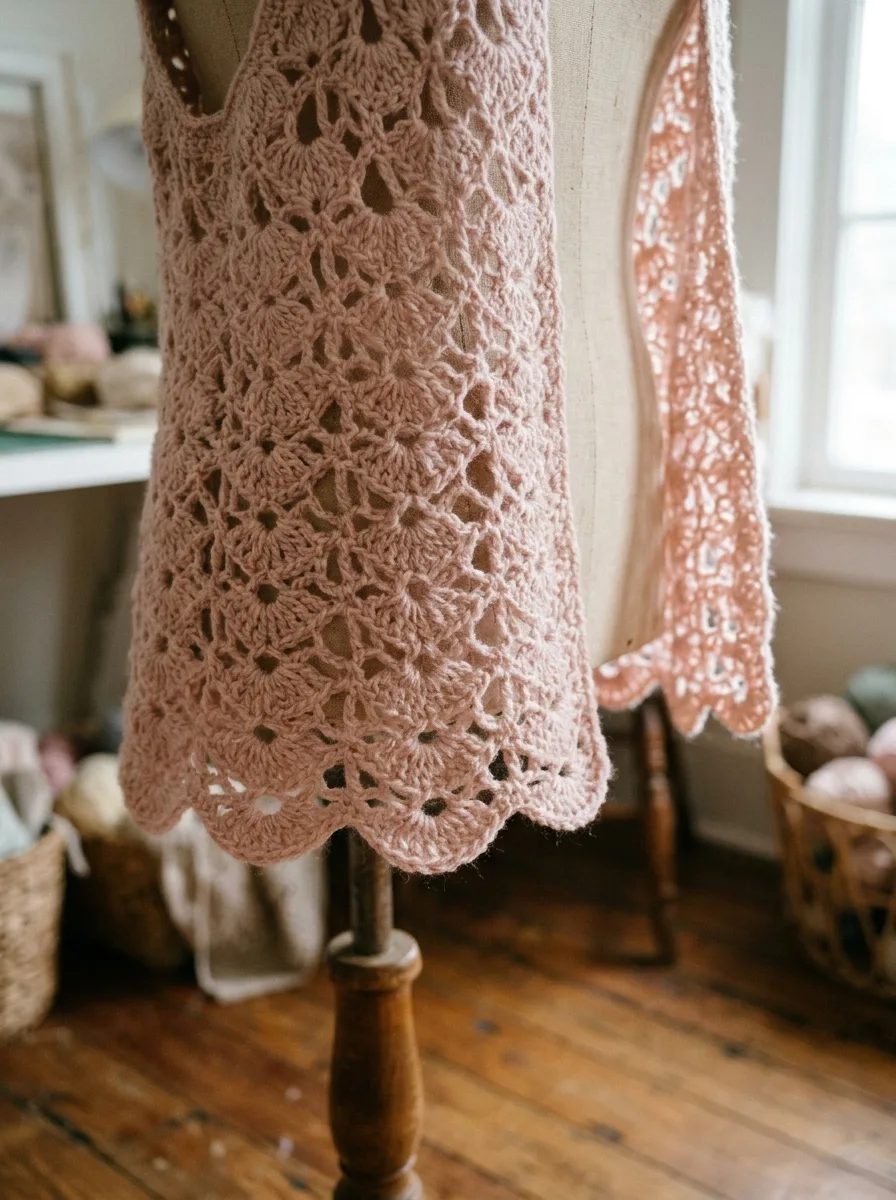
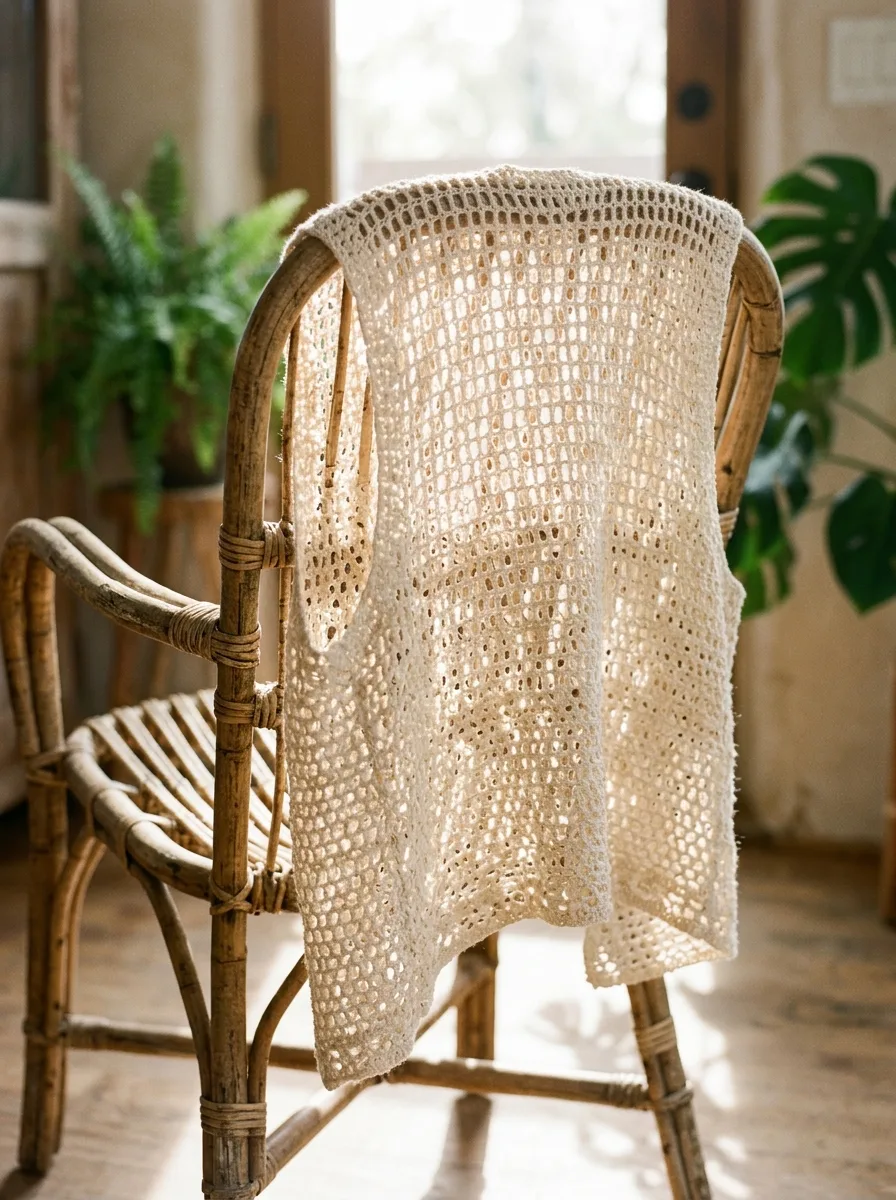
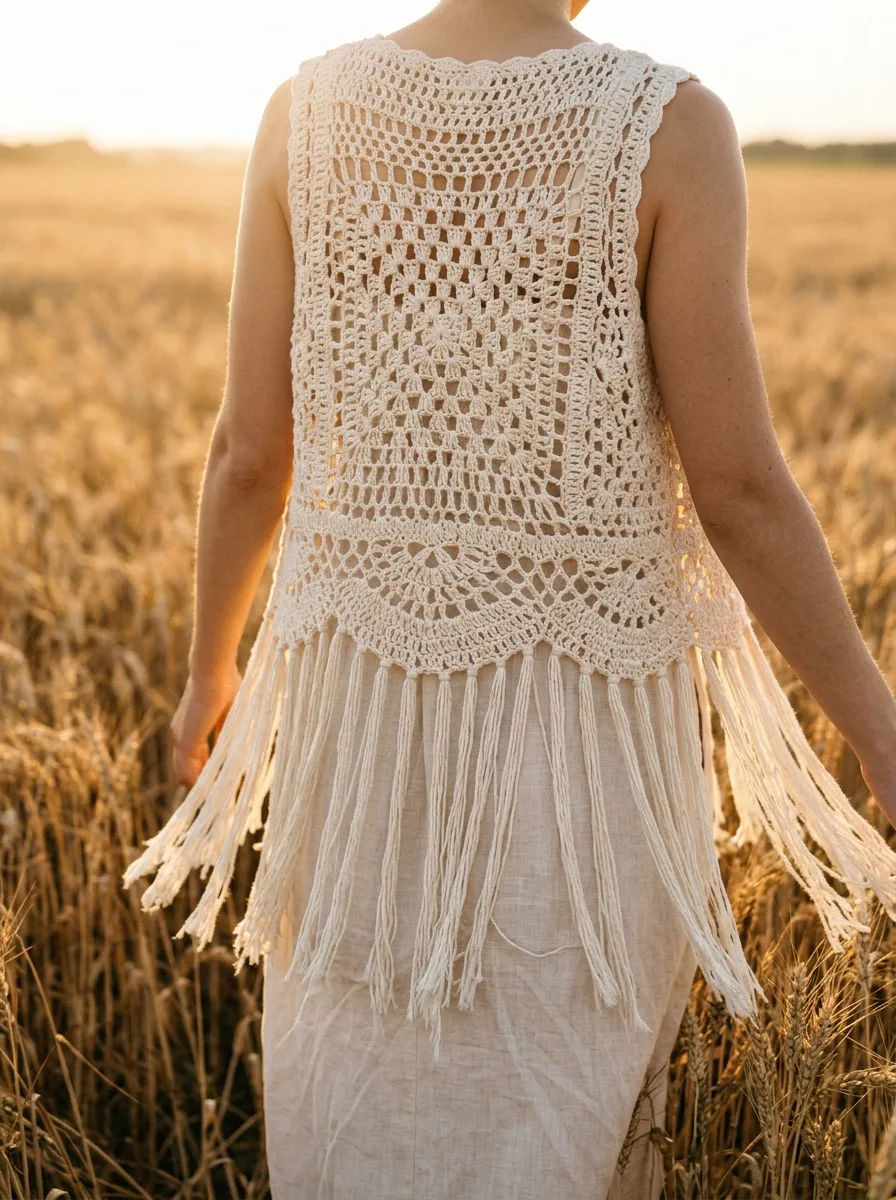
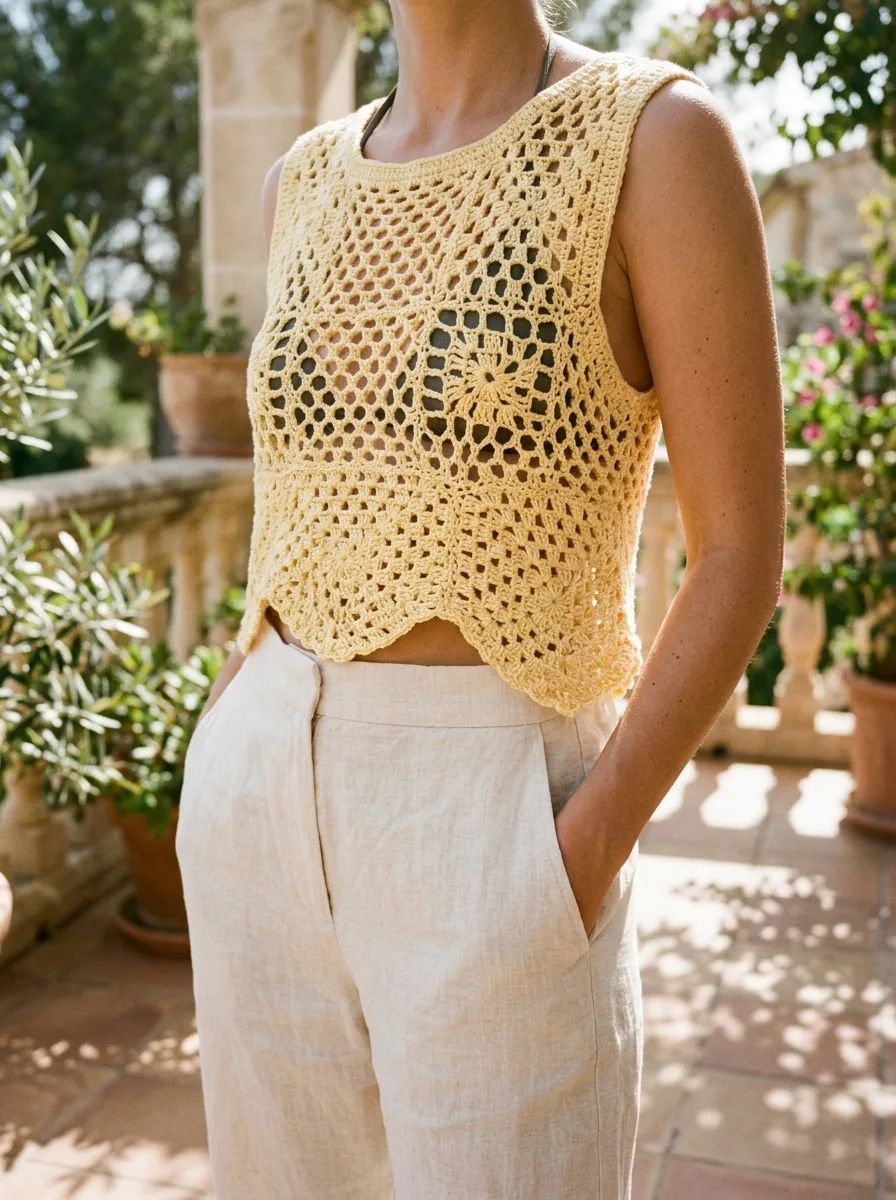
Open mesh is the fastest crochet fabric. A mesh vest is worked in repeating chains and double crochets with large gaps, so it uses far less yarn than a solid vest and weighs very little.
Open mesh is quick to crochet and light enough for warm weather.
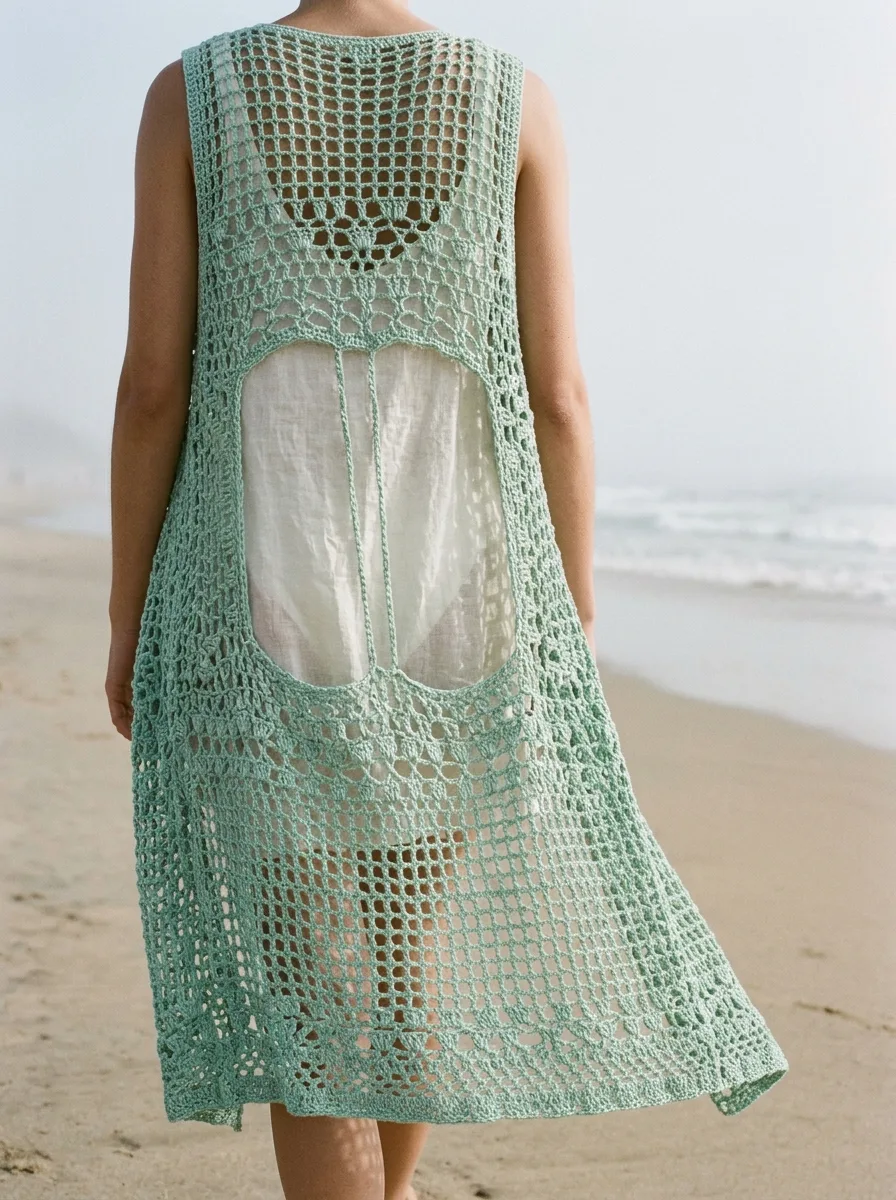
A shell-stitch hem is an easy way to make a mesh or solid vest look dressy. Shells are a repeat of one stitch group, so there is only one thing to learn. See our crochet stitches guide for how to work them.
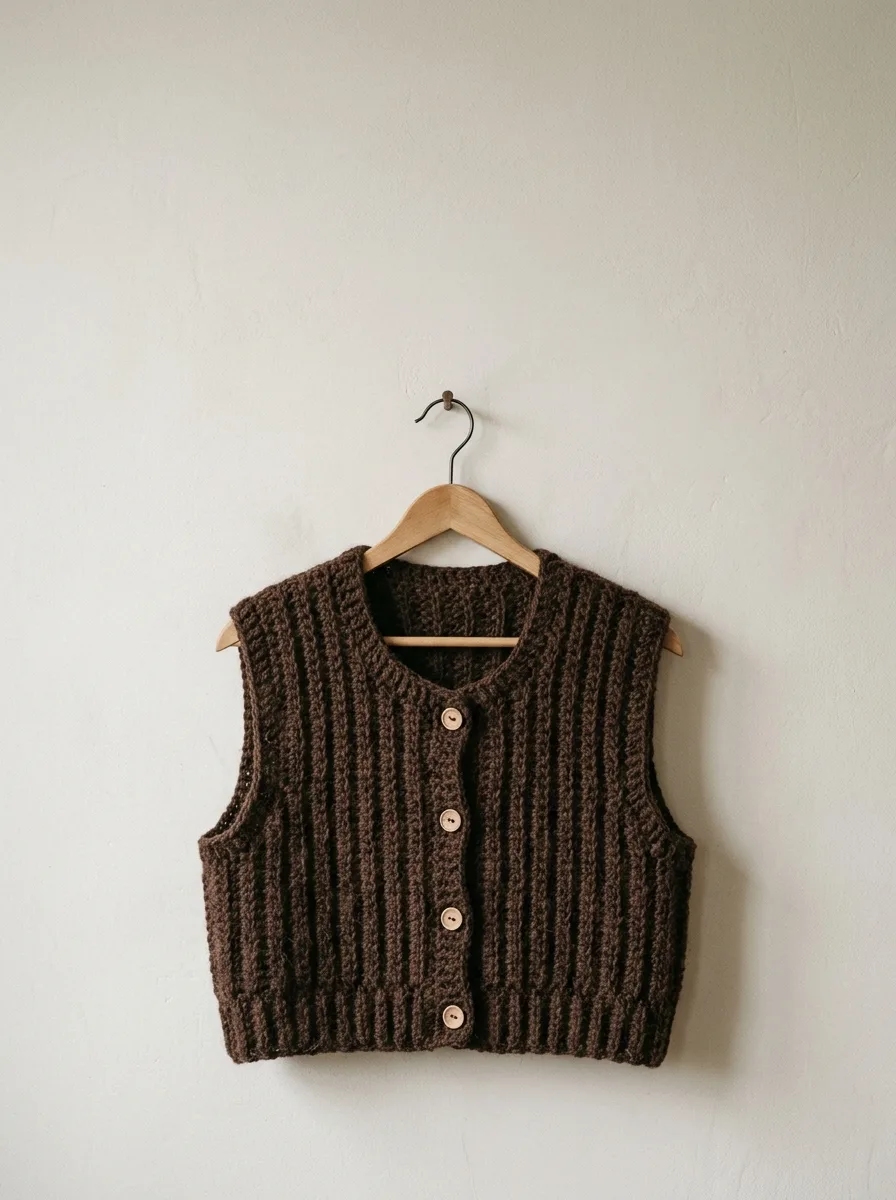
A cropped ribbed waistcoat looks tailored, but it is still rectangles plus ribbing. Work the body in a firm stitch such as half double crochet, add a ribbed band along the front edges, and sew on a few buttons.
A cropped waistcoat reads tailored but is still just rectangles and ribbing.
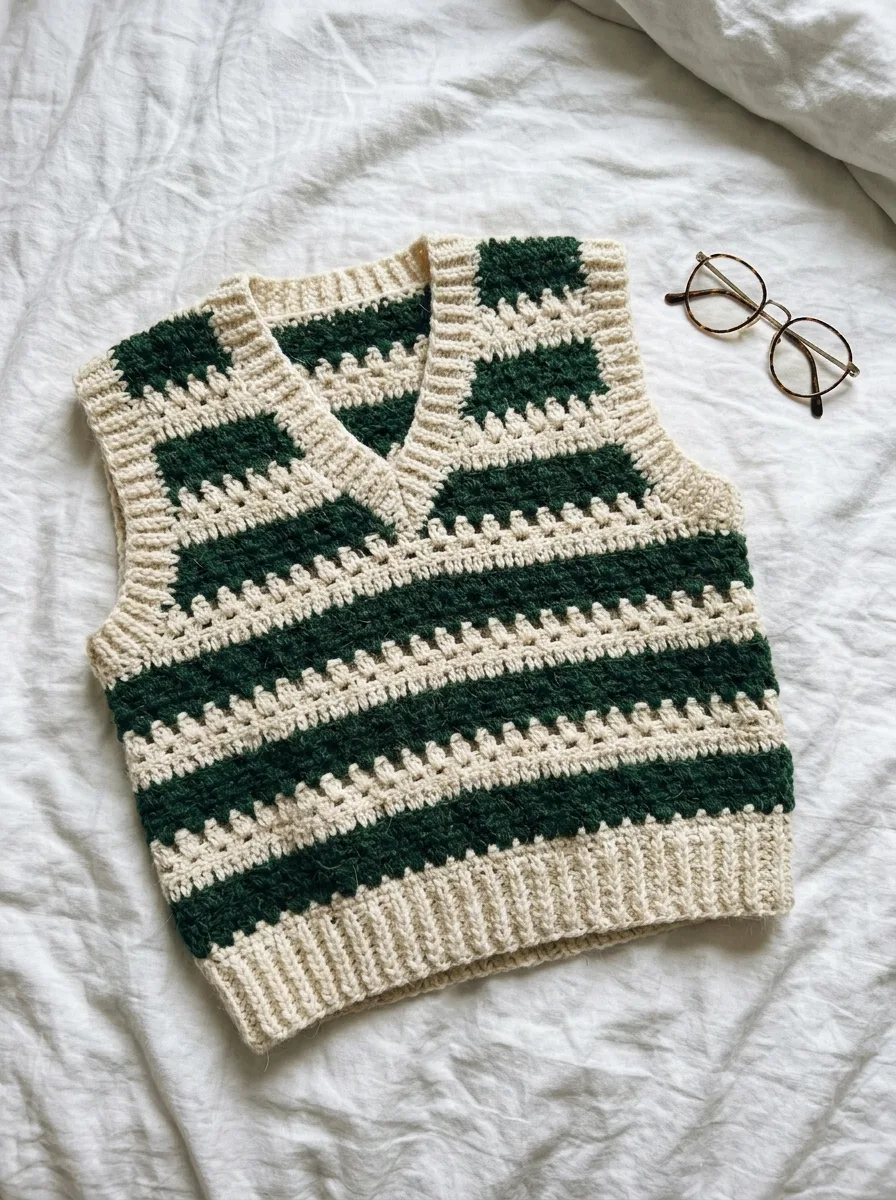
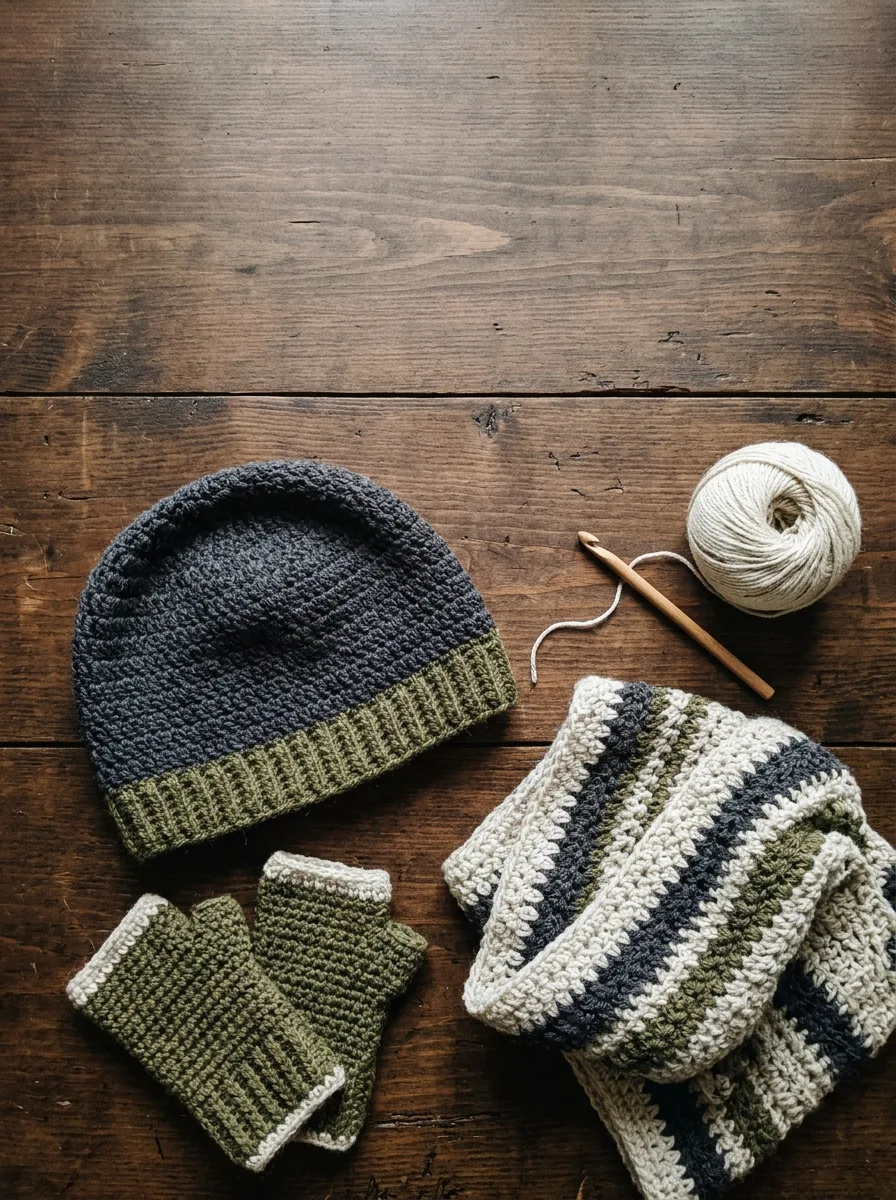
Stripes are the easiest way to make a plain vest look designed. Changing color every two or four rows hides nothing and adds a lot, and it is the best use of the half-used balls in your stash.
Stripes are the easiest way to make a plain vest look designed.
Fringe adds movement. Long fringe on the hem of a simple vest swings when you walk, and it takes an afternoon to cut and knot rather than a week to crochet.
This vest is two identical rectangles of dcdc = double crochetUK: treble (tr)Yarn over, insert, pull up a loop (3 loops), then [yarn over, pull through 2] twice. About twice as tall as sc. worked flat in rows. Work one for the back and one for the front. The foundation chain is the number of stitches plus 2, and the first 3 chains of every row count as the first double crochet.
S
M
L
Bust (body measurement)
81–86 cm
92–97 cm
102–107 cm
Finished width of each panel
49 cm
53 cm
58 cm
Foundation chain
70
76
83
Stitches per row
68
74
81
Rows (panel length)
45 (56 cm)
48 (60 cm)
52 (65 cm)
Shoulder / neck / shoulder (stitches)
23 / 22 / 23
25 / 24 / 25
28 / 25 / 28
Side seam (rows from the hem)
27
29
32
Tick as you go
Two-Rectangle Vest, size M (make 2)
0 / 7 done
Count check for size M: 76 chains minus the 3 that stand for the first dc leaves 73 more dc, plus the first dc, equals 74 stitches. Shoulder 25 + neck 24 + shoulder 25 = 74. Rows 48 = 29 seamed + 19 armhole. Other sizes: use the table above and keep the same row repeat.
Finished! Fasten off and admire it.
Before you seam, lay each panel flat, mist it and let it dry so the cotton relaxes. Measure the panel width against the table: a few centimeters either way is fine, but if the panel is much narrower, go up a hook size next time. Finish the neck and armholes with one round of single crochet to clean up the edges.
How to Style a Crochet Vest
Wear it open over a plain tee and let the vest be the statement. Cream, white and denim are the easiest partners for a colorful granny vest.
Wear it open over a plain tee and let the vest be the statement.
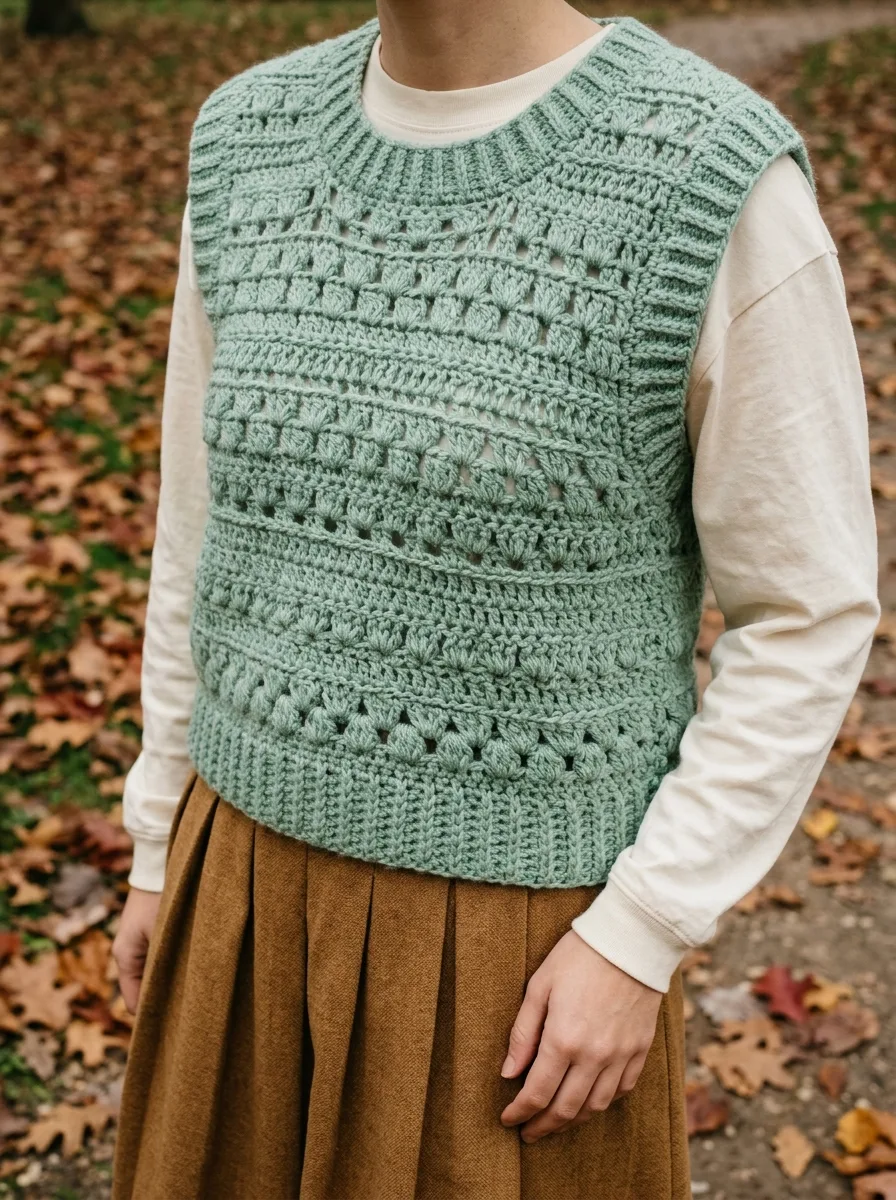
A vest is the layer that carries a summer top into autumn. It adds warmth to the body without adding bulk at the arms, which makes it easy to wear under a coat.
A vest is the layer that carries a summer top into autumn.
A cropped vest sits well over a dress and works as a beach-to-dinner layer. Worn over wide trousers it gives a balanced, relaxed outline. See more warm-weather looks in our crochet summer outfits.
Make a few. A vest is the quickest garment to repeat in new colors, and the second one takes half as long because you already know the sizing. Once you are comfortable with panels, try the crochet cardigan and sweater ideas for the next step up.
Yes. A basic vest is two rectangles of double crochet joined at the shoulders and sides. There are no sleeves, no armhole shaping and no increases, so it is the easiest garment to start with once you can crochet straight rows.
It depends on the square size. With 10 cm (4 in) squares, a medium vest needs about 30 to 36 squares; with 15 cm squares, about 16 to 20. Measure your own square, then divide the width and length you want by the square size.
Cotton or a cotton blend gives a drapey vest that holds its shape and stays cool. Pure acrylic is cheaper and light, but it can feel warm. Avoid very heavy wool for open mesh styles because the weight stretches the stitches.
Change the width of the rectangles: the pattern's stitch count is about 1.4 stitches per cm of body width. Add or remove stitches in the foundation chain, then adjust the shoulder and neck counts so they still add up to the full width.
How do I stop the shoulders from sagging?
Seam the shoulders with a stable join such as a slip stitch seam on the wrong side, and keep the neck opening no wider than about a third of the panel width. Cotton stretches under its own weight, so block the panels flat before seaming.