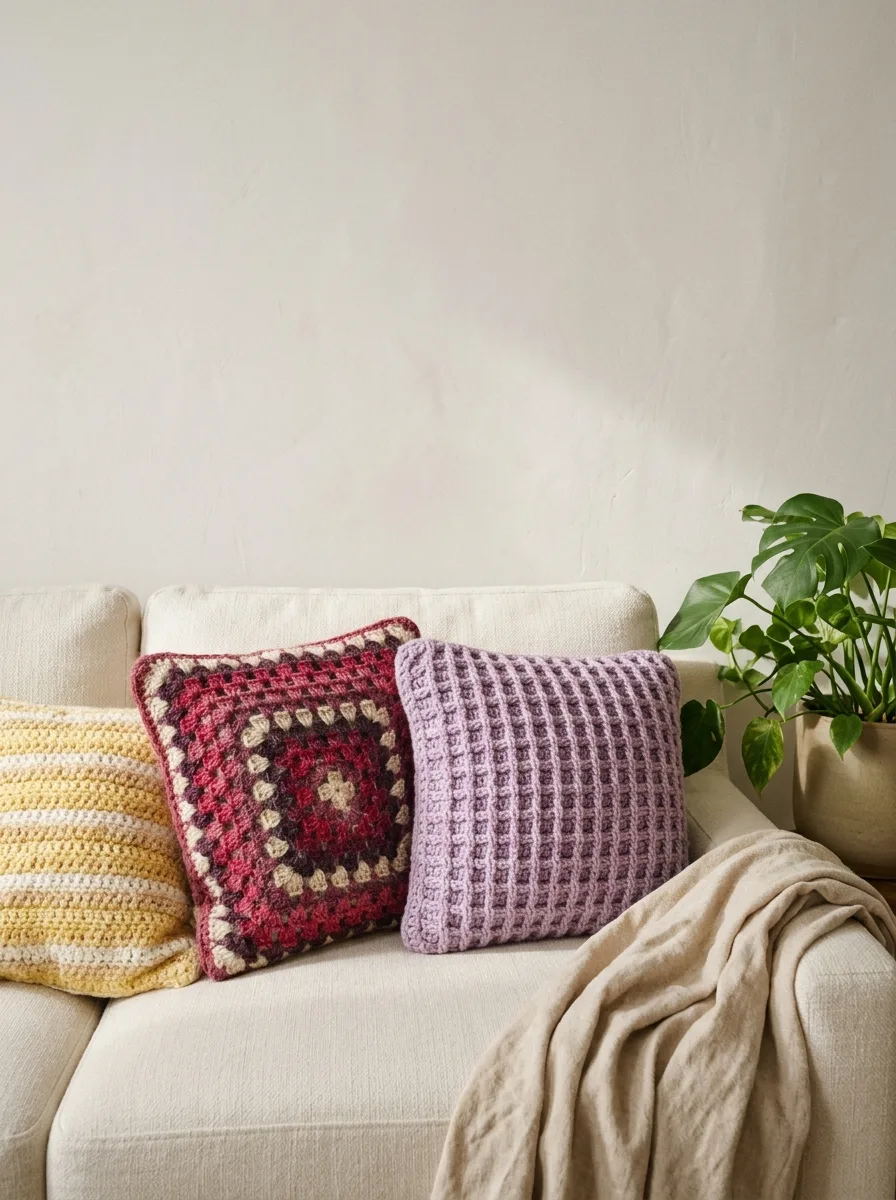
Crochet Pillow and Cushion Covers: 16 Ideas to Update Your Sofa
Crochet pillow and cushion cover ideas: granny square, textured and envelope-back styles, plus a free nine-square cushion cover pattern for a 40 cm cushion.
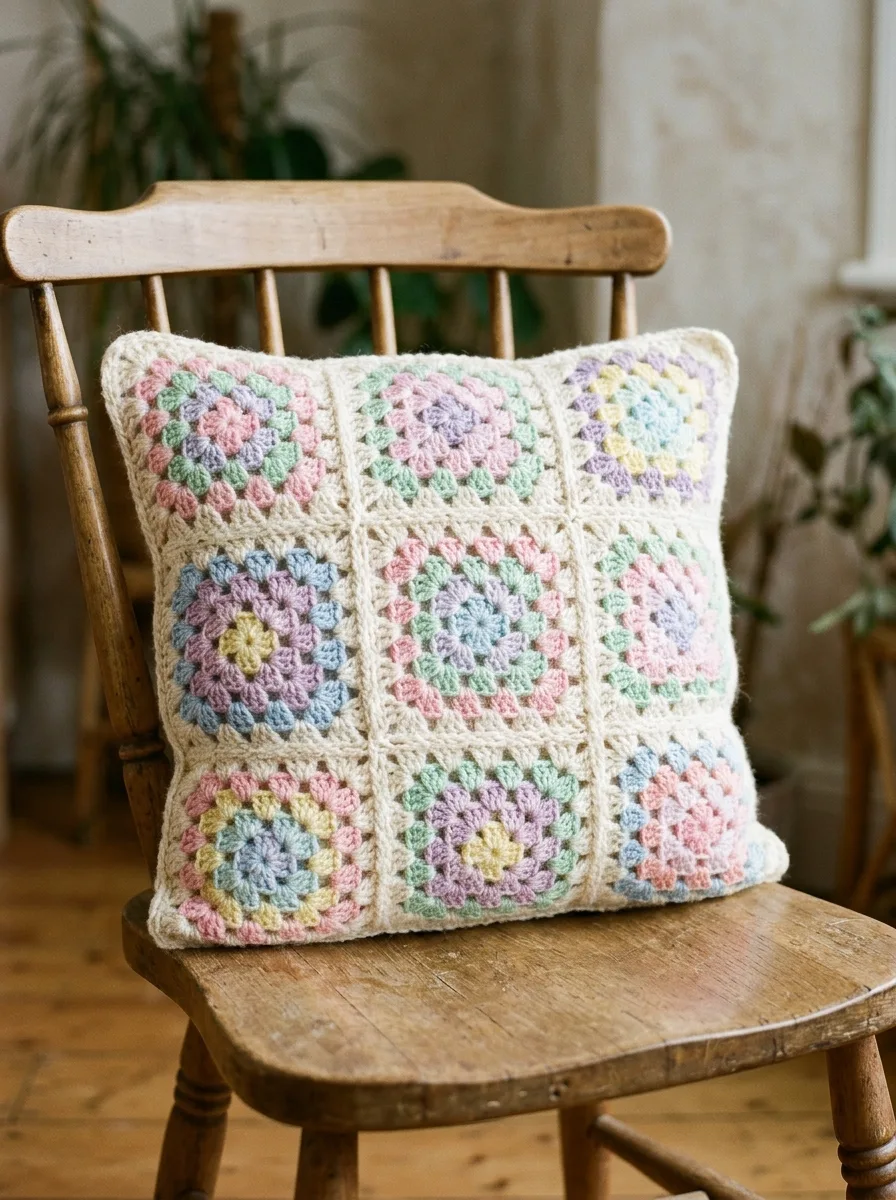
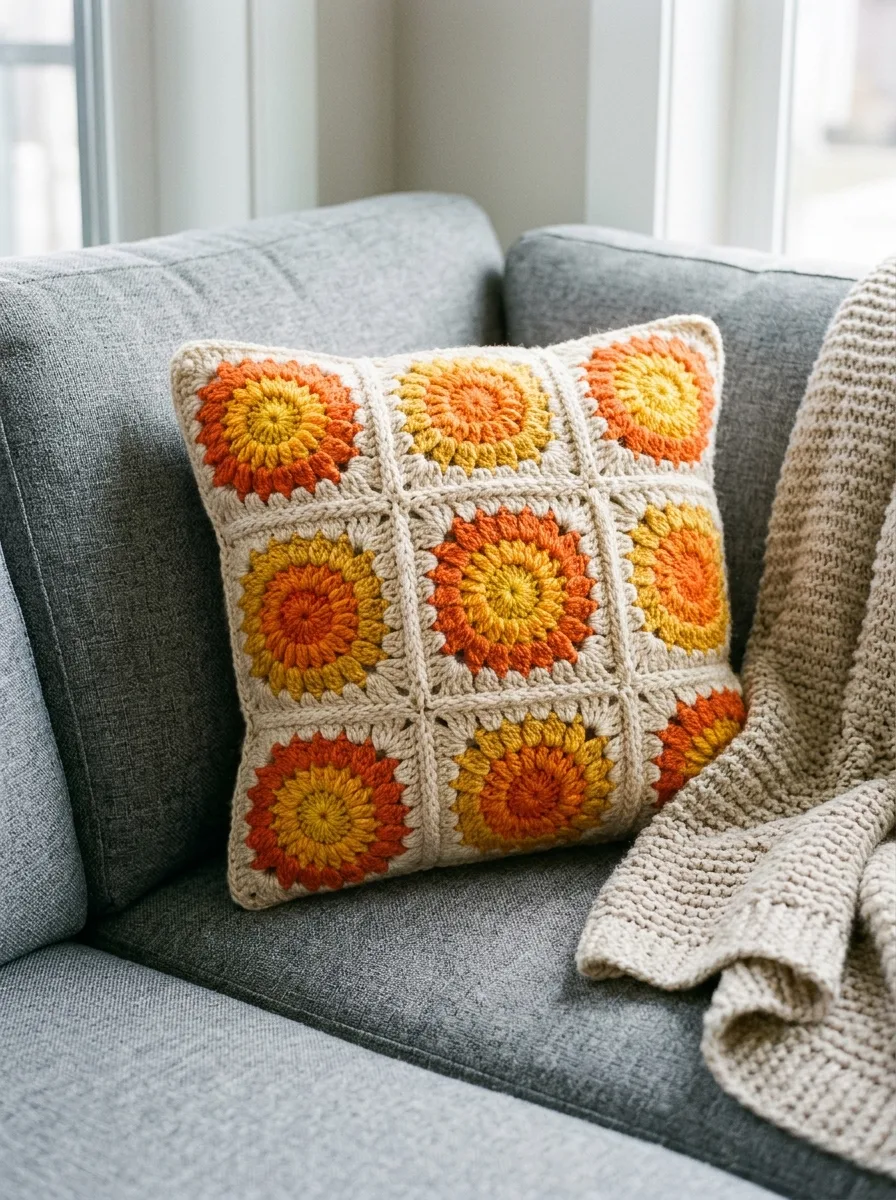
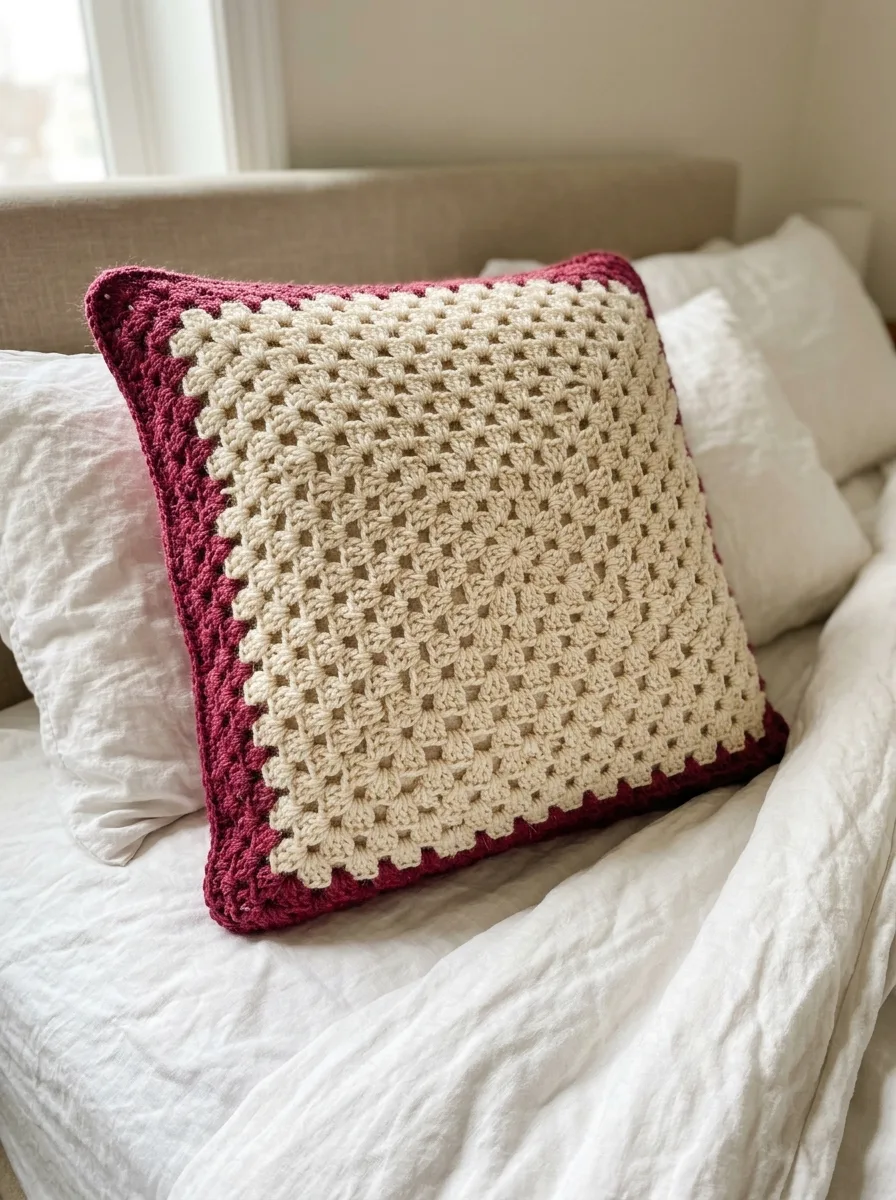
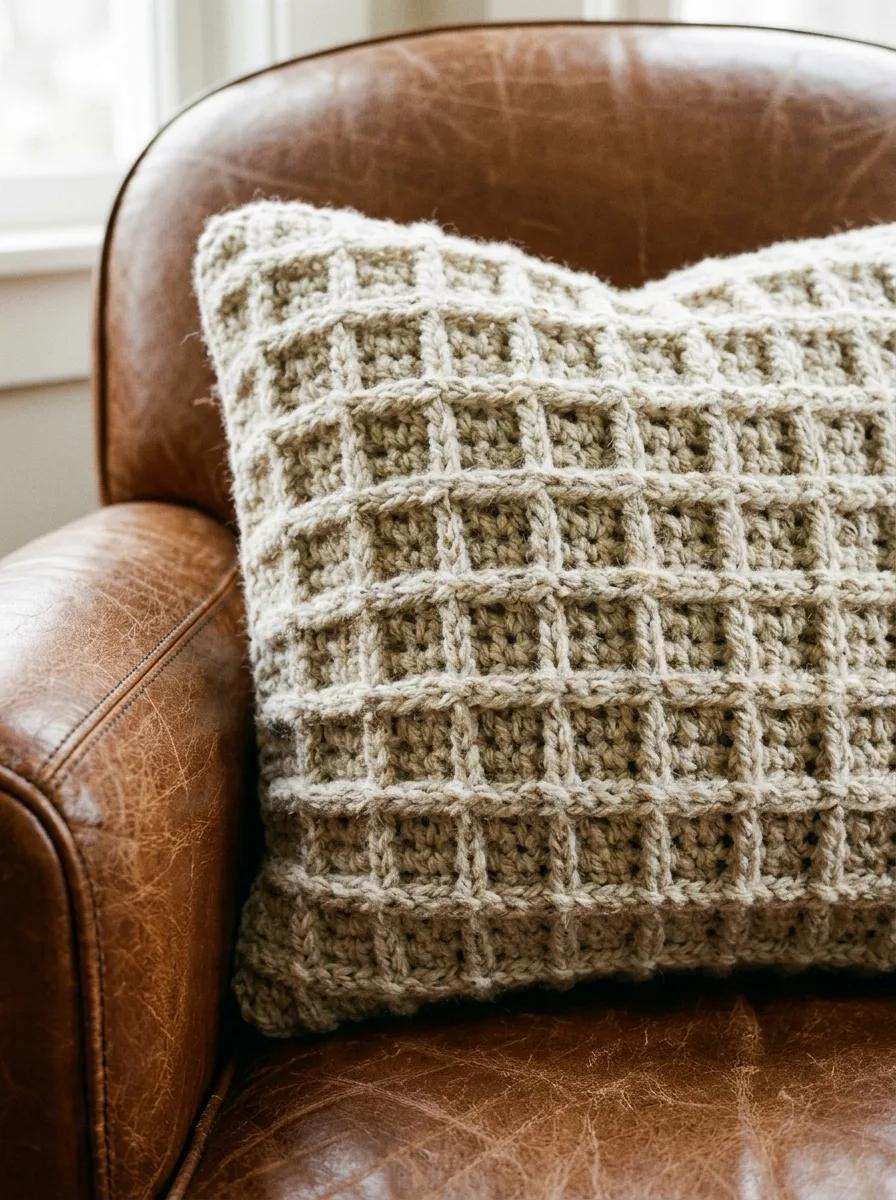
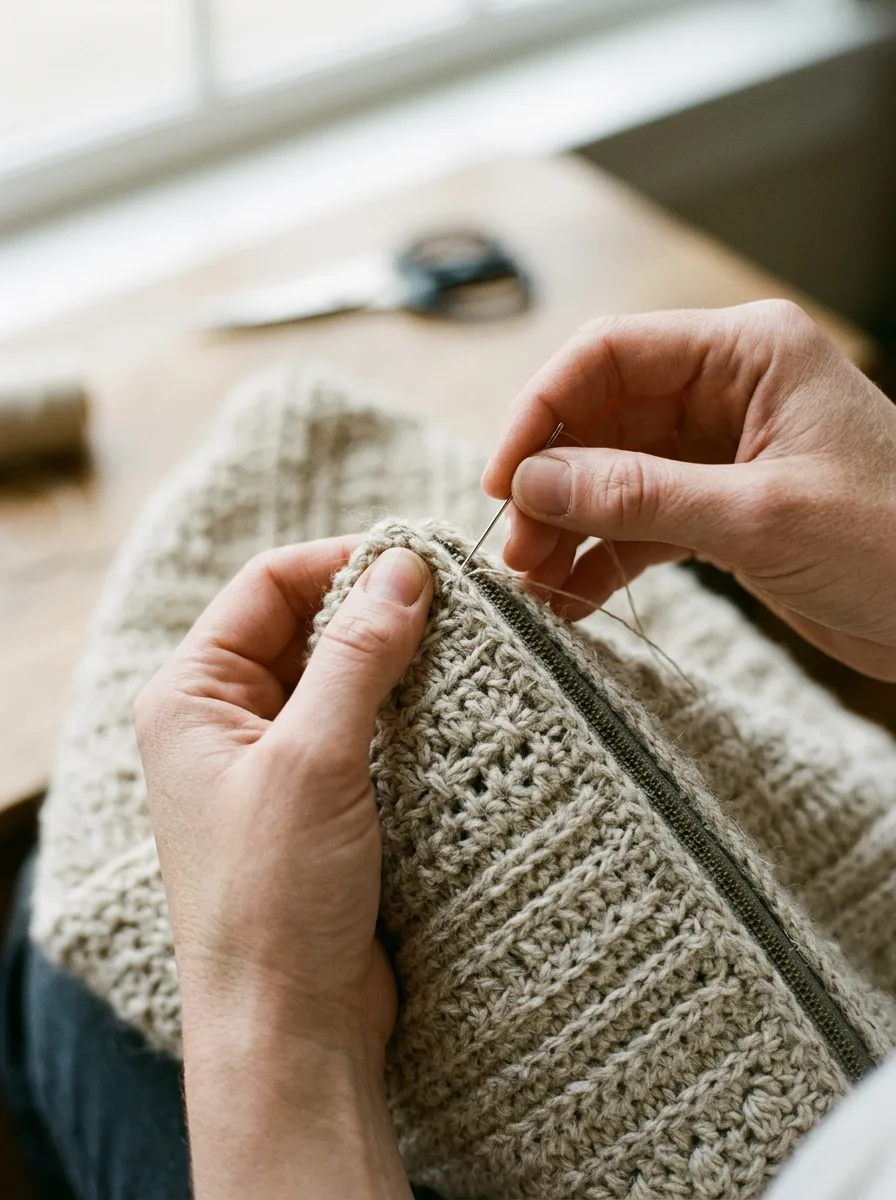
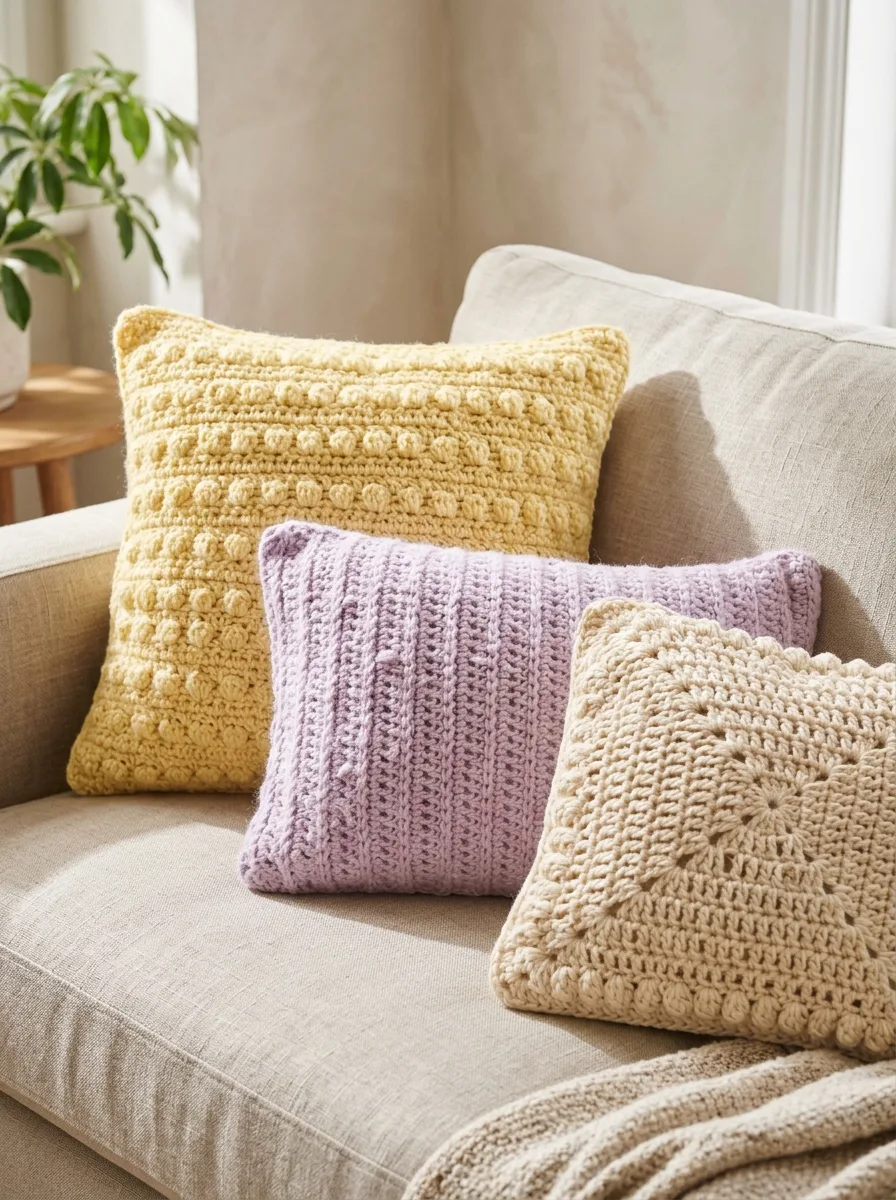
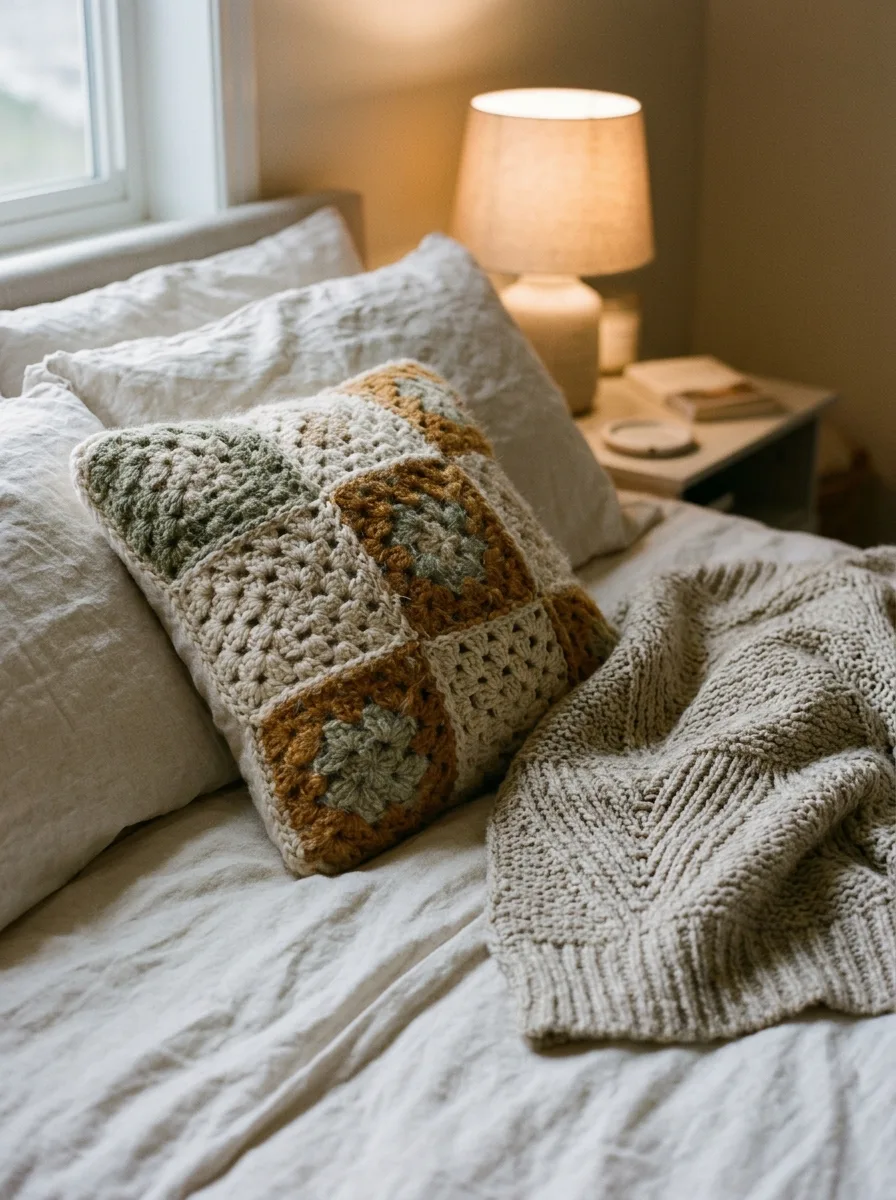
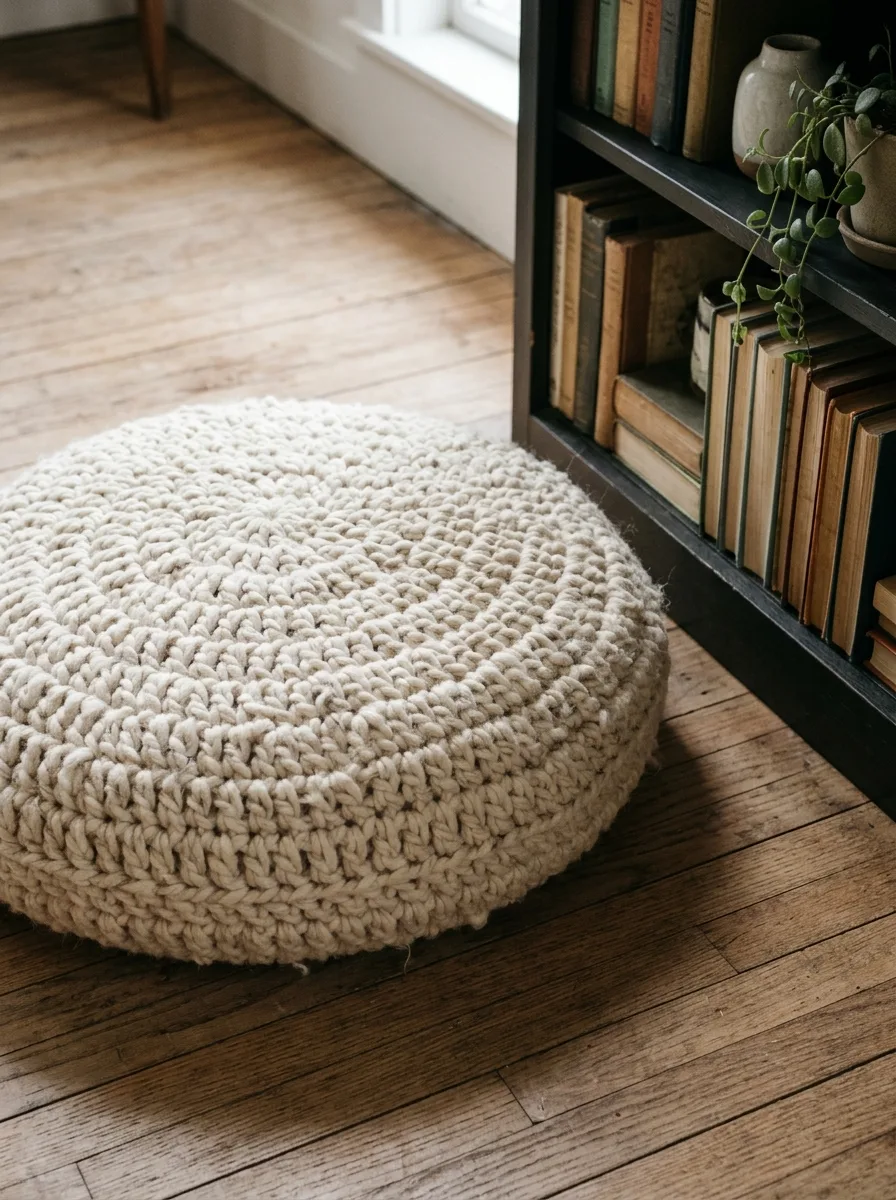
A cushion cover is easier than a blanket and shows off a stitch beautifully. It is also the quickest way to update a sofa. This page covers sizing, three styles (granny square, textured and plain), the three closures (envelope, button and zip) and 16 ideas, and ends with a free nine-square granny cushion cover with an envelope back. For more home projects see our crochet home decor ideas.
Size It Right
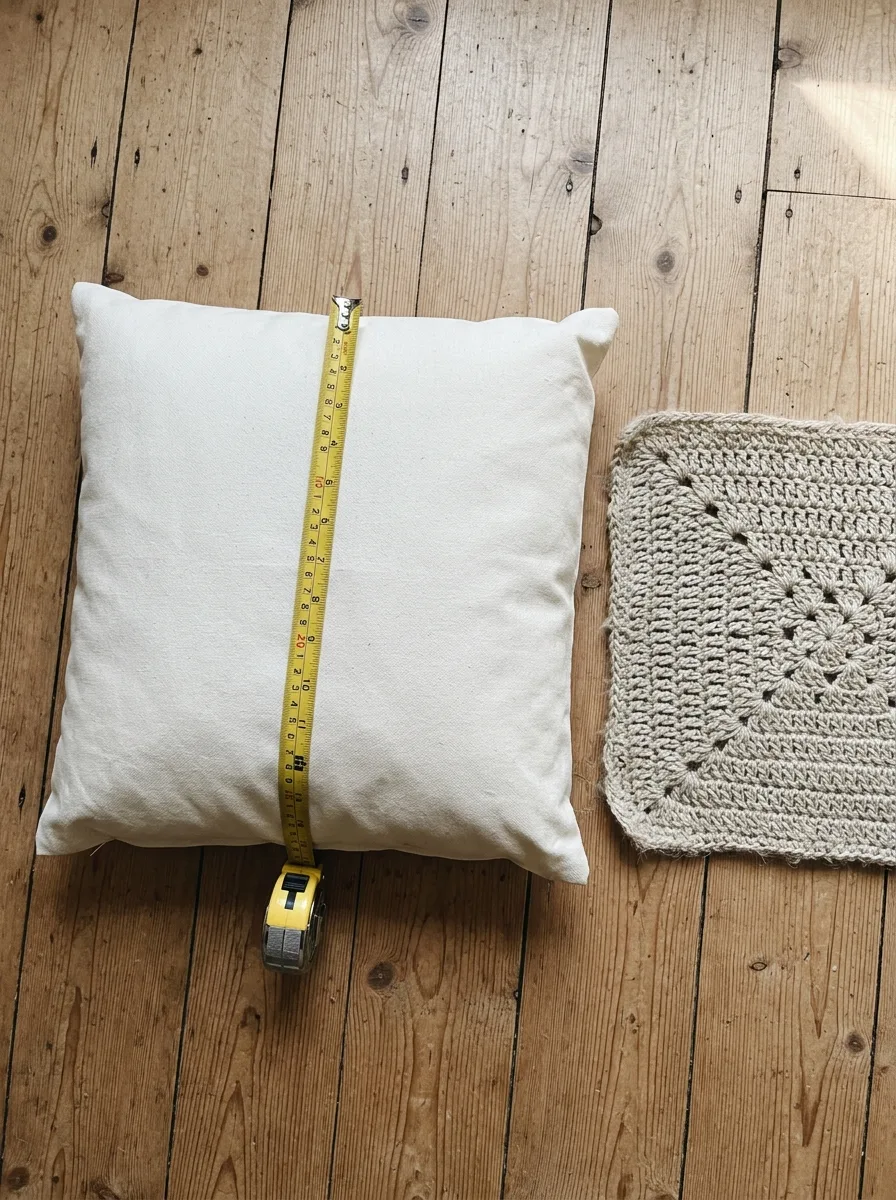
Make the crochet piece about 2 cm smaller than the cushion so the cover fits snugly. A tight cover looks plump; a loose one looks tired.
Make a few covers so you can change them with the seasons. A neutral set for winter, brights for summer. See our crochet blanket ideas for matching throws.
Make a few covers so you can change them with the seasons.
Free Pattern: Granny Square Cushion Cover
The front is nine classic granny squares of dcdc = double crochetUK: treble (tr)Yarn over, insert, pull up a loop (3 loops), then [yarn over, pull through 2] twice. About twice as tall as sc. and the back is two overlapping rectangles. Each square has 4 rounds and measures 12.5 cm.
Tick as you go
Granny Square Cushion Cover (40 cm cushion)
0 / 8 done
Count check: Rnd n of the square has 12n dc (Rnd 4 = 48). 3 squares × 12.5 cm = 37.5 cm. Back: 54 chains minus the 3 for the first dc = 51 dc + 1 = 52 dc ≈ 37 cm at 14 dc per 10 cm; 20 rows ÷ 8 per 10 cm = 25 cm. Two panels of 25 cm cover 37.5 cm with a 12.5 cm overlap.
Finished! Fasten off and admire it.
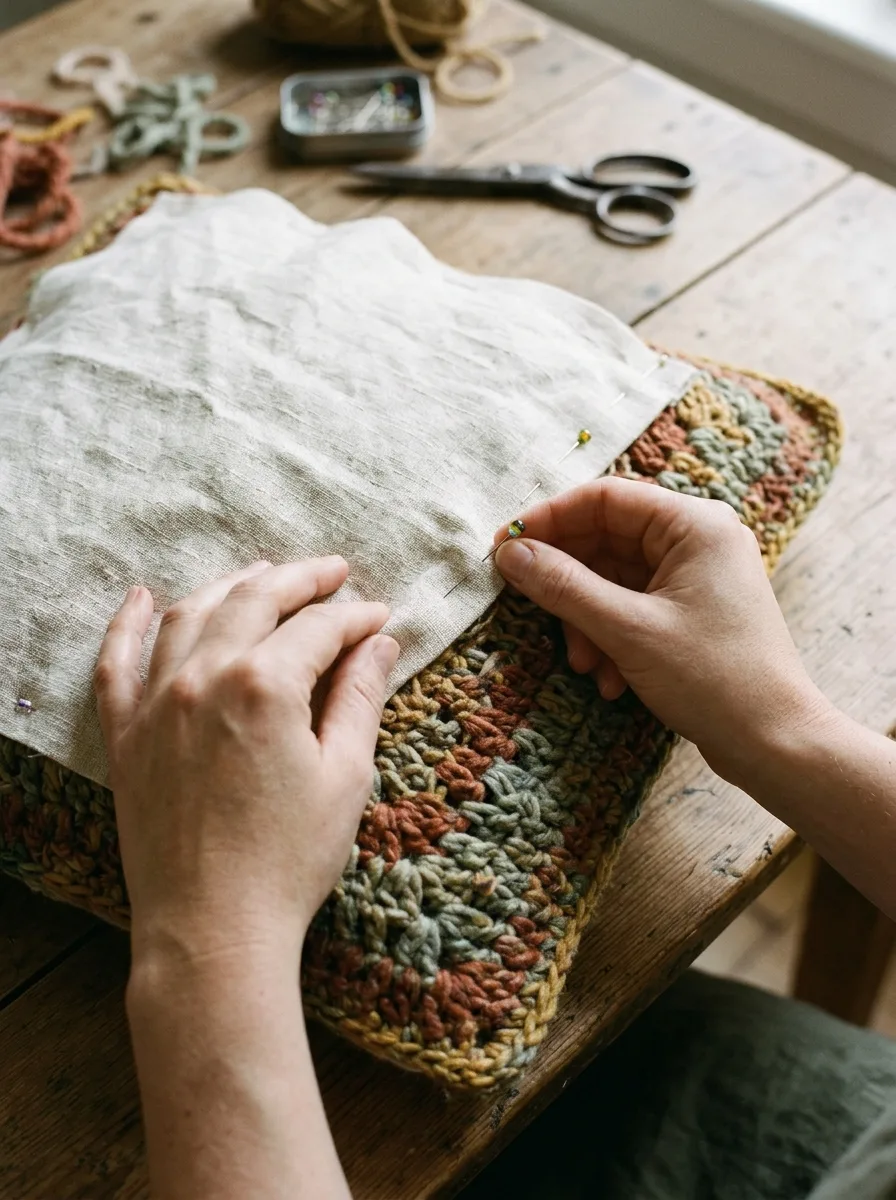
Insert the cushion through the envelope opening. If the fit is loose, add a round of sc around the edge before joining, or use a smaller insert. A matching lining makes a more durable cover.
About 2 cm smaller than the cushion insert, so the cover fits snugly and the cushion looks plump. For a 40 cm cushion, make a 38 cm cover. Crochet stretches, so a cover that is too big looks floppy.
How many granny squares make a cushion cover?
Nine squares of 12.5 cm make a 38 cm front for a 40 cm cushion. Use fewer larger squares or more smaller ones, as long as the front is about 2 cm smaller than the cushion.
What is the easiest closure for a crochet cushion cover?
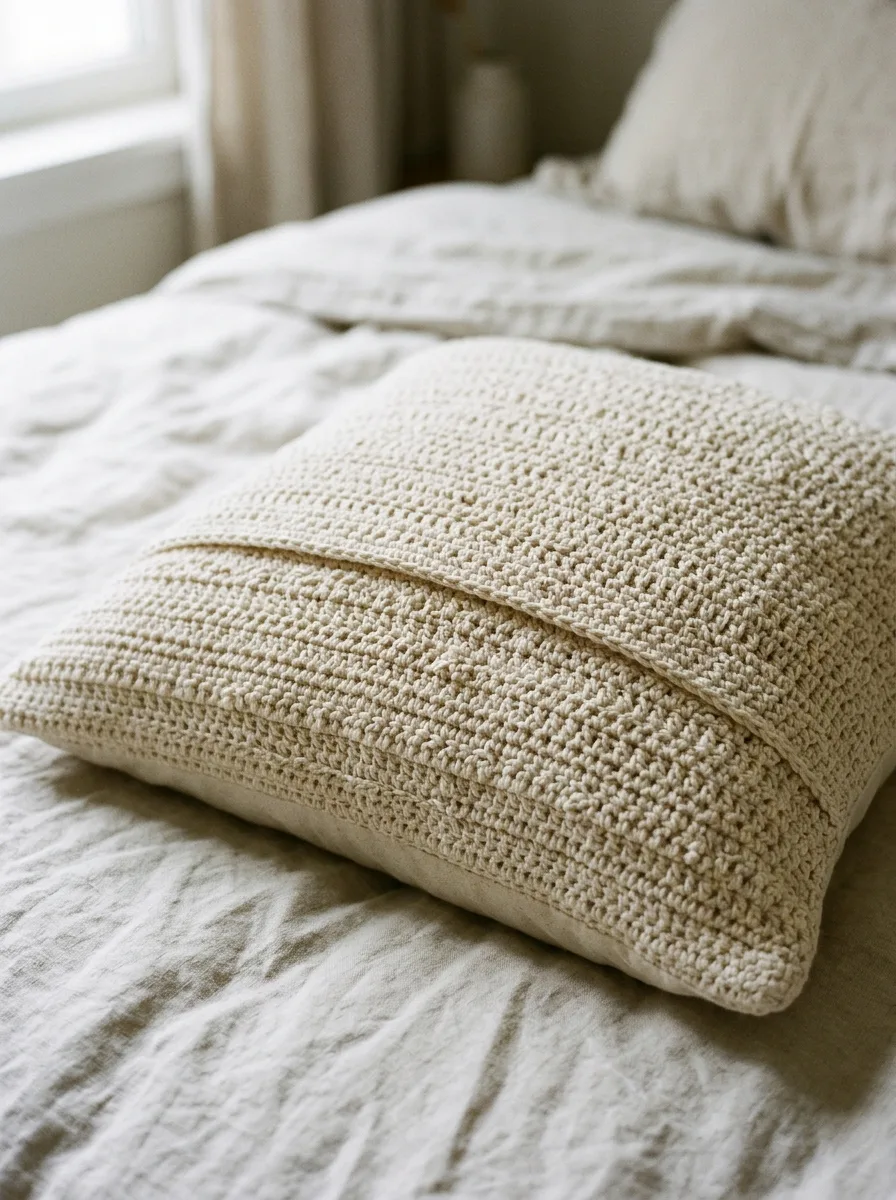
An envelope back: two overlapping panels, with no buttons or zip. It is quick, washable and lets you remove the insert easily.
Should I line a crochet cushion cover?
A lining stops the cushion insert from showing through open stitches and makes it last longer. Use a plain cotton fabric in a matching color, and sew it as a simple cover inside.
What stitches look best on a cushion?
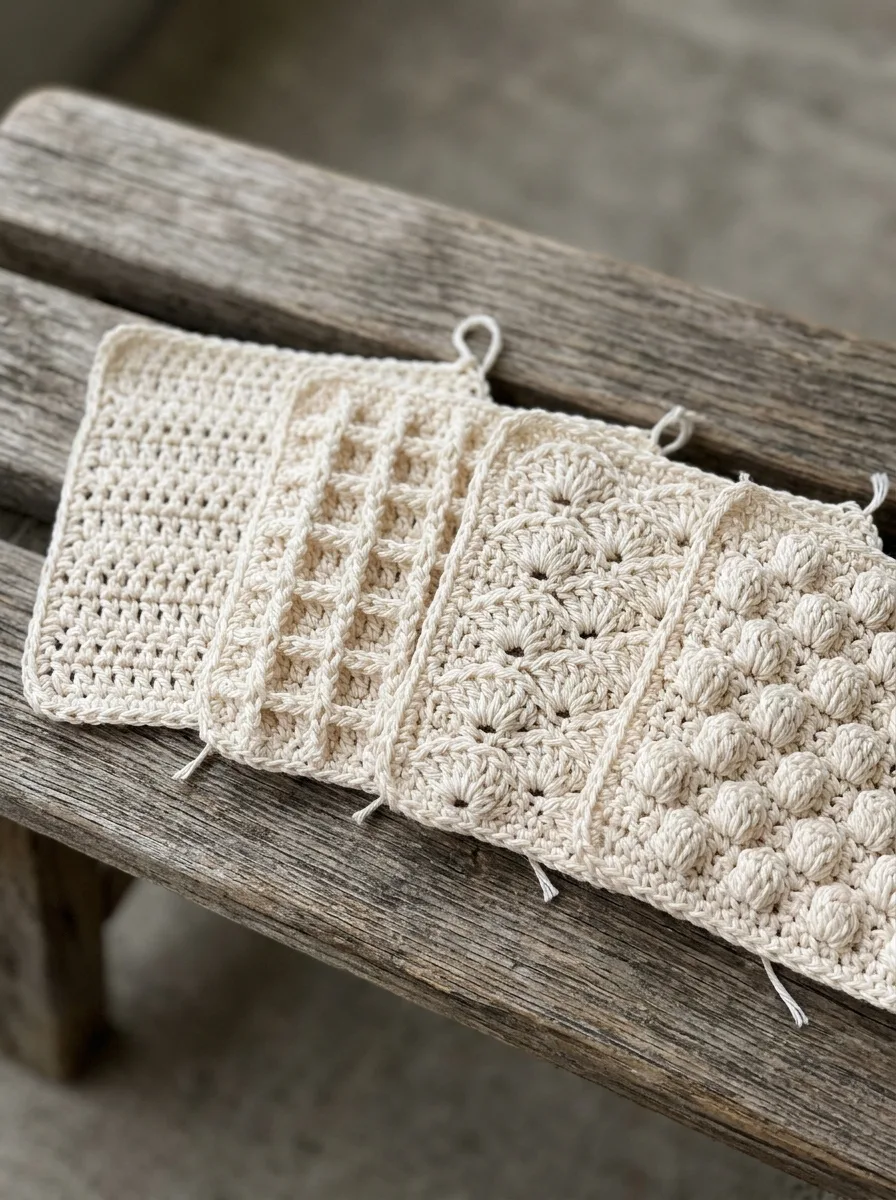
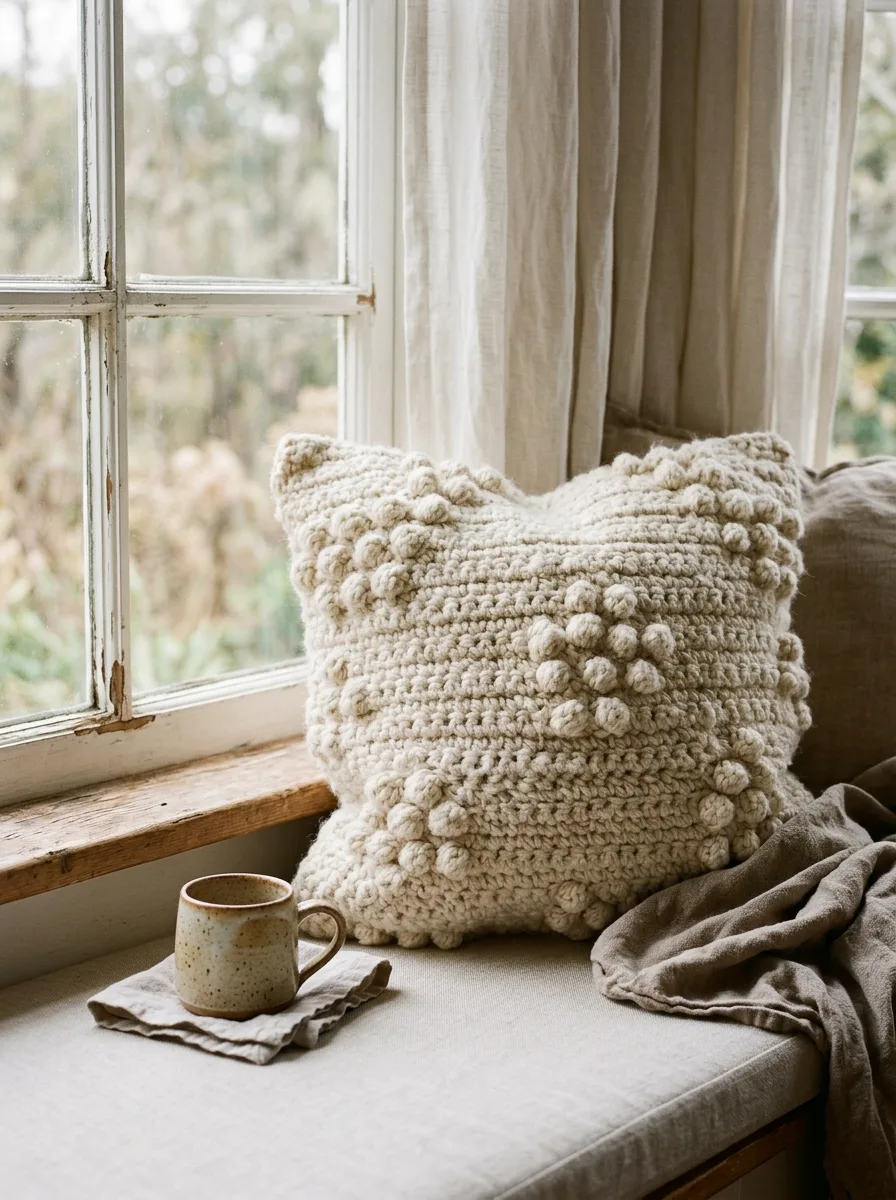
Textured stitches such as waffle, moss and bobbles, because they show light and shadow. Keep bobbles small so the cover stays flat.