Crochet Borders and Edgings: 12 Easy Finishes for Blankets and Garments
Crochet borders and edgings: 12 easy finishes for blankets and garments, from single crochet to shells, picots and lace, with stitch-count rules for corners.
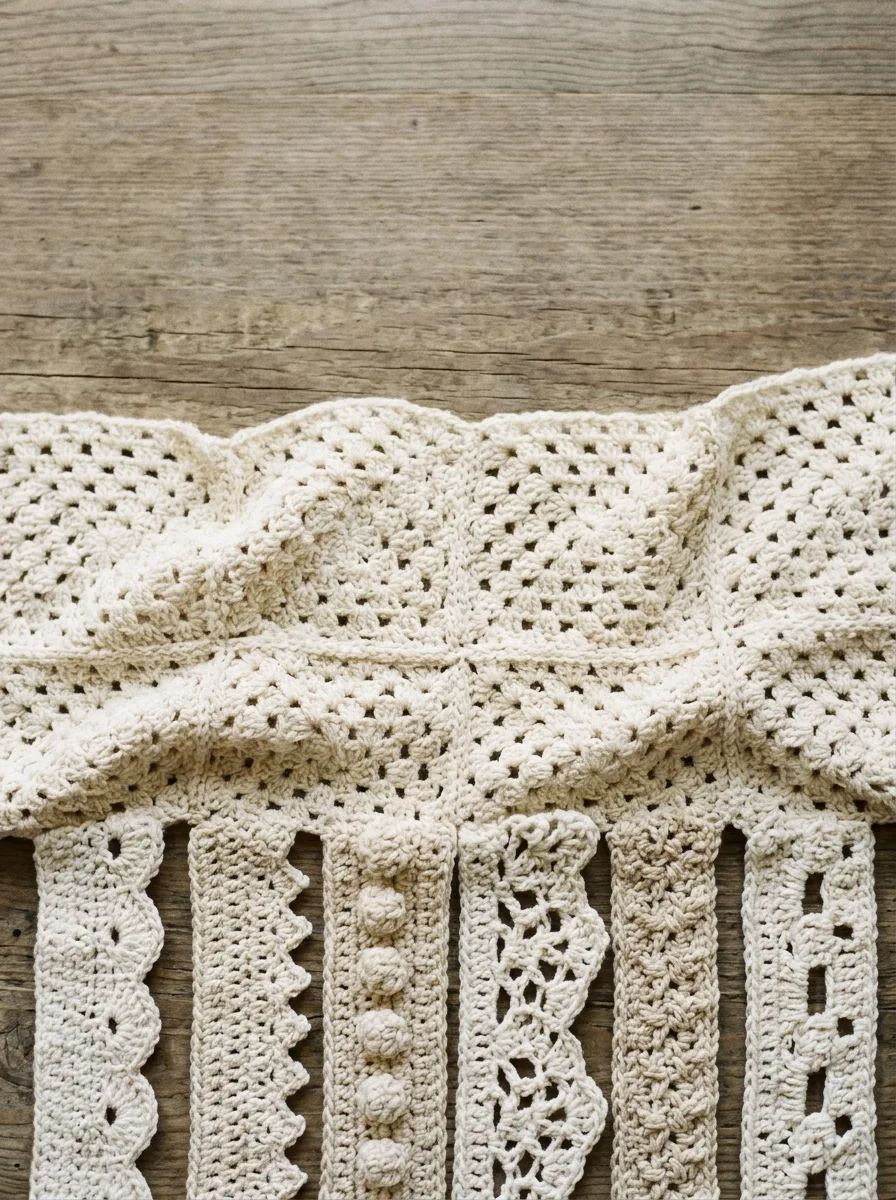
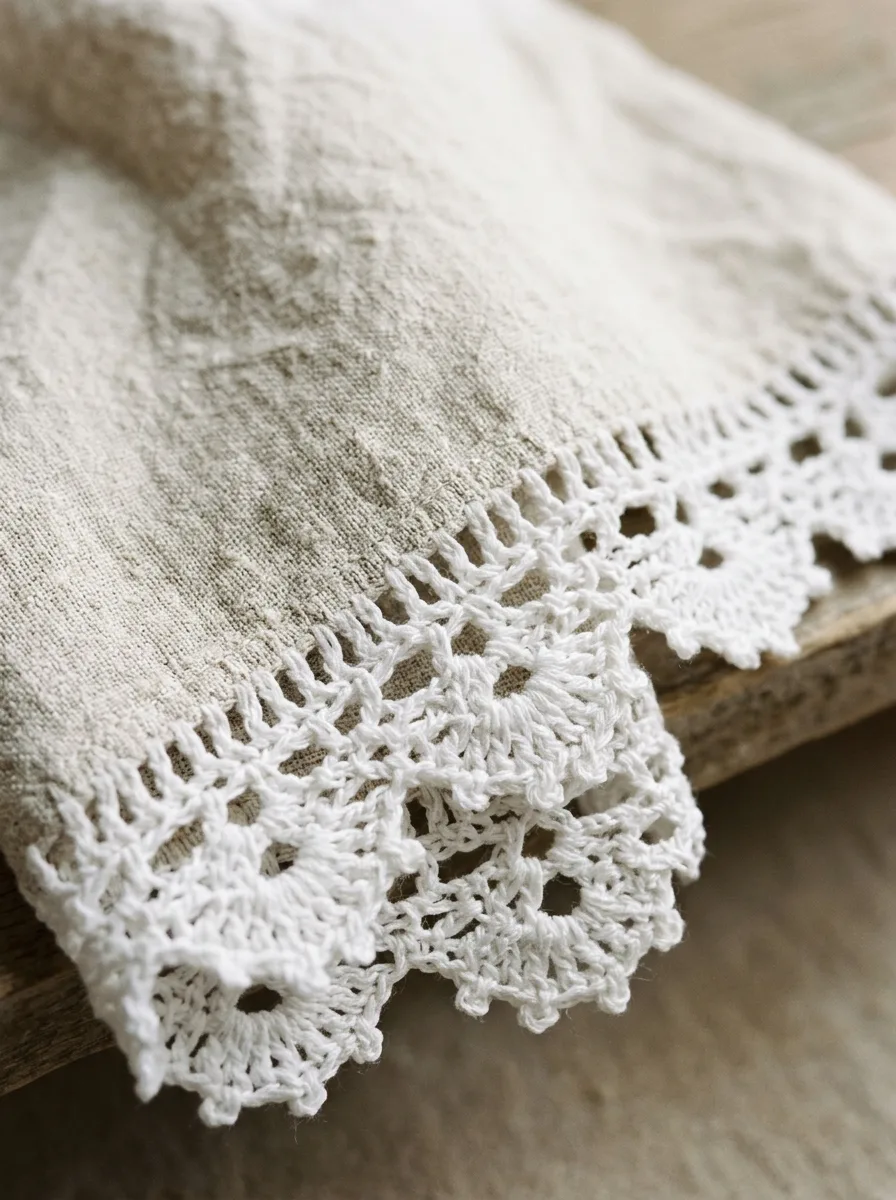
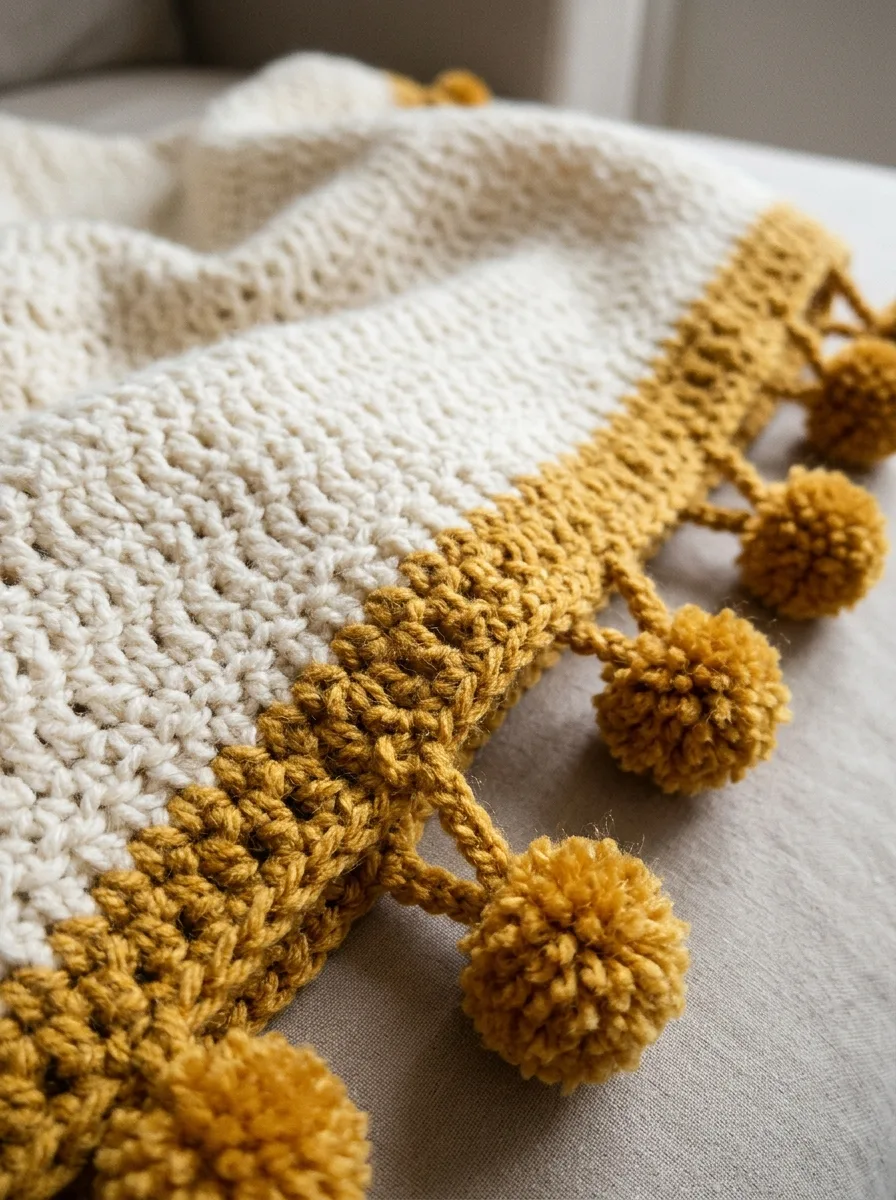
Borders turn a wobbly blanket into a finished one. A well-chosen edging hides uneven rows, frames the colors and makes a garment look professionally made. This page orders 12 borders from easiest (a round of single crochet) to showy (lace and pom-poms), gives the stitch counts you need for sides and corners and explains how to join and finish neatly. For blankets to border see our crochet blanket ideas.
Before You Start the Border
Start with an even foundation row of single crochet. It gives every other border a stable base, and it evens out the edge.
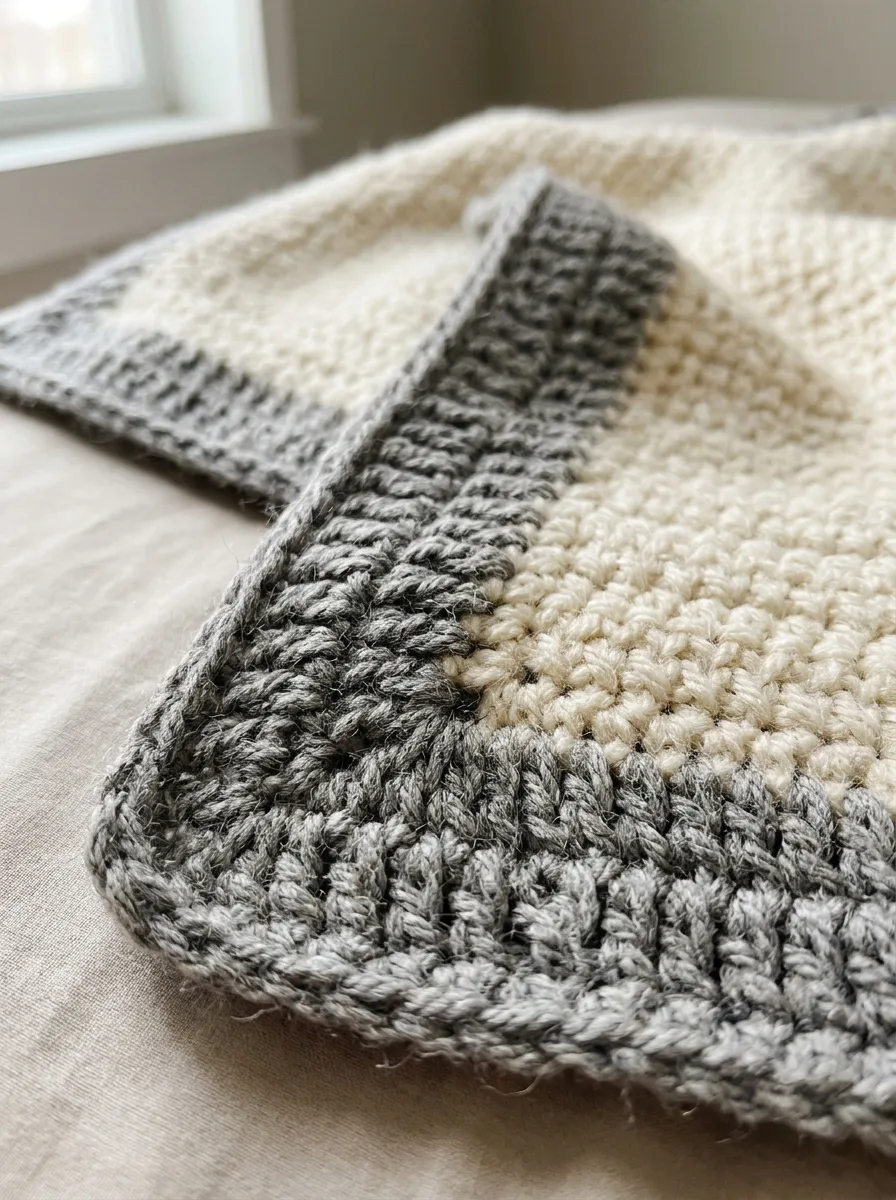
Work three stitches into each corner to make it lie flat.
Simple Borders for Beginners
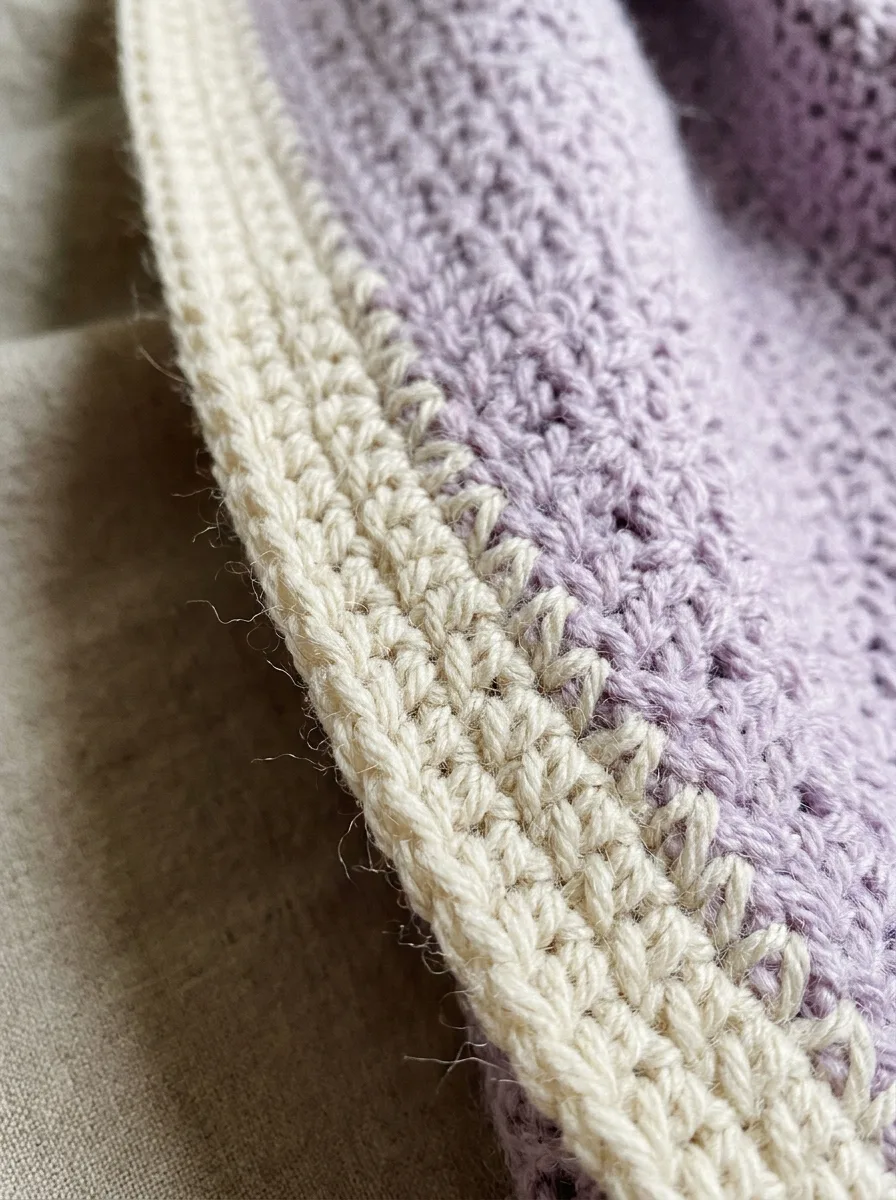
A single crochet border is the simplest finish. One round of scsc = single crochetUK: double crochet (dc)Insert hook, yarn over, pull up a loop (2 loops), yarn over, pull through both. The shortest, densest basic stitch. evenly around the blanket is enough.
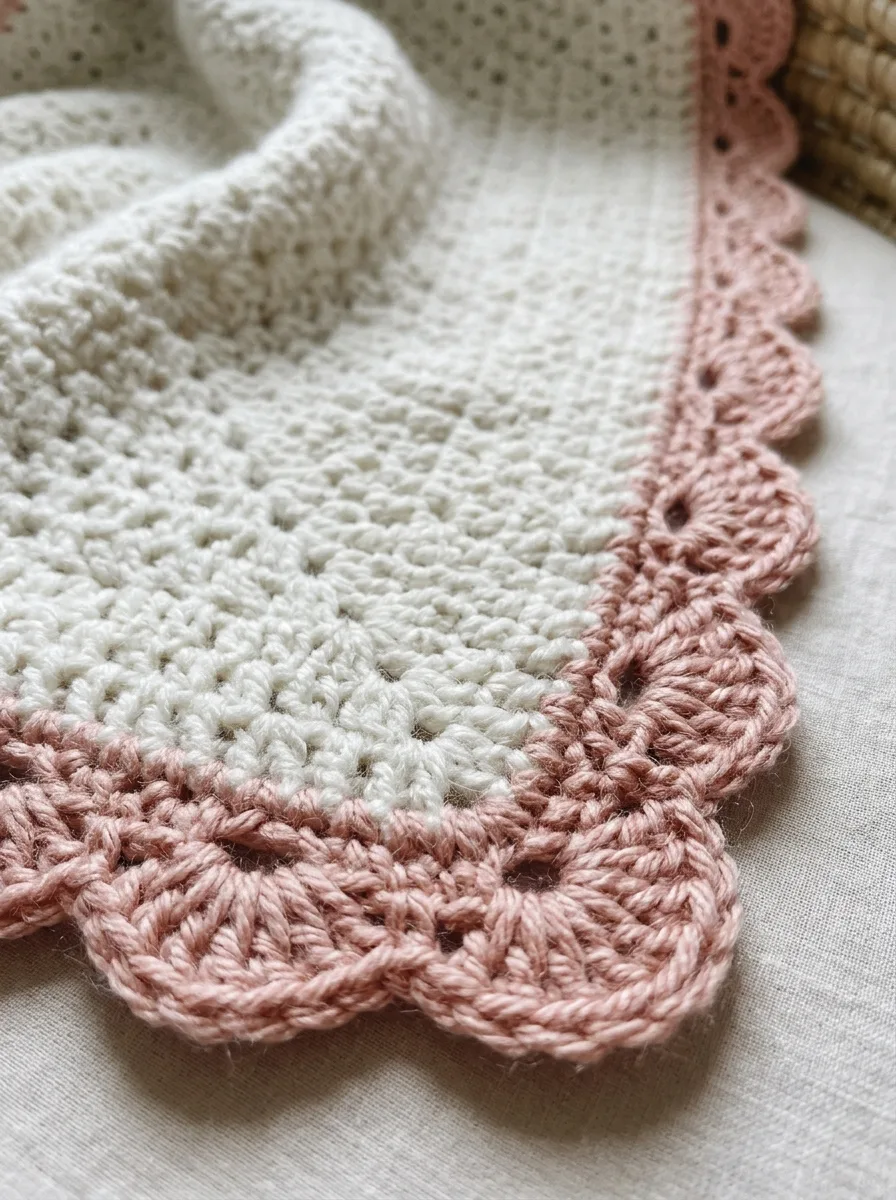
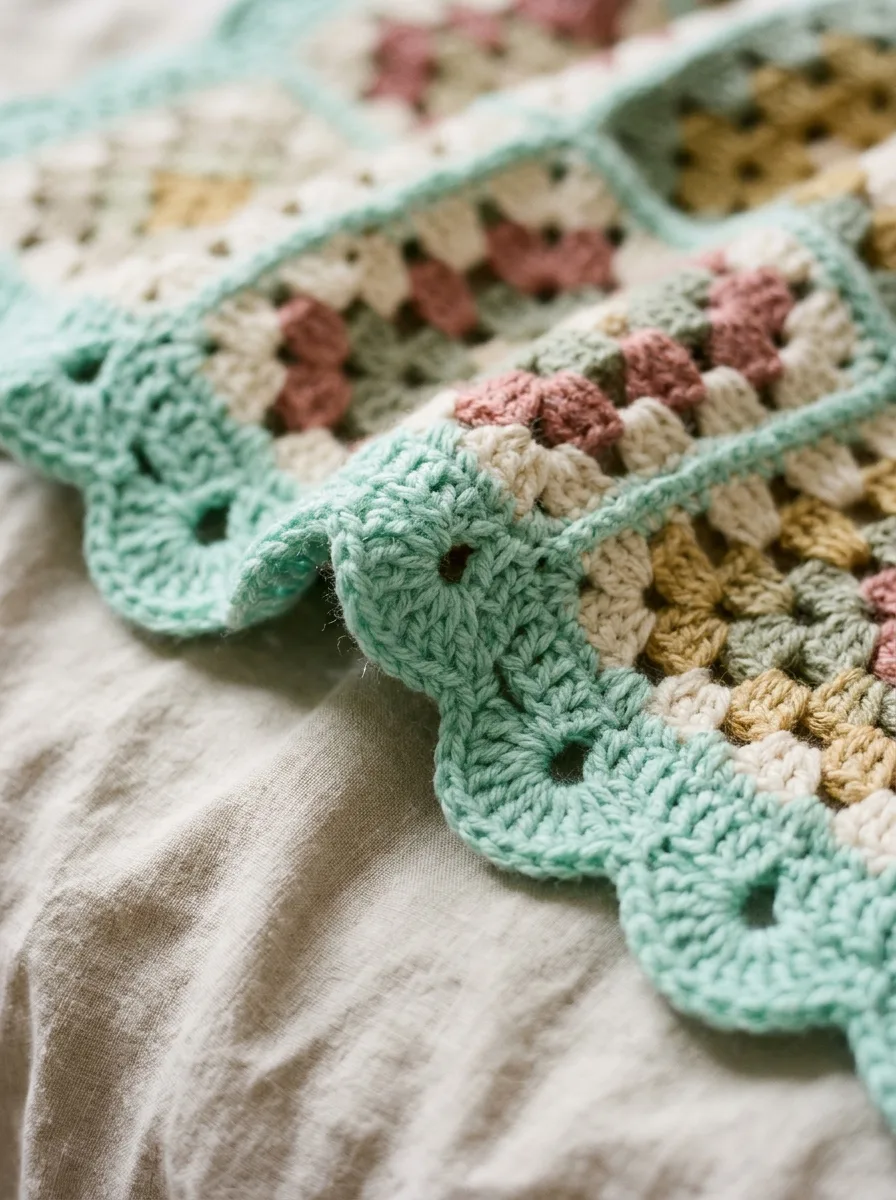
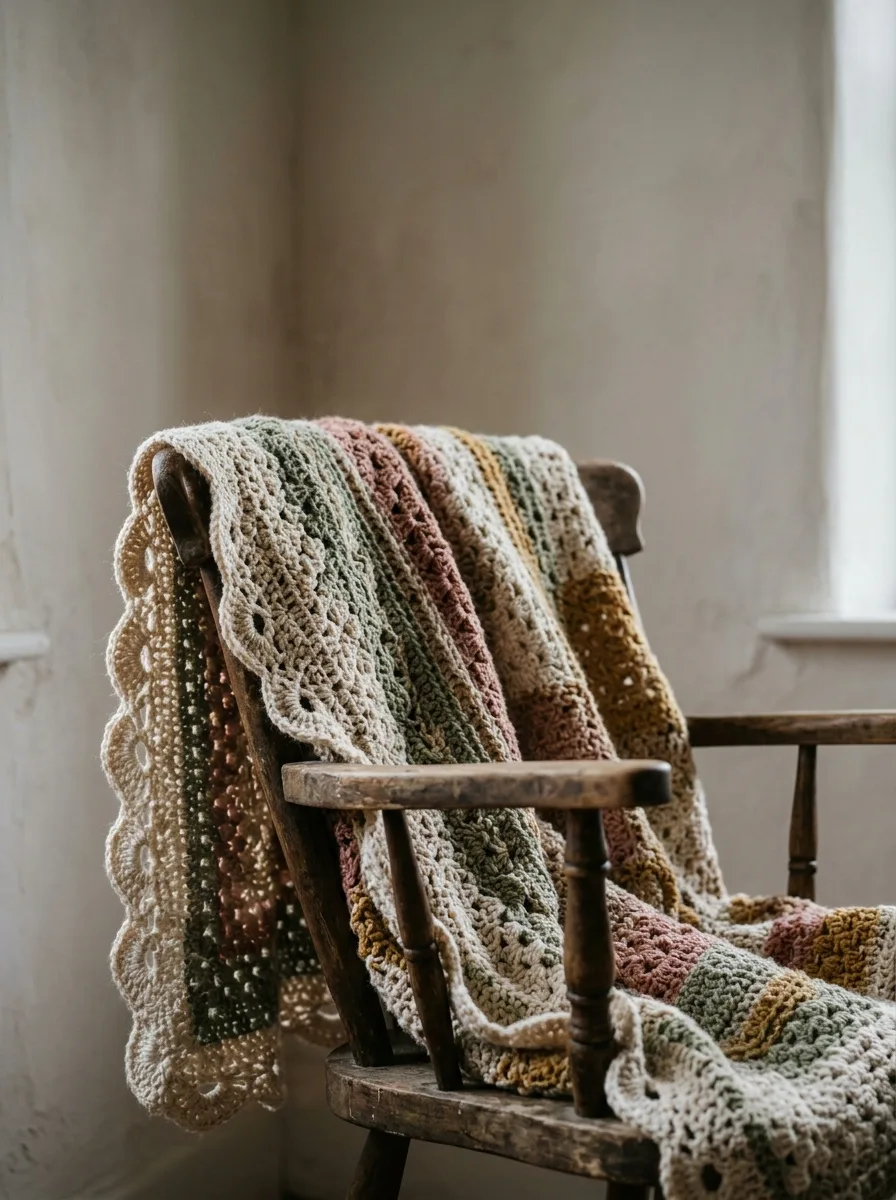
Shells are a classic border for baby blankets. Skip 2, work 5 dcdc = double crochetUK: treble (tr)Yarn over, insert, pull up a loop (3 loops), then [yarn over, pull through 2] twice. About twice as tall as sc. in the next stitch, skip 2, and sc in the next stitch.
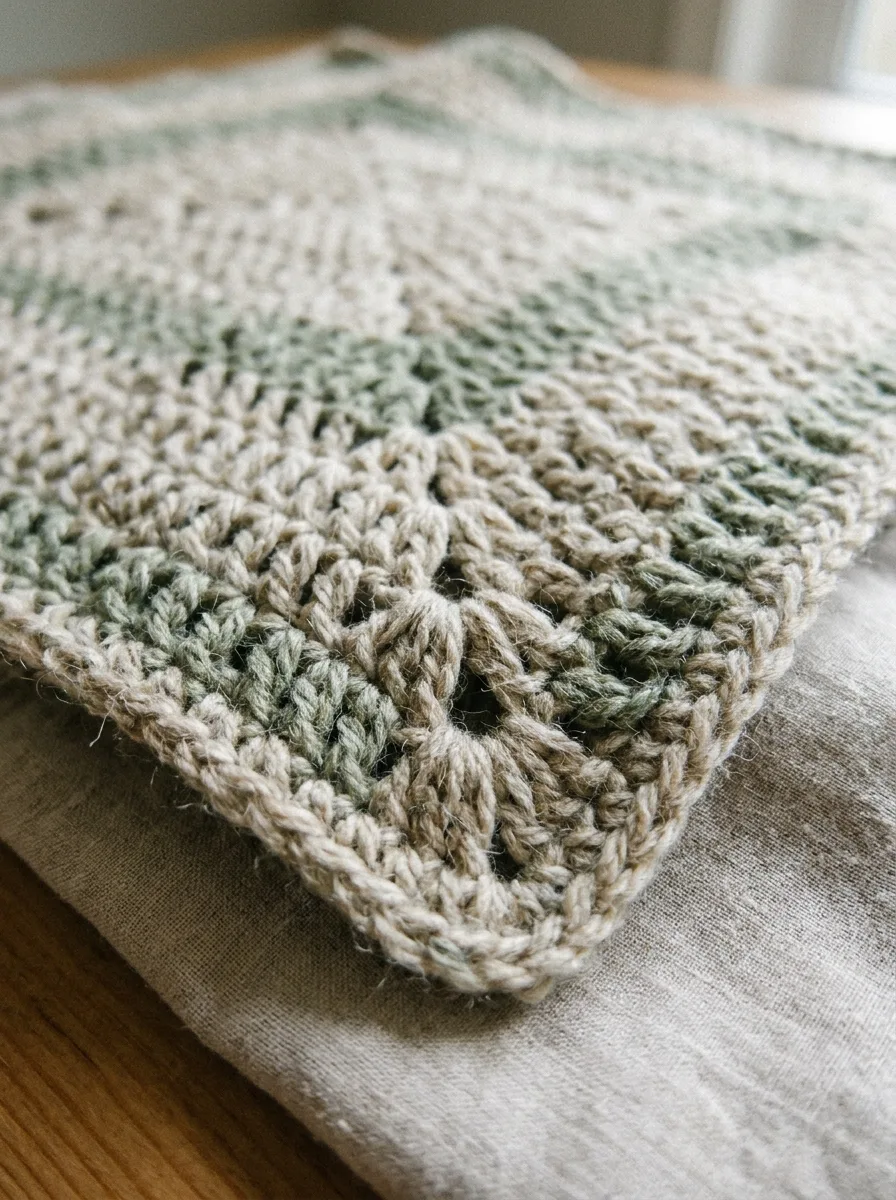
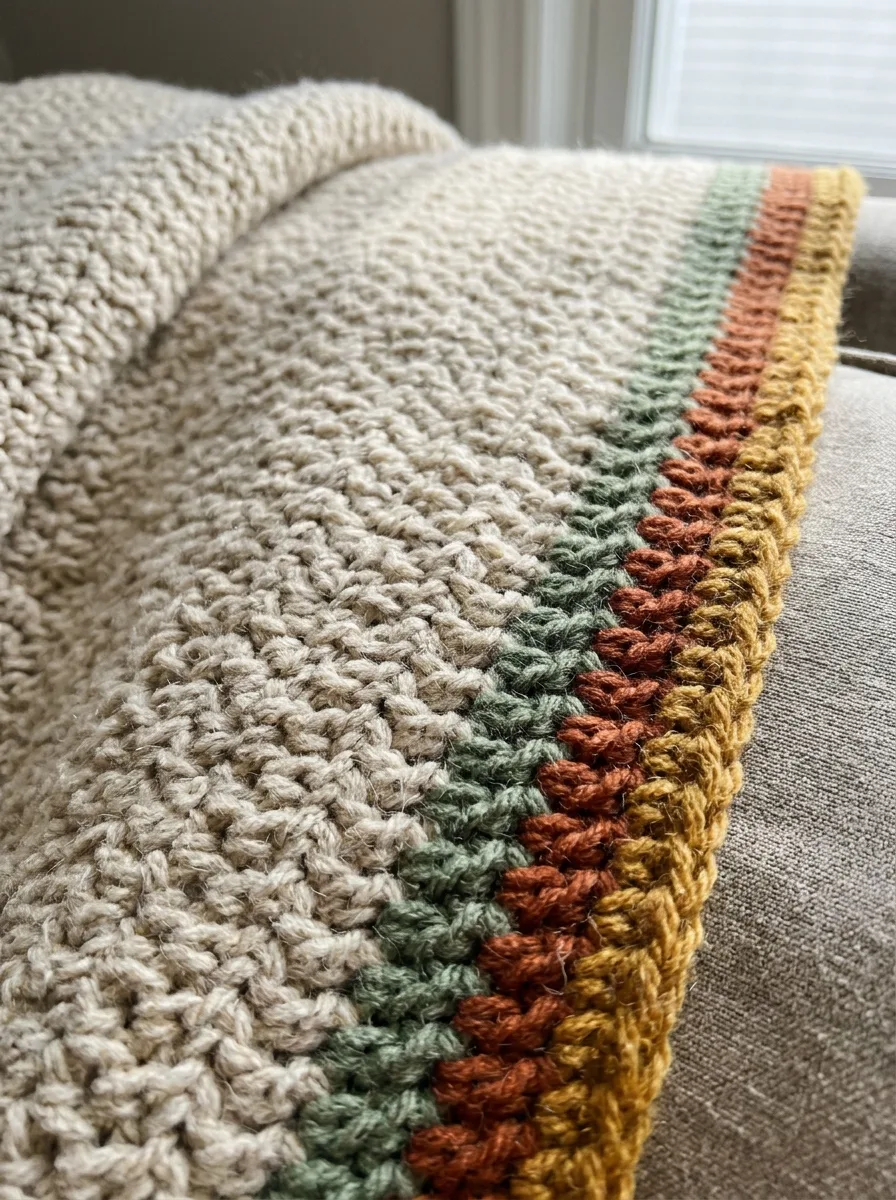
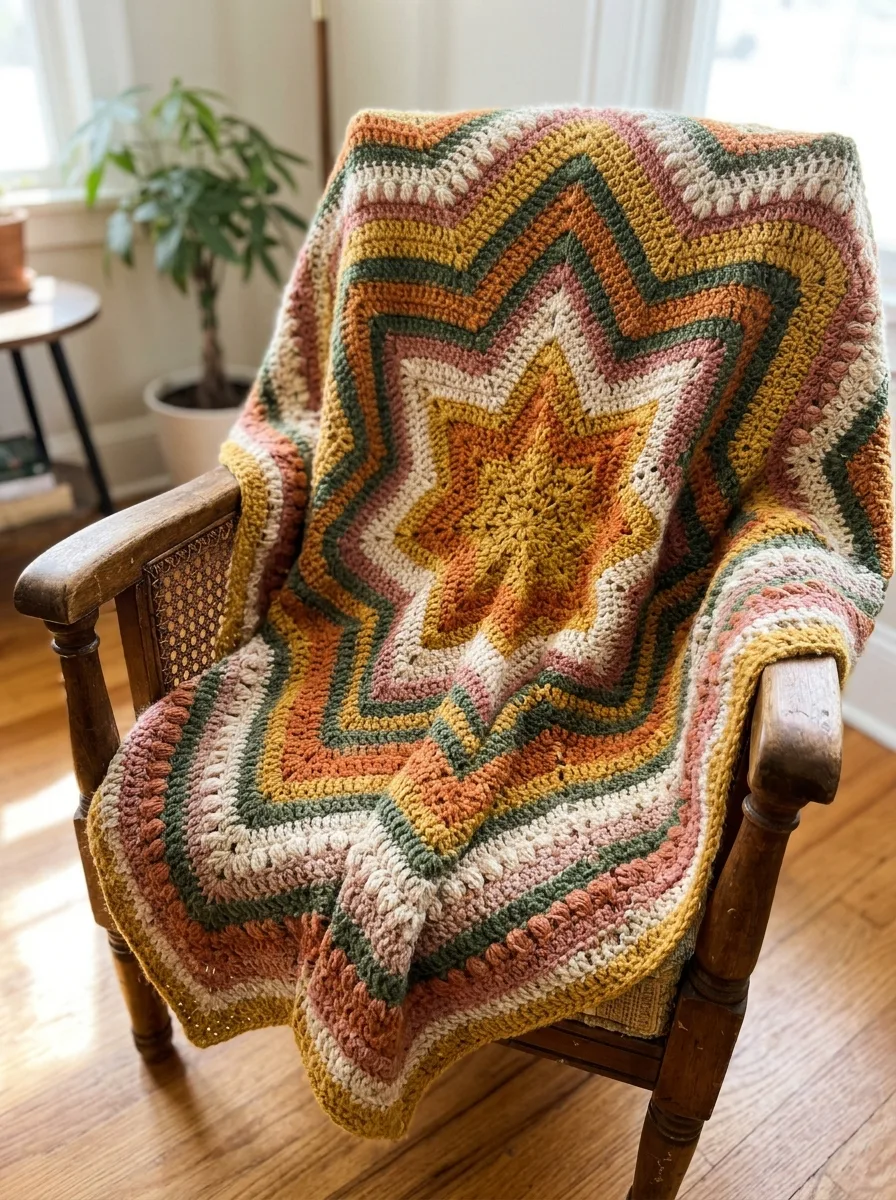
A good border finishes the blanket and hides any wobbly edges.
Stitch-Count Rules You Can Rely On
Use these rules to set up your foundation round. They are estimates, so check against your own gauge.
Edge
Stitches to work
Top and bottom (along the stitches)
1 sc in each stitch (2 in each chain space if the row has spaces)
Side of a row of sc or hdc
1 sc per row end
Side of a row of dc
2 sc per row end
Corner
3 sc in the corner stitch
Shell border repeat
6 stitches (skip 2, 5 dc in next, skip 2, sc in next)
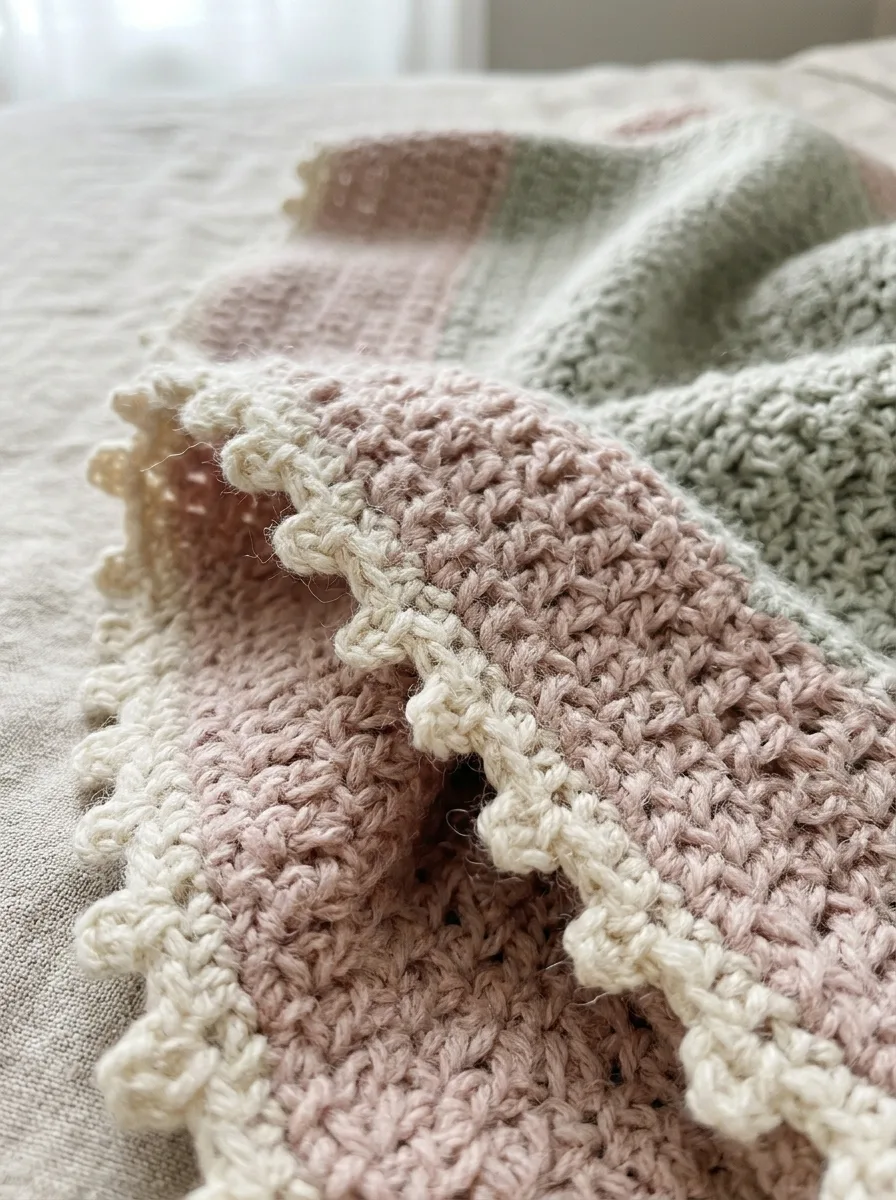
Picot
Every 3rd stitch: ch 3, sl st in the first chain
Example. A blanket with 120 stitches across and 160 double crochet rows: top and bottom 120 sc each, sides 160 × 2 = 320 sc each, plus 3 sc at each of 4 corners = 12, for a total of 120 + 120 + 320 + 320 + 12 = 892 sc. For a shell border, the stitch count on each side should be a multiple of 6 plus 1: adjust the foundation round (skip or add a stitch) until it is: for 120 stitches, use 6 × 20 = 120, plus 1 = 121.
If the edge ripples, you have too many stitches: take out the round and use fewer. If it pulls in, you have too few. Take your time on the first round, because everything else follows from it.
How many stitches do I work along the side of a blanket?
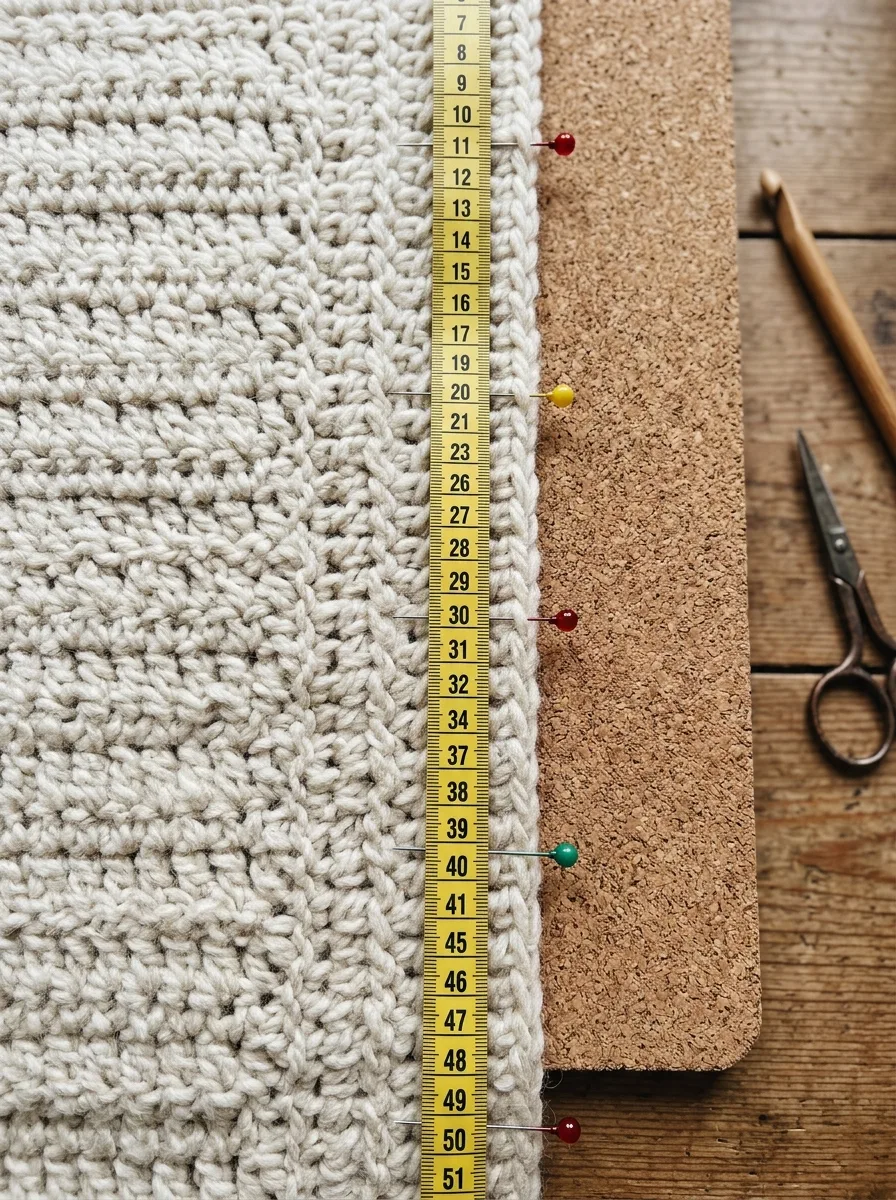
About one single crochet per row end of a single crochet or half double crochet row, and about two per row end of a double crochet row. Pin every 10 cm to spread the stitches evenly, and adjust if the edge ruffles or pulls.
How do I work corners so they lie flat?
Work 3 stitches into each corner stitch (3 sc, or 3 hdc for the next rounds). The extra stitches turn the corner. If the corner still cups, add a fourth stitch; if it ruffles, work only 2 and a chain-space.
What is crab stitch?
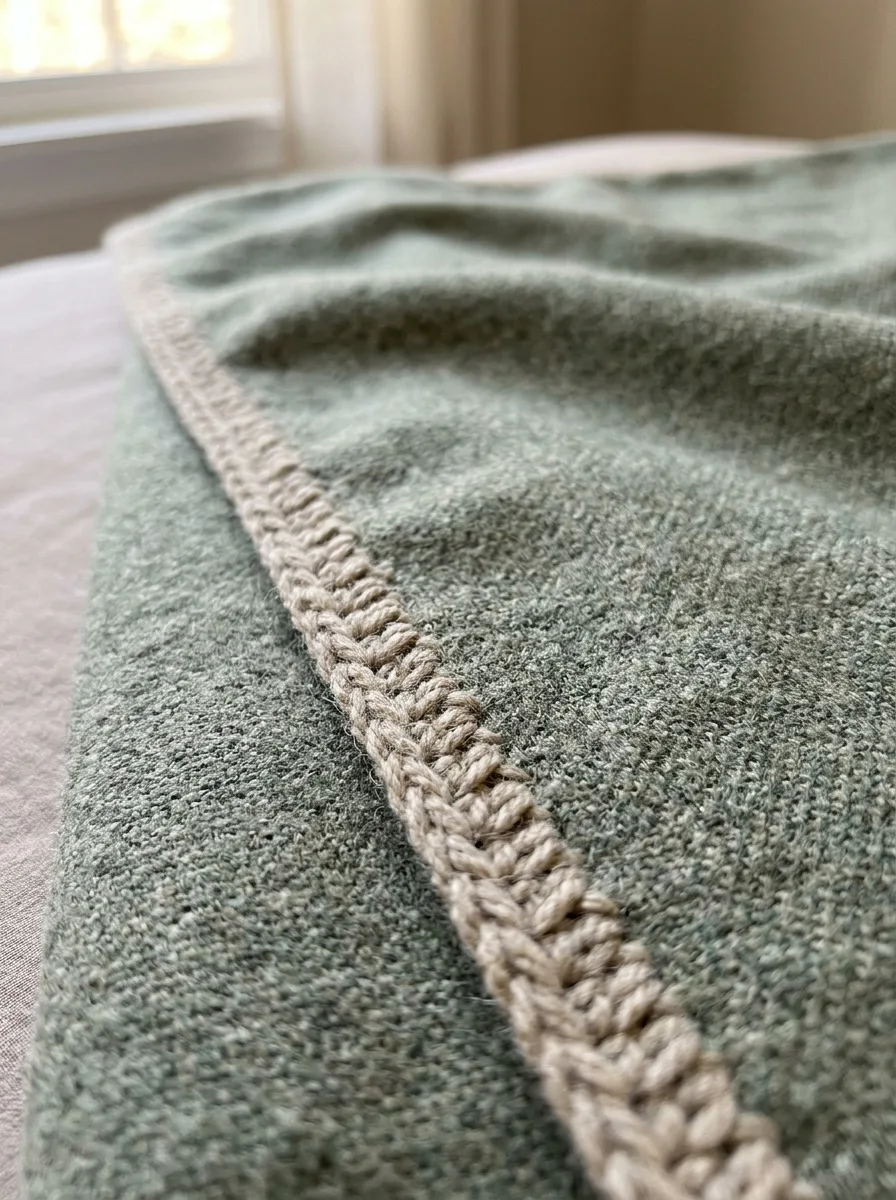
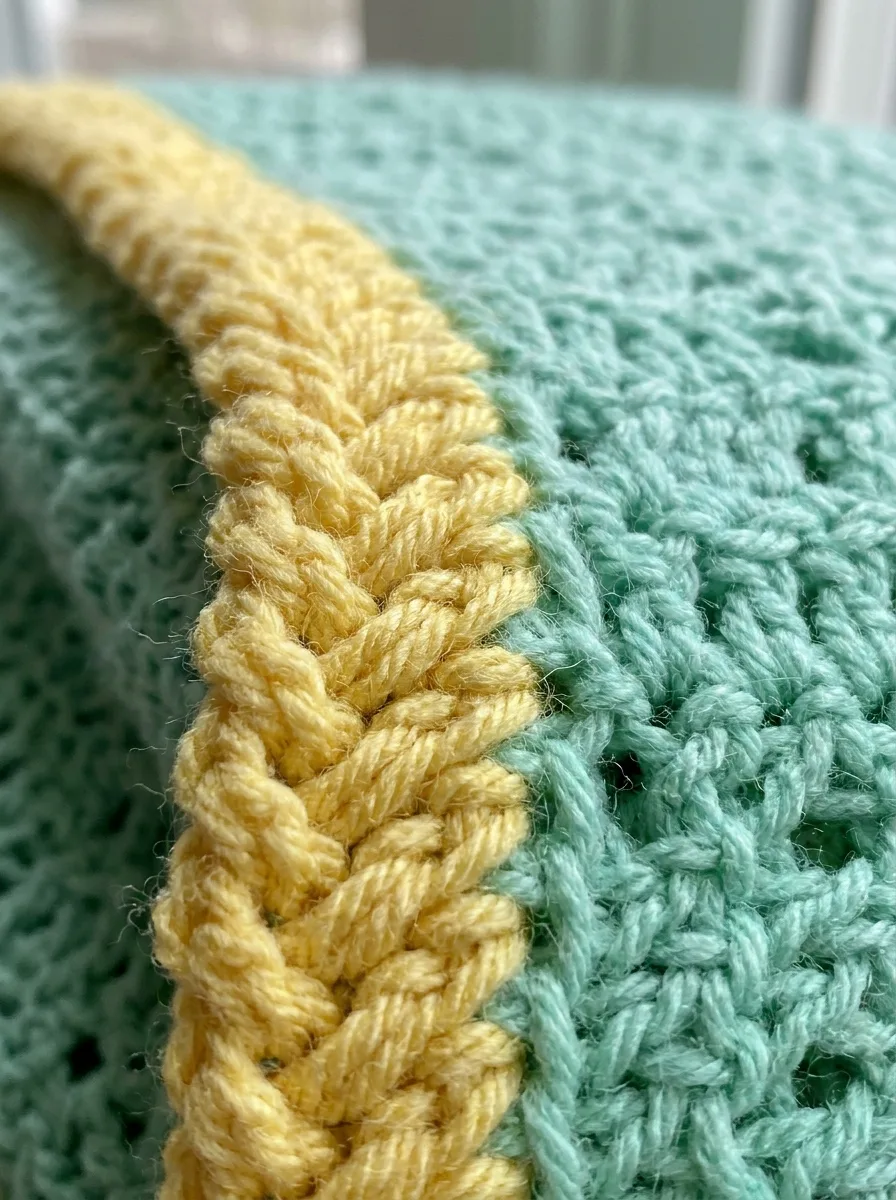
Single crochet worked backward, from left to right. It makes a twisted, rope-like edge that is firm and neat, and it is the classic finish on a blanket.
A shell repeat uses 6 stitches (skip 2, 5 dc in the next, skip 2, sc in the next). Make the number of stitches on each side a multiple of 6 plus 1 by adjusting the foundation round before you start the shells.
How do I hide the join in a border?
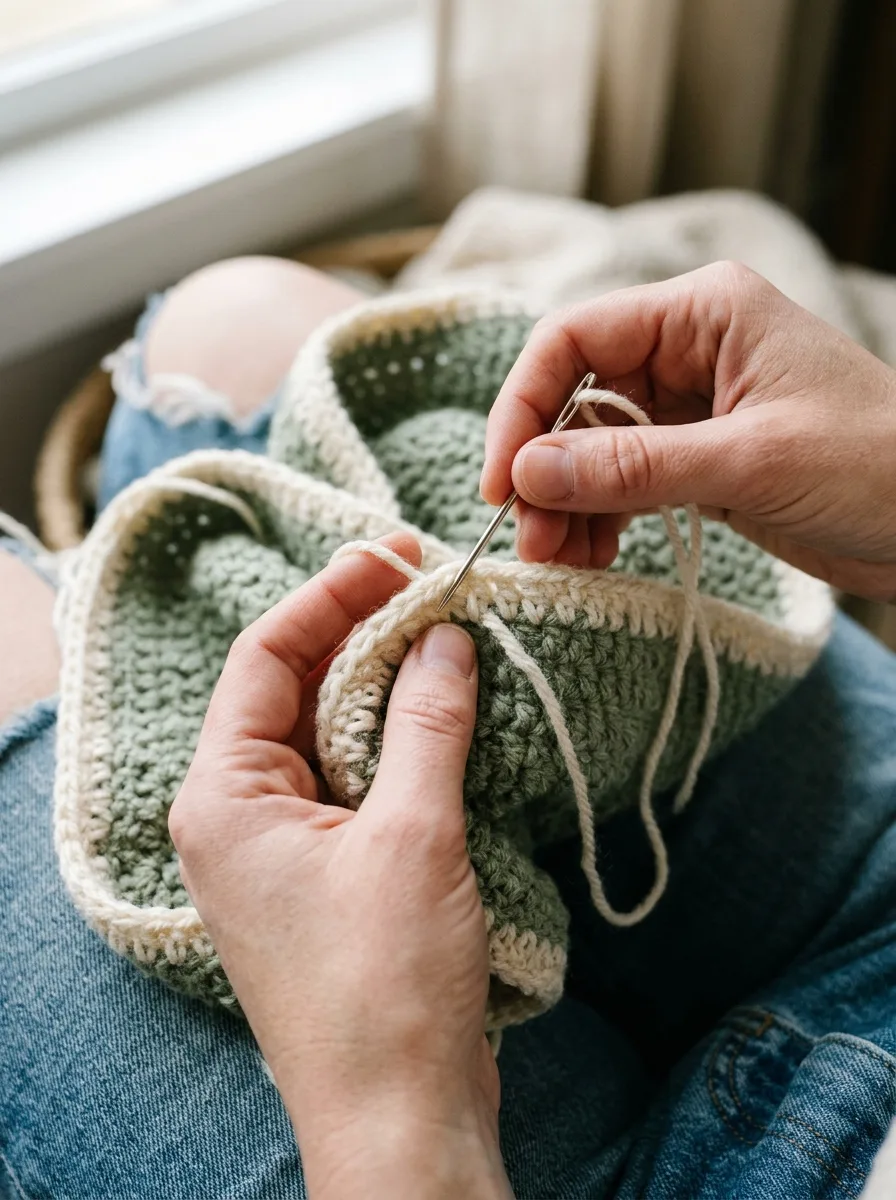
Join with an invisible join: cut the yarn, thread it through the first stitch's top loops and back down the last stitch, and weave in the end so it disappears.